
BuddhistCatholicContemplativeEvangelicalGeneral ChristianHinduJewishLatter-day SaintMuslimNew VisionsProgressive Christian
Beliefs
- Buddhist
- Catholic
- Contemplative
- Evangelical
- General Christian
- Hindu
- Jewish
- Latter-day Saint
- More Voices
- Muslim
- New Visions
- Pagan
- Progressive Christian
Topics
- Religion News
- Food and Religion
- Sports and Religion
- Religious Art
- Religious Music and Entertainment
- Religious Events
- History and Religion
- Style and Religion
- Politics and Religion
- Women in Religion
- Recreation Outdoors and Religion
- Business Finance and Religion
- Careers Workplace and Religion
- Education and Religion
- Family Parenting and Religion
- Health Fitness and Religion
- Home and Religion
- Relationships and Religion
- Technology and Religion
- Travel and Religion
Columnists
- Buddhist Columnists
- Business Finance and Religion Columnists
- Careers Workplace and Religion Columnists
- Catholic Columnists
- Contemplative Columnists
- Education and Religion Columnists
- Evangelists Columnists
- Family Parenting and Religion Columnists
- General Christian Columnists
- Health Fitness and Religion Columnists
- Hindu Columnists
- History and Religion Columnists
- Home and Religion Columnists
- Jewish Columnists
- More Voices Columnists
- Latter Day Columnists
- Muslim Columnists
- New Visions Columnists
- Nonreligious Columnists
- Pagan Columnists
- Politics and Religion Columnists
- Progressive Columnists
- Recreation Outdoors and Religion Columnists
- Relationships and Religion Columnists
- Religion News Columnists
- Religious Art Columnists
- Religious Events Columnists
- Religious Music and Entertainment Columnists
- Sports and Religion Columnists
- Style and Religion Columnists
- Technology and Religion Columnists
- Travel and Religion Columnists
- Women in Religion Columnists
Resource Library
- 2026 Calendar
- Library of World Religions
- The 100 Most Holy Places on Earth
- Patheos Answers
- Podcasts
- Videos
- Faith Leaders Database
- Anglican Episcopalian
- Bahai
- Baptist
- Buddhism
- Christianity
- Confucianism
- Eastern Orthodoxy
- Hinduism
- Holiness and Pentecostal
- ISKCON
- Islam
- Judaism
- Lutheran
- Methodist
- The Church of Jesus Christ of Latter-day Saints
- New Age
- Paganism
- Presbytarian and Reformed
- Protestantism
- Religion Behind the Scenes
- Roman Catholic
- Scientology
- Shia Islam
- Sikhism
- Sufism
- Sunni Islam
- Taoism
- Zen
- See all religions
Research Tools
 Ad-Free & Subscriber Log-In Subscription Support
Ad-Free & Subscriber Log-In Subscription Support
Follow Patheos 

- Trending:
- Forgiveness
- |
- Marriage
- |
- Consciousness
- |
- Death Penalty
- |
- Election
- |
- Halloween

- Home
- Progressive Christian
- I Am Because You Are
I Am Because You Are
Last updated on: June 10, 2017 at 5:01 pm by Vance Morgan
I Am Because You Are 2017-06-10T17:01:13-04:00 Vance Morgan
Patheos Explore the world's faith through different perspectives on religion and spirituality! Patheos has the views of the prevalent religions and spiritualities of the world.
I almost never give up on a book half-way through; I was reminded not long ago of why this is a good habit to have developed. I was deep into a book that I should have loved. Patrick Henry (a descendant of that Patrick Henry of “Give me liberty or give me death!” fame),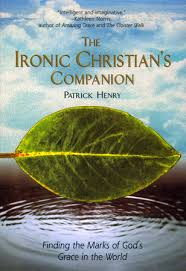 the author of The Ironic Christian’s Companion, is a historian of religion and the former director of the ecumenical institute where I spent a sabbatical semester in 2009. But I was struggling with the book. I liked most of the author’s ideas, but not his writing style, the haphazard organization of the book, or what seemed to me a minor case of his being a bit too full of himself (it takes one to know one). I had not dipped into it for a week or so, and decided to give it one more go. I’m glad I did, because the next chapter resonated on several levels, beginning with perhaps the most famous claim in the history of Western philosophy.
“I think, therefore I am”—it is not much of an oversimplification to say that with this single sentence Descartes rewrote the playbook for Western philosophy and set Western philosophy and science on a path that it has taken more than four centuries to begin steering away from. The subjective turn, the insistence on certainty that begins with me, the dualism that separates mind from body as well as intellect from emotion—the list of thorny philosophical problems traceable back to Rene Descartes goes on and on.  I am very familiar with Descartes—I wrote my dissertation on his moral philosophy in which he struggles mightily with the problem of how the solipsistic individual mind that is the center of his metaphysics is to live her or his life in a world that sharply distinguishes neither between mind and body nor between the autonomous self and the billions of other such selves on earth. Patrick Henry, a dedicated academic with a powerful intellect, writes that
When I used Descartes, as elaborated by a whole intellectual and academic culture, as my guide, I got the world wrong. I have spent much of my life trying to unlearn Descartes’ lesson.
Long before I went to graduate school, a theologian friend of my father’s once told me that the darkest day in the history of Western civilization was the day that Descartes shut himself alone in a stove-heated room and began to think. I didn’t know what he meant then, but I do now—and so does Patrick Henry.
Philosophical puzzles and problems aside, the real problem arising from the vision of reality that Descartes creates is that it closes each of us off from each other and establishes the autonomous human individual as the measure of what is true and real.  Patrick Henry writes that he began to break free from Descartes’ hold when a friend from Kenya told him that “in Africa, we say I am because you are.” My existence is not self-defined; I cannot start from scratch and it is no accident that each of us finds ourselves surrounded by other human beings. We define ourselves not in the solipsistic privacy of our individual minds, but through interaction with others. This is a difficult thing for academics to learn; some of us never do. Trying to get academics to do anything collectively is often referred to as similar to trying to herd cats; it’s actually a lot more difficult than that. My years of chairing a large academic department, then directing an even larger academic program, revealed that trying to organize academics is like trying to herd cats when each of the cats has a PhD and truly believes it is the smartest cat in the room. The chances of creating an academic community when each individual in the community trusts her or his own intellect more than what might be learned from others are very small.
My own academic department has recently been a prime example of what can happen when a group of very smart people over time becomes convinced that they have little or nothing to learn from each other, unless they already happen to largely agree with the others in question. My department is large as philosophy departments go; the very idea of more than twenty philosophers occupying the same space might be enough to cause normal people to despair.  But for the first fifteen or so of the twenty-three years I have been a member of this department, we argued, challenged each other, took contrary positions, but were also mutually supportive and largely managed both to get along and learn from each other. For a host of reasons—more than I can even remember—this began to change several years ago.
Factions began to form, suspicion replaced trust, posturing replaced dialogue, and ideology replaced the pursuit of truth. After a few years of this poisonous brew stewing, we have come to the point where there is little conversation in the halls other than between people who know they all agree, no benefits of a doubt were given for months, the administration and lawyers became involved, and our dysfunction made us the laughing-stock of the campus. Although I would love to think that I am the only person in the department who can listen to and communicate with all sides, I know this not to be the case. I am just as likely as anyone else to roll my eyes when certain colleagues raise their hand in a meeting before they even open their mouths, because I “know” that I will entirely disagree with what they say and since I “know” there is nothing I could possibly learn from this person; I have no doubt some of my colleagues have the same reaction when I raise my hand.  During the worst of it, a junior colleague said to me at lunch “But we’re above all this!” And indeed we should be, but sadly we are not.
Patrick Henry tells a story of how a botched prayer unexpectedly provided an insight into why no one person’s or group’s intellectual commitments can possibly serve as a foundation for truth. Once when offering grace before a meal, Henry’s mother-in-law recited a well-known prayer that ends with asking God to “make us ever mindful of the needs of others.” Except that this time she closed the prayer with make us ever needful of the minds of others. I don’t think I’ve ever read a better counter to Descartes’ claim that my own activity of thought is sufficient to establish my identity. As Henry develops in the following pages, I (and each of us) need the minds of others because I cannot know enough, what I do know is distorted, my ways of knowing are different from the ways of others, and I can easily fool myself. Only through constant engagement with others, not in order to prove oneself right but rather in order to truly come to knowledge together, can a true community be formed.
I am continually reminded of this through regular seminars I conduct with friends and fellow travelers once a month after the morning service at  the Episcopal church I attend. I am the “professor” in the group and we use one of my recent blog essays as a jumping-off point for conversation each month. Yet I have learned far more about faith and life itself from the members of this group than they could learn from me in a million years. Each of us has developed not only trust in each other but reliance upon each other, because each of us knows that we are needful of each other’s minds, hearts, and experiences. Whether the situation in my department can be turned around or even salvaged, I do not know. But I do know that if there is any hope for improvement, it might begin with each of us taping on our bathroom mirrors and computer screens what Patrick Henry learned from his African friend: I Am Because You Are. Even if we don’t particularly like each other.
Development of Western Civilization
Development of Western Civilization
Previous Post

June 9, 2017
The Little Red-Haired Girl
Next Post

June 12, 2017 Carbonated Holiness
Browse Our Archives
Select a Category abortion Advent AI Angels Artificial intelligence atheism attention baptism Baptists beauty belief Benedictines Bible bicycling Big Bird books Bovina Camaldoli hermitage Canada Catholicism cats certainty change Christianity Christmas Collegeville Covid-19 creativity Development of Western Civilization dogs doubt Easter Enneagram Epiphany Episcopal ethics Eucharist evil extroverts Facebook faith family fear flowers forgiveness freedom friends God goodness grace happiness heaven hell history Holy Spirit Holy Week hope human nature humility humor idolatry incarnation introverts irreverence Islam Jeanne Jesus Joe Biden joy Judaism justice Kamala Harris knowledge Lent listen literature liturgy love Marsue Memorial Day miracles movies music mystery mythology NPR Old Testament optimism paradox peace Penguins philosophy piano podcast politics power prayer Protestantism Providence College Religion Rhode Island sabbatical sacrament science seeing silence Simone Weil Socrates soul sports St. John's College stories suffering tattoo teaching technology television theology thinking time tolerance transcendence travel trees trust truth Uncategorized Vermont wisdom wonder writing
Select a Month May 2026 April 2026 March 2026 February 2026 January 2026 December 2025 November 2025 October 2025 September 2025 August 2025 July 2025 June 2025 May 2025 April 2025 March 2025 February 2025 January 2025 December 2024 November 2024 October 2024 September 2024 August 2024 July 2024 June 2024 May 2024 April 2024 March 2024 February 2024 January 2024 December 2023 November 2023 October 2023 September 2023 August 2023 July 2023 June 2023 May 2023 April 2023 March 2023 February 2023 January 2023 December 2022 November 2022 October 2022 September 2022 August 2022 July 2022 June 2022 May 2022 April 2022 March 2022 February 2022 January 2022 December 2021 November 2021 October 2021 September 2021 August 2021 July 2021 June 2021 May 2021 April 2021 March 2021 February 2021 January 2021 December 2020 November 2020 October 2020 September 2020 August 2020 July 2020 June 2020 May 2020 April 2020 March 2020 February 2020 January 2020 December 2019 November 2019 October 2019 September 2019 August 2019 July 2019 June 2019 May 2019 April 2019 March 2019 February 2019 January 2019 December 2018 November 2018 October 2018 September 2018 August 2018 July 2018 June 2018 May 2018 April 2018 March 2018 February 2018 January 2018 December 2017 November 2017 October 2017 September 2017 August 2017 July 2017 June 2017 May 2017 April 2017 March 2017 February 2017 January 2017 December 2016 November 2016 October 2016 September 2016 August 2016 July 2016 June 2016 May 2016 April 2016 March 2016 February 2016 January 2016 December 2015 November 2015 October 2015 September 2015 August 2015 July 2015 June 2015 May 2015 April 2015 March 2015 February 2015 January 2015 December 2014 November 2014 October 2014 September 2014 August 2014 July 2014 June 2014 May 2014 April 2014 March 2014 February 2014 January 2014 December 2013 November 2013 October 2013 September 2013 August 2013 July 2013 June 2013 May 2013 April 2013 March 2013 February 2013 January 2013 December 2012 November 2012 October 2012 September 2012
Follow Us!
TAKE THE
Religious Wisdom Quiz
Who was the strongest man in the Bible?
Select your answer to see how you score.
David Moses Goliath Samson
Books by This Author Books by Vance G. Morgan
Related posts from Freelance Christianity

The Lonely Pawn: On Faith, Doubt, and Meaning


AI and Love: When a Chatbot Becomes a...

TRENDING AT PATHEOS Progressive Christian

What Being a Modern-Day Apostle Means to Me
In my last column, I discussed the ins and outs of modern-day...

Did Ancient China Once Worship the God of...
Across human history, a common thread weaves through the origins of the...

Love Your Neighbor – Including Earth-Kin: Lev. 19,...
God’s command to love your neighbor means acting in an ethical and...

Lead a Church Study of “Jesus and Lao...
Guest writer Jack Thomas (The Irreverent Reverend) reflects on leading his church...

Pastoral Wisdom for Responding to Sermon Pushback
Getting sermon pushback on your social justice sermon? Learn practical, Proverbs-based strategies...

Principles for Understanding the Apostolic Ministry Today
Whenever people discover that my formal ministry title is "apostle," as in...
view all Progressive Christian blogs
Ad-Free & Subscriber Log-In Subscription Support
- About Us
- 2026 Calendar
- Videos
- Podcasts
- Library of World Religions
- Faith In Media Tracker
- Advertise With Us
- Write for Us
- Privacy Policy
- Terms of Service
- Do Not Sell My Data
- Contact Us
- Radiant Digital
- Manage Newsletter Subscriptions
- Unsubscribe From Notifications
- Sitemap
Copyright 2008-2026, Patheos. All rights reserved.
Subscription Support Ad-Free & Subscriber Log-In
Follow Patheos