
BuddhistCatholicContemplativeEvangelicalGeneral ChristianHinduJewishLatter-day SaintMuslimNew VisionsProgressive Christian
Beliefs
- Buddhist
- Catholic
- Contemplative
- Evangelical
- General Christian
- Hindu
- Jewish
- Latter-day Saint
- More Voices
- Muslim
- New Visions
- Pagan
- Progressive Christian
Topics
- Religion News
- Food and Religion
- Sports and Religion
- Religious Art
- Religious Music and Entertainment
- Religious Events
- History and Religion
- Style and Religion
- Politics and Religion
- Women in Religion
- Recreation Outdoors and Religion
- Business Finance and Religion
- Careers Workplace and Religion
- Education and Religion
- Family Parenting and Religion
- Health Fitness and Religion
- Home and Religion
- Relationships and Religion
- Technology and Religion
- Travel and Religion
Columnists
- Buddhist Columnists
- Business Finance and Religion Columnists
- Careers Workplace and Religion Columnists
- Catholic Columnists
- Contemplative Columnists
- Education and Religion Columnists
- Evangelists Columnists
- Family Parenting and Religion Columnists
- General Christian Columnists
- Health Fitness and Religion Columnists
- Hindu Columnists
- History and Religion Columnists
- Home and Religion Columnists
- Jewish Columnists
- More Voices Columnists
- Latter Day Columnists
- Muslim Columnists
- New Visions Columnists
- Nonreligious Columnists
- Pagan Columnists
- Politics and Religion Columnists
- Progressive Columnists
- Recreation Outdoors and Religion Columnists
- Relationships and Religion Columnists
- Religion News Columnists
- Religious Art Columnists
- Religious Events Columnists
- Religious Music and Entertainment Columnists
- Sports and Religion Columnists
- Style and Religion Columnists
- Technology and Religion Columnists
- Travel and Religion Columnists
- Women in Religion Columnists
Resource Library
- 2026 Calendar
- Library of World Religions
- The 100 Most Holy Places on Earth
- Patheos Answers
- Podcasts
- Videos
- Faith Leaders Database
- Anglican Episcopalian
- Bahai
- Baptist
- Buddhism
- Christianity
- Confucianism
- Eastern Orthodoxy
- Hinduism
- Holiness and Pentecostal
- ISKCON
- Islam
- Judaism
- Lutheran
- Methodist
- The Church of Jesus Christ of Latter-day Saints
- New Age
- Paganism
- Presbytarian and Reformed
- Protestantism
- Religion Behind the Scenes
- Roman Catholic
- Scientology
- Shia Islam
- Sikhism
- Sufism
- Sunni Islam
- Taoism
- Zen
- See all religions
Research Tools
 Ad-Free & Subscriber Log-In Subscription Support
Ad-Free & Subscriber Log-In Subscription Support
Follow Patheos 

- Trending:
- Forgiveness
- |
- Marriage
- |
- Consciousness
- |
- Death Penalty
- |
- Election
- |
- Halloween

- Home
- Progressive Christian
- That Hopey Changey Thing
That Hopey Changey Thing
Last updated on: December 5, 2016 at 7:30 am by Vance Morgan
That Hopey Changey Thing 2016-12-05T07:30:01-04:00 Vance Morgan
Patheos Explore the world's faith through different perspectives on religion and spirituality! Patheos has the views of the prevalent religions and spiritualities of the world.
Although I was raised in the most non-liturgical version of Christianity imaginable, I love liturgy. When I was introduced to the annual liturgical cycle when I encountered the Episcopal church in my twenties, I found that I particularly resonated with Advent, the four weeks between Thanksgiving and Christmas that kicks off the liturgical year. Advent is the season of hope and expectation, which this year is particularly welcome. Because for many of us, hope is a particularly scarce commodity these days.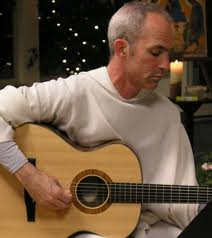
Cyprian Consiglio, the Benedictine monk, theologian, hermitage prior and musician who ran the retreat I attended in Minnesota a couple of years ago, defines “liturgy” as “ideology in action.” Annie Dillard defines it as a collection of words and phrases that human beings over the centuries have been able to address to God without getting killed (she also suggests that we should wear crash helmets to church).
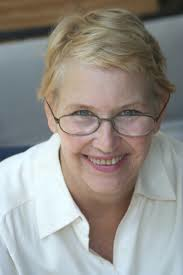 I like both of these definitions. I have a deep resonance with liturgy, especially liturgy expressed in music, something surprising given that there was none in my Baptist world growing up. Although “ideology” is usually something I accuse people I disagree with of embracing, Cyprian’s definition reminds me that at its core, ideology is simply the collection of beliefs, stories, ideas and commitments, some conscious and some unconscious, that guides a person’s actions and frames a person’s life. We are all ideologues. Liturgical frameworks provide a container that shapes this collection with reference to what is greater than us. Annie’s definition is a reminder that the very attempt to say or do anything with content and meaning referring to what is greater than us is at best misguided, at worst ridiculous.
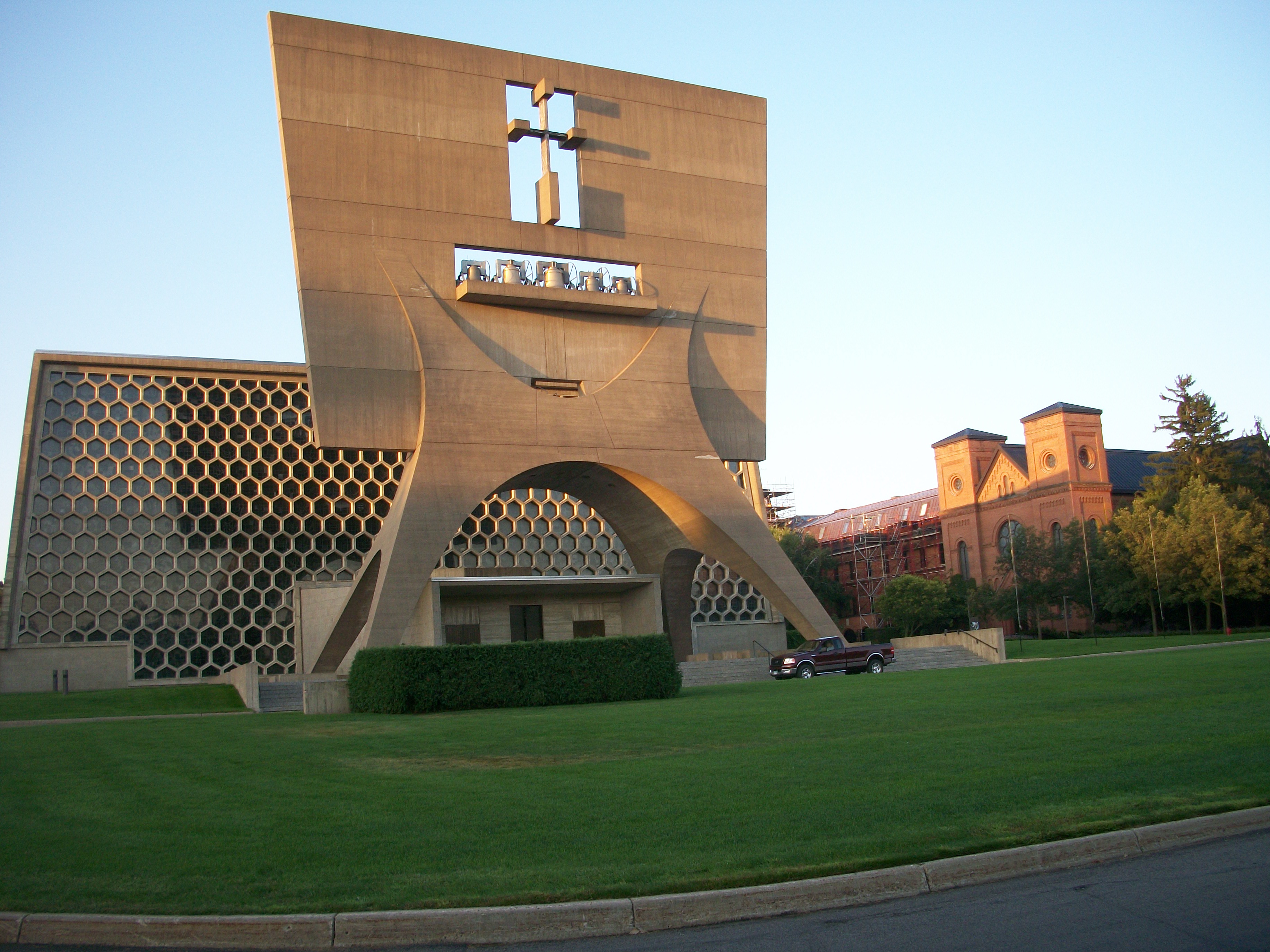 Of the many varieties of liturgical celebration I have encountered over the past several years, including a number of them at St. John’s Abbey in Minnesota (the Benedictines know how to do liturgy better than anyone), the most striking is the Good Friday morning prayer service I have experienced twice with the monks at the Abbey. On Good Friday afternoon there is the large, austere three-hour service permeated primarily with silence and capped by kissing the cross that certain sorts of Christians are fond of (I’m not one of them). But at 7:00 in the morning, the Good Friday morning prayer service sets the tone for the day as a solitary monk chants the entire book of Lamentations from the Jewish scriptures.
 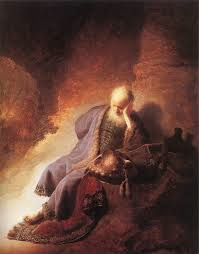 Not familiar with that book? That’s probably because it’s the most depressing book in the Bible—perhaps anywhere. Lamentations is a litany of five poetic dirges over the destruction of Jerusalem. Traditionally attributed to the prophet Jeremiah, the tone of the poems is bleak: God does not speak, the degree of suffering is presented as undeserved, and expectations of future redemption are minimal. In Psalm 129 the Psalmist writes “Plowmen have plowed my back and made their furrows long”—Lamentations is page after page of that sentiment.
Exactly two years ago I found myself sitting toward the back of Providence College’s main chapel waiting for the beginning of a service in memory of our beloved colleague and friend Siobhan who died far too soon in an automobile accident the day before Thanksgiving. As I sat with the several hundred persons who closed offices and cancelled classes in the middle of the day to honor  Siobhan and celebrate her life, I noticed in the program that the Old Testament reading was from Lamentations. “That’s appropriate,” I thought. “At least there’s nothing in Lamentations that will tell us we should not feel the devastating loss and sadness that we share right now.” But I had forgotten that just about half way through the poems, Jeremiah comes up briefly for air.
I will call this to mind, as my reason to hope:
The favors of the Lord are not exhausted, his mercies are not spent;
They are renewed each morning, so great is his faithfulness.
My portion is the Lord, therefore will I hope in him.
Good is the Lord to one who waits for him, to the soul that seeks him;
It is good to hope in silence for the saving help of the Lord.
I t seem like only a short time ago that a dynamic, fresh new face burst onto the American political scene promising “Hope and Change”; not long afterwards Sarah Palin, not particularly enamored of this new guy, snarkily asked “How’s that hopey changey thing working out for ya?” Politics aside, it’s a good question. The Apostle Paul famously wrote “Now abide faith, hope and love—but the greatest of these is love.” The editor of First Corinthians took out something else Paul wrote: “But sometimes the toughest of these is hope.”
Advent is the liturgical season of hope—my favorite of all the liturgical seasons because it means that the semester is almost over, I like purple, enjoy the Advent carols that only come around once a year, appreciate the opportunity to do something other than slog through the interminable Ordinary Time that has been going on since May, and because I am by nature a very hopeful person. But it has been a bit of a tough sell for many of us lately, with seemingly daily evidence that the world is a mess, no one has the capacity or wants to do anything about it, our country has elected a spectacularly unqualified person to be our next President, sprinkled with regular and tragic reminders that human life is fleeting and even the best can be taken away in a moment. “ The world really sucks,” my lovely wife commented as we listened to NPR the other morning on the way downtown to the bus station so she could catch a ride to NYC for a weekend with her sister whose husband just died. And it does suck. But if we are willing to poke our heads even momentarily up from the shit, Lamentations tells us that hope is always appropriate—and is a choice.
Providence College’s annual Advent Lessons and Carols Service, an annual early December event, always opens with a beautiful hymn: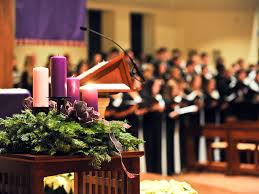
O come, divine Messiah!
The world in silence waits the day
When hope shall sing its triumph,
And sadness flee away.
Dear Savior haste;
Come, come to earth,
Dispel the night and show your face,
And bid us hail the dawn of grace.
Who doesn’t want sadness to flee away? Who doesn’t want to see the dawn of grace that will drive away the night? But when the sadness is palpable, when the night is especially dark, what hope can a song offer? More importantly, in the midst of Advent, do we have any reason to believe that what we hope for—a divine presence in the midst of human sadness and darkness—is anything more than a fairy tale we repeat regularly in order to convince ourselves that there is a glimmer of meaning in a horribly dark world?
According to Lamentations, we have reason to hope if we choose to have it. And the reason to hope will not be found in external events, which will be as they will be. Hope finds its home in waiting, in silence, in emptiness, and in the conviction that there is more going on than meets the eye. There are as many ways to nurture the space of quietness and silence within as there are people containing that space. Our task is to be ready, to prepare a space for hope and promise to be nurtured, even when every external indicator is that there is no reason to hope. As Lao Tzu wrote,
We shape clay into a pot,
but it is the emptiness inside that holds whatever we want.
We hammer wood for a house,
but it is the inner space that makes it livable.
I was taught as a child that I should find a place for the Christ child in my heart. I don’t exactly use that language any more, but I know what it means.
You come in peace and meekness,
And lowly will your cradle be;
All clothed in human weakness
Shall we your Godhead see.
Previous Post

December 2, 2016
What Cuba Taught Me About My Faith
Next Post
December 7, 2016 Being a Fanatic
Browse Our Archives
Select a Category abortion Advent AI Angels Artificial intelligence atheism attention baptism Baptists beauty belief Benedictines Bible bicycling Big Bird books Bovina Camaldoli hermitage Canada Catholicism cats certainty change Christianity Christmas Collegeville Covid-19 creativity Development of Western Civilization dogs doubt Easter Enneagram Epiphany Episcopal ethics Eucharist evil extroverts Facebook faith family fear flowers forgiveness freedom friends God goodness grace happiness heaven hell history Holy Spirit Holy Week hope human nature humility humor idolatry incarnation introverts irreverence Islam Jeanne Jesus Joe Biden joy Judaism justice Kamala Harris knowledge Lent listen literature liturgy love Marsue Memorial Day miracles movies music mystery mythology NPR Old Testament optimism paradox peace Penguins philosophy piano podcast politics power prayer Protestantism Providence College Religion Rhode Island sabbatical sacrament science seeing silence Simone Weil Socrates soul sports St. John's College stories suffering tattoo teaching technology television theology thinking time tolerance transcendence travel trees trust truth Uncategorized Vermont wisdom wonder writing
Select a Month May 2026 April 2026 March 2026 February 2026 January 2026 December 2025 November 2025 October 2025 September 2025 August 2025 July 2025 June 2025 May 2025 April 2025 March 2025 February 2025 January 2025 December 2024 November 2024 October 2024 September 2024 August 2024 July 2024 June 2024 May 2024 April 2024 March 2024 February 2024 January 2024 December 2023 November 2023 October 2023 September 2023 August 2023 July 2023 June 2023 May 2023 April 2023 March 2023 February 2023 January 2023 December 2022 November 2022 October 2022 September 2022 August 2022 July 2022 June 2022 May 2022 April 2022 March 2022 February 2022 January 2022 December 2021 November 2021 October 2021 September 2021 August 2021 July 2021 June 2021 May 2021 April 2021 March 2021 February 2021 January 2021 December 2020 November 2020 October 2020 September 2020 August 2020 July 2020 June 2020 May 2020 April 2020 March 2020 February 2020 January 2020 December 2019 November 2019 October 2019 September 2019 August 2019 July 2019 June 2019 May 2019 April 2019 March 2019 February 2019 January 2019 December 2018 November 2018 October 2018 September 2018 August 2018 July 2018 June 2018 May 2018 April 2018 March 2018 February 2018 January 2018 December 2017 November 2017 October 2017 September 2017 August 2017 July 2017 June 2017 May 2017 April 2017 March 2017 February 2017 January 2017 December 2016 November 2016 October 2016 September 2016 August 2016 July 2016 June 2016 May 2016 April 2016 March 2016 February 2016 January 2016 December 2015 November 2015 October 2015 September 2015 August 2015 July 2015 June 2015 May 2015 April 2015 March 2015 February 2015 January 2015 December 2014 November 2014 October 2014 September 2014 August 2014 July 2014 June 2014 May 2014 April 2014 March 2014 February 2014 January 2014 December 2013 November 2013 October 2013 September 2013 August 2013 July 2013 June 2013 May 2013 April 2013 March 2013 February 2013 January 2013 December 2012 November 2012 October 2012 September 2012
Follow Us!
TAKE THE
Religious Wisdom Quiz
Who first witnessed the empty tomb after Jesus' resurrection?
Select your answer to see how you score.
Mary Magdalene John Nicodemus Andrew
Books by This Author Books by Vance G. Morgan
Related posts from Freelance Christianity

The Lonely Pawn: On Faith, Doubt, and Meaning


AI and Love: When a Chatbot Becomes a...

TRENDING AT PATHEOS Progressive Christian

What Being a Modern-Day Apostle Means to Me
In my last column, I discussed the ins and outs of modern-day...

Did Ancient China Once Worship the God of...
Across human history, a common thread weaves through the origins of the...

Love Your Neighbor – Including Earth-Kin: Lev. 19,...
God’s command to love your neighbor means acting in an ethical and...

Lead a Church Study of “Jesus and Lao...
Guest writer Jack Thomas (The Irreverent Reverend) reflects on leading his church...

Pastoral Wisdom for Responding to Sermon Pushback
Getting sermon pushback on your social justice sermon? Learn practical, Proverbs-based strategies...

Principles for Understanding the Apostolic Ministry Today
Whenever people discover that my formal ministry title is "apostle," as in...
view all Progressive Christian blogs
Ad-Free & Subscriber Log-In Subscription Support
- About Us
- 2026 Calendar
- Videos
- Podcasts
- Library of World Religions
- Faith In Media Tracker
- Advertise With Us
- Write for Us
- Privacy Policy
- Terms of Service
- Do Not Sell My Data
- Contact Us
- Radiant Digital
- Manage Newsletter Subscriptions
- Unsubscribe From Notifications
- Sitemap
Copyright 2008-2026, Patheos. All rights reserved.
Subscription Support Ad-Free & Subscriber Log-In
Follow Patheos