
BuddhistCatholicContemplativeEvangelicalGeneral ChristianHinduJewishLatter-day SaintMuslimNew VisionsProgressive Christian
Beliefs
- Buddhist
- Catholic
- Contemplative
- Evangelical
- General Christian
- Hindu
- Jewish
- Latter-day Saint
- More Voices
- Muslim
- New Visions
- Pagan
- Progressive Christian
Topics
- Religion News
- Food and Religion
- Sports and Religion
- Religious Art
- Religious Music and Entertainment
- Religious Events
- History and Religion
- Style and Religion
- Politics and Religion
- Women in Religion
- Recreation Outdoors and Religion
- Business Finance and Religion
- Careers Workplace and Religion
- Education and Religion
- Family Parenting and Religion
- Health Fitness and Religion
- Home and Religion
- Relationships and Religion
- Technology and Religion
- Travel and Religion
Columnists
- Buddhist Columnists
- Business Finance and Religion Columnists
- Careers Workplace and Religion Columnists
- Catholic Columnists
- Contemplative Columnists
- Education and Religion Columnists
- Evangelists Columnists
- Family Parenting and Religion Columnists
- General Christian Columnists
- Health Fitness and Religion Columnists
- Hindu Columnists
- History and Religion Columnists
- Home and Religion Columnists
- Jewish Columnists
- More Voices Columnists
- Latter Day Columnists
- Muslim Columnists
- New Visions Columnists
- Nonreligious Columnists
- Pagan Columnists
- Politics and Religion Columnists
- Progressive Columnists
- Recreation Outdoors and Religion Columnists
- Relationships and Religion Columnists
- Religion News Columnists
- Religious Art Columnists
- Religious Events Columnists
- Religious Music and Entertainment Columnists
- Sports and Religion Columnists
- Style and Religion Columnists
- Technology and Religion Columnists
- Travel and Religion Columnists
- Women in Religion Columnists
Resource Library
- 2026 Calendar
- Library of World Religions
- The 100 Most Holy Places on Earth
- Patheos Answers
- Podcasts
- Videos
- Faith Leaders Database
- Anglican Episcopalian
- Bahai
- Baptist
- Buddhism
- Christianity
- Confucianism
- Eastern Orthodoxy
- Hinduism
- Holiness and Pentecostal
- ISKCON
- Islam
- Judaism
- Lutheran
- Methodist
- The Church of Jesus Christ of Latter-day Saints
- New Age
- Paganism
- Presbytarian and Reformed
- Protestantism
- Religion Behind the Scenes
- Roman Catholic
- Scientology
- Shia Islam
- Sikhism
- Sufism
- Sunni Islam
- Taoism
- Zen
- See all religions
Research Tools
 Ad-Free & Subscriber Log-In Subscription Support
Ad-Free & Subscriber Log-In Subscription Support
Follow Patheos 

- Trending:
- Forgiveness
- |
- Marriage
- |
- Consciousness
- |
- Death Penalty
- |
- Election
- |
- Halloween

- Home
- Progressive Christian
- Holy Manure
Holy Manure
Last updated on: November 20, 2013 at 7:30 am by Vance Morgan
Holy Manure 2013-11-20T07:30:18-04:00 Vance Morgan
Patheos Explore the world's faith through different perspectives on religion and spirituality! Patheos has the views of the prevalent religions and spiritualities of the world.
Last weekend I (hopefully) finished getting the yard ready for winter–raking leaves, cutting back various bushes, covering rose bush roots. While doing so I remembered the flip side of this activity, getting the yard ready for winter, and what I wrote about it last March.
Soon it will be time to start getting the yard in shape—one of my favorite times of the year. I use the word “yard” broadly, since we live in the city and our available land is postage-stamp size, comparatively speaking. That’s fine with me—we have lived here for seventeen years and I am regularly grateful that it takes no longer than twenty minutes to mow the lawn, back, front, and side. I have little interest in a luxurious, weed-free lawn.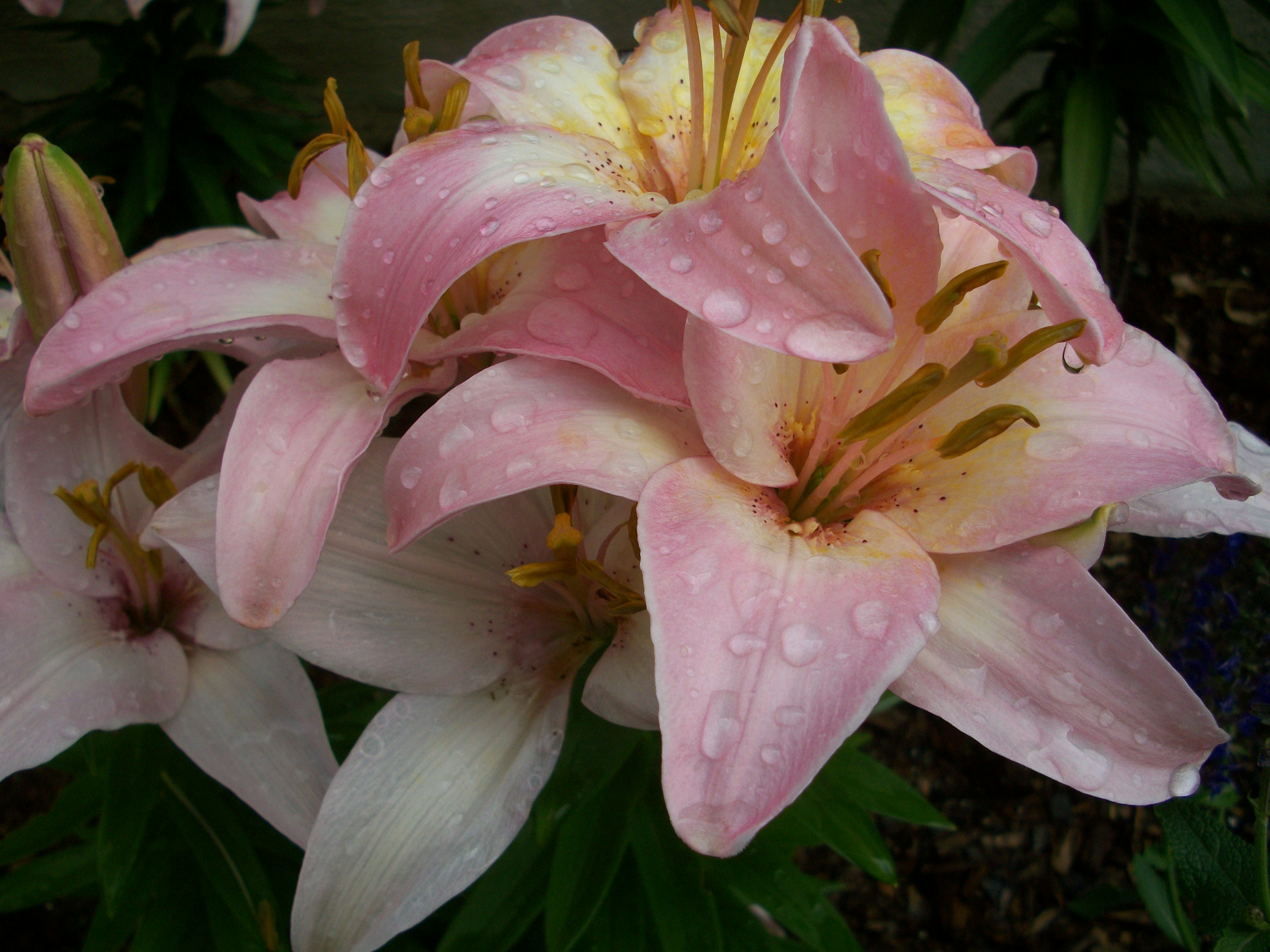 Indeed I suspect that in the height of summer at least one-half of our lawn is covered with what those who know would call weeds. But the lawn is green, and that’s all I care about.
What I do care about is flowers. I had no idea how much pleasure there is to be found in the annual cycle of cleaning flower beds in March and early April, watching lilies, columbines, and peonies poke their heads through the dirt despite having as much as six-foot snow banks on top of them during the winter. I keep a sharp eye out for the first leaf and flower buds on the flowering cherry tree, roses, and hydrangea bush in front, as well as the butterfly, blackberry, and lilac bushes in the back. I inspect each potential bud-producer every day and take it very personally when no progress is evident. The process has been entirely trial-and-error over the years; assorted azaleas and
 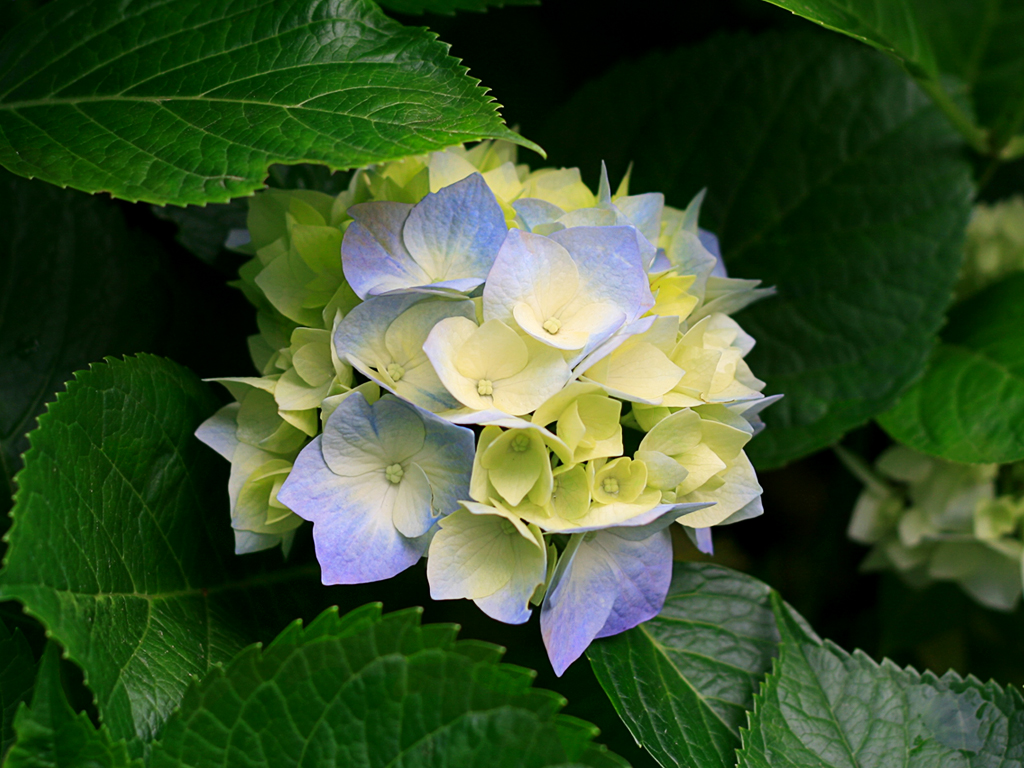 hydrangea bushes have failed to make an appearance in given springs, tulips and daffodils have tended to be a disaster, leading to digging up last year’s remains and replacing them with something that might possibly do better. The perennials and flowering bushes we presently have are survivors of Morgan’s version of natural selection—if you don’t show up when I think you should, you’re out. The plants that have survived both my impatience and incompetence over the years are hardy enough to survive nuclear holocaust.
I’ve learned a few things over the years, of course—loosening the flower beds and working in bags of shit from ![757854410188[1]](https://wp-media.patheos.com/blogs/sites/766/2013/03/7578544101881.jpg) Lowe’s (really—they contain manure), then covering with a layer of mulch is a stimulant for growth and a deterrent for weeds. I’m particularly attracted to mulch, whose odor is reminiscent of either a pristine forest or an overpowering
Lowe’s (really—they contain manure), then covering with a layer of mulch is a stimulant for growth and a deterrent for weeds. I’m particularly attracted to mulch, whose odor is reminiscent of either a pristine forest or an overpowering ![car_photo_211930_7[1]](https://wp-media.patheos.com/blogs/sites/766/2013/03/car_photo_211930_71.jpg) air freshener hanging from the rear view mirror in the car, depending on the quality of mulch purchased. I never seem to buy enough bags, though, and always have to make another trip to purchase three or four more bags.
air freshener hanging from the rear view mirror in the car, depending on the quality of mulch purchased. I never seem to buy enough bags, though, and always have to make another trip to purchase three or four more bags.
I was encouraged a few Sundays ago to hear in Luke’s gospel about a land owner who had as little patience with his plants as I do.
Then he told this parable: ![19cuaresmaC3[1]](https://wp-media.patheos.com/blogs/sites/766/2013/03/19cuaresmac31.jpg) “A man had a fig tree planted in his vineyard; and he came looking for fruit on it and found none. So he said to the gardener, ‘See here! For three years I have come looking for fruit on this fig tree, and still I find none. Cut it down! Why should it be wasting the soil?’ He replied, ‘Sir, let it alone for one more year, until I dig around it and put manure on it. If it bears fruit next year, well and good; but if not, you can cut it down.'”
“A man had a fig tree planted in his vineyard; and he came looking for fruit on it and found none. So he said to the gardener, ‘See here! For three years I have come looking for fruit on this fig tree, and still I find none. Cut it down! Why should it be wasting the soil?’ He replied, ‘Sir, let it alone for one more year, until I dig around it and put manure on it. If it bears fruit next year, well and good; but if not, you can cut it down.'”
Jesus must have had a bad experience with fig trees as a child; we will discover during Holy Week that he kills a poor, random fig tree on ![Jesus and the Fig Tree[1]](https://wp-media.patheos.com/blogs/sites/766/2013/03/jesus-and-the-fig-tree1.jpg) Holy Week Monday for failing to bear fruit, even though it is not even the season for fig-bearing. But I understand the impatience of the fig tree owner. There is no room for fruitless and flowerless plants in my yard—no slackers allowed. But the fascinating part of the parable is the remedy suggested by the gardener, the resident expert, for the figless tree. He says “Let me disturb it at its roots, throw some crap in there, and I’ll bet it will start producing!” That’s generally the suggested solution for any recalcitrant plant. Cut it back to the ground, lop its branches indiscriminately—in short, do things to the plant that any sensible person fears will kill it, then wait and see what happens.
Holy Week Monday for failing to bear fruit, even though it is not even the season for fig-bearing. But I understand the impatience of the fig tree owner. There is no room for fruitless and flowerless plants in my yard—no slackers allowed. But the fascinating part of the parable is the remedy suggested by the gardener, the resident expert, for the figless tree. He says “Let me disturb it at its roots, throw some crap in there, and I’ll bet it will start producing!” That’s generally the suggested solution for any recalcitrant plant. Cut it back to the ground, lop its branches indiscriminately—in short, do things to the plant that any sensible person fears will kill it, then wait and see what happens.
It seems to be a truism, in almost all everything I’ve ever read about spiritual growth, that such growth is impossible without conflict, pain, suffering, and violence. Even the great and extraordinarily difficult philosopher Georg Friedrich Wilhelm Hegel![250px-Hegel_portrait_by_Schlesinger_1831[1]](https://wp-media.patheos.com/blogs/sites/766/2013/03/250px-hegel_portrait_by_schlesinger_18311.jpg) wrote that “periods of peace are blank pages in the book of history.” I want to know why. Of course, the classic expression of this problem is “Why do bad things happen to good people?” and, more problematically, “Why do good things happen to bad people?” But I’m not that concerned about why human beings have to suffer and struggle—this is such an obvious feature of the human landscape that it hardly seems worth asking about. I’m more interested in what to make of a creating being who presumably had infinite options when choosing the guiding principles and template for the world to be created, and chose to do it in the most open-ended and messy fashion imaginable. This is not a world created with efficiency in mind.
wrote that “periods of peace are blank pages in the book of history.” I want to know why. Of course, the classic expression of this problem is “Why do bad things happen to good people?” and, more problematically, “Why do good things happen to bad people?” But I’m not that concerned about why human beings have to suffer and struggle—this is such an obvious feature of the human landscape that it hardly seems worth asking about. I’m more interested in what to make of a creating being who presumably had infinite options when choosing the guiding principles and template for the world to be created, and chose to do it in the most open-ended and messy fashion imaginable. This is not a world created with efficiency in mind.
In her fascinating and eclectic memoir Wild Harmonies, classical pianist and dedicated environmentalist Hélène Grimaud![1594489270[1]](https://wp-media.patheos.com/blogs/sites/766/2013/03/15944892701.jpg) writes that “we can be essential only when we are suffering. It encourages us to remain honest.” I think most of us would appreciate being given a shot at living essentially and honestly without suffering, but we don’t get that chance. Instead we get to do it as plants do it, through productive seasons and dormant, through times when even we are astounded by our beauty as well as those times when even the most generous observer would swear that we are dead.
writes that “we can be essential only when we are suffering. It encourages us to remain honest.” I think most of us would appreciate being given a shot at living essentially and honestly without suffering, but we don’t get that chance. Instead we get to do it as plants do it, through productive seasons and dormant, through times when even we are astounded by our beauty as well as those times when even the most generous observer would swear that we are dead.
In a charismatic church I attended many years ago in a previous lifetime, we often would start the morning service with an annoying song based on Psalm 52:8.
Like a tree, like a tree, I’m like a green olive tree
In the house, in the house of the Lord.
I will trust in the mercies of God forever,![figtree-new[1]](https://wp-media.patheos.com/blogs/sites/766/2013/03/figtree-new1.jpg)
I will trust in the mercies of God.
It’s interesting that I’ve never heard such a song about being a fig tree.
Previous Post

November 18, 2013
Being Schroeder
Next Post
November 24, 2013 Get Thee Behind Me, Santa
Browse Our Archives
Select a Category abortion Advent AI Angels Artificial intelligence atheism attention baptism Baptists beauty belief Benedictines Bible bicycling Big Bird books Bovina Camaldoli hermitage Canada Catholicism cats certainty change Christianity Christmas Collegeville Covid-19 creativity Development of Western Civilization dogs doubt Easter Enneagram Epiphany Episcopal ethics Eucharist evil extroverts Facebook faith family fear flowers forgiveness freedom friends God goodness grace happiness heaven hell history Holy Spirit Holy Week hope human nature humility humor idolatry incarnation introverts irreverence Islam Jeanne Jesus Joe Biden joy Judaism justice Kamala Harris knowledge Lent listen literature liturgy love Marsue Memorial Day miracles movies music mystery mythology NPR Old Testament optimism paradox peace Penguins philosophy piano podcast politics power prayer Protestantism Providence College Religion Rhode Island sabbatical sacrament science seeing silence Simone Weil Socrates soul sports St. John's College stories suffering tattoo teaching technology television theology thinking time tolerance transcendence travel trees trust truth Uncategorized Vermont wisdom wonder writing
Select a Month May 2026 April 2026 March 2026 February 2026 January 2026 December 2025 November 2025 October 2025 September 2025 August 2025 July 2025 June 2025 May 2025 April 2025 March 2025 February 2025 January 2025 December 2024 November 2024 October 2024 September 2024 August 2024 July 2024 June 2024 May 2024 April 2024 March 2024 February 2024 January 2024 December 2023 November 2023 October 2023 September 2023 August 2023 July 2023 June 2023 May 2023 April 2023 March 2023 February 2023 January 2023 December 2022 November 2022 October 2022 September 2022 August 2022 July 2022 June 2022 May 2022 April 2022 March 2022 February 2022 January 2022 December 2021 November 2021 October 2021 September 2021 August 2021 July 2021 June 2021 May 2021 April 2021 March 2021 February 2021 January 2021 December 2020 November 2020 October 2020 September 2020 August 2020 July 2020 June 2020 May 2020 April 2020 March 2020 February 2020 January 2020 December 2019 November 2019 October 2019 September 2019 August 2019 July 2019 June 2019 May 2019 April 2019 March 2019 February 2019 January 2019 December 2018 November 2018 October 2018 September 2018 August 2018 July 2018 June 2018 May 2018 April 2018 March 2018 February 2018 January 2018 December 2017 November 2017 October 2017 September 2017 August 2017 July 2017 June 2017 May 2017 April 2017 March 2017 February 2017 January 2017 December 2016 November 2016 October 2016 September 2016 August 2016 July 2016 June 2016 May 2016 April 2016 March 2016 February 2016 January 2016 December 2015 November 2015 October 2015 September 2015 August 2015 July 2015 June 2015 May 2015 April 2015 March 2015 February 2015 January 2015 December 2014 November 2014 October 2014 September 2014 August 2014 July 2014 June 2014 May 2014 April 2014 March 2014 February 2014 January 2014 December 2013 November 2013 October 2013 September 2013 August 2013 July 2013 June 2013 May 2013 April 2013 March 2013 February 2013 January 2013 December 2012 November 2012 October 2012 September 2012
Follow Us!
TAKE THE
Religious Wisdom Quiz
Who had a coat of many colors?
Select your answer to see how you score.
Jacob Esau Benjamin Joseph
Books by This Author Books by Vance G. Morgan
Related posts from Freelance Christianity

The Lonely Pawn: On Faith, Doubt, and Meaning


AI and Love: When a Chatbot Becomes a...

TRENDING AT PATHEOS Progressive Christian

What Being a Modern-Day Apostle Means to Me
In my last column, I discussed the ins and outs of modern-day...

Did Ancient China Once Worship the God of...
Across human history, a common thread weaves through the origins of the...

Love Your Neighbor – Including Earth-Kin: Lev. 19,...
God’s command to love your neighbor means acting in an ethical and...

Lead a Church Study of “Jesus and Lao...
Guest writer Jack Thomas (The Irreverent Reverend) reflects on leading his church...

Pastoral Wisdom for Responding to Sermon Pushback
Getting sermon pushback on your social justice sermon? Learn practical, Proverbs-based strategies...

Principles for Understanding the Apostolic Ministry Today
Whenever people discover that my formal ministry title is "apostle," as in...
view all Progressive Christian blogs
Ad-Free & Subscriber Log-In Subscription Support
- About Us
- 2026 Calendar
- Videos
- Podcasts
- Library of World Religions
- Faith In Media Tracker
- Advertise With Us
- Write for Us
- Privacy Policy
- Terms of Service
- Do Not Sell My Data
- Contact Us
- Radiant Digital
- Manage Newsletter Subscriptions
- Unsubscribe From Notifications
- Sitemap
Copyright 2008-2026, Patheos. All rights reserved.
Subscription Support Ad-Free & Subscriber Log-In
Follow Patheos