
BuddhistCatholicContemplativeEvangelicalGeneral ChristianHinduJewishLatter-day SaintMuslimNew VisionsProgressive Christian
Beliefs
- Buddhist
- Catholic
- Contemplative
- Evangelical
- General Christian
- Hindu
- Jewish
- Latter-day Saint
- More Voices
- Muslim
- New Visions
- Pagan
- Progressive Christian
Topics
- Religion News
- Food and Religion
- Sports and Religion
- Religious Art
- Religious Music and Entertainment
- Religious Events
- History and Religion
- Style and Religion
- Politics and Religion
- Women in Religion
- Recreation Outdoors and Religion
- Business Finance and Religion
- Careers Workplace and Religion
- Education and Religion
- Family Parenting and Religion
- Health Fitness and Religion
- Home and Religion
- Relationships and Religion
- Technology and Religion
- Travel and Religion
Columnists
- Buddhist Columnists
- Business Finance and Religion Columnists
- Careers Workplace and Religion Columnists
- Catholic Columnists
- Contemplative Columnists
- Education and Religion Columnists
- Evangelists Columnists
- Family Parenting and Religion Columnists
- General Christian Columnists
- Health Fitness and Religion Columnists
- Hindu Columnists
- History and Religion Columnists
- Home and Religion Columnists
- Jewish Columnists
- More Voices Columnists
- Latter Day Columnists
- Muslim Columnists
- New Visions Columnists
- Nonreligious Columnists
- Pagan Columnists
- Politics and Religion Columnists
- Progressive Columnists
- Recreation Outdoors and Religion Columnists
- Relationships and Religion Columnists
- Religion News Columnists
- Religious Art Columnists
- Religious Events Columnists
- Religious Music and Entertainment Columnists
- Sports and Religion Columnists
- Style and Religion Columnists
- Technology and Religion Columnists
- Travel and Religion Columnists
- Women in Religion Columnists
Resource Library
- 2026 Calendar
- Library of World Religions
- The 100 Most Holy Places on Earth
- Patheos Answers
- Podcasts
- Videos
- Faith Leaders Database
- Anglican Episcopalian
- Bahai
- Baptist
- Buddhism
- Christianity
- Confucianism
- Eastern Orthodoxy
- Hinduism
- Holiness and Pentecostal
- ISKCON
- Islam
- Judaism
- Lutheran
- Methodist
- The Church of Jesus Christ of Latter-day Saints
- New Age
- Paganism
- Presbytarian and Reformed
- Protestantism
- Religion Behind the Scenes
- Roman Catholic
- Scientology
- Shia Islam
- Sikhism
- Sufism
- Sunni Islam
- Taoism
- Zen
- See all religions
Research Tools
 Ad-Free & Subscriber Log-In Subscription Support
Ad-Free & Subscriber Log-In Subscription Support
Follow Patheos 

- Trending:
- Forgiveness
- |
- Marriage
- |
- Consciousness
- |
- Death Penalty
- |
- Election
- |
- Halloween

- Home
- Progressive Christian
- This is Why I am Not an Atheist
This is Why I am Not an Atheist
Last updated on: November 27, 2018 at 7:00 am by Vance Morgan
This is Why I am Not an Atheist 2018-11-25T12:31:25-04:00 Vance Morgan
Patheos Explore the world's faith through different perspectives on religion and spirituality! Patheos has the views of the prevalent religions and spiritualities of the world.
Despite my consistent self-description as a “person of faith,” I have been accused occasionally over the years, usually by various Christian colleagues, of actually being an atheist. I do take atheism very seriously, and have often written about how this has helped me understand and express my faith more effectively and clearly. I have regularly written on this blog about what atheists and persons of faith share in common and how they can communicate fruitfully and intelligently.
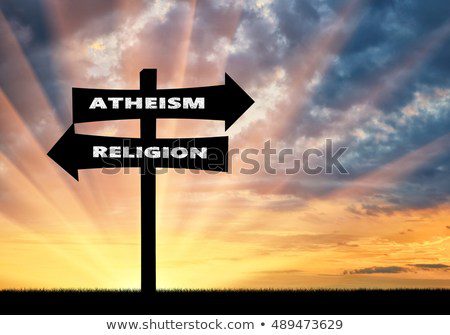
I recently received a lengthy and interesting comment on one of these essays; I responded, and an exchange began that I suspect will continue. The commenter identified himself as an atheist; his first comment included the following:
- It takes far more courage to embrace the world for what it actually entails . . . and what it entails is not divine in any sense. It takes courage to admit we have no ultimate purpose outside of what we make for ourselves. It takes courage to face the fact that we only have a short time . . . and we will be snuffed out of existence like the millions of humans that preceded us . . . that death IS the end.
He continued by noting that, in his estimation, I am right on the brink of taking the advisable leap into atheism.
- You are so close . . . losing the epistemological failure of faith does not mean you have to lose your sense of awe and wonderment. For me, knowing that my death is the absolute end is freeing. It allows me to drink in all I can. To love my family with all I have. To accept my failures as normal – learn from them and move along. To treat others with kindness.
The subsequent conversation ranged widely, covering topics including whether atheism is a claim to belief or knowledge, what progressive Christians believe, how broad the tent of Christianity actually is, the nature of evidence, some of my many reasons why I am a person of faith, and so on. The entire thread is at the end of the essay at the link above. At times my conversation partner expressed a certain amount of frustration, wondering why I would bother with the baggage of Christianity when everything I was expressing as important to me is available without the baggage. In a later comment he asked
- Why do you even bother with Christianity? You like the good bits – and good for you because there are some good things there. But by declaring yourself a Christian you get all the bad bits too. The misogyny, the bigotry – all the baggage Christian history carries with it. You sound like a humanist to me – so why add the supernatural trappings? What is it about Christianity that compels you? Inquiring minds want to know!
I expressed to the commenter on a couple of occasions my appreciation of the opportunity to discuss sanely and at length important matters that often lead directly to snarky comments and disdain. This conversation was far more fruitful than any I can recall having with anyone who significantly disagrees with me from the other end of the spectrum. And it provided me with a new opportunity to think carefully about why exactly I am a person of Christian faith and am not an atheist.
Fortuitously, a noted thinker from more than four centuries years ago showed up on the syllabus in one of my courses recently; his thought provided me with new ideas about my own situation. Blaise Pascal was one of the great mathematicians of the Scientific Revolution who, on November 23, 1654, had a powerful encounter with something greater than himself that changed his life. Pascal’s encounter has come to be known as his “Night of Fire.” He wrote a description of his experience down on a piece of parchment and sewed into his coat, where it was found after his death eight years later.
Pascal became a committed apologist for the Christian faith; because he died at age 38, he never was able to finish his reflections on how he—a person of remarkable intelligence—wove his reason and his new-found faith together. His scattered writings were collected into a volume we know as the Pensées after his death.
Perhaps the best known sentence from the Pensées is Pascal’s observation that “the heart has reasons that reason does not know” (Le cœur a ses raisons que la raison ne connaît pas). Pascal expands on this on several occasions, writing for instance that
We know the truth, not only through reason, but also through the heart. It is through the latter that we know first principles, and reason, which has no part in it, tries in vain to challenge them. Reason must use this knowledge from the heart and instinct, and base all its arguments on it.
The persistent complaint of the atheist is that the person of faith bases her or his faith on principles or experiences for which they can provide no rational supporting evidence. The person of faith often responds defensively by trying to provide such supporting evidence, knowing all along that the atheist is right. The core of faith cannot be expressed, nor can it be supported, in an exclusively rational manner.
Pascal’s insight is that the problem here is not with the person of faith’s irrationality. Rather, the problem is the atheist’s refusal to accept that there are more kinds of evidence than rational and more sources of belief than reason. The source of the conviction of faith is what Pascal calls the heart, as legitimate a source of belief and evidence as are reason and logic. Pascal writes that
Principles are felt, propositions are proved; all with certainty, though in different ways. And it is as useless and absurd for reason to demand from the heart proofs of its first principles before accepting them, as it would be for the heart to demand from reason an intuition of all demonstrated propositions before receiving them.
This is why I have often said that the best “proof” of faith is a changed life. Only the person who inhabits that life can tell the story of how she or he came to embrace as the centerpiece of their life principles that are felt rather than proved. The atheist owes such a person a hearing; this requires admitting, at least for the sake of argument that, as Hamlet tells Horatio, “there are more things in heaven and earth than are dreamed of in your philosophy.”
I’m quite sure that this will not satisfy my new atheist friend, who believes that he has heard all of this before. But he sounds not only like a smart guy, but a guy with a heart. For the time being, my best case for why I am a Christian is what I told him in response to his question about why I bother:
- There are many reasons that I am a Christian, beginning with that it is my heritage, my tradition, and my home in the sense that I can inhabit it while also knowing that there are crazy people in the house as well, just as there are anywhere else. It provides the best cognitive framework for understanding myself and the world around me than I have ever encountered. I have never been able to escape the strong suspicion that maybe, just maybe, there is more going on than our limited capacities are able to directly engage with. Most importantly, the best evidence in support of faith (or whatever you choose to call it) is a changed life. That’s my own story.
Next Post

November 29, 2018 Trailing Clouds of Glory, We Come From God
Browse Our Archives
Select a Category abortion Advent AI Angels Artificial intelligence atheism attention baptism Baptists beauty belief Benedictines Bible bicycling Big Bird books Bovina Camaldoli hermitage Canada Catholicism cats certainty change Christianity Christmas Collegeville Covid-19 creativity Development of Western Civilization dogs doubt Easter Enneagram Epiphany Episcopal ethics Eucharist evil extroverts Facebook faith family fear flowers forgiveness freedom friends God goodness grace happiness heaven hell history Holy Spirit Holy Week hope human nature humility humor idolatry incarnation introverts irreverence Islam Jeanne Jesus Joe Biden joy Judaism justice Kamala Harris knowledge Lent listen literature liturgy love Marsue Memorial Day miracles movies music mystery mythology NPR Old Testament optimism paradox peace Penguins philosophy piano podcast politics power prayer Protestantism Providence College Religion Rhode Island sabbatical sacrament science seeing silence Simone Weil Socrates soul sports St. John's College stories suffering tattoo teaching technology television theology thinking time tolerance transcendence travel trees trust truth Uncategorized Vermont wisdom wonder writing
Select a Month May 2026 April 2026 March 2026 February 2026 January 2026 December 2025 November 2025 October 2025 September 2025 August 2025 July 2025 June 2025 May 2025 April 2025 March 2025 February 2025 January 2025 December 2024 November 2024 October 2024 September 2024 August 2024 July 2024 June 2024 May 2024 April 2024 March 2024 February 2024 January 2024 December 2023 November 2023 October 2023 September 2023 August 2023 July 2023 June 2023 May 2023 April 2023 March 2023 February 2023 January 2023 December 2022 November 2022 October 2022 September 2022 August 2022 July 2022 June 2022 May 2022 April 2022 March 2022 February 2022 January 2022 December 2021 November 2021 October 2021 September 2021 August 2021 July 2021 June 2021 May 2021 April 2021 March 2021 February 2021 January 2021 December 2020 November 2020 October 2020 September 2020 August 2020 July 2020 June 2020 May 2020 April 2020 March 2020 February 2020 January 2020 December 2019 November 2019 October 2019 September 2019 August 2019 July 2019 June 2019 May 2019 April 2019 March 2019 February 2019 January 2019 December 2018 November 2018 October 2018 September 2018 August 2018 July 2018 June 2018 May 2018 April 2018 March 2018 February 2018 January 2018 December 2017 November 2017 October 2017 September 2017 August 2017 July 2017 June 2017 May 2017 April 2017 March 2017 February 2017 January 2017 December 2016 November 2016 October 2016 September 2016 August 2016 July 2016 June 2016 May 2016 April 2016 March 2016 February 2016 January 2016 December 2015 November 2015 October 2015 September 2015 August 2015 July 2015 June 2015 May 2015 April 2015 March 2015 February 2015 January 2015 December 2014 November 2014 October 2014 September 2014 August 2014 July 2014 June 2014 May 2014 April 2014 March 2014 February 2014 January 2014 December 2013 November 2013 October 2013 September 2013 August 2013 July 2013 June 2013 May 2013 April 2013 March 2013 February 2013 January 2013 December 2012 November 2012 October 2012 September 2012
Follow Us!
TAKE THE
Religious Wisdom Quiz
Which book follows Psalms in the Bible?
Select your answer to see how you score.
Proverbs Song of Solomon Ecclesiastes Job
Books by This Author Books by Vance G. Morgan
Related posts from Freelance Christianity

The Lonely Pawn: On Faith, Doubt, and Meaning


AI and Love: When a Chatbot Becomes a...

TRENDING AT PATHEOS Progressive Christian

What Being a Modern-Day Apostle Means to Me
In my last column, I discussed the ins and outs of modern-day...

Did Ancient China Once Worship the God of...
Across human history, a common thread weaves through the origins of the...

Love Your Neighbor – Including Earth-Kin: Lev. 19,...
God’s command to love your neighbor means acting in an ethical and...

Lead a Church Study of “Jesus and Lao...
Guest writer Jack Thomas (The Irreverent Reverend) reflects on leading his church...

Pastoral Wisdom for Responding to Sermon Pushback
Getting sermon pushback on your social justice sermon? Learn practical, Proverbs-based strategies...

Principles for Understanding the Apostolic Ministry Today
Whenever people discover that my formal ministry title is "apostle," as in...
view all Progressive Christian blogs
Ad-Free & Subscriber Log-In Subscription Support
- About Us
- 2026 Calendar
- Videos
- Podcasts
- Library of World Religions
- Faith In Media Tracker
- Advertise With Us
- Write for Us
- Privacy Policy
- Terms of Service
- Do Not Sell My Data
- Contact Us
- Radiant Digital
- Manage Newsletter Subscriptions
- Unsubscribe From Notifications
- Sitemap
Copyright 2008-2026, Patheos. All rights reserved.
Subscription Support Ad-Free & Subscriber Log-In
Follow Patheos