
BuddhistCatholicContemplativeEvangelicalGeneral ChristianHinduJewishLatter-day SaintMuslimNew VisionsProgressive Christian
Beliefs
- Buddhist
- Catholic
- Contemplative
- Evangelical
- General Christian
- Hindu
- Jewish
- Latter-day Saint
- More Voices
- Muslim
- New Visions
- Pagan
- Progressive Christian
Topics
- Religion News
- Food and Religion
- Sports and Religion
- Religious Art
- Religious Music and Entertainment
- Religious Events
- History and Religion
- Style and Religion
- Politics and Religion
- Women in Religion
- Recreation Outdoors and Religion
- Business Finance and Religion
- Careers Workplace and Religion
- Education and Religion
- Family Parenting and Religion
- Health Fitness and Religion
- Home and Religion
- Relationships and Religion
- Technology and Religion
- Travel and Religion
Columnists
- Buddhist Columnists
- Business Finance and Religion Columnists
- Careers Workplace and Religion Columnists
- Catholic Columnists
- Contemplative Columnists
- Education and Religion Columnists
- Evangelists Columnists
- Family Parenting and Religion Columnists
- General Christian Columnists
- Health Fitness and Religion Columnists
- Hindu Columnists
- History and Religion Columnists
- Home and Religion Columnists
- Jewish Columnists
- More Voices Columnists
- Latter Day Columnists
- Muslim Columnists
- New Visions Columnists
- Nonreligious Columnists
- Pagan Columnists
- Politics and Religion Columnists
- Progressive Columnists
- Recreation Outdoors and Religion Columnists
- Relationships and Religion Columnists
- Religion News Columnists
- Religious Art Columnists
- Religious Events Columnists
- Religious Music and Entertainment Columnists
- Sports and Religion Columnists
- Style and Religion Columnists
- Technology and Religion Columnists
- Travel and Religion Columnists
- Women in Religion Columnists
Resource Library
- 2026 Calendar
- Library of World Religions
- The 100 Most Holy Places on Earth
- Patheos Answers
- Podcasts
- Videos
- Faith Leaders Database
- Anglican Episcopalian
- Bahai
- Baptist
- Buddhism
- Christianity
- Confucianism
- Eastern Orthodoxy
- Hinduism
- Holiness and Pentecostal
- ISKCON
- Islam
- Judaism
- Lutheran
- Methodist
- The Church of Jesus Christ of Latter-day Saints
- New Age
- Paganism
- Presbytarian and Reformed
- Protestantism
- Religion Behind the Scenes
- Roman Catholic
- Scientology
- Shia Islam
- Sikhism
- Sufism
- Sunni Islam
- Taoism
- Zen
- See all religions
Research Tools
 Ad-Free & Subscriber Log-In Subscription Support
Ad-Free & Subscriber Log-In Subscription Support
Follow Patheos 

- Trending:
- Forgiveness
- |
- Marriage
- |
- Consciousness
- |
- Death Penalty
- |
- Election
- |
- Halloween

- Home
- Progressive Christian
- Good Morning, Psalms
Good Morning, Psalms
Last updated on: September 6, 2016 at 7:30 am by Vance Morgan
Good Morning, Psalms 2016-09-06T07:30:05-04:00 Vance Morgan
Patheos Explore the world's faith through different perspectives on religion and spirituality! Patheos has the views of the prevalent religions and spiritualities of the world.
Last Thursday, in just our second class of the semester, I had the opportunity to introduce my ethics students to the master of all things ethical. The key to Aristotle’s understanding of the life of human flourishing is that such a life depends on the formation of the best habits— the virtues—to guide one’s life. Aristotle conceived of the life of freedom and moral excellence as a life constructed out of the virtues, good habits that, when cultivated, incline a person to do the right thing as a matter of developed character rather than conscious choice. Habits are established by repetition and, once formed, are often very difficult to change. Accordingly, one should take great care that one’s moral habits are the right ones (virtues) and not the wrong ones (vices), since the wrong habits, once entrenched, will be next to impossible to replace with better ones.
I have taught Aristotle’s ethics for many years and believe that although Alfred North Whitehead was probably correct when he said that all of philosophy is a series of footnotes to Plato, the best thinking about ethics begins with Aristotle. And his insights concerning the importance of habits are relevant beyond the ethical realm. I find myself in the best physical shape of my life now in my early sixties because several decades ago my grudging daily trips to the gym somehow turned into a habit that I no longer had to talk myself into. Reading psalms with 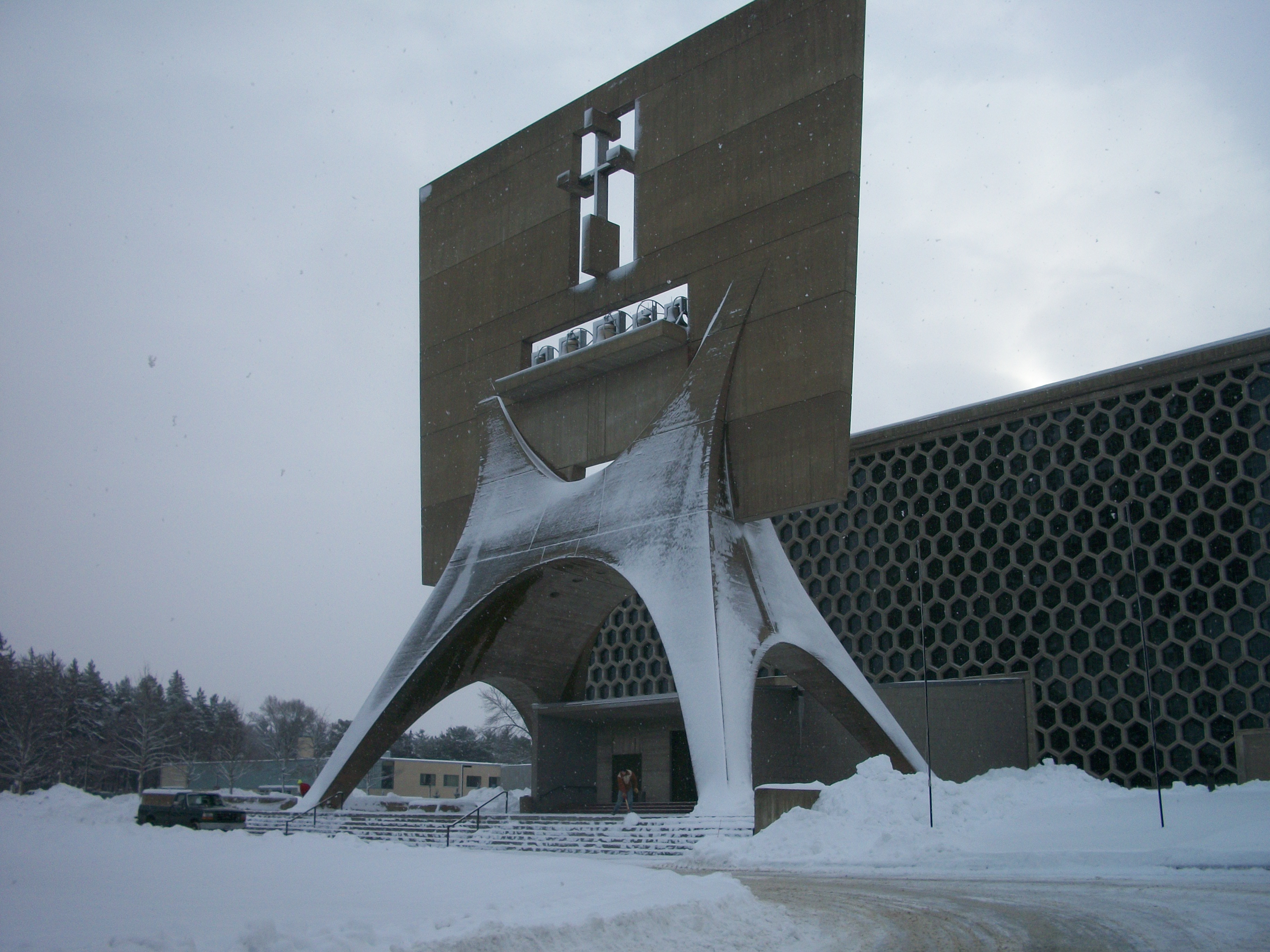 Benedictine monks in Minnesota three times a day during my 2009 sabbatical established a habit of reading the three or four psalms appointed for each day in the Book of Common Prayer that continued for several years after my sabbatical ended. Between my alarm at 5:15 AM and getting to the gym by its 6:00 opening time I read the day’s psalter aloud (or murmured it, lest I awaken the dogs and Jeanne). I am convinced that this simple habit both helped transfer important changes in my life from sabbatical to real life, and also contributed to the preservation of my sanity as I juggled full-time teaching with the additional full-time duties of running a large academic program for four years.
But then I lost the habit, under the strangest of circumstances. My next sabbatical arrived, and with the prospect of unlimited time to rest, re-center, read, and write in front of me, somehow the daily regimen of early morning psalm reading fell by the wayside. I no longer needed to arise at 5:15, I rode my new bicycle obsessively instead of daily workouts at the gym, I applied myself energetically to my sabbatical writing project, and somehow my simple ten to fifteen minutes alone with the psalms every morning didn’t make the cut. 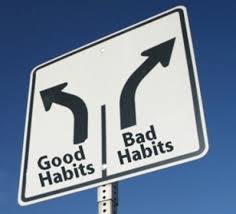 I made no conscious decision to end the habit—I just did. If Aristotle is correct in saying that well-established bad habits are very difficult to break, it turned out—in my case at least—that good habits can be broken very easily. I didn’t even realize consciously that my psalm reading habit had gone by the wayside for several weeks; once I noticed its absence, I made a few half-hearted attempts to start again over the following months. But they didn’t take.
I returned to the classroom for the first time in fifteen months a week ago, and decided that along with a return to a 5:15 wake-up call, I would attempt to re-establish my psalm reading habit. With only a week under my belt, the returns are promising; coming back to the psalms has been like becoming reacquainted with very wise friends who have been away for a while. My renewed acquaintances include:
Monday, August 29: Psalm 139
The opening psalm on the list for my first day back was one that, depending on my mood and what’s going on in my life, has been either very disturbing or deeply comforting.
O LORD, you have searched me and known me.
You know when I sit down and when I rise up;
you discern my thoughts from far away . . .
Where can I go from your spirit? Or where can I flee from your presence?
If I ascend to heaven, you are there; if I make my bed in Sheol, you are there.
If I take the wings of the morning and settle at the farthest limits of the sea,
even there your hand shall lead me, and your right hand shall hold me fast . . .
![big[1]](https://wp-media.patheos.com/blogs/sites/766/2016/09/big1.gif) For it was you who created my being, knit me together in my mother’s womb.
For it was you who created my being, knit me together in my mother’s womb.
Sometimes this Psalm reads like a description of a divine stalker, but more often the mere improbability that the creator of the universe cares about lil’ ole me is overwhelming. If I were inclined to be an atheist, or at least an agnostic, it would probably be because of this very point—the idea that God cares about human beings in any specific sense at all. Most of what we observe and experience screams against it. Our obvious insignificance screams against it.
Psalm 139 offers hope in the face of insignificance. Perhaps there is one place where I do not need to be an impostor or be overwhelmed by my insignificance, a place where I am known better than I know myself and am valued more highly than I could ever manufacture. The other day at convocation, NY Times Pulitzer Prize winning journalist 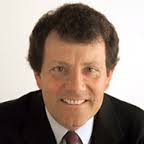 Nicolas Kristof told the hundreds of students and faculty in attendance that at those times when one feels insignificant, like a single drop of water in a very large bucket, a drop that can’t possibly make a difference, we should remember that buckets are filled by one drop of water at a time.
Tuesday, August 30: Psalm 146
The final entries in the collection of 150 poems are praises of various sorts—noon prayers at St. John’s Abbey in Minnesota, the place where I first learned to inhabit these ancient poems, include one of the final five psalms in rotation. I always looked forward to Psalm 146, which for me summarizes what God—and therefore those who profess to follow God—cares about the most.
It is the Lord who keeps faith forever, who is just to those who are oppressed.
It is God who gives bread to the hungry, the Lord, who sets prisoners free,
the Lord, who gives sight to the blind, who raises up those who are bowed down,
the Lord, who protects the stranger and upholds the widow and orphan.
When John the Baptist sends some of his followers from his prison cell to ask Jesus whether Jesus is the Messiah, “the one who is to come, or should we look for another?” Jesus responds in the language of Psalm 146. Tell John that the blind see, the lame walk, the hungry are being fed, strangers are being welcomed, and those imprisoned are being set free. That’s how you can tell when the divine is in the house, when human beings are in tune with what is greater than themselves. Imagine how different our nation, our world, would be if the above lines were the defining touchstone for success.
Thursday, September 1: Psalm 1
The compilers of the Psalms chose to kick things off with a description of happy people, those who “delight in the law of the Lord.”
They are like a tree that is planted bedside the flowing waters,
That yields its fruit in due season and whose leaves shall never fade;
and all that they do shall prosper.
 I have always been fascinated with trees, but have come to love them in a deeper way over the past several years. Their stability, rootedness, and beauty have become iconic for me. I write about trees frequently in this blog: within the past few months I have written about Tolkien’s Ents, arboreal survival strategies, oaks of righteousness, and how the removal of a 150+ year old tree on campus this summer was traumatic for all involved. In an interview with Krista Tippett, theologian Ellen Davis said that “anything in our world now that slows us down is to be valued and maybe as a gift and even a calling from God.” The fact that the first analogy in the Psalms for the person who “meditates on God’s law day and night” is a tree silently proceeding through its seasons of fruitfulness and prosperity confirms Davis’ insight. I may not meditate on God’s law day and night, but fifteen minutes a day is doable.
Previous Post

September 5, 2016
Nice Work If You Can Get It
Next Post
September 8, 2016 Embracing the Barbarian Invasion
Browse Our Archives
Select a Category abortion Advent AI Angels Artificial intelligence atheism attention baptism Baptists beauty belief Benedictines Bible bicycling Big Bird books Bovina Camaldoli hermitage Canada Catholicism cats certainty change Christianity Christmas Collegeville Covid-19 creativity Development of Western Civilization dogs doubt Easter Enneagram Epiphany Episcopal ethics Eucharist evil extroverts Facebook faith family fear flowers forgiveness freedom friends God goodness grace happiness heaven hell history Holy Spirit Holy Week hope human nature humility humor idolatry incarnation introverts irreverence Islam Jeanne Jesus Joe Biden joy Judaism justice Kamala Harris knowledge Lent listen literature liturgy love Marsue Memorial Day miracles movies music mystery mythology NPR Old Testament optimism paradox peace Penguins philosophy piano podcast politics power prayer Protestantism Providence College Religion Rhode Island sabbatical sacrament science seeing silence Simone Weil Socrates soul sports St. John's College stories suffering tattoo teaching technology television theology thinking time tolerance transcendence travel trees trust truth Uncategorized Vermont wisdom wonder writing
Select a Month May 2026 April 2026 March 2026 February 2026 January 2026 December 2025 November 2025 October 2025 September 2025 August 2025 July 2025 June 2025 May 2025 April 2025 March 2025 February 2025 January 2025 December 2024 November 2024 October 2024 September 2024 August 2024 July 2024 June 2024 May 2024 April 2024 March 2024 February 2024 January 2024 December 2023 November 2023 October 2023 September 2023 August 2023 July 2023 June 2023 May 2023 April 2023 March 2023 February 2023 January 2023 December 2022 November 2022 October 2022 September 2022 August 2022 July 2022 June 2022 May 2022 April 2022 March 2022 February 2022 January 2022 December 2021 November 2021 October 2021 September 2021 August 2021 July 2021 June 2021 May 2021 April 2021 March 2021 February 2021 January 2021 December 2020 November 2020 October 2020 September 2020 August 2020 July 2020 June 2020 May 2020 April 2020 March 2020 February 2020 January 2020 December 2019 November 2019 October 2019 September 2019 August 2019 July 2019 June 2019 May 2019 April 2019 March 2019 February 2019 January 2019 December 2018 November 2018 October 2018 September 2018 August 2018 July 2018 June 2018 May 2018 April 2018 March 2018 February 2018 January 2018 December 2017 November 2017 October 2017 September 2017 August 2017 July 2017 June 2017 May 2017 April 2017 March 2017 February 2017 January 2017 December 2016 November 2016 October 2016 September 2016 August 2016 July 2016 June 2016 May 2016 April 2016 March 2016 February 2016 January 2016 December 2015 November 2015 October 2015 September 2015 August 2015 July 2015 June 2015 May 2015 April 2015 March 2015 February 2015 January 2015 December 2014 November 2014 October 2014 September 2014 August 2014 July 2014 June 2014 May 2014 April 2014 March 2014 February 2014 January 2014 December 2013 November 2013 October 2013 September 2013 August 2013 July 2013 June 2013 May 2013 April 2013 March 2013 February 2013 January 2013 December 2012 November 2012 October 2012 September 2012
Follow Us!
TAKE THE
Religious Wisdom Quiz
Who was the first king of the northern kingdom of Israel?
Select your answer to see how you score.
Omri Jeroboam Rehoboam Ahab
Books by This Author Books by Vance G. Morgan
Related posts from Freelance Christianity

The Lonely Pawn: On Faith, Doubt, and Meaning


AI and Love: When a Chatbot Becomes a...

TRENDING AT PATHEOS Progressive Christian

Why Christians Have a Sacred Duty to Vote:...
The Bible offers strong support for the sacred duty to vote. Here...

What Being a Modern-Day Apostle Means to Me
In my last column, I discussed the ins and outs of modern-day...

Did Ancient China Once Worship the God of...
Across human history, a common thread weaves through the origins of the...

Love Your Neighbor – Including Earth-Kin: Lev. 19,...
God’s command to love your neighbor means acting in an ethical and...

Lead a Church Study of “Jesus and Lao...
Guest writer Jack Thomas (The Irreverent Reverend) reflects on leading his church...

Principles for Understanding the Apostolic Ministry Today
Whenever people discover that my formal ministry title is "apostle," as in...
view all Progressive Christian blogs
Ad-Free & Subscriber Log-In Subscription Support
- About Us
- 2026 Calendar
- Videos
- Podcasts
- Library of World Religions
- Faith In Media Tracker
- Advertise With Us
- Write for Us
- Privacy Policy
- Terms of Service
- Do Not Sell My Data
- Contact Us
- Radiant Digital
- Manage Newsletter Subscriptions
- Unsubscribe From Notifications
- Sitemap
Copyright 2008-2026, Patheos. All rights reserved.
Subscription Support Ad-Free & Subscriber Log-In
Follow Patheos