
BuddhistCatholicContemplativeEvangelicalGeneral ChristianHinduJewishLatter-day SaintMuslimNew VisionsProgressive Christian
Beliefs
- Buddhist
- Catholic
- Contemplative
- Evangelical
- General Christian
- Hindu
- Jewish
- Latter-day Saint
- More Voices
- Muslim
- New Visions
- Pagan
- Progressive Christian
Topics
- Religion News
- Food and Religion
- Sports and Religion
- Religious Art
- Religious Music and Entertainment
- Religious Events
- History and Religion
- Style and Religion
- Politics and Religion
- Women in Religion
- Recreation Outdoors and Religion
- Business Finance and Religion
- Careers Workplace and Religion
- Education and Religion
- Family Parenting and Religion
- Health Fitness and Religion
- Home and Religion
- Relationships and Religion
- Technology and Religion
- Travel and Religion
Columnists
- Buddhist Columnists
- Business Finance and Religion Columnists
- Careers Workplace and Religion Columnists
- Catholic Columnists
- Contemplative Columnists
- Education and Religion Columnists
- Evangelists Columnists
- Family Parenting and Religion Columnists
- General Christian Columnists
- Health Fitness and Religion Columnists
- Hindu Columnists
- History and Religion Columnists
- Home and Religion Columnists
- Jewish Columnists
- More Voices Columnists
- Latter Day Columnists
- Muslim Columnists
- New Visions Columnists
- Nonreligious Columnists
- Pagan Columnists
- Politics and Religion Columnists
- Progressive Columnists
- Recreation Outdoors and Religion Columnists
- Relationships and Religion Columnists
- Religion News Columnists
- Religious Art Columnists
- Religious Events Columnists
- Religious Music and Entertainment Columnists
- Sports and Religion Columnists
- Style and Religion Columnists
- Technology and Religion Columnists
- Travel and Religion Columnists
- Women in Religion Columnists
Resource Library
- 2026 Calendar
- Library of World Religions
- The 100 Most Holy Places on Earth
- Patheos Answers
- Podcasts
- Videos
- Faith Leaders Database
- Anglican Episcopalian
- Bahai
- Baptist
- Buddhism
- Christianity
- Confucianism
- Eastern Orthodoxy
- Hinduism
- Holiness and Pentecostal
- ISKCON
- Islam
- Judaism
- Lutheran
- Methodist
- The Church of Jesus Christ of Latter-day Saints
- New Age
- Paganism
- Presbytarian and Reformed
- Protestantism
- Religion Behind the Scenes
- Roman Catholic
- Scientology
- Shia Islam
- Sikhism
- Sufism
- Sunni Islam
- Taoism
- Zen
- See all religions
Research Tools
 Ad-Free & Subscriber Log-In Subscription Support
Ad-Free & Subscriber Log-In Subscription Support
Follow Patheos 

- Trending:
- Forgiveness
- |
- Marriage
- |
- Consciousness
- |
- Death Penalty
- |
- Election
- |
- Halloween

- Home
- Progressive Christian
- Good Friday: “Actually, he died”
Good Friday: “Actually, he died”
Last updated on: April 18, 2025 at 7:00 am by Vance Morgan
Good Friday: “Actually, he died” 2025-04-13T19:01:13-04:00 Vance Morgan
Patheos Explore the world's faith through different perspectives on religion and spirituality! Patheos has the views of the prevalent religions and spiritualities of the world.
The gospel reading for the Good Friday liturgy from John’s gospel begins with Jesus’s arrest in the Garden of Gethsemane and ends with Joseph of Arimathea and Nicodemus preparing Jesus’s body for burial and placing it in a tomb. Many Christmas Eves ago, Jeanne, our youngest son Justin, and I were invited to share dinner with a friend from work and her family, which included two precocious and very active children. On display was a beautiful crèche that contained all sorts of interesting items, including a duck and an elephant of roughly the same size. Our friend’s five-year-old daughter introduced Justin to the various characters in a monologue interrupted only by a few confirming comments. “And these are some shepherds, those are goats and sheep, that’s a dog a turkey and a cow, these are some angels, and that’s the baby Jesus.” “Oh, really?” “Yes. Actually, he died.”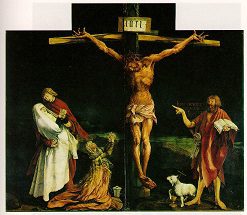
The idea of a suffering and dying God is not new—there are many traditions older than Christianity that include myths and stories of a divinity suffering and dying for various reasons. But this story is so intimately personal, so representative of the crushed hopes and dreams, the inescapable pain and suffering, that are fundamentally part of the human experience. Jesus seemed to be something different but turned out to be the same as everyone else: human, limited, subject to suffocating power and injustice, to the random events that ultimately shape each of our stories.
In the religious tradition of my youth, our theology was what scholars call a “theology of glory,” one that emphasizes the power and glory of God as exemplified through Christ’s sacrifice for the sins of the world on Good Friday and his triumphant resurrection from the dead three days later. It is difficult to pay more than twenty-four hours of attention to the suffering and agony of the cross when you know that it all ends up in the right place. But what happens if the focus of one’s Christian faith is Good Friday rather than Easter? What is the difference between a “theology of the cross” and a “theology of glory”?
The Crucifixion without anticipating the Resurrection first moves our attention away from glory, power, and triumph, instead focusing us on suffering, pain, and weakness. This brings home the fundamental fact of Christian belief—God became human, with an emphasis on the human part—something that a theology of glory tends to de-emphasize. A few years ago I had a discussion with my monthly after-church adult education seminar group about the end of the Book of Job in the Jewish Scriptures, an ending that scholars say was tacked on long after the main story had been written, in which after more than forty chapters of suffering Job gets back everything that he had lost.
I asked the group why someone might have added this “happily ever after” ending to such a dark and human story. “Because the original ending is too tough,” someone suggested. “Because people want to believe that suffering has a point, that it is all for something,” another contributed. “Which makes the better story?” I asked. “The original is truer,” an eighty-something regular participant said. “People don’t come back. Things that you lose don’t return.” A theology that relies on a triumphant, happy ending is one that runs the risk of failing to address the human condition as we find it.
In contrast to a theology of glory, in a theology of the cross God addresses the human condition, not by overcoming it, but by becoming part of it. The divine is incarnated in human flesh and thus becomes subject to everything that human beings are subject to—including suffering and death. The Incarnation and the Crucifixion focus our attention on unlimited love, something that we often are too quick to move past in our rush to a happy ending. Good Friday reminds us that because of divine love the incarnated God did not seek to avoid this fundamental human experience.
Paul argues that the focal point of the Christian faith is the Resurrection: “If Christ be not raised, your faith is vain.” More foundationally, however, the Christian faith is vain if there is no cross, no suffering and death of the divine mediator between God and humanity. Only when we see, as did the penitent thief, that this criminal hanging on a cross, rejected and despised by all, is the perfectly just God-human paying the ultimate sacrifice to achieve mediation between God and humanity will we begin to truly experience the mystery of the Christian faith.
If the story ended with Jesus executed as a criminal and dead in a tomb, we still would have reason to believe in a God of love. The story of a God who becomes fully human, who lives a real human life subject to all things each human being is subject to, including suffering, pain, loss, tragedy, injustice, and death, serves to drive the point deeper. Good Friday reveals just how far the divine chooses to go with us—into the depths of despair and death. I once saw a poster with a dark twist on a familiar saying. “It is always darkest just before—it goes pitch black.” And God is there.
For reflection: Centuries of theological debate have centered on where one should focus one’s attention most strongly among the events of Holy Week. Which is more meaningful to your faith journey—Jesus’s death on the cross or Jesus’s resurrection three days later?
Previous Post

April 17, 2025
Maundy Thursday: "Could you not keep awake one hour?"
Next Post
April 19, 2025 Holy Saturday: "Mortals die, and are laid low"
Recent Comments
"Mary did have a choice. And she was able to make it before the Holy ..."
"i cannot read beyond your recommendations for the books since i like to have a ..."
"AI will never be able to utter with honesty, feeling, or humility, the greeting: "Namaste".It ..."
"They do. I'm sure you could find discussions of the same topic from any of ..."
Browse Our Archives
Select a Category abortion Advent AI Angels Artificial intelligence atheism attention baptism Baptists beauty belief Benedictines Bible bicycling Big Bird books Bovina Camaldoli hermitage Canada Catholicism cats certainty change Christianity Christmas Collegeville Covid-19 creativity Development of Western Civilization dogs doubt Easter Enneagram Epiphany Episcopal ethics Eucharist evil extroverts Facebook faith family fear flowers forgiveness freedom friends God goodness grace happiness heaven hell history Holy Spirit Holy Week hope human nature humility humor idolatry incarnation introverts irreverence Islam Jeanne Jesus Joe Biden joy Judaism justice Kamala Harris knowledge Lent listen literature liturgy love Marsue Memorial Day miracles movies music mystery mythology NPR Old Testament optimism paradox peace Penguins philosophy piano podcast politics power prayer Protestantism Providence College Religion Rhode Island sabbatical sacrament science seeing silence Simone Weil Socrates soul sports St. John's College stories suffering tattoo teaching technology television theology thinking time tolerance transcendence travel trees trust truth Uncategorized Vermont wisdom wonder writing
Select a Month May 2026 April 2026 March 2026 February 2026 January 2026 December 2025 November 2025 October 2025 September 2025 August 2025 July 2025 June 2025 May 2025 April 2025 March 2025 February 2025 January 2025 December 2024 November 2024 October 2024 September 2024 August 2024 July 2024 June 2024 May 2024 April 2024 March 2024 February 2024 January 2024 December 2023 November 2023 October 2023 September 2023 August 2023 July 2023 June 2023 May 2023 April 2023 March 2023 February 2023 January 2023 December 2022 November 2022 October 2022 September 2022 August 2022 July 2022 June 2022 May 2022 April 2022 March 2022 February 2022 January 2022 December 2021 November 2021 October 2021 September 2021 August 2021 July 2021 June 2021 May 2021 April 2021 March 2021 February 2021 January 2021 December 2020 November 2020 October 2020 September 2020 August 2020 July 2020 June 2020 May 2020 April 2020 March 2020 February 2020 January 2020 December 2019 November 2019 October 2019 September 2019 August 2019 July 2019 June 2019 May 2019 April 2019 March 2019 February 2019 January 2019 December 2018 November 2018 October 2018 September 2018 August 2018 July 2018 June 2018 May 2018 April 2018 March 2018 February 2018 January 2018 December 2017 November 2017 October 2017 September 2017 August 2017 July 2017 June 2017 May 2017 April 2017 March 2017 February 2017 January 2017 December 2016 November 2016 October 2016 September 2016 August 2016 July 2016 June 2016 May 2016 April 2016 March 2016 February 2016 January 2016 December 2015 November 2015 October 2015 September 2015 August 2015 July 2015 June 2015 May 2015 April 2015 March 2015 February 2015 January 2015 December 2014 November 2014 October 2014 September 2014 August 2014 July 2014 June 2014 May 2014 April 2014 March 2014 February 2014 January 2014 December 2013 November 2013 October 2013 September 2013 August 2013 July 2013 June 2013 May 2013 April 2013 March 2013 February 2013 January 2013 December 2012 November 2012 October 2012 September 2012
Follow Us!
TAKE THE
Religious Wisdom Quiz
True or False: Elijah defeated 400 prophets of Baal on Mount Carmel.
Select your answer to see how you score.
FALSE TRUE
Books by This Author Books by Vance G. Morgan
Related posts from Freelance Christianity



TRENDING AT PATHEOS Progressive Christian

What Being a Modern-Day Apostle Means to Me
In my last column, I discussed the ins and outs of modern-day...

Did Ancient China Once Worship the God of...
Across human history, a common thread weaves through the origins of the...

Love Your Neighbor – Including Earth-Kin: Lev. 19,...
God’s command to love your neighbor means acting in an ethical and...

Lead a Church Study of “Jesus and Lao...
Guest writer Jack Thomas (The Irreverent Reverend) reflects on leading his church...

Pastoral Wisdom for Responding to Sermon Pushback
Getting sermon pushback on your social justice sermon? Learn practical, Proverbs-based strategies...

Principles for Understanding the Apostolic Ministry Today
Whenever people discover that my formal ministry title is "apostle," as in...
view all Progressive Christian blogs
What Are Your Thoughts?leave a comment
Ad-Free & Subscriber Log-In Subscription Support
- About Us
- 2026 Calendar
- Videos
- Podcasts
- Library of World Religions
- Faith In Media Tracker
- Advertise With Us
- Write for Us
- Privacy Policy
- Terms of Service
- Do Not Sell My Data
- Contact Us
- Radiant Digital
- Manage Newsletter Subscriptions
- Unsubscribe From Notifications
- Sitemap
Copyright 2008-2026, Patheos. All rights reserved.
Subscription Support Ad-Free & Subscriber Log-In
Follow Patheos