
BuddhistCatholicContemplativeEvangelicalGeneral ChristianHinduJewishLatter-day SaintMuslimNew VisionsProgressive Christian
Beliefs
- Buddhist
- Catholic
- Contemplative
- Evangelical
- General Christian
- Hindu
- Jewish
- Latter-day Saint
- More Voices
- Muslim
- New Visions
- Pagan
- Progressive Christian
Topics
- Religion News
- Food and Religion
- Sports and Religion
- Religious Art
- Religious Music and Entertainment
- Religious Events
- History and Religion
- Style and Religion
- Politics and Religion
- Women in Religion
- Recreation Outdoors and Religion
- Business Finance and Religion
- Careers Workplace and Religion
- Education and Religion
- Family Parenting and Religion
- Health Fitness and Religion
- Home and Religion
- Relationships and Religion
- Technology and Religion
- Travel and Religion
Columnists
- Buddhist Columnists
- Business Finance and Religion Columnists
- Careers Workplace and Religion Columnists
- Catholic Columnists
- Contemplative Columnists
- Education and Religion Columnists
- Evangelists Columnists
- Family Parenting and Religion Columnists
- General Christian Columnists
- Health Fitness and Religion Columnists
- Hindu Columnists
- History and Religion Columnists
- Home and Religion Columnists
- Jewish Columnists
- More Voices Columnists
- Latter Day Columnists
- Muslim Columnists
- New Visions Columnists
- Nonreligious Columnists
- Pagan Columnists
- Politics and Religion Columnists
- Progressive Columnists
- Recreation Outdoors and Religion Columnists
- Relationships and Religion Columnists
- Religion News Columnists
- Religious Art Columnists
- Religious Events Columnists
- Religious Music and Entertainment Columnists
- Sports and Religion Columnists
- Style and Religion Columnists
- Technology and Religion Columnists
- Travel and Religion Columnists
- Women in Religion Columnists
Resource Library
- 2026 Calendar
- Library of World Religions
- The 100 Most Holy Places on Earth
- Patheos Answers
- Podcasts
- Videos
- Faith Leaders Database
- Anglican Episcopalian
- Bahai
- Baptist
- Buddhism
- Christianity
- Confucianism
- Eastern Orthodoxy
- Hinduism
- Holiness and Pentecostal
- ISKCON
- Islam
- Judaism
- Lutheran
- Methodist
- The Church of Jesus Christ of Latter-day Saints
- New Age
- Paganism
- Presbytarian and Reformed
- Protestantism
- Religion Behind the Scenes
- Roman Catholic
- Scientology
- Shia Islam
- Sikhism
- Sufism
- Sunni Islam
- Taoism
- Zen
- See all religions
Research Tools
 Ad-Free & Subscriber Log-In Subscription Support
Ad-Free & Subscriber Log-In Subscription Support
Follow Patheos 

- Trending:
- Forgiveness
- |
- Marriage
- |
- Consciousness
- |
- Death Penalty
- |
- Election
- |
- Halloween

- Home
- Progressive Christian
- God Said It. I Believe It. That Settles It.
God Said It. I Believe It. That Settles It.
Last updated on: March 19, 2019 at 6:00 am by Vance Morgan
God Said It. I Believe It. That Settles It. 2019-03-15T15:08:12-04:00 Vance Morgan
Patheos Explore the world's faith through different perspectives on religion and spirituality! Patheos has the views of the prevalent religions and spiritualities of the world.
Not long ago, I found myself involved behind the scenes in a squabble between the chair of my department and another department colleague. Their disagreement was about the proper interpretation of the Faculty Handbook on an issue related to my colleague’s upcoming promotion case. Both asked me, as a former department chair, to offer my opinion. I felt that my colleague’s interpretation, based on a charitable “spirit of the law” reading of the relevant portion of the handbook, made more sense than my chair’s more rigid “letter of the law” interpretation.
“Geez,” my colleague complained in an email, “he’s reading the handbook like an originalist reads the Constitution!”
“He’s reading the handbook like a fundamentalist reads the Bible,” I replied. Little did I know how closely those are linked.
“Originalism” has been part of the conversation about the U. S. Supreme Court for most of my life, particularly while Antonin Scalia was on the bench. Scalia, who died in 2016, was an eloquent and forceful advocate of originalism; SCOTUS watchers continue to observe closely to see if Justice Neil Gorsuch, appointed to the Court in 2017, will continue Scalia’s commitment to this interpretive approach.
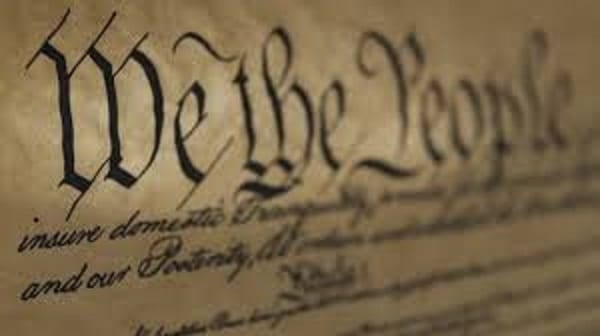
With regard to the U. S. Constitution, originalism requires that a judge ask questions such as “What was the writer’s original intent?” and “What would reasonable people at that time have understood this text to mean?” Advocates of originalism strongly emphasize the difference between judges and legislators and are particularly concerned to root out judicial activism. They contend judges should strive to apply the law as they find it, focusing backward on text, structure, and history, nor forward on their moral convictions or the policy consequences they consider best for today’s society. Scalia defined it this way: “The Constitution that I interpret and apply is not living but dead, or as I prefer to call it, enduring. It means today not what current society, much less the court, thinks it ought to mean, but what it meant when it was adopted.”
Scalia’s definition positions originalism in opposition to a “living document” approach. In this understanding, a document’s meaning and application is intended to change and grow within identifiable parameters as each generation’s new issues and concerns arise. The “originalism vs. living document” debate often falls into familiar conservative vs. liberal political categories, in which originalists advocate a narrow use of history and reading of the text in order to push back against the perceived liberal tendency to make the text “relevant” and update it to contemporary concerns.
The term “originalism” was coined in the 1980s; constitutional scholars have been interested, among other things, in understanding why this interpretive strategy has become so influential in the U.S., particularly since originalism has little or no influence in other constitutional democracies with similar legislative and judicial histories to the United States, countries such as Canada and Australia. In a recent interview with the New Yorker, Harvard historian Jill Lepore listed a few reasons suggested by scholars for the strong influence of originalism in this country; one caught my attention. Originalism arose in the United States because of the unique historical influence of fundamentalist Protestantism on this country’s history and development—an influence missing both in Canada and Australia.
I was born into the fundamentalist Protestant world that Lepore references, and I am thoroughly familiar with how they read their sacred text. I was taught that the Bible is the inerrant and infallible word of God, dictated by divine inspiration to specially selected human beings, then gathered into the Word of God that we call the Bible. The Bible is God’s final word to us, I was taught; all the guidance a Christian needs to live a life pleasing to God can be found between its covers. Many of the vehicles in our church parking lot sported a bumper sticker expressing the appropriate attitude toward Scripture: “God Said It. I Believe It. That Settles It.”
Lepore points out that there is a great deal of similarity between how fundamentalist Protestants treat the Bible and originalists treat the U. S. Constitution. In both cases, the text is a special document that must be treated with the reverence and care that it deserves. Join that conviction with the belief among many conservative Christians in this country that the founding fathers were divinely inspired when they wrote the seminal texts of the United States of America, and originalism becomes a familiar interpretive strategy. Originalism is attractive to many Americans because they are accustomed to treating important texts with deference, even reverence.
The parallels between originalism and fundamentalist Protestantism also provide reasons to be suspicious of both strategies of interpretation. It is worth remembering, as Lepore points out, that the founding fathers themselves were not originalists by any stretch of the imagination. They wanted to break sharply with tradition; the Declaration of Independence includes a litany of injuries caused by the king, deliberately intending to set history aside in exchange for creating something brand new. The last thing on the framers’ minds was to bind future generations of citizens with documents that would not and could not grow and evolve.
A parallel case can be made with regard to Scripture. Christians often forget just how earthshaking and groundbreaking the message of the Gospels truly is. The reported words of Jesus tell us much about how to continually grow and change while following Him; at the same time, Jesus is frequently critical of attempts to rigidly apply what we believe God said in the past to new situations and circumstances. As soon as words of life are treated as fixed and unchanging, doctrine and dogma become substitutes for a faith intended to fruitfully engage with a changing world. Just as Jesus was a living, breathing human being, so the faith that grows from following him should also live and breathe. That means it should never stop being open to change.
One Sunday evening many years ago, I heard a Baptist minister, a family friend and the godfather of my firstborn son, say something shocking from the pulpit. He lifted his well-worn Bible above his head with his right arm and said in a loud voice: “This is not the Word of God!” Gasps filled the sanctuary, followed by an uncomfortable silence. After a dramatic pause of several moments, he continued. “This is just ink on paper between leather covers. This becomes the Word of God when the Holy Spirit makes it so to each of us individually.”
My son’s godfather was right. The divine word changes and grows in each of us, often in apparent conflict with what we thought was already fixed and settled. When temptations arise to find security and safety in inflexible interpretations of important texts, whether the Constitution or Scripture, it is worth taking the words of Paul to the church at Corinth to heart: “The letter kills, but the Spirit gives life.”
Previous Post
March 17, 2019
Why I Am Done Trying to Prove the Existence of God
Next Post

March 21, 2019 The GOATs of the Western Tradition
Browse Our Archives
Select a Category abortion Advent AI Angels Artificial intelligence atheism attention baptism Baptists beauty belief Benedictines Bible bicycling Big Bird books Bovina Camaldoli hermitage Canada Catholicism cats certainty change Christianity Christmas Collegeville Covid-19 creativity Development of Western Civilization dogs doubt Easter Enneagram Epiphany Episcopal ethics Eucharist evil extroverts Facebook faith family fear flowers forgiveness freedom friends God goodness grace happiness heaven hell history Holy Spirit Holy Week hope human nature humility humor idolatry incarnation introverts irreverence Islam Jeanne Jesus Joe Biden joy Judaism justice Kamala Harris knowledge Lent listen literature liturgy love Marsue Memorial Day miracles movies music mystery mythology NPR Old Testament optimism paradox peace Penguins philosophy piano podcast politics power prayer Protestantism Providence College Religion Rhode Island sabbatical sacrament science seeing silence Simone Weil Socrates soul sports St. John's College stories suffering tattoo teaching technology television theology thinking time tolerance transcendence travel trees trust truth Uncategorized Vermont wisdom wonder writing
Select a Month May 2026 April 2026 March 2026 February 2026 January 2026 December 2025 November 2025 October 2025 September 2025 August 2025 July 2025 June 2025 May 2025 April 2025 March 2025 February 2025 January 2025 December 2024 November 2024 October 2024 September 2024 August 2024 July 2024 June 2024 May 2024 April 2024 March 2024 February 2024 January 2024 December 2023 November 2023 October 2023 September 2023 August 2023 July 2023 June 2023 May 2023 April 2023 March 2023 February 2023 January 2023 December 2022 November 2022 October 2022 September 2022 August 2022 July 2022 June 2022 May 2022 April 2022 March 2022 February 2022 January 2022 December 2021 November 2021 October 2021 September 2021 August 2021 July 2021 June 2021 May 2021 April 2021 March 2021 February 2021 January 2021 December 2020 November 2020 October 2020 September 2020 August 2020 July 2020 June 2020 May 2020 April 2020 March 2020 February 2020 January 2020 December 2019 November 2019 October 2019 September 2019 August 2019 July 2019 June 2019 May 2019 April 2019 March 2019 February 2019 January 2019 December 2018 November 2018 October 2018 September 2018 August 2018 July 2018 June 2018 May 2018 April 2018 March 2018 February 2018 January 2018 December 2017 November 2017 October 2017 September 2017 August 2017 July 2017 June 2017 May 2017 April 2017 March 2017 February 2017 January 2017 December 2016 November 2016 October 2016 September 2016 August 2016 July 2016 June 2016 May 2016 April 2016 March 2016 February 2016 January 2016 December 2015 November 2015 October 2015 September 2015 August 2015 July 2015 June 2015 May 2015 April 2015 March 2015 February 2015 January 2015 December 2014 November 2014 October 2014 September 2014 August 2014 July 2014 June 2014 May 2014 April 2014 March 2014 February 2014 January 2014 December 2013 November 2013 October 2013 September 2013 August 2013 July 2013 June 2013 May 2013 April 2013 March 2013 February 2013 January 2013 December 2012 November 2012 October 2012 September 2012
Follow Us!
TAKE THE
Religious Wisdom Quiz
True or False: Thomas doubted Jesus' resurrection until he saw and touched Jesus' wounds.
Select your answer to see how you score.
TRUE FALSE
Books by This Author Books by Vance G. Morgan
Related posts from Freelance Christianity

The Lonely Pawn: On Faith, Doubt, and Meaning


AI and Love: When a Chatbot Becomes a...

TRENDING AT PATHEOS Progressive Christian

What Being a Modern-Day Apostle Means to Me
In my last column, I discussed the ins and outs of modern-day...

Did Ancient China Once Worship the God of...
Across human history, a common thread weaves through the origins of the...

Love Your Neighbor – Including Earth-Kin: Lev. 19,...
God’s command to love your neighbor means acting in an ethical and...

Lead a Church Study of “Jesus and Lao...
Guest writer Jack Thomas (The Irreverent Reverend) reflects on leading his church...

Pastoral Wisdom for Responding to Sermon Pushback
Getting sermon pushback on your social justice sermon? Learn practical, Proverbs-based strategies...

Principles for Understanding the Apostolic Ministry Today
Whenever people discover that my formal ministry title is "apostle," as in...
view all Progressive Christian blogs
Ad-Free & Subscriber Log-In Subscription Support
- About Us
- 2026 Calendar
- Videos
- Podcasts
- Library of World Religions
- Faith In Media Tracker
- Advertise With Us
- Write for Us
- Privacy Policy
- Terms of Service
- Do Not Sell My Data
- Contact Us
- Radiant Digital
- Manage Newsletter Subscriptions
- Unsubscribe From Notifications
- Sitemap
Copyright 2008-2026, Patheos. All rights reserved.
Subscription Support Ad-Free & Subscriber Log-In
Follow Patheos