
BuddhistCatholicContemplativeEvangelicalGeneral ChristianHinduJewishLatter-day SaintMuslimNew VisionsProgressive Christian
Beliefs
- Buddhist
- Catholic
- Contemplative
- Evangelical
- General Christian
- Hindu
- Jewish
- Latter-day Saint
- More Voices
- Muslim
- New Visions
- Pagan
- Progressive Christian
Topics
- Religion News
- Food and Religion
- Sports and Religion
- Religious Art
- Religious Music and Entertainment
- Religious Events
- History and Religion
- Style and Religion
- Politics and Religion
- Women in Religion
- Recreation Outdoors and Religion
- Business Finance and Religion
- Careers Workplace and Religion
- Education and Religion
- Family Parenting and Religion
- Health Fitness and Religion
- Home and Religion
- Relationships and Religion
- Technology and Religion
- Travel and Religion
Columnists
- Buddhist Columnists
- Business Finance and Religion Columnists
- Careers Workplace and Religion Columnists
- Catholic Columnists
- Contemplative Columnists
- Education and Religion Columnists
- Evangelists Columnists
- Family Parenting and Religion Columnists
- General Christian Columnists
- Health Fitness and Religion Columnists
- Hindu Columnists
- History and Religion Columnists
- Home and Religion Columnists
- Jewish Columnists
- More Voices Columnists
- Latter Day Columnists
- Muslim Columnists
- New Visions Columnists
- Nonreligious Columnists
- Pagan Columnists
- Politics and Religion Columnists
- Progressive Columnists
- Recreation Outdoors and Religion Columnists
- Relationships and Religion Columnists
- Religion News Columnists
- Religious Art Columnists
- Religious Events Columnists
- Religious Music and Entertainment Columnists
- Sports and Religion Columnists
- Style and Religion Columnists
- Technology and Religion Columnists
- Travel and Religion Columnists
- Women in Religion Columnists
Resource Library
- 2026 Calendar
- Library of World Religions
- The 100 Most Holy Places on Earth
- Patheos Answers
- Podcasts
- Videos
- Faith Leaders Database
- Anglican Episcopalian
- Bahai
- Baptist
- Buddhism
- Christianity
- Confucianism
- Eastern Orthodoxy
- Hinduism
- Holiness and Pentecostal
- ISKCON
- Islam
- Judaism
- Lutheran
- Methodist
- The Church of Jesus Christ of Latter-day Saints
- New Age
- Paganism
- Presbytarian and Reformed
- Protestantism
- Religion Behind the Scenes
- Roman Catholic
- Scientology
- Shia Islam
- Sikhism
- Sufism
- Sunni Islam
- Taoism
- Zen
- See all religions
Research Tools
 Ad-Free & Subscriber Log-In Subscription Support
Ad-Free & Subscriber Log-In Subscription Support
Follow Patheos 

- Trending:
- Forgiveness
- |
- Marriage
- |
- Consciousness
- |
- Death Penalty
- |
- Election
- |
- Halloween

- Home
- Progressive Christian
- God is a Question. What is the Answer?
God is a Question. What is the Answer?
Last updated on: April 7, 2020 at 6:00 am by Vance Morgan
God is a Question. What is the Answer? 2020-04-06T07:17:11-04:00 Vance Morgan
Patheos Explore the world's faith through different perspectives on religion and spirituality! Patheos has the views of the prevalent religions and spiritualities of the world.
In my General Ethics course, we just completed a unit called “Does God have anything to do with ethics?” last week. One of the essays we considered was William Irwin’s “God is a Question, Not an Answer”; it raised issues that parallel those raised by the contrast between Cromwell and More. Irwin admits that “people who claim certainty about God worry me, both those who believe and those who don’t believe,” since, in his estimation,
God is a question, not an answer . . . The question is permanent; answers are temporary. I live in the question . . . Dwelling in a state of doubt, uncertainty and openness about the existence of God marks an honest approach to the question . . . Anyone who does not occasionally worry that she is wrong about the existence or nonexistence of God most likely has a fraudulent belief.
Irwin concludes his essay with this from Thomas Merton:
Faith is a decision, a judgment that is fully and deliberately taken in the light of a truth that cannot be proven—it is not merely the acceptance of a decision that has been made by somebody else.
These same matters arise throughout fiction, including in a long-awaited conclusion to an honored historical fiction trilogy that was just published.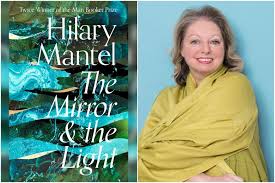
Lovers of great historical fiction (I am one of them) have been anxiously waiting for several years for the third installment in Hilary Mantel’s honored trilogy that immerses us into the world of Henry VIII as seen through the eyes of his consigliere Thomas Cromwell. Wolf Hall (2009) and Bring up the Bodies (2012), the first two parts of the trilogy, each won the Man Booker Prize (the British version of the Pulitzer Prize for fiction). After what seemed an extraordinarily long wait for dedicated lovers of Mantel’s work, The Mirror and the Light, the third installment in the trilogy, was published a few weeks ago, a welcome gift for millions of people who suddenly find themselves with more reading time on their hands than usual.
Early in Wolf Hall, Cromwell provides us with a flashback to when he was a young star in Cardinal Wolsey’s orbit, a firmament containing another, brighter star—Thomas More—who in Mantel’s treatment becomes one of Cromwell’s opponents and competitors for the attention of the great and powerful. But more importantly, Cromwell reveals a fundamental difference between him and More that raises issues transcending this particular story:
He [Cromwell] never sees More . . . without wanting to ask him, what’s wrong with you? Or what’s wrong with me? Why does everything you know, and everything you’ve learned, confirm you in what you believed before? Whereas in my case, what I grew up with, and what I thought I believed, is chipped away a little and a little, a fragment then a piece and then a piece more. With every month that passes, the corners are knocked off the certainties of this world: and the next world too. Show me where it says, in the Bible, “purgatory.” Show me where it says “relics, monks, nuns.” Show me where it says “Pope.”
Or, someone might add, show me where it says “liturgy” or “dogma” or any number of other things that are staples of Christian tradition even outside Catholicism. I have no idea whether Mantel’s characterization of Cromwell and More is accurate (neither does she, for that matter), but I am so strongly aligned by nature with fictional Cromwell in this passage that I share his utter astonishment with the fictional Mores among us. Wolf Hall is set during the early decades of the sixteenth century when the revolutionary impact of the Protestant Reformation is already making itself known in England. Thomas More is the epitome of religious certainty, imagined by Mantel as a vigorous, devout, hair-shirt-wearing and frequently inflexible defender of Catholic orthodoxy.
Although Cromwell rises to influence as the right-hand man of the powerful Cardinal Wolsey, he is far more comfortable with situational flexibility than with pre-established beliefs and principles. When Wolsey falls from grace because of his failure to facilitate the king’s desire to divorce Catherine of Aragon in order to marry Anne Boleyn, Cromwell’s ability to quickly adjust to changing circumstances and maneuver creatively brings him into the king’s inner circle. But he always keeps the Mores of his world in view, simultaneously envious and wary of anyone’s unflinching commitment to principle.
I often find myself inadvertently dividing my fellow human beings into various categories (introvert/extrovert, high-maintenance/low-maintenance, Platonic/Aristotelian, hedgehog/fox, and more); Cromwell/More is another important distinction, especially when religious belief is under discussion. The older I get, the more Cromwellian I become, finding that even my most fixed beliefs not only are regularly under scrutiny, but that constant adjustment and change is a symptom of a healthy faith. Christian Wiman puts this insight better than anyone I’ve read:
It is why every single expression of faith is provisional—because life carries us always forward to a place where the faith we’d fought so hard to articulate to ourselves must now be reformulated, and because faith in God is, finally, faith in change.
I am frequently reminded in a number of ways by various Mores that a Cromwellian embrace of change is dangerous in that it supposedly leads to the brink of the worst of all abysses, a relativistic world with no absolutes and no fixed points. I admit that it can be disconcerting to find that one’s most reliable cornerstones have crumbled or shifted, but I have learned to find stability in commitment rather than in content. Within the well-defined banks of commitment to what is greater than us, the river of faith sometimes flows swiftly, sometimes pools stagnantly, and always offers the opportunity to explore uncharted waters. The terrain of commitment looks very different from various vantage points, and in my experience seldom provides confirmation of what I have believed in the past without change and without remainder.
I remember several years ago that I came across one of John Shelby Spong’s books in Borders with the provocative title Why Christianity Must Change or Die. I read the book and found that the changes that Spong, the liberal retired Episcopal bishop of New Jersey was calling for were not changes I was willing to make then—or now. But I fully resonate with the energy of his book’s title. The Christian faith that I profess has not only changed greatly over the past several years (and promises to change even more going forward), but the Christianity I was taught in my youth would have died long ago if it had not changed. And this is as it should be. As James Carse writes,
This is Christianity’s strongest feature: it tirelessly provokes its members to object to prevailing doctrines without having to abandon the faith . . . Neither Christianity nor any of the great religions has ever been able to successfully erect barriers against the dreaded barbarian incursions of fresh ideas.
One of the things I’ve learned over the past few years is to stop criticizing or belittling those who build their belief systems in the manner of More, shaping all new experiences and information in the image of their most fixed and unchanging commitments. There are a number of Mores among my friends and family, and I’ve learned not only to appreciate them (usually), but find myself occasionally envying them. But at heart I’m happy being Cromwell as I watch the corners get knocked off my certainties.
Previous Post

April 5, 2020
Palm Sunday and the Teaching Life
Next Post

April 8, 2020 Waiting for an Hour: A Maundy Thursday Meditation
Browse Our Archives
Select a Category abortion Advent AI Angels Artificial intelligence atheism attention baptism Baptists beauty belief Benedictines Bible bicycling Big Bird books Bovina Camaldoli hermitage Canada Catholicism cats certainty change Christianity Christmas Collegeville Covid-19 creativity Development of Western Civilization dogs doubt Easter Enneagram Epiphany Episcopal ethics Eucharist evil extroverts Facebook faith family fear flowers forgiveness freedom friends God goodness grace happiness heaven hell history Holy Spirit Holy Week hope human nature humility humor idolatry incarnation introverts irreverence Islam Jeanne Jesus Joe Biden joy Judaism justice Kamala Harris knowledge Lent listen literature liturgy love Marsue Memorial Day miracles movies music mystery mythology NPR Old Testament optimism paradox peace Penguins philosophy piano podcast politics power prayer Protestantism Providence College Religion Rhode Island sabbatical sacrament science seeing silence Simone Weil Socrates soul sports St. John's College stories suffering tattoo teaching technology television theology thinking time tolerance transcendence travel trees trust truth Uncategorized Vermont wisdom wonder writing
Select a Month May 2026 April 2026 March 2026 February 2026 January 2026 December 2025 November 2025 October 2025 September 2025 August 2025 July 2025 June 2025 May 2025 April 2025 March 2025 February 2025 January 2025 December 2024 November 2024 October 2024 September 2024 August 2024 July 2024 June 2024 May 2024 April 2024 March 2024 February 2024 January 2024 December 2023 November 2023 October 2023 September 2023 August 2023 July 2023 June 2023 May 2023 April 2023 March 2023 February 2023 January 2023 December 2022 November 2022 October 2022 September 2022 August 2022 July 2022 June 2022 May 2022 April 2022 March 2022 February 2022 January 2022 December 2021 November 2021 October 2021 September 2021 August 2021 July 2021 June 2021 May 2021 April 2021 March 2021 February 2021 January 2021 December 2020 November 2020 October 2020 September 2020 August 2020 July 2020 June 2020 May 2020 April 2020 March 2020 February 2020 January 2020 December 2019 November 2019 October 2019 September 2019 August 2019 July 2019 June 2019 May 2019 April 2019 March 2019 February 2019 January 2019 December 2018 November 2018 October 2018 September 2018 August 2018 July 2018 June 2018 May 2018 April 2018 March 2018 February 2018 January 2018 December 2017 November 2017 October 2017 September 2017 August 2017 July 2017 June 2017 May 2017 April 2017 March 2017 February 2017 January 2017 December 2016 November 2016 October 2016 September 2016 August 2016 July 2016 June 2016 May 2016 April 2016 March 2016 February 2016 January 2016 December 2015 November 2015 October 2015 September 2015 August 2015 July 2015 June 2015 May 2015 April 2015 March 2015 February 2015 January 2015 December 2014 November 2014 October 2014 September 2014 August 2014 July 2014 June 2014 May 2014 April 2014 March 2014 February 2014 January 2014 December 2013 November 2013 October 2013 September 2013 August 2013 July 2013 June 2013 May 2013 April 2013 March 2013 February 2013 January 2013 December 2012 November 2012 October 2012 September 2012
Follow Us!
TAKE THE
Religious Wisdom Quiz
Who was the only female judge of Israel?
Select your answer to see how you score.
Esther Deborah Ruth Hannah
Books by This Author Books by Vance G. Morgan
Related posts from Freelance Christianity

The Lonely Pawn: On Faith, Doubt, and Meaning


AI and Love: When a Chatbot Becomes a...

TRENDING AT PATHEOS Progressive Christian

What Being a Modern-Day Apostle Means to Me
In my last column, I discussed the ins and outs of modern-day...

Did Ancient China Once Worship the God of...
Across human history, a common thread weaves through the origins of the...

Love Your Neighbor – Including Earth-Kin: Lev. 19,...
God’s command to love your neighbor means acting in an ethical and...

Lead a Church Study of “Jesus and Lao...
Guest writer Jack Thomas (The Irreverent Reverend) reflects on leading his church...

Pastoral Wisdom for Responding to Sermon Pushback
Getting sermon pushback on your social justice sermon? Learn practical, Proverbs-based strategies...

Principles for Understanding the Apostolic Ministry Today
Whenever people discover that my formal ministry title is "apostle," as in...
view all Progressive Christian blogs
Ad-Free & Subscriber Log-In Subscription Support
- About Us
- 2026 Calendar
- Videos
- Podcasts
- Library of World Religions
- Faith In Media Tracker
- Advertise With Us
- Write for Us
- Privacy Policy
- Terms of Service
- Do Not Sell My Data
- Contact Us
- Radiant Digital
- Manage Newsletter Subscriptions
- Unsubscribe From Notifications
- Sitemap
Copyright 2008-2026, Patheos. All rights reserved.
Subscription Support Ad-Free & Subscriber Log-In
Follow Patheos