
BuddhistCatholicContemplativeEvangelicalGeneral ChristianHinduJewishLatter-day SaintMuslimNew VisionsProgressive Christian
Beliefs
- Buddhist
- Catholic
- Contemplative
- Evangelical
- General Christian
- Hindu
- Jewish
- Latter-day Saint
- More Voices
- Muslim
- New Visions
- Pagan
- Progressive Christian
Topics
- Religion News
- Food and Religion
- Sports and Religion
- Religious Art
- Religious Music and Entertainment
- Religious Events
- History and Religion
- Style and Religion
- Politics and Religion
- Women in Religion
- Recreation Outdoors and Religion
- Business Finance and Religion
- Careers Workplace and Religion
- Education and Religion
- Family Parenting and Religion
- Health Fitness and Religion
- Home and Religion
- Relationships and Religion
- Technology and Religion
- Travel and Religion
Columnists
- Buddhist Columnists
- Business Finance and Religion Columnists
- Careers Workplace and Religion Columnists
- Catholic Columnists
- Contemplative Columnists
- Education and Religion Columnists
- Evangelists Columnists
- Family Parenting and Religion Columnists
- General Christian Columnists
- Health Fitness and Religion Columnists
- Hindu Columnists
- History and Religion Columnists
- Home and Religion Columnists
- Jewish Columnists
- More Voices Columnists
- Latter Day Columnists
- Muslim Columnists
- New Visions Columnists
- Nonreligious Columnists
- Pagan Columnists
- Politics and Religion Columnists
- Progressive Columnists
- Recreation Outdoors and Religion Columnists
- Relationships and Religion Columnists
- Religion News Columnists
- Religious Art Columnists
- Religious Events Columnists
- Religious Music and Entertainment Columnists
- Sports and Religion Columnists
- Style and Religion Columnists
- Technology and Religion Columnists
- Travel and Religion Columnists
- Women in Religion Columnists
Resource Library
- 2026 Calendar
- Library of World Religions
- The 100 Most Holy Places on Earth
- Patheos Answers
- Podcasts
- Videos
- Faith Leaders Database
- Anglican Episcopalian
- Bahai
- Baptist
- Buddhism
- Christianity
- Confucianism
- Eastern Orthodoxy
- Hinduism
- Holiness and Pentecostal
- ISKCON
- Islam
- Judaism
- Lutheran
- Methodist
- The Church of Jesus Christ of Latter-day Saints
- New Age
- Paganism
- Presbytarian and Reformed
- Protestantism
- Religion Behind the Scenes
- Roman Catholic
- Scientology
- Shia Islam
- Sikhism
- Sufism
- Sunni Islam
- Taoism
- Zen
- See all religions
Research Tools
 Ad-Free & Subscriber Log-In Subscription Support
Ad-Free & Subscriber Log-In Subscription Support
Follow Patheos 

- Trending:
- Forgiveness
- |
- Marriage
- |
- Consciousness
- |
- Death Penalty
- |
- Election
- |
- Halloween

- Home
- Progressive Christian
- A Gnawing Suspicion
A Gnawing Suspicion
Last updated on: July 20, 2016 at 7:22 am by Vance Morgan
A Gnawing Suspicion 2016-07-20T07:22:40-04:00 Vance Morgan
Patheos Explore the world's faith through different perspectives on religion and spirituality! Patheos has the views of the prevalent religions and spiritualities of the world.
A mystic is anyone who has the gnawing suspicion that the apparent discord, brokenness, contradictions, and discontinuities that assault us every day might conceal a hidden unity. Lawrence Kushner
 A while ago Jeanne and I were in the car listening to the hourly news update on NPR. As usual, they were trying to stuff as much horrible news as possible into a three-minute segment. Ebola, ISIS, Zika, Palestinians, Israel, Istanbul, Russia, illegal immigrants, racial discrimination— one of us said “they’re never going to figure this out.” I forget which of the above items the comment was referring to, but it could have been any of them. I know few people who are more naturally optimistic than I am,
  but what evidence is there that we human beings are up to the challenge of solving our problems long-term in a sustainable way? The history of our species provides ample evidence to the contrary.
So what impact should this depressing and dour news have on a person not inclined toward cynicism or despair? I must admit that I would find it very difficult to avoid cynicism in general, overcome only by dogged attempts to make my little corner of the world a bit better on a daily basis, were it not that I am convinced that the often sad and grubby human story that is trumpeted at us 24/7 through multiple media outlets is not the only story in town. There’s something bigger going on. In other words, I believe in God. So sue me.
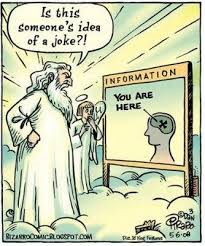
 For many the conversation stops right there. How on earth can an educated, relatively intelligent person with working senses possibly believe in the existence of God in the face of the massive evidence to the contrary that threatens to overwhelm us daily? Please note, though, that I said that I believe in God, not that I believe in the existence of God. This is a gradual, seismic internal shift that has been going on for a while, one that I have frequently taken note of in various ways during the almost-four years of this blog’s existence (and for a lot longer than that).
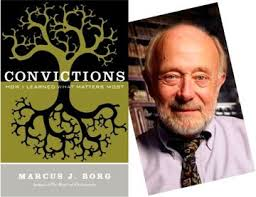
 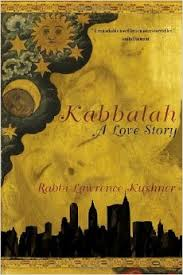 Two short books, Marcus Borg’s Convictions and Lawrence Kushner’s Kabbalah: A Love Story, have crystallized this shift in unexpected ways. Let me explain.
The “does God exist?” question never had much philosophical interest for me (I don’t think any of the arguments designed to answer the question positively actually work very well);  over time I have lost interest in it just about entirely. The God whose existence is almost always in question is a being separate and distinct from the universe, a supreme being who created the universe a long time ago. This description usually goes on to add personality traits such as omnipotence, omniscience and omnibenevolence to God’s resume; God thus described is often imagined with authoritarian and parental attributes, with all of the positive and negative baggage accompanying. Marcus Borg calls belief in the existence of this being “Supernatural Theism.” For non-theists who deny the existence of God, it is almost always the God of Supernatural Theism whose existence is being denied; it is this God that is the target of the impassioned attacks of the “New Atheists.”
  Borg notes that when someone tells him that she or he does not believe in God, he “learned many years ago to respond, ‘Tell me about the God you don’t believe in.’ It was always the God of supernaturalism.” Borg professes that he stopped believing in that God when he was in his twenties (he passed away in his seventies about a year ago). I don’t believe in that God either.
It isn’t that I now believe in the existence of a divine being with a different resume. It’s rather than I think “does God exist?” is the wrong question. Because the issue of God for me is not existential—it’s not about whether there is another being out there in addition to the universe. The issue of God is experiential. Scripture says “taste and see that the Lord is good,” and tasting and seeing are not arguments, rationalizations or proofs. Borg describes the shift I have in mind well:
 There is a cloud of witnesses, Christian and non-Christian, for whom God, the sacred, is real, an element of experience, not a hypothetical being who may or may not exist and whom we can only believe in.
Both Borg and Kushner call this orientation “mysticism,” and both refer to experiences that might be described as “mystical” that helped bring them to this experiential conclusion. I’m not crazy about calling myself a “mystic” for a number of reasons, but I do resonate with Kushner’s definition at the beginning of this post, just as I resonate with Borg’s adjustment of what the word “God” refers to:
A theology that takes mystical experience seriously leads to a very different understanding of the referent of the word “God.” The word no longer refers to a being separate from the universe, but to a reality, a “more,” a radiant and luminous presence that permeates everything that is.
 Kushner refers to the “gnawing suspicion” that there is a hidden unity underlying all of the mess that we find ourselves in. “Suspicion” is a well-chosen term, because a reorientation from Supernatural Theism to Mystical Theism (as Borg calls it; Kushner calls it “mystical monism”) is difficult to talk about and impossible to provide convincing arguments for. Words fail me, although I keep trying to find them. More often than not I fall back on the evidence of a “changed life” and “come and see,” finding strength in the fact that those who have also experienced the sacred and have not just thought about it resonate with me on a level deeper than words. They just “know” what I am trying to convey.
Working out the implications of where this takes me on all sorts of issues is a continuing effort in these pages. Returning briefly to where I began, what might mystical theism say about the fractured and disjointed world in which we live?  Trying to square such a world with the God of Supernatural Theism gives rise to the problem of evil, perhaps the most intractable philosophical/ theological problem of all. But as Kushner suggests, there is a different orientation available.
If you are a mystic, saying you believe in God means that you have an abiding suspicion that everything is a manifestation of God, and no matter how horrific it might be, it is still, somehow, filled with holiness.
The only evidence for that is experiential, and even such experience is iffy and enigmatic. I have not had the “road to Damascus” sorts of experiences that have changed the lives of many. My reorientation has been more gradual, which for me means it is likely to have the permanence that a “once for all” experience might lack. 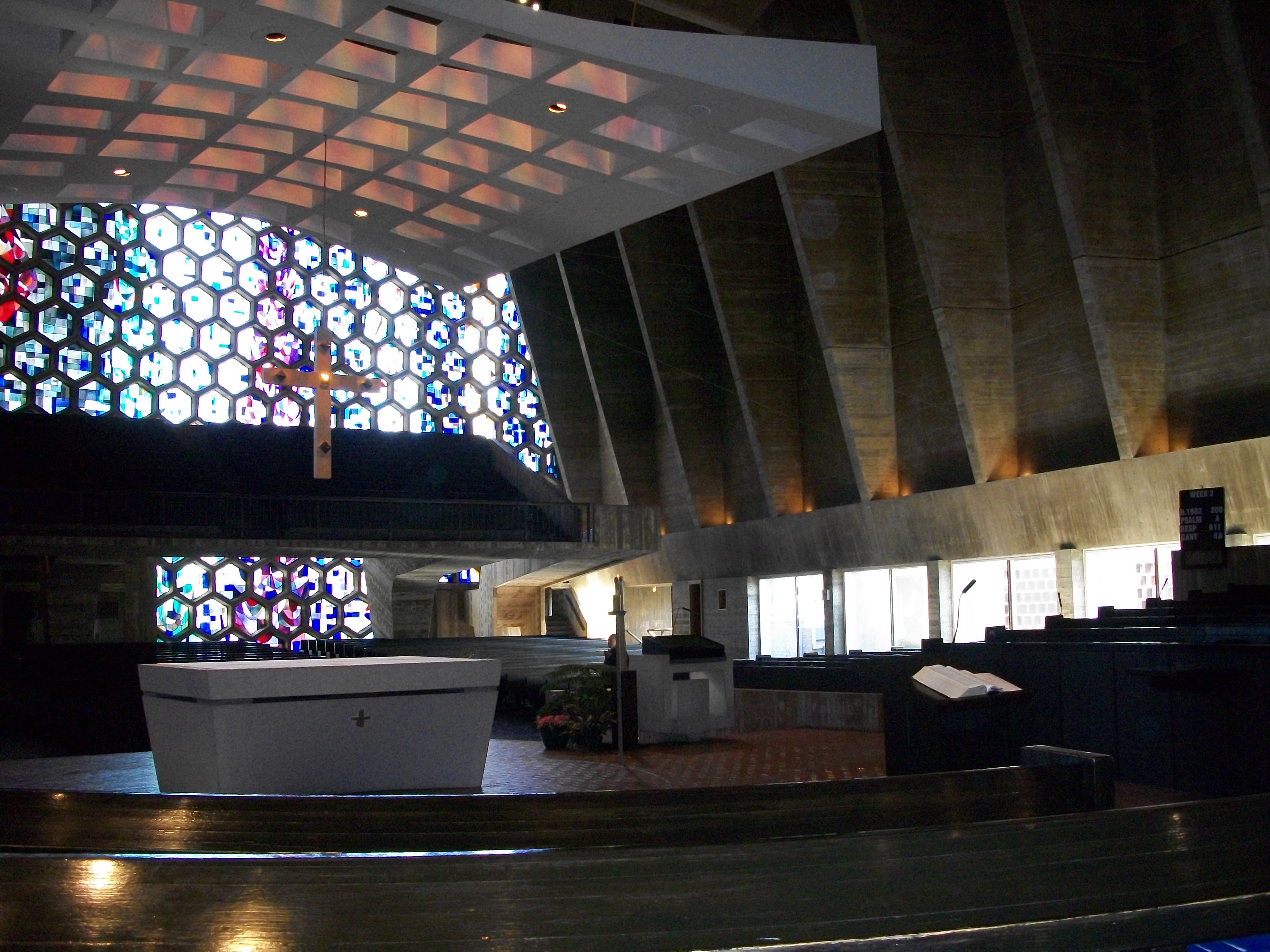 As I sat for many weeks in daily prayer with Benedictine monks several years ago, the reorientation began as I noticed a slow opening of peaceful spaces inside and a new way of seeing what is around me. This does not conflict with my intellect, my mind or my philosophy—it holds them in place. And when I run out of convincing words, I plan to remember this that I just read from Lawrence Kushner:
Why is it that you cannot simply tell someone a great religious truth without a whole rigmarole of questions and hints, allusions and mysteries? It is because that is the way God made the world.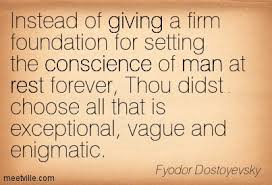
Previous Post

July 18, 2016
Random Midsummer Thoughts
Next Post
July 25, 2016 Believing What I Think
Browse Our Archives
Select a Category abortion Advent AI Angels Artificial intelligence atheism attention baptism Baptists beauty belief Benedictines Bible bicycling Big Bird books Bovina Camaldoli hermitage Canada Catholicism cats certainty change Christianity Christmas Collegeville Covid-19 creativity Development of Western Civilization dogs doubt Easter Enneagram Epiphany Episcopal ethics Eucharist evil extroverts Facebook faith family fear flowers forgiveness freedom friends God goodness grace happiness heaven hell history Holy Spirit Holy Week hope human nature humility humor idolatry incarnation introverts irreverence Islam Jeanne Jesus Joe Biden joy Judaism justice Kamala Harris knowledge Lent listen literature liturgy love Marsue Memorial Day miracles movies music mystery mythology NPR Old Testament optimism paradox peace Penguins philosophy piano podcast politics power prayer Protestantism Providence College Religion Rhode Island sabbatical sacrament science seeing silence Simone Weil Socrates soul sports St. John's College stories suffering tattoo teaching technology television theology thinking time tolerance transcendence travel trees trust truth Uncategorized Vermont wisdom wonder writing
Select a Month May 2026 April 2026 March 2026 February 2026 January 2026 December 2025 November 2025 October 2025 September 2025 August 2025 July 2025 June 2025 May 2025 April 2025 March 2025 February 2025 January 2025 December 2024 November 2024 October 2024 September 2024 August 2024 July 2024 June 2024 May 2024 April 2024 March 2024 February 2024 January 2024 December 2023 November 2023 October 2023 September 2023 August 2023 July 2023 June 2023 May 2023 April 2023 March 2023 February 2023 January 2023 December 2022 November 2022 October 2022 September 2022 August 2022 July 2022 June 2022 May 2022 April 2022 March 2022 February 2022 January 2022 December 2021 November 2021 October 2021 September 2021 August 2021 July 2021 June 2021 May 2021 April 2021 March 2021 February 2021 January 2021 December 2020 November 2020 October 2020 September 2020 August 2020 July 2020 June 2020 May 2020 April 2020 March 2020 February 2020 January 2020 December 2019 November 2019 October 2019 September 2019 August 2019 July 2019 June 2019 May 2019 April 2019 March 2019 February 2019 January 2019 December 2018 November 2018 October 2018 September 2018 August 2018 July 2018 June 2018 May 2018 April 2018 March 2018 February 2018 January 2018 December 2017 November 2017 October 2017 September 2017 August 2017 July 2017 June 2017 May 2017 April 2017 March 2017 February 2017 January 2017 December 2016 November 2016 October 2016 September 2016 August 2016 July 2016 June 2016 May 2016 April 2016 March 2016 February 2016 January 2016 December 2015 November 2015 October 2015 September 2015 August 2015 July 2015 June 2015 May 2015 April 2015 March 2015 February 2015 January 2015 December 2014 November 2014 October 2014 September 2014 August 2014 July 2014 June 2014 May 2014 April 2014 March 2014 February 2014 January 2014 December 2013 November 2013 October 2013 September 2013 August 2013 July 2013 June 2013 May 2013 April 2013 March 2013 February 2013 January 2013 December 2012 November 2012 October 2012 September 2012
Follow Us!
TAKE THE
Religious Wisdom Quiz
Who is the most common author of the Psalms?
Select your answer to see how you score.
Solomon David Moses Asaph
Books by This Author Books by Vance G. Morgan
Related posts from Freelance Christianity

The Lonely Pawn: On Faith, Doubt, and Meaning


AI and Love: When a Chatbot Becomes a...

TRENDING AT PATHEOS Progressive Christian

Why Christians Have a Sacred Duty to Vote:...
The Bible offers strong support for the sacred duty to vote. Here...

What Being a Modern-Day Apostle Means to Me
In my last column, I discussed the ins and outs of modern-day...

Did Ancient China Once Worship the God of...
Across human history, a common thread weaves through the origins of the...

Love Your Neighbor – Including Earth-Kin: Lev. 19,...
God’s command to love your neighbor means acting in an ethical and...

Lead a Church Study of “Jesus and Lao...
Guest writer Jack Thomas (The Irreverent Reverend) reflects on leading his church...

Principles for Understanding the Apostolic Ministry Today
Whenever people discover that my formal ministry title is "apostle," as in...
view all Progressive Christian blogs
Ad-Free & Subscriber Log-In Subscription Support
- About Us
- 2026 Calendar
- Videos
- Podcasts
- Library of World Religions
- Faith In Media Tracker
- Advertise With Us
- Write for Us
- Privacy Policy
- Terms of Service
- Do Not Sell My Data
- Contact Us
- Radiant Digital
- Manage Newsletter Subscriptions
- Unsubscribe From Notifications
- Sitemap
Copyright 2008-2026, Patheos. All rights reserved.
Subscription Support Ad-Free & Subscriber Log-In
Follow Patheos