
BuddhistCatholicContemplativeEvangelicalGeneral ChristianHinduJewishLatter-day SaintMuslimNew VisionsProgressive Christian
Beliefs
- Buddhist
- Catholic
- Contemplative
- Evangelical
- General Christian
- Hindu
- Jewish
- Latter-day Saint
- More Voices
- Muslim
- New Visions
- Pagan
- Progressive Christian
Topics
- Religion News
- Food and Religion
- Sports and Religion
- Religious Art
- Religious Music and Entertainment
- Religious Events
- History and Religion
- Style and Religion
- Politics and Religion
- Women in Religion
- Recreation Outdoors and Religion
- Business Finance and Religion
- Careers Workplace and Religion
- Education and Religion
- Family Parenting and Religion
- Health Fitness and Religion
- Home and Religion
- Relationships and Religion
- Technology and Religion
- Travel and Religion
Columnists
- Buddhist Columnists
- Business Finance and Religion Columnists
- Careers Workplace and Religion Columnists
- Catholic Columnists
- Contemplative Columnists
- Education and Religion Columnists
- Evangelists Columnists
- Family Parenting and Religion Columnists
- General Christian Columnists
- Health Fitness and Religion Columnists
- Hindu Columnists
- History and Religion Columnists
- Home and Religion Columnists
- Jewish Columnists
- More Voices Columnists
- Latter Day Columnists
- Muslim Columnists
- New Visions Columnists
- Nonreligious Columnists
- Pagan Columnists
- Politics and Religion Columnists
- Progressive Columnists
- Recreation Outdoors and Religion Columnists
- Relationships and Religion Columnists
- Religion News Columnists
- Religious Art Columnists
- Religious Events Columnists
- Religious Music and Entertainment Columnists
- Sports and Religion Columnists
- Style and Religion Columnists
- Technology and Religion Columnists
- Travel and Religion Columnists
- Women in Religion Columnists
Resource Library
- 2026 Calendar
- Library of World Religions
- The 100 Most Holy Places on Earth
- Patheos Answers
- Podcasts
- Videos
- Faith Leaders Database
- Anglican Episcopalian
- Bahai
- Baptist
- Buddhism
- Christianity
- Confucianism
- Eastern Orthodoxy
- Hinduism
- Holiness and Pentecostal
- ISKCON
- Islam
- Judaism
- Lutheran
- Methodist
- The Church of Jesus Christ of Latter-day Saints
- New Age
- Paganism
- Presbytarian and Reformed
- Protestantism
- Religion Behind the Scenes
- Roman Catholic
- Scientology
- Shia Islam
- Sikhism
- Sufism
- Sunni Islam
- Taoism
- Zen
- See all religions
Research Tools
 Ad-Free & Subscriber Log-In Subscription Support
Ad-Free & Subscriber Log-In Subscription Support
Follow Patheos 

- Trending:
- Forgiveness
- |
- Marriage
- |
- Consciousness
- |
- Death Penalty
- |
- Election
- |
- Halloween

- Home
- Progressive Christian
- Reason Touched By Grace: Getting Faith and Intellect on the Same Page
Reason Touched By Grace: Getting Faith and Intellect on the Same Page
Last updated on: September 12, 2019 at 3:05 pm by Vance Morgan
Reason Touched By Grace: Getting Faith and Intellect on the Same Page 2019-09-12T15:05:21-04:00 Vance Morgan
Patheos Explore the world's faith through different perspectives on religion and spirituality! Patheos has the views of the prevalent religions and spiritualities of the world.
A few days ago, Pete Buttigeig, mayor of South Bend and candidate for the Democratic nomination for President, was interviewed on MSNBC’s “Morning Joe.” One of the many things that has made Mayor Pete an unusual candidate is his willingness to talk openly about how his Christian faith has shaped him, both as a public servant and as a person. In answer to Joe Scarborough’s wondering whether Buttigeig believed that Jesus Christ was his “Lord and personal Savior,” Mayor Pete said this:
Yes, but maybe that means different things to different people. A lot of people feel that they had a sort of road to Damascus personal encounter with God. For me, personally, I came to the faith through an appreciation of mystery and personal humility about the limits to where this part of me [points to his head] can get, rather than by believing that I had found “the answer.” I struggle with a lot of doubt and with a lot of ambiguity, but that is there in Scripture, just as that is there in life.
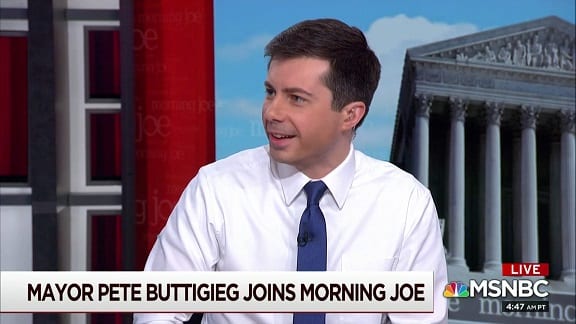
I didn’t appreciate Scarborough’s subsequent attempts to get Buttigeig to verbally sign on the dotted line in endorsement of Scarborough’s favored Baptist description of “salvation,” but I loved Mayor Pete’s original and subsequent responses. They resonated with my own experience as I seek to live out a real faith in the midst of doubts and uncertainties.
On the recommendation of a good friend, I recently read Patricia Hampl’s The Art of the Wasted Day. My friend thought that the book might particularly appeal to my “philosophical” side, but it did more than that. It appealed to the side of me that resonates with Mayor Pete’s comments, the side that tries to negotiate the constant intersection between my head and my heart.
There is no linear narrative to The Art of the Wasted Day, perhaps not even a “point” in the usual sense that the word is intended. And yet several interlocking people and ideas keep rising to the surface of Hampl’s ruminations, items that have floated in and out of my writing, teaching, and consciousness for the past several years. My 16th century soulmate Michel de Montaigne, an increasing distrust of certainty of all sorts, a fascination with how bits and pieces of memory are stitched into a life, confusion and fascination with the need to write even if no one is reading what I write—these obsessions of mine weave through Hampl’s book like distinctive threads through a complex tapestry.
Hampl is not a particularly “religious” thinker or writer, but—despite the title of this blog—I would argue that I am not a particularly “religious” thinker or writer either, despite my obvious obsession with God and the life of faith. I am constitutionally allergic to organized religion, an allergy that has developed over many years as I have grappled with the effects of the organized religion into which I was born and which—for both better and worse—shaped me in many ways.
And yet, despite this allergy, I find myself strangely attracted to, even comforted by, any number of things that, to an outsider, look “religious.” I resonate with many aspects of liturgy. I still love many of the Protestant hymns from my youth. I love artwork and architecture related to religion. I love many parts of the Bible. My dedication to the teaching profession, shaped by my training in philosophy, adds more cognitive dissonance to the mix. How are all of these apparently incompatible elements of thought, commitment, and life to coexist in one place? I’ve wondered about that for most of my life. And so has Patricia Hampl.
Michel de Montaigne, the inventor of the self-reflective essay, the philosopher sometimes described as “the first modern man,” is a frequent focus of Hampl’s attention in The Art of the Wasted Day. Two-thirds of the way through the book, she tells the story of her visit to Montaigne’s chateau in southern France, where his monumental Essais was written over the last decade or so of his life. Montaigne did his writing in a library located on the top floor of a circular tower on the grounds of the chateau (bottom left in the picture below). As she climbs the winding, stone stairs toward Montaigne’s library, she passes his private chapel on the floor below, “niched with an altar, a shrinelike cavern.”

While exploring Montaigne’s library above, a “light-filled chamber” that is more or less a secular shrine and pilgrimage location for those who love Montaigne’s essays, Hampl notices—next to the small alcove where Montaigne slept adjacent to a fireplace—“a kind of chute, a peephole down to the chapel so he could hear—even see—Mass without going down there.” A library, a fireplace, a place to sleep, listening to and participating in the Mass without having to descend the stairs—this is a bachelor den, what we often call a “man cave” nowadays. Montaigne, although Catholic his whole life, is not known for his religious devotion; as a matter of fact, he makes a frequent point of expressing the insanity of religious fervor and orthodoxy at the expense of doubt and careful thought, especially when such fervor and orthodoxy incites the sort of violence that swept over France throughout Montaigne’s entire life.
Accordingly, Hampl is surprised both by the chapel and by Montaigne’s apparent desire to stay connected to his faith, while at the same time crafting doubt and skepticism into an art form.
He built liturgy into his privacy, this first “modern man,” this man we claim as a skeptic. He was a skeptic—and also a believer. He bridged the gap. He lived above with his books in the unheated tower, and he tended, faithfully, the rituals down there in the candlelit dark where mystery abided.
Built into the very architecture of Montaigne’s tower is the realization that it is possible for faith and reason, mystery and logic, belief and skeptical doubt, to cohabit fruitfully without contradiction and without aggression. I smiled as I read Hampl’s lovely, brief meditation on the relationship of Montaigne’s library and his chapel, one located above the other as the head is above the heart. I smiled because I realized that, in my own humble and limited ways, I have been seeking to build such an internal space my whole life.
It perhaps never occurred to Montaigne to think that there was something odd or contradictory about keeping one foot in the faith of his youth while firmly planting his other foot in ideas, texts, and essays that, according to traditional ways of thinking, are a direct threat to the very faith that he maintained. But he knew that his faith was as much a part of him as his being French and his being a privileged male aristocrat; he writes in the Essais that “we are Catholic in the same way that we are German or Perigordian.”
Similarly, perhaps, I am Christian in the same way that I am a male and an extreme introvert. I was born that way. Certainly, my faith is subject to rigorous challenge, doubt, and revision—I do that all the time, more and more vigorously and explicitly the older I get. Yet I have never felt the need to explain or defend my strong connection to and belief in matters of faith that defy logical analysis or intellectual scrutiny.
When reflecting on these dynamics in Montaigne (and in herself), Patricia Hampl quotes John Keats: “One must be capable of being in uncertainties, mysteries, doubts, without any irritable reaching after fact and reason.” The best way to “bridge the gap” between the chapel and the man cave is with a life committed to the value and importance of both, a life energized by both doubt and belief, by liturgy and logic. I’ve often said that the best proof of the existence of God is a changed life. The life memorialized in Montaigne’s tower is the sort of life in which that sort of change is most likely to happen.
In his recent book Montaigne in Barn Boots, Michael Perry describes Montaigne as “a very original Christian skeptic who leaned toward reason, but only if it was touched by grace.” I love that description and aspire, more and more, to be that sort of person myself.
Previous Post

September 5, 2019
Donald Trump, Pardons, and Forgiveness
Next Post

September 10, 2019 Dear Trump Supporters: Believing Something Doesn't Make It True
Browse Our Archives
Select a Category abortion Advent AI Angels Artificial intelligence atheism attention baptism Baptists beauty belief Benedictines Bible bicycling Big Bird books Bovina Camaldoli hermitage Canada Catholicism cats certainty change Christianity Christmas Collegeville Covid-19 creativity Development of Western Civilization dogs doubt Easter Enneagram Epiphany Episcopal ethics Eucharist evil extroverts Facebook faith family fear flowers forgiveness freedom friends God goodness grace happiness heaven hell history Holy Spirit Holy Week hope human nature humility humor idolatry incarnation introverts irreverence Islam Jeanne Jesus Joe Biden joy Judaism justice Kamala Harris knowledge Lent listen literature liturgy love Marsue Memorial Day miracles movies music mystery mythology NPR Old Testament optimism paradox peace Penguins philosophy piano podcast politics power prayer Protestantism Providence College Religion Rhode Island sabbatical sacrament science seeing silence Simone Weil Socrates soul sports St. John's College stories suffering tattoo teaching technology television theology thinking time tolerance transcendence travel trees trust truth Uncategorized Vermont wisdom wonder writing
Select a Month May 2026 April 2026 March 2026 February 2026 January 2026 December 2025 November 2025 October 2025 September 2025 August 2025 July 2025 June 2025 May 2025 April 2025 March 2025 February 2025 January 2025 December 2024 November 2024 October 2024 September 2024 August 2024 July 2024 June 2024 May 2024 April 2024 March 2024 February 2024 January 2024 December 2023 November 2023 October 2023 September 2023 August 2023 July 2023 June 2023 May 2023 April 2023 March 2023 February 2023 January 2023 December 2022 November 2022 October 2022 September 2022 August 2022 July 2022 June 2022 May 2022 April 2022 March 2022 February 2022 January 2022 December 2021 November 2021 October 2021 September 2021 August 2021 July 2021 June 2021 May 2021 April 2021 March 2021 February 2021 January 2021 December 2020 November 2020 October 2020 September 2020 August 2020 July 2020 June 2020 May 2020 April 2020 March 2020 February 2020 January 2020 December 2019 November 2019 October 2019 September 2019 August 2019 July 2019 June 2019 May 2019 April 2019 March 2019 February 2019 January 2019 December 2018 November 2018 October 2018 September 2018 August 2018 July 2018 June 2018 May 2018 April 2018 March 2018 February 2018 January 2018 December 2017 November 2017 October 2017 September 2017 August 2017 July 2017 June 2017 May 2017 April 2017 March 2017 February 2017 January 2017 December 2016 November 2016 October 2016 September 2016 August 2016 July 2016 June 2016 May 2016 April 2016 March 2016 February 2016 January 2016 December 2015 November 2015 October 2015 September 2015 August 2015 July 2015 June 2015 May 2015 April 2015 March 2015 February 2015 January 2015 December 2014 November 2014 October 2014 September 2014 August 2014 July 2014 June 2014 May 2014 April 2014 March 2014 February 2014 January 2014 December 2013 November 2013 October 2013 September 2013 August 2013 July 2013 June 2013 May 2013 April 2013 March 2013 February 2013 January 2013 December 2012 November 2012 October 2012 September 2012
Follow Us!
TAKE THE
Religious Wisdom Quiz
Who said, "Lord, I believe; help my unbelief!"
Select your answer to see how you score.
Mary Peter Thomas The father of a sick boy
Books by This Author Books by Vance G. Morgan
Related posts from Freelance Christianity

The Lonely Pawn: On Faith, Doubt, and Meaning


AI and Love: When a Chatbot Becomes a...

TRENDING AT PATHEOS Progressive Christian

Why Christians Have a Sacred Duty to Vote:...
The Bible offers strong support for the sacred duty to vote. Here...

What Being a Modern-Day Apostle Means to Me
In my last column, I discussed the ins and outs of modern-day...

Did Ancient China Once Worship the God of...
Across human history, a common thread weaves through the origins of the...

Love Your Neighbor – Including Earth-Kin: Lev. 19,...
God’s command to love your neighbor means acting in an ethical and...

Lead a Church Study of “Jesus and Lao...
Guest writer Jack Thomas (The Irreverent Reverend) reflects on leading his church...

Principles for Understanding the Apostolic Ministry Today
Whenever people discover that my formal ministry title is "apostle," as in...
view all Progressive Christian blogs
Ad-Free & Subscriber Log-In Subscription Support
- About Us
- 2026 Calendar
- Videos
- Podcasts
- Library of World Religions
- Faith In Media Tracker
- Advertise With Us
- Write for Us
- Privacy Policy
- Terms of Service
- Do Not Sell My Data
- Contact Us
- Radiant Digital
- Manage Newsletter Subscriptions
- Unsubscribe From Notifications
- Sitemap
Copyright 2008-2026, Patheos. All rights reserved.
Subscription Support Ad-Free & Subscriber Log-In
Follow Patheos