
BuddhistCatholicContemplativeEvangelicalGeneral ChristianHinduJewishLatter-day SaintMuslimNew VisionsProgressive Christian
Beliefs
- Buddhist
- Catholic
- Contemplative
- Evangelical
- General Christian
- Hindu
- Jewish
- Latter-day Saint
- More Voices
- Muslim
- New Visions
- Pagan
- Progressive Christian
Topics
- Religion News
- Food and Religion
- Sports and Religion
- Religious Art
- Religious Music and Entertainment
- Religious Events
- History and Religion
- Style and Religion
- Politics and Religion
- Women in Religion
- Recreation Outdoors and Religion
- Business Finance and Religion
- Careers Workplace and Religion
- Education and Religion
- Family Parenting and Religion
- Health Fitness and Religion
- Home and Religion
- Relationships and Religion
- Technology and Religion
- Travel and Religion
Columnists
- Buddhist Columnists
- Business Finance and Religion Columnists
- Careers Workplace and Religion Columnists
- Catholic Columnists
- Contemplative Columnists
- Education and Religion Columnists
- Evangelists Columnists
- Family Parenting and Religion Columnists
- General Christian Columnists
- Health Fitness and Religion Columnists
- Hindu Columnists
- History and Religion Columnists
- Home and Religion Columnists
- Jewish Columnists
- More Voices Columnists
- Latter Day Columnists
- Muslim Columnists
- New Visions Columnists
- Nonreligious Columnists
- Pagan Columnists
- Politics and Religion Columnists
- Progressive Columnists
- Recreation Outdoors and Religion Columnists
- Relationships and Religion Columnists
- Religion News Columnists
- Religious Art Columnists
- Religious Events Columnists
- Religious Music and Entertainment Columnists
- Sports and Religion Columnists
- Style and Religion Columnists
- Technology and Religion Columnists
- Travel and Religion Columnists
- Women in Religion Columnists
Resource Library
- 2026 Calendar
- Library of World Religions
- The 100 Most Holy Places on Earth
- Patheos Answers
- Podcasts
- Videos
- Faith Leaders Database
- Anglican Episcopalian
- Bahai
- Baptist
- Buddhism
- Christianity
- Confucianism
- Eastern Orthodoxy
- Hinduism
- Holiness and Pentecostal
- ISKCON
- Islam
- Judaism
- Lutheran
- Methodist
- The Church of Jesus Christ of Latter-day Saints
- New Age
- Paganism
- Presbytarian and Reformed
- Protestantism
- Religion Behind the Scenes
- Roman Catholic
- Scientology
- Shia Islam
- Sikhism
- Sufism
- Sunni Islam
- Taoism
- Zen
- See all religions
Research Tools
 Ad-Free & Subscriber Log-In Subscription Support
Ad-Free & Subscriber Log-In Subscription Support
Follow Patheos 

- Trending:
- Forgiveness
- |
- Marriage
- |
- Consciousness
- |
- Death Penalty
- |
- Election
- |
- Halloween

- Home
- Progressive Christian
- From Babel to Pentecost–We’ve Come Full Circle
From Babel to Pentecost–We’ve Come Full Circle
Last updated on: May 23, 2021 at 6:00 am by Vance Morgan
From Babel to Pentecost–We’ve Come Full Circle 2021-05-17T17:43:51-04:00 Vance Morgan
Patheos Explore the world's faith through different perspectives on religion and spirituality! Patheos has the views of the prevalent religions and spiritualities of the world.
Jeanne and I once watched a documentary called “Fierce Light: When Spirit Meets Action,” created, filmed and directed by a man with the fabulous name “Velcrow Ripper.” He is the cousin-in-law of a colleague and friend of Jeanne’s who made the recommendation. The movie was beautifully constructed and filmed, as well as being very thought-provoking. The central thread of the documentary traces various ways in which people seek spiritual growth and reality that are seldom located in traditionally religious frameworks. All this, of course, in the middle of a world that often seems to have little concern for matters of the spirit. The voices of spirituality, religion, secularism, materialism, power, and greed often are speaking languages so incompatible that our world appears to be little more than a cacophony of white noise at different pitches.
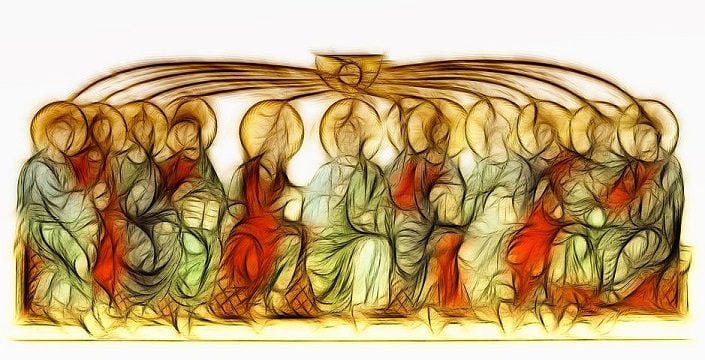
Today is Pentecost Sunday. The Old Testament reading for Pentecost often is a story that is familiar to many but has probably been actually read by few. The Tower of Babel tale is part of the first seminar assignment (Genesis 1-25) when I teach in the freshman year of the interdisciplinary course I regularly participate in. These chapters contain stories so seminal and formative—creation, the Garden of Eden, Cain and Abel, Noah and his ark, the call and adventures of Abraham—that it is impossible to do them all justice. So I don’t try. Instead, I focus our seminar attention on the strange story in Genesis 11.
Very briefly, this story is traditionally interpreted as a story similar to Noah and the flood—human beings are getting uppity and God puts them in their place. Because of their hubris, God scatters people in every direction as well as “confusing their language” so they can no longer understand each other. Just as we can blame Adam and Eve for original sin, so our seeming incapability of understanding or truly communicating with each other is inherited from the people of Babel who thought themselves to be greater than they actually were.
Reading this story anew with my students last fall, however, revealed something far more interesting and provocative. First of all, there is no obvious challenge to God from the people of Babel. What they want to do is build a city, share their talents, build a tower as tall as their abilities and technology will allow, settle down, stop wandering, and “make a name for ourselves—otherwise we shall be scattered abroad upon the face of the earth.” In other words, this is a story about the early beginnings of what we recognize as civilization. Recognizing that the world is a demanding and scary place, human beings learn that there is strength and security in cooperation and numbers. Self-reliance and independence are better established collectively than individually. There is no obvious sense of humans thumbing their noses at God here, just a desire to reap the benefits of community. So what’s the big deal?
From the perspective of Elohim (the plural name for God used in this story), apparently this is a very big deal in a negative sense. Something about human attempts at solidarity, independence and strength is threatening to God throughout the Old Testament, never more so than in this story. “This is only the beginning of what they will do; nothing that they propose to do will now be impossible for them.” These amazing creatures that we made? Look at what they can do! Planning, creativity, cooperation, independence, ambition—the sky’s the limit! Great stuff, right? Our kids are growing up! Divine high fives all around! Not exactly. “Come, let us go down, and confuse their language there, so that they will not understand one another’s speech.” Someone’s sounding threatened and paranoid.
At the very least, the Tower of Babel story reveals that human progress by its very nature creates tension with what is greater than us. This particular God, sounding like somewhat of a control freak, is made uneasy by the prospect that this particular creation might actually have a mind and will of its own. These are the early seeds of tension between the secular and the sacred. The divine response? Put an end to it now. Scatter them, confuse them, cut this thing off at the knees. Not surprisingly, when I ask my seminar students to reflect in their journals on the question “Did God treat the people of Babel fairly?” they unanimously judge that God did not.
Toward the end of the semester, as we move into the New Testament for a couple of weeks, the seminar assignment is usually the Gospel of Luke, the Book of Acts, and Romans. What, among the vast array of possibilities, to focus on? It occurs to me, as it often occurs independently to several students in seminar, that there is far more than simply a surface level connection between the story of Pentecost in Acts 2 and the Tower of Babel story in Genesis 11. In fact, Pentecost undoes Babel, turns it on its head. Rather than dispersing human beings and confusing their language, at Pentecost the divine unites human beings by causing them to understand each other.
I was taught that Pentecost is the “birthday of the church,” but actually I think it signifies something much greater and more important than the start of a church or religion. Pentecost tells us that the divine is neither angry at nor threatened by us. God wants human beings to cooperate and communicate effectively. Furthermore, our ability to do so is a divine gift. Whenever we overcome the vast differences that separate us, differences too many to count, the divine is present. Whenever human beings connect, not by eliminating differences but rather by finding commonality, enhanced and deepened by our diverse perspectives and experiences, God is there. The divine strategy, culminating in Pentecost, is simple and profound. The distance between God and humanity in Genesis 11 has been eliminated; Pentecost completes the story of the Incarnation. We all are “God carriers.”
Pentecost also tells us that the divine solution to our failure to understand each other is not conformity, getting everyone on the same page and believing the same thing. Everyone did not miraculously start speaking the same language at Pentecost, as humans did at the start of the Babel story. Each person retained his or her language and was divinely enabled to hear the good news in his or her own tongue. God met everyone exactly where they were, as the divine continues to do. Because we now “contain this treasure in earthen vessels,”as Paul wrote to the church at Corinth, we can easily be distracted by the various shapes, sizes, designs, and materials of the clay pots. But the divine connects us all. In the words of the ancient Gregorian chant,
Where charity and love is,
God is there.
Development of Western Civilization
Previous Post

May 20, 2021
Why Graduation Day and Pentecost Belong Together
Next Post

May 25, 2021 Do You Believe In the Human Heart?
Browse Our Archives
Select a Category abortion Advent AI Angels Artificial intelligence atheism attention baptism Baptists beauty belief Benedictines Bible bicycling Big Bird books Bovina Camaldoli hermitage Canada Catholicism cats certainty change Christianity Christmas Collegeville Covid-19 creativity Development of Western Civilization dogs doubt Easter Enneagram Epiphany Episcopal ethics Eucharist evil extroverts Facebook faith family fear flowers forgiveness freedom friends God goodness grace happiness heaven hell history Holy Spirit Holy Week hope human nature humility humor idolatry incarnation introverts irreverence Islam Jeanne Jesus Joe Biden joy Judaism justice Kamala Harris knowledge Lent listen literature liturgy love Marsue Memorial Day miracles movies music mystery mythology NPR Old Testament optimism paradox peace Penguins philosophy piano podcast politics power prayer Protestantism Providence College Religion Rhode Island sabbatical sacrament science seeing silence Simone Weil Socrates soul sports St. John's College stories suffering tattoo teaching technology television theology thinking time tolerance transcendence travel trees trust truth Uncategorized Vermont wisdom wonder writing
Select a Month May 2026 April 2026 March 2026 February 2026 January 2026 December 2025 November 2025 October 2025 September 2025 August 2025 July 2025 June 2025 May 2025 April 2025 March 2025 February 2025 January 2025 December 2024 November 2024 October 2024 September 2024 August 2024 July 2024 June 2024 May 2024 April 2024 March 2024 February 2024 January 2024 December 2023 November 2023 October 2023 September 2023 August 2023 July 2023 June 2023 May 2023 April 2023 March 2023 February 2023 January 2023 December 2022 November 2022 October 2022 September 2022 August 2022 July 2022 June 2022 May 2022 April 2022 March 2022 February 2022 January 2022 December 2021 November 2021 October 2021 September 2021 August 2021 July 2021 June 2021 May 2021 April 2021 March 2021 February 2021 January 2021 December 2020 November 2020 October 2020 September 2020 August 2020 July 2020 June 2020 May 2020 April 2020 March 2020 February 2020 January 2020 December 2019 November 2019 October 2019 September 2019 August 2019 July 2019 June 2019 May 2019 April 2019 March 2019 February 2019 January 2019 December 2018 November 2018 October 2018 September 2018 August 2018 July 2018 June 2018 May 2018 April 2018 March 2018 February 2018 January 2018 December 2017 November 2017 October 2017 September 2017 August 2017 July 2017 June 2017 May 2017 April 2017 March 2017 February 2017 January 2017 December 2016 November 2016 October 2016 September 2016 August 2016 July 2016 June 2016 May 2016 April 2016 March 2016 February 2016 January 2016 December 2015 November 2015 October 2015 September 2015 August 2015 July 2015 June 2015 May 2015 April 2015 March 2015 February 2015 January 2015 December 2014 November 2014 October 2014 September 2014 August 2014 July 2014 June 2014 May 2014 April 2014 March 2014 February 2014 January 2014 December 2013 November 2013 October 2013 September 2013 August 2013 July 2013 June 2013 May 2013 April 2013 March 2013 February 2013 January 2013 December 2012 November 2012 October 2012 September 2012
Follow Us!
TAKE THE
Religious Wisdom Quiz
What was Bezalel's profession?
Select your answer to see how you score.
Soldier Craftsman Priest Farmer
Books by This Author Books by Vance G. Morgan
Related posts from Freelance Christianity

The Lonely Pawn: On Faith, Doubt, and Meaning


AI and Love: When a Chatbot Becomes a...

TRENDING AT PATHEOS Progressive Christian

What Being a Modern-Day Apostle Means to Me
In my last column, I discussed the ins and outs of modern-day...

Did Ancient China Once Worship the God of...
Across human history, a common thread weaves through the origins of the...

Love Your Neighbor – Including Earth-Kin: Lev. 19,...
God’s command to love your neighbor means acting in an ethical and...

Lead a Church Study of “Jesus and Lao...
Guest writer Jack Thomas (The Irreverent Reverend) reflects on leading his church...

Pastoral Wisdom for Responding to Sermon Pushback
Getting sermon pushback on your social justice sermon? Learn practical, Proverbs-based strategies...

Principles for Understanding the Apostolic Ministry Today
Whenever people discover that my formal ministry title is "apostle," as in...
view all Progressive Christian blogs
Ad-Free & Subscriber Log-In Subscription Support
- About Us
- 2026 Calendar
- Videos
- Podcasts
- Library of World Religions
- Faith In Media Tracker
- Advertise With Us
- Write for Us
- Privacy Policy
- Terms of Service
- Do Not Sell My Data
- Contact Us
- Radiant Digital
- Manage Newsletter Subscriptions
- Unsubscribe From Notifications
- Sitemap
Copyright 2008-2026, Patheos. All rights reserved.
Subscription Support Ad-Free & Subscriber Log-In
Follow Patheos