
BuddhistCatholicContemplativeEvangelicalGeneral ChristianHinduJewishLatter-day SaintMuslimNew VisionsProgressive Christian
Beliefs
- Buddhist
- Catholic
- Contemplative
- Evangelical
- General Christian
- Hindu
- Jewish
- Latter-day Saint
- More Voices
- Muslim
- New Visions
- Pagan
- Progressive Christian
Topics
- Religion News
- Food and Religion
- Sports and Religion
- Religious Art
- Religious Music and Entertainment
- Religious Events
- History and Religion
- Style and Religion
- Politics and Religion
- Women in Religion
- Recreation Outdoors and Religion
- Business Finance and Religion
- Careers Workplace and Religion
- Education and Religion
- Family Parenting and Religion
- Health Fitness and Religion
- Home and Religion
- Relationships and Religion
- Technology and Religion
- Travel and Religion
Columnists
- Buddhist Columnists
- Business Finance and Religion Columnists
- Careers Workplace and Religion Columnists
- Catholic Columnists
- Contemplative Columnists
- Education and Religion Columnists
- Evangelists Columnists
- Family Parenting and Religion Columnists
- General Christian Columnists
- Health Fitness and Religion Columnists
- Hindu Columnists
- History and Religion Columnists
- Home and Religion Columnists
- Jewish Columnists
- More Voices Columnists
- Latter Day Columnists
- Muslim Columnists
- New Visions Columnists
- Nonreligious Columnists
- Pagan Columnists
- Politics and Religion Columnists
- Progressive Columnists
- Recreation Outdoors and Religion Columnists
- Relationships and Religion Columnists
- Religion News Columnists
- Religious Art Columnists
- Religious Events Columnists
- Religious Music and Entertainment Columnists
- Sports and Religion Columnists
- Style and Religion Columnists
- Technology and Religion Columnists
- Travel and Religion Columnists
- Women in Religion Columnists
Resource Library
- 2026 Calendar
- Library of World Religions
- The 100 Most Holy Places on Earth
- Patheos Answers
- Podcasts
- Videos
- Faith Leaders Database
- Anglican Episcopalian
- Bahai
- Baptist
- Buddhism
- Christianity
- Confucianism
- Eastern Orthodoxy
- Hinduism
- Holiness and Pentecostal
- ISKCON
- Islam
- Judaism
- Lutheran
- Methodist
- The Church of Jesus Christ of Latter-day Saints
- New Age
- Paganism
- Presbytarian and Reformed
- Protestantism
- Religion Behind the Scenes
- Roman Catholic
- Scientology
- Shia Islam
- Sikhism
- Sufism
- Sunni Islam
- Taoism
- Zen
- See all religions
Research Tools
 Ad-Free & Subscriber Log-In Subscription Support
Ad-Free & Subscriber Log-In Subscription Support
Follow Patheos 

- Trending:
- Forgiveness
- |
- Marriage
- |
- Consciousness
- |
- Death Penalty
- |
- Election
- |
- Halloween

- Home
- Progressive Christian
- Flesh and Blood Goodness
Flesh and Blood Goodness
Last updated on: February 18, 2021 at 7:00 am by Vance Morgan
Flesh and Blood Goodness 2021-02-17T17:17:18-04:00 Vance Morgan
Patheos Explore the world's faith through different perspectives on religion and spirituality! Patheos has the views of the prevalent religions and spiritualities of the world.
Once many years ago, a couple I was close friends with was having marital problems. For the first (and only) time in my life, I found myself frequently playing the role of telephone confessor and therapist for each of them—I’m quite sure that neither was aware that I was doing this with the other. The phone calls became so frequent that one evening as I talked to the male in the relationship, the woman beeped in on call waiting. Toward the end of their relationship, she complained to me one evening that “There is no problem so great that he can’t ignore it!” These informal therapy sessions were unsuccessful; the couple soon divorced, one of them remarried, and both seem to have spent the past twenty-five-plus years far happier than they were when together. Maybe that means my input was successful after all.
My friend’s complaint about her husband was, unfortunately, all too recognizable as a typical human reaction to information or truths that we don’t want to hear. In the Gospel of John, Jesus is reported as having said “You will know the truth, and the truth will set you free.” I don’t think so. I think the real situation is more like what one of my students wrote in a recent intellectual notebook entry: “The truth doesn’t set a person free, but it does complicate their life.” So what is one to do when the truth about something is so obvious that it cannot be ignored—and you don’t want to deal with it?
Along with a colleague from the history department, I am currently teaching a colloquium entitled “‘Love Never Fails’: Grace, Freedom, and Truth during the Nazi Era.” This the fifth time that we have taught this wildly popular course in the past eight years. Each time we teach the course, after several weeks of immersion in the world of the Nazis, including Mein Kampf and Albert Speer’s Inside the Third Reich, students and professors alike are worn out by exposure to human pain, suffering, and evil and how these are facilitated by deliberate ignorance and evasion created through the choices we make.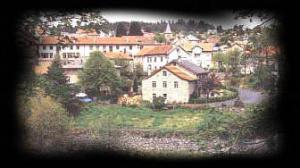
Fortunately, in the second half of the course we encounter a different sort of story altogether: Philip Hallie’s Lest Innocent Blood Be Shed. The subtitle of Hallie’s remarkable book is “The Story of the Village of Le Chambon and How Goodness Happened There.” It is, in many ways, more challenging and disturbing than being immersed in the depths of human depravity.
Hallie’s book is the little-known story of Le Chambon-sur-Lignon, a small and insignificant Protestant village in south-central France that, during the later years of World War II, “became the safest place for Jews in Europe.” Between 1940 and 1943, the villagers of Le Chambon, with full knowledge of the Vichy police and the Gestapo, and at great risk to their own safety and lives, organized a complex network of protection through which they hid and saved the lives of at least five thousand Jewish refugees—most of them women and children.
As a woman whose three children’s lives were saved by these villagers told Philip Hallie decades later, “The Holocaust was storm, lightning, thunder, wind, rain—and Le Chambon was the rainbow.” Hallie comments that “The rainbow reminds God and man that life is precious to God, that God offers not only sentimental hope, but a promise that living will have the last word, not killing. The rainbow means realistic hope,” a hope that was incarnated in Le Chambon.
It is a beautiful story, one that is virtually unknown in comparison to more familiar and dramatic narratives. Everyone who cares about the human spirit should read it—I dare you to make it through with dry eyes. My first question to the thirty-some students in the colloquium at our first class on this text is always “How did this happen?”
There is nothing special about Le Chambon—there are hundreds of similar rural villages throughout Europe. There were dozens of them within a short train ride of Le Chambon. Yet none of them did anything like what the Chambonnais did; indeed, many of them collaborated with the Vichy police and turned their Jewish neighbors and Jewish refugees in to the authorities as the occupying Nazis demanded. What made Le Chambon different? How did goodness happen here?
According to the Chambonnais in virtually every interview Hallie conducted, there was nothing special about what they did at all. After being described as a “hero” or simply as “good,” Magda Trocmé, wife of the village’s dynamic pastor André Trocmé, asked in annoyance
How can you call us ‘good’? We were doing what had to be done. Who else could help them? And what has all this to do with goodness? Things had to be done, that’s all, and we happened to be there to do them. You must understand that it was the most natural thing in the world to help these people. Who else would have taken care of them if we didn’t? They needed our help and they needed it then. Anyone else would have done the same thing.
I asked my students, “Is she right? How many think anyone else would have done the same?” Not a hand was raised—certainly not mine. So the question remains. How did this happen? How did goodness happen here? According to Hallie, the most important reason that goodness happened in Le Chambon is so simple and basic that it cannot be overlooked.
The Chambonnais believed one fundamental thing concerning human beings—that all human life, whether French, Jewish, or Nazi, is fundamentally precious and must not be harmed. Period. Many people, then and now, profess to believe this; the Chambonnais not only believed it—they acted on it. Consistently and regularly. Without questioning or equivocation. For such people, Hallie describes, “The good of others becomes a thing naturally and necessarily attended to, like any of the physical conditions of our existence. For certain people, helping the distressed is as natural and necessary as feeding themselves.” The villagers of Le Chambon were such people.
The source of this simple but powerful lived commitment depended on the person. For Pastor André Trocmé, on the one hand, his commitment to nonviolence and active goodness was rooted in his commitment to emulate Jesus and to take seriously, in a remarkably straightforward way, the message of the gospel. During his theological training, for instance, he was taught by his professors that the Sermon on the Mount is intended to be read as an allegory or as a standard set impossibly high so we can understand our sins and failures more clearly. André had no patience for such evasions. In a book written shortly after the end of the war, he asks
If Jesus really walked upon this earth, why do we keep treating him as if he were a disembodied, impossibly idealistic ethical theory? If he was a real man, then the Sermon on the Mount was made for people on this earth; and if he existed, God has shown us in flesh and blood what goodness is for flesh-and-blood people.
André’s wife Magda, on the other hand, had no patience for doctrine, religion, or any esoteric debate that might take her attention away from what was right in front of her. She did not believe that something was evil because it violated God’s commands. She believed that something is evil simply because it hurts people. A person’s need was the basis of her moral vision, not any sentimental love she might or might not feel for the person in need, and certainly not any calling to moral or religious excellence. There is a need and I will address it was her motivating energy. Simple as that.
I have taught this book a number of times in various classes over the years; as I worked through the story with my students the last time we taught this course, I realized with a new depth just how disturbing and shocking the story of Le Chambon is. “These people make me uncomfortable,” I told the students. “They let me know just how wide a gap there is between what I say I believe and what I actually do.” When the truth of what I profess is laid out in front of me in a way that I cannot ignore, I want to look away. I shift into philosopher mode—“This is idealistic, this won’t work in real life, real human beings won’t treat each other this way,” and so on.
My students were happy to be told this, because they were just as uncomfortable with the Chambonnais as I was and am. But goodness did happen there in the midst of some of the worst evil humans have ever manufactured. Real people created goodness in the midst of evil by actually taking what they believed seriously enough to do it. The best I can do is to make Hallie’s closing words in Lest Innocent Blood Be Shed my own and invite my students to come along.
I, who share Trocme’s and the Chambonnais’ beliefs in the preciousness of human life, may never have the moral strength to be much like the Chambonnais or like Trocmé; but I know I want to have the power to be. I know that I want to have a door in the depths of my being, a door that is not locked against the faces of all other human beings. I know that I want to be able to say, from the depths, “Naturally, come in, and come in.”
Previous Post

February 16, 2021
The Earth is Round. Two Plus Two Equals Four. Deal With It
Next Post

February 21, 2021 By the Light of the Moon: Thoughts on Reflective Faith
Browse Our Archives
Select a Category abortion Advent AI Angels Artificial intelligence atheism attention baptism Baptists beauty belief Benedictines Bible bicycling Big Bird books Bovina Camaldoli hermitage Canada Catholicism cats certainty change Christianity Christmas Collegeville Covid-19 creativity Development of Western Civilization dogs doubt Easter Enneagram Epiphany Episcopal ethics Eucharist evil extroverts Facebook faith family fear flowers forgiveness freedom friends God goodness grace happiness heaven hell history Holy Spirit Holy Week hope human nature humility humor idolatry incarnation introverts irreverence Islam Jeanne Jesus Joe Biden joy Judaism justice Kamala Harris knowledge Lent listen literature liturgy love Marsue Memorial Day miracles movies music mystery mythology NPR Old Testament optimism paradox peace Penguins philosophy piano podcast politics power prayer Protestantism Providence College Religion Rhode Island sabbatical sacrament science seeing silence Simone Weil Socrates soul sports St. John's College stories suffering tattoo teaching technology television theology thinking time tolerance transcendence travel trees trust truth Uncategorized Vermont wisdom wonder writing
Select a Month May 2026 April 2026 March 2026 February 2026 January 2026 December 2025 November 2025 October 2025 September 2025 August 2025 July 2025 June 2025 May 2025 April 2025 March 2025 February 2025 January 2025 December 2024 November 2024 October 2024 September 2024 August 2024 July 2024 June 2024 May 2024 April 2024 March 2024 February 2024 January 2024 December 2023 November 2023 October 2023 September 2023 August 2023 July 2023 June 2023 May 2023 April 2023 March 2023 February 2023 January 2023 December 2022 November 2022 October 2022 September 2022 August 2022 July 2022 June 2022 May 2022 April 2022 March 2022 February 2022 January 2022 December 2021 November 2021 October 2021 September 2021 August 2021 July 2021 June 2021 May 2021 April 2021 March 2021 February 2021 January 2021 December 2020 November 2020 October 2020 September 2020 August 2020 July 2020 June 2020 May 2020 April 2020 March 2020 February 2020 January 2020 December 2019 November 2019 October 2019 September 2019 August 2019 July 2019 June 2019 May 2019 April 2019 March 2019 February 2019 January 2019 December 2018 November 2018 October 2018 September 2018 August 2018 July 2018 June 2018 May 2018 April 2018 March 2018 February 2018 January 2018 December 2017 November 2017 October 2017 September 2017 August 2017 July 2017 June 2017 May 2017 April 2017 March 2017 February 2017 January 2017 December 2016 November 2016 October 2016 September 2016 August 2016 July 2016 June 2016 May 2016 April 2016 March 2016 February 2016 January 2016 December 2015 November 2015 October 2015 September 2015 August 2015 July 2015 June 2015 May 2015 April 2015 March 2015 February 2015 January 2015 December 2014 November 2014 October 2014 September 2014 August 2014 July 2014 June 2014 May 2014 April 2014 March 2014 February 2014 January 2014 December 2013 November 2013 October 2013 September 2013 August 2013 July 2013 June 2013 May 2013 April 2013 March 2013 February 2013 January 2013 December 2012 November 2012 October 2012 September 2012
Follow Us!
TAKE THE
Religious Wisdom Quiz
Who was the father of John the Baptist?
Select your answer to see how you score.
Joseph Nathan Zechariah Simeon
Books by This Author Books by Vance G. Morgan
Related posts from Freelance Christianity

The Lonely Pawn: On Faith, Doubt, and Meaning


AI and Love: When a Chatbot Becomes a...

TRENDING AT PATHEOS Progressive Christian

What Being a Modern-Day Apostle Means to Me
In my last column, I discussed the ins and outs of modern-day...

Did Ancient China Once Worship the God of...
Across human history, a common thread weaves through the origins of the...

Love Your Neighbor – Including Earth-Kin: Lev. 19,...
God’s command to love your neighbor means acting in an ethical and...

Lead a Church Study of “Jesus and Lao...
Guest writer Jack Thomas (The Irreverent Reverend) reflects on leading his church...

Pastoral Wisdom for Responding to Sermon Pushback
Getting sermon pushback on your social justice sermon? Learn practical, Proverbs-based strategies...

Principles for Understanding the Apostolic Ministry Today
Whenever people discover that my formal ministry title is "apostle," as in...
view all Progressive Christian blogs
Ad-Free & Subscriber Log-In Subscription Support
- About Us
- 2026 Calendar
- Videos
- Podcasts
- Library of World Religions
- Faith In Media Tracker
- Advertise With Us
- Write for Us
- Privacy Policy
- Terms of Service
- Do Not Sell My Data
- Contact Us
- Radiant Digital
- Manage Newsletter Subscriptions
- Unsubscribe From Notifications
- Sitemap
Copyright 2008-2026, Patheos. All rights reserved.
Subscription Support Ad-Free & Subscriber Log-In
Follow Patheos