
BuddhistCatholicContemplativeEvangelicalGeneral ChristianHinduJewishLatter-day SaintMuslimNew VisionsProgressive Christian
Beliefs
- Buddhist
- Catholic
- Contemplative
- Evangelical
- General Christian
- Hindu
- Jewish
- Latter-day Saint
- More Voices
- Muslim
- New Visions
- Pagan
- Progressive Christian
Topics
- Religion News
- Food and Religion
- Sports and Religion
- Religious Art
- Religious Music and Entertainment
- Religious Events
- History and Religion
- Style and Religion
- Politics and Religion
- Women in Religion
- Recreation Outdoors and Religion
- Business Finance and Religion
- Careers Workplace and Religion
- Education and Religion
- Family Parenting and Religion
- Health Fitness and Religion
- Home and Religion
- Relationships and Religion
- Technology and Religion
- Travel and Religion
Columnists
- Buddhist Columnists
- Business Finance and Religion Columnists
- Careers Workplace and Religion Columnists
- Catholic Columnists
- Contemplative Columnists
- Education and Religion Columnists
- Evangelists Columnists
- Family Parenting and Religion Columnists
- General Christian Columnists
- Health Fitness and Religion Columnists
- Hindu Columnists
- History and Religion Columnists
- Home and Religion Columnists
- Jewish Columnists
- More Voices Columnists
- Latter Day Columnists
- Muslim Columnists
- New Visions Columnists
- Nonreligious Columnists
- Pagan Columnists
- Politics and Religion Columnists
- Progressive Columnists
- Recreation Outdoors and Religion Columnists
- Relationships and Religion Columnists
- Religion News Columnists
- Religious Art Columnists
- Religious Events Columnists
- Religious Music and Entertainment Columnists
- Sports and Religion Columnists
- Style and Religion Columnists
- Technology and Religion Columnists
- Travel and Religion Columnists
- Women in Religion Columnists
Resource Library
- 2026 Calendar
- Library of World Religions
- The 100 Most Holy Places on Earth
- Patheos Answers
- Podcasts
- Videos
- Faith Leaders Database
- Anglican Episcopalian
- Bahai
- Baptist
- Buddhism
- Christianity
- Confucianism
- Eastern Orthodoxy
- Hinduism
- Holiness and Pentecostal
- ISKCON
- Islam
- Judaism
- Lutheran
- Methodist
- The Church of Jesus Christ of Latter-day Saints
- New Age
- Paganism
- Presbytarian and Reformed
- Protestantism
- Religion Behind the Scenes
- Roman Catholic
- Scientology
- Shia Islam
- Sikhism
- Sufism
- Sunni Islam
- Taoism
- Zen
- See all religions
Research Tools
 Ad-Free & Subscriber Log-In Subscription Support
Ad-Free & Subscriber Log-In Subscription Support
Follow Patheos 

- Trending:
- Forgiveness
- |
- Marriage
- |
- Consciousness
- |
- Death Penalty
- |
- Election
- |
- Halloween

- Home
- Progressive Christian
- Fixers and Healers
Fixers and Healers
Last updated on: November 8, 2020 at 7:36 am by Vance Morgan
Fixers and Healers 2020-11-08T07:36:33-04:00 Vance Morgan
Patheos Explore the world's faith through different perspectives on religion and spirituality! Patheos has the views of the prevalent religions and spiritualities of the world.
My doctor says that I am his most boring patient, because there is never anything wrong with me. I show up for my yearly appointment, my blood pressure is good, my weight fluctuates within a five-pound range of my target weight, my blood work is always fine—my only complaints are spring allergies, for which he says “take Claritin,” and occasional sciatica problems, for which he suggests that I should stretch more. I have never been in a hospital overnight except when I was born, and I don’t remember that.
But Jeanne has had a number of things that have needed attention over the years, including back problems. One time as she suffered with excruciating back pain, a co-worker suggested that she get in touch with his father, Peter, who runs a chiropractic/ acupuncture/ Eastern medicine establishment within an hour’s drive of Providence. Peter’s business card says “Japanese Body Balance Shoppe and Acupuncture Clinic.” Jeanne has always been far more adventurous when it comes to medical treatments than I am, so she immediately made an appointment and I went along for the ride.
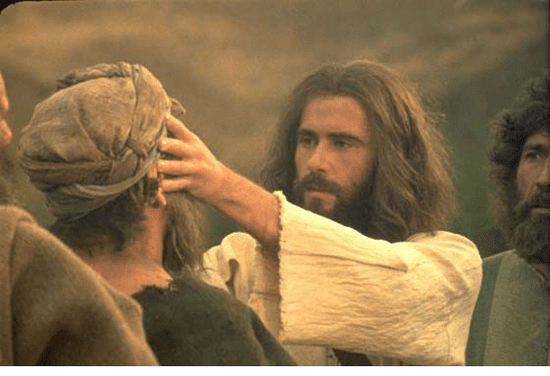
Peter’s treatment was so successful in just one session that became our “go to” guy for just about everything. I even started getting “tune ups” with Peter after which, although I went in feeling fine, I came out feeling a lot better than fine. When I fell walking my dachshunds and jammed my shoulder badly one summer, I am convinced that a session with Peter is what saved me from surgery. Jeanne and I revere Peter’s almost-mystical abilities so much after several years we talk about him as if he would have been a great healing partner for Jesus had he lived two thousand years ago.
Peter is a child of the sixties as Jeanne and I are; over time we learned a lot of his life story, including how he as a Westerner became a trained practitioner of Eastern healing arts. He told us once of a horrible automobile accident he was in during his twenties that he barely survived, with dozens of broken bones and damaged internal organs. Skilled doctors and surgeons were able to fuse and stitch him back together, but he lived in excruciating pain until, on a friend’s advice and with nothing to lose, he tried some “alternative” Eastern treatments.
And they worked—so well that subsequently he lived with his Japanese wife in Japan for several years training as an apprentice, then becoming a master of “Sotai,” a method of treatment I can only describe as a mixture of acupuncture, chiropracty, and aroma therapy. Peter described his journey this way: “Western medicine saved my life, and Eastern medicine gave me my life back.” Western medicine fixed Peter, in other words, and Eastern medicine healed him.
This reminds me of a course that I team-teach regularly with a colleague from the history department–a course that we will be repeating next semester. The last time we taught the course two years ago, my teaching partner and I spent all of final exam week running half-hour oral examinations for the thirty-seven sophomores in our “Grace, Truth, and Freedom in the Nazi Era” colloquium—a marathon of conversations that both wore us out and were well worth the time and energy commitment. I’ve often said that I can learn more in a half-hour oral exam about what a student knows and what that student will take away from the class than from reading a twenty-page final paper or two-hour written final exam. This round of oral exams was no exception.
We provided the students with four comprehensive questions ranging across topics and texts we had considered throughout the semester and told them that we would begin each oral examination conversation with the question of their choice, with the caveat that we might intersect with any or all of the remaining questions by the end of their half hour, depending on how the conversation developed. One of the questions focused on a passage toward the end of Camus’ The Plague, a conversation between two characters–Rieux and Tarrou–that we had frequently referenced throughout the semester. In this conversation, Tarrou says that
All I maintain is that on this earth there are pestilences and there are victims, and it is up to us, so far as possible, not to join forces with the pestilences . . . We should grant a third category: that of the true healers. But it’s a fact one doesn’t come across many of them, and anyhow it must be a hard vocation. . . . I can at least try to discover how one attains to the third category; in other words, to peace.
With this passage in mind, one of the four possible questions a student might choose to begin their oral exam was
Throughout this semester we have been witness to the truth of Tarrou’s words that there are only pestilences and victims, and in a few cases, healers. In your opinion, what exactly constitutes a true healer and in looking back over the materials you have read or viewed, who would you identify as a true healer and why?
Probably a dozen or so students chose this question as the starting point for their exam, and their thinking about it produced a range of fruitful and interesting possibilities. As various persons from our semester’s work—Andre and Magda Trocme, Sophie and Hans Scholl, Dietrich Bonhoeffer, Maximillian Kolbe—were mentioned as examples of healers and an informal list of characteristics shared by healers was generated, several questions were raised. What human problems or maladies are a healer’s energies directed toward? Is a person born a healer, or is “healer” something to which all of might (and should) aspire? If the latter, what might be the beginning steps in the direction of becoming a healer?
In the midst of fascinating and insightful discussions, students often focused on a personal story that my teaching colleague Ray used during one of my lectures early in the semester to illustrate the importance concept of “attention” from Simone Weil. Ray and his wife Pat are intimately involved with the Society of Saint Vincent de Paul, a Catholic relief society whose members are described on the Society’s website as “men and women who strive to grow spiritually by offering person-to-person service to individuals in need.”
Pat and Ray frequently make home visits to such individuals and families in need. Ray described to the students that the typical home visit often consisted of making the client aware of the various services the Society has that could address various needs and problems, including health care, food and clothing assistance, directing people to other agencies with needed services, and so on. With the best of intentions, such services were often offered without knowing in detail the history or story of the client and his or her family.
Then, as Ray described, after becoming aware of Simone Weil’s concept of “attention,” in which Weil says “The soul empties itself of all its own contents in order to receive into itself the being it is looking at, just as he is, in all his truth,” he and Pat tried something different on their next home visit. Instead of immediately describing what they, as representatives of the Society, could do for the person in need, Pat and Ray asked the client “What would you like to tell us? What is your story?” And for the next hour, they listened to the woman tell her story without interruption. This completely transformed the dynamic both of that conversation and of future home visits. Through listening without interruption and projection, Ray and Pat had established an atmosphere of healing rather than of one of fixing.
“Attention” for Simone Weil is the skill of seeing, of attending to the reality of something other than oneself without the filters of the self being in the way. It is a task of love that requires constant practice, as illustrated by Pat and Ray in their home visit. Pat and Ray had moved from considering the woman in front of them as a problem to be solved, or something broken in need of fixing, to a healing activity of seeing her, as Weil describes, “not as a unit in a collection, or a specimen from the social category labeled ‘unfortunate,’ but as a person, exactly like us, who was one day stamped with a special mark by affliction.”
And this transforms everything, for, as Weil continues,
Those who are unhappy have no need for anything in this world but people capable of giving them their attention. The capacity to give one’s attention to a sufferer is a very rare and difficult thing; it is almost a miracle; it is a miracle.
But it is a miracle each of us can learn to perform. Being a healer begins with simply listening, for “The love of our neighbor in all its fullness simply means being able to say to him: ‘What are you going through?’” It begins not by asking “How can I solve your problem?” but rather by inviting the person in need to answer the question “Who are you?” No task is more difficult, and these days, no task is more important.
Previous Post

November 5, 2020
What to Do When an Argument Leads to a Conclusion that You Don't Like
Next Post
November 10, 2020 Hope: The Thing with Feathers
Browse Our Archives
Select a Category abortion Advent AI Angels Artificial intelligence atheism attention baptism Baptists beauty belief Benedictines Bible bicycling Big Bird books Bovina Camaldoli hermitage Canada Catholicism cats certainty change Christianity Christmas Collegeville Covid-19 creativity Development of Western Civilization dogs doubt Easter Enneagram Epiphany Episcopal ethics Eucharist evil extroverts Facebook faith family fear flowers forgiveness freedom friends God goodness grace happiness heaven hell history Holy Spirit Holy Week hope human nature humility humor idolatry incarnation introverts irreverence Islam Jeanne Jesus Joe Biden joy Judaism justice Kamala Harris knowledge Lent listen literature liturgy love Marsue Memorial Day miracles movies music mystery mythology NPR Old Testament optimism paradox peace Penguins philosophy piano podcast politics power prayer Protestantism Providence College Religion Rhode Island sabbatical sacrament science seeing silence Simone Weil Socrates soul sports St. John's College stories suffering tattoo teaching technology television theology thinking time tolerance transcendence travel trees trust truth Uncategorized Vermont wisdom wonder writing
Select a Month May 2026 April 2026 March 2026 February 2026 January 2026 December 2025 November 2025 October 2025 September 2025 August 2025 July 2025 June 2025 May 2025 April 2025 March 2025 February 2025 January 2025 December 2024 November 2024 October 2024 September 2024 August 2024 July 2024 June 2024 May 2024 April 2024 March 2024 February 2024 January 2024 December 2023 November 2023 October 2023 September 2023 August 2023 July 2023 June 2023 May 2023 April 2023 March 2023 February 2023 January 2023 December 2022 November 2022 October 2022 September 2022 August 2022 July 2022 June 2022 May 2022 April 2022 March 2022 February 2022 January 2022 December 2021 November 2021 October 2021 September 2021 August 2021 July 2021 June 2021 May 2021 April 2021 March 2021 February 2021 January 2021 December 2020 November 2020 October 2020 September 2020 August 2020 July 2020 June 2020 May 2020 April 2020 March 2020 February 2020 January 2020 December 2019 November 2019 October 2019 September 2019 August 2019 July 2019 June 2019 May 2019 April 2019 March 2019 February 2019 January 2019 December 2018 November 2018 October 2018 September 2018 August 2018 July 2018 June 2018 May 2018 April 2018 March 2018 February 2018 January 2018 December 2017 November 2017 October 2017 September 2017 August 2017 July 2017 June 2017 May 2017 April 2017 March 2017 February 2017 January 2017 December 2016 November 2016 October 2016 September 2016 August 2016 July 2016 June 2016 May 2016 April 2016 March 2016 February 2016 January 2016 December 2015 November 2015 October 2015 September 2015 August 2015 July 2015 June 2015 May 2015 April 2015 March 2015 February 2015 January 2015 December 2014 November 2014 October 2014 September 2014 August 2014 July 2014 June 2014 May 2014 April 2014 March 2014 February 2014 January 2014 December 2013 November 2013 October 2013 September 2013 August 2013 July 2013 June 2013 May 2013 April 2013 March 2013 February 2013 January 2013 December 2012 November 2012 October 2012 September 2012
Follow Us!
TAKE THE
Religious Wisdom Quiz
They will beat their swords into plowshares and their spears into what farming tool?
Select your answer to see how you score.
Pruning hooks Scythes Sickles Hoes
Books by This Author Books by Vance G. Morgan
Related posts from Freelance Christianity

The Lonely Pawn: On Faith, Doubt, and Meaning


AI and Love: When a Chatbot Becomes a...

TRENDING AT PATHEOS Progressive Christian

What Being a Modern-Day Apostle Means to Me
In my last column, I discussed the ins and outs of modern-day...

Did Ancient China Once Worship the God of...
Across human history, a common thread weaves through the origins of the...

Love Your Neighbor – Including Earth-Kin: Lev. 19,...
God’s command to love your neighbor means acting in an ethical and...

Lead a Church Study of “Jesus and Lao...
Guest writer Jack Thomas (The Irreverent Reverend) reflects on leading his church...

Pastoral Wisdom for Responding to Sermon Pushback
Getting sermon pushback on your social justice sermon? Learn practical, Proverbs-based strategies...

Principles for Understanding the Apostolic Ministry Today
Whenever people discover that my formal ministry title is "apostle," as in...
view all Progressive Christian blogs
Ad-Free & Subscriber Log-In Subscription Support
- About Us
- 2026 Calendar
- Videos
- Podcasts
- Library of World Religions
- Faith In Media Tracker
- Advertise With Us
- Write for Us
- Privacy Policy
- Terms of Service
- Do Not Sell My Data
- Contact Us
- Radiant Digital
- Manage Newsletter Subscriptions
- Unsubscribe From Notifications
- Sitemap
Copyright 2008-2026, Patheos. All rights reserved.
Subscription Support Ad-Free & Subscriber Log-In
Follow Patheos