
BuddhistCatholicContemplativeEvangelicalGeneral ChristianHinduJewishLatter-day SaintMuslimNew VisionsProgressive Christian
Beliefs
- Buddhist
- Catholic
- Contemplative
- Evangelical
- General Christian
- Hindu
- Jewish
- Latter-day Saint
- More Voices
- Muslim
- New Visions
- Pagan
- Progressive Christian
Topics
- Religion News
- Food and Religion
- Sports and Religion
- Religious Art
- Religious Music and Entertainment
- Religious Events
- History and Religion
- Style and Religion
- Politics and Religion
- Women in Religion
- Recreation Outdoors and Religion
- Business Finance and Religion
- Careers Workplace and Religion
- Education and Religion
- Family Parenting and Religion
- Health Fitness and Religion
- Home and Religion
- Relationships and Religion
- Technology and Religion
- Travel and Religion
Columnists
- Buddhist Columnists
- Business Finance and Religion Columnists
- Careers Workplace and Religion Columnists
- Catholic Columnists
- Contemplative Columnists
- Education and Religion Columnists
- Evangelists Columnists
- Family Parenting and Religion Columnists
- General Christian Columnists
- Health Fitness and Religion Columnists
- Hindu Columnists
- History and Religion Columnists
- Home and Religion Columnists
- Jewish Columnists
- More Voices Columnists
- Latter Day Columnists
- Muslim Columnists
- New Visions Columnists
- Nonreligious Columnists
- Pagan Columnists
- Politics and Religion Columnists
- Progressive Columnists
- Recreation Outdoors and Religion Columnists
- Relationships and Religion Columnists
- Religion News Columnists
- Religious Art Columnists
- Religious Events Columnists
- Religious Music and Entertainment Columnists
- Sports and Religion Columnists
- Style and Religion Columnists
- Technology and Religion Columnists
- Travel and Religion Columnists
- Women in Religion Columnists
Resource Library
- 2026 Calendar
- Library of World Religions
- The 100 Most Holy Places on Earth
- Patheos Answers
- Podcasts
- Videos
- Faith Leaders Database
- Anglican Episcopalian
- Bahai
- Baptist
- Buddhism
- Christianity
- Confucianism
- Eastern Orthodoxy
- Hinduism
- Holiness and Pentecostal
- ISKCON
- Islam
- Judaism
- Lutheran
- Methodist
- The Church of Jesus Christ of Latter-day Saints
- New Age
- Paganism
- Presbytarian and Reformed
- Protestantism
- Religion Behind the Scenes
- Roman Catholic
- Scientology
- Shia Islam
- Sikhism
- Sufism
- Sunni Islam
- Taoism
- Zen
- See all religions
Research Tools
 Ad-Free & Subscriber Log-In Subscription Support
Ad-Free & Subscriber Log-In Subscription Support
Follow Patheos 

- Trending:
- Forgiveness
- |
- Marriage
- |
- Consciousness
- |
- Death Penalty
- |
- Election
- |
- Halloween

- Home
- Progressive Christian
- Finding the Light
Finding the Light
Last updated on: August 18, 2019 at 6:00 am by Vance Morgan
Finding the Light 2019-08-14T15:33:50-04:00 Vance Morgan
Patheos Explore the world's faith through different perspectives on religion and spirituality! Patheos has the views of the prevalent religions and spiritualities of the world.
We are not simply made by God—we are made of God Julian of Norwich
Toward the end of a transformative four-month sabbatical in the spring of 2009, I heard a homily given by a Benedictine monk at the abbey where I had been spending a couple of hours a day reading psalms and praying with the monks for weeks. I don’t remember anything about the homily except this quotation from Saint Catherine of Genoa: My deepest me is God. 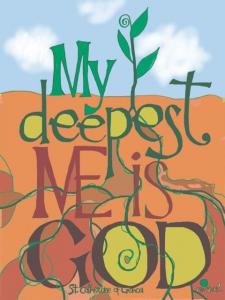 Without exaggeration, any evidence of positive internal change that I have tracked in this blog over the past several years is traceable back to that one simple but profound phrase. The deepest part of each of us is divine. What would it be like if we actually believed that and acted on it?
“My deepest me is God.” Believing this is a significant challenge for someone like myself who cut his religious eye teeth on the doctrine of original sin and total depravity. Catherine of Siena’s insight runs directly contrary to that pernicious doctrine. Shortly after our return from a wonderful nine-day vacation in Scotland last summer, Jeanne and I went to hear a presentation at a local Episcopal church, followed by a Eucharistic service, on Celtic Spirituality. The presenter that afternoon was Rev. John Philip Newell, an ordained Church of Scotland minister who is internationally recognized as an expert and a leader in Celtic Christianity and spirituality. His accent and his peaceful presence reminded us of the beautiful country we had visited and did not want to leave.
Newell began his talk by quoting Julian of Norwich; the most familiar saying from Julian that has come down to us is “All shall be well, and all manner of thing shall be well” (more on this claim in a later post this week!). Newell continued, however, by quoting an even more controversial saying attributed to Julian:
We are not simply made by God, we are made of God.
We are not, Newell said, just fashioned from afar by a distant Creator. We are born from the very womb of the Divine. Newell used this insight to contrast the foundational Celtic Christian insight that all of creation, including all human beings, are bearers of the divine, with a more familiar story about human nature that is central to much of traditional Christian thought and belief.
The Celtic understanding of human nature, expressed eloquently by Julian, is fundamentally opposed to the doctrine of original sin, which tells us that human beings are totally depraved and entirely lacking in any natural goodness. The conflict between which understanding of human nature would dominate in Christian theology was largely fought between Pelagius, a Christian theologian from Britain, and Augustine of Hippo in the 4th century AD. Augustine and his allies won the argument, Pelagius—as all losers in theological disputes—was branded a heretic, and Celtic Christianity became a “fringe element” of Christian spirituality that still survives in hidden corners of the globe.
I am Exhibit A of the damage that being raised on original sin can do to one’s self image and psyche. As I did briefly at the start of this essay, I often ask myself how different I would be, how different our world would be, if we truly believed that our natural state and status is one of “original blessing,” as Matthew Fox says, rather than of original sin. Newell told a powerful brief story that addresses this very question.
A number of years ago, Newell said, he was delivering a talk in Ottawa that focused primarily on the text from the first chapter of John’s gospel that describes the Word as “the Light that enlightens every person coming into the world.” In attendance that evening was a Canadian Mohawk elder. He had been invited to the gathering to make observations about the parallels between his First Nations spirituality and the spirituality of the Celtic world.
At the end of Newell’s talk, the Mohawk elder stood in the audience with tears in his eyes and said, “As I have been listening to these themes, I have been wondering where I would be tonight. I have been wondering where my people would be tonight. And I have been wondering where we would be as a Western world tonight if the mission that had come to us from Europe centuries ago had come expecting to find light in us.”
In the context in which it was asked, the elder was asking those present to consider whether the violence and destruction caused by the European invasion of the New World, violence and destruction often perpetuated in the name of Christ, might have been ameliorated or even avoided altogether if the newcomers had seen the natives as bearers of the divine light rather than as depraved and godless. But his question is also a timeless one, a question that resonates powerfully in our current polarized country and world.
What if we habitually and naturally embraced ourselves and each other as bearers of light, rather than approaching ourselves and each other with negativity and suspicion? What if we greeted the divine in each other openly and easily rather than assuming the worst as a matter of course? There is no switch to flip in order to accomplish this—especially since the dominant religious perspective that has shaped our culture, regardless of whether a person is religious or not, has told us that there is something fundamentally wrong with human beings.
“My deepest me is God.” And, Catherine of Genoa might have added, “your deepest you is God as well.” It strikes me that there are two types of people in the world. Those for whom it would be more difficult to believe Catherine’s claim about other people, and those for whom it would be more difficult to believe it about themselves. By nature, I fall into the second category; I still have to pay close attention to connect with the divine deep inside and to believe that it is me rather than an external something that occasionally takes up residence. For those who seek to find the divine in their deepest self, I offer this poem—“On Solitude”—from Irish poet John O’Donohue, another teacher of Celtic spirituality:
May you learn to see your self
with the same delight,
pride, and expectation
with which God sees you in every moment.
Previous Post

August 15, 2019
Does Faith Need a Creed?
Next Post
August 20, 2019 Will All Things Be Well?
Browse Our Archives
Select a Category abortion Advent AI Angels Artificial intelligence atheism attention baptism Baptists beauty belief Benedictines Bible bicycling Big Bird books Bovina Camaldoli hermitage Canada Catholicism cats certainty change Christianity Christmas Collegeville Covid-19 creativity Development of Western Civilization dogs doubt Easter Enneagram Epiphany Episcopal ethics Eucharist evil extroverts Facebook faith family fear flowers forgiveness freedom friends God goodness grace happiness heaven hell history Holy Spirit Holy Week hope human nature humility humor idolatry incarnation introverts irreverence Islam Jeanne Jesus Joe Biden joy Judaism justice Kamala Harris knowledge Lent listen literature liturgy love Marsue Memorial Day miracles movies music mystery mythology NPR Old Testament optimism paradox peace Penguins philosophy piano podcast politics power prayer Protestantism Providence College Religion Rhode Island sabbatical sacrament science seeing silence Simone Weil Socrates soul sports St. John's College stories suffering tattoo teaching technology television theology thinking time tolerance transcendence travel trees trust truth Uncategorized Vermont wisdom wonder writing
Select a Month May 2026 April 2026 March 2026 February 2026 January 2026 December 2025 November 2025 October 2025 September 2025 August 2025 July 2025 June 2025 May 2025 April 2025 March 2025 February 2025 January 2025 December 2024 November 2024 October 2024 September 2024 August 2024 July 2024 June 2024 May 2024 April 2024 March 2024 February 2024 January 2024 December 2023 November 2023 October 2023 September 2023 August 2023 July 2023 June 2023 May 2023 April 2023 March 2023 February 2023 January 2023 December 2022 November 2022 October 2022 September 2022 August 2022 July 2022 June 2022 May 2022 April 2022 March 2022 February 2022 January 2022 December 2021 November 2021 October 2021 September 2021 August 2021 July 2021 June 2021 May 2021 April 2021 March 2021 February 2021 January 2021 December 2020 November 2020 October 2020 September 2020 August 2020 July 2020 June 2020 May 2020 April 2020 March 2020 February 2020 January 2020 December 2019 November 2019 October 2019 September 2019 August 2019 July 2019 June 2019 May 2019 April 2019 March 2019 February 2019 January 2019 December 2018 November 2018 October 2018 September 2018 August 2018 July 2018 June 2018 May 2018 April 2018 March 2018 February 2018 January 2018 December 2017 November 2017 October 2017 September 2017 August 2017 July 2017 June 2017 May 2017 April 2017 March 2017 February 2017 January 2017 December 2016 November 2016 October 2016 September 2016 August 2016 July 2016 June 2016 May 2016 April 2016 March 2016 February 2016 January 2016 December 2015 November 2015 October 2015 September 2015 August 2015 July 2015 June 2015 May 2015 April 2015 March 2015 February 2015 January 2015 December 2014 November 2014 October 2014 September 2014 August 2014 July 2014 June 2014 May 2014 April 2014 March 2014 February 2014 January 2014 December 2013 November 2013 October 2013 September 2013 August 2013 July 2013 June 2013 May 2013 April 2013 March 2013 February 2013 January 2013 December 2012 November 2012 October 2012 September 2012
Follow Us!
TAKE THE
Religious Wisdom Quiz
What language was the Old Testament mostly written in?
Select your answer to see how you score.
Aramaic Latin Greek Hebrew
Books by This Author Books by Vance G. Morgan
Related posts from Freelance Christianity

The Lonely Pawn: On Faith, Doubt, and Meaning


AI and Love: When a Chatbot Becomes a...

TRENDING AT PATHEOS Progressive Christian

What Being a Modern-Day Apostle Means to Me
In my last column, I discussed the ins and outs of modern-day...

Did Ancient China Once Worship the God of...
Across human history, a common thread weaves through the origins of the...

Love Your Neighbor – Including Earth-Kin: Lev. 19,...
God’s command to love your neighbor means acting in an ethical and...

Lead a Church Study of “Jesus and Lao...
Guest writer Jack Thomas (The Irreverent Reverend) reflects on leading his church...

Pastoral Wisdom for Responding to Sermon Pushback
Getting sermon pushback on your social justice sermon? Learn practical, Proverbs-based strategies...

Principles for Understanding the Apostolic Ministry Today
Whenever people discover that my formal ministry title is "apostle," as in...
view all Progressive Christian blogs
Ad-Free & Subscriber Log-In Subscription Support
- About Us
- 2026 Calendar
- Videos
- Podcasts
- Library of World Religions
- Faith In Media Tracker
- Advertise With Us
- Write for Us
- Privacy Policy
- Terms of Service
- Do Not Sell My Data
- Contact Us
- Radiant Digital
- Manage Newsletter Subscriptions
- Unsubscribe From Notifications
- Sitemap
Copyright 2008-2026, Patheos. All rights reserved.
Subscription Support Ad-Free & Subscriber Log-In
Follow Patheos