
BuddhistCatholicContemplativeEvangelicalGeneral ChristianHinduJewishLatter-day SaintMuslimNew VisionsProgressive Christian
Beliefs
- Buddhist
- Catholic
- Contemplative
- Evangelical
- General Christian
- Hindu
- Jewish
- Latter-day Saint
- More Voices
- Muslim
- New Visions
- Pagan
- Progressive Christian
Topics
- Religion News
- Food and Religion
- Sports and Religion
- Religious Art
- Religious Music and Entertainment
- Religious Events
- History and Religion
- Style and Religion
- Politics and Religion
- Women in Religion
- Recreation Outdoors and Religion
- Business Finance and Religion
- Careers Workplace and Religion
- Education and Religion
- Family Parenting and Religion
- Health Fitness and Religion
- Home and Religion
- Relationships and Religion
- Technology and Religion
- Travel and Religion
Columnists
- Buddhist Columnists
- Business Finance and Religion Columnists
- Careers Workplace and Religion Columnists
- Catholic Columnists
- Contemplative Columnists
- Education and Religion Columnists
- Evangelists Columnists
- Family Parenting and Religion Columnists
- General Christian Columnists
- Health Fitness and Religion Columnists
- Hindu Columnists
- History and Religion Columnists
- Home and Religion Columnists
- Jewish Columnists
- More Voices Columnists
- Latter Day Columnists
- Muslim Columnists
- New Visions Columnists
- Nonreligious Columnists
- Pagan Columnists
- Politics and Religion Columnists
- Progressive Columnists
- Recreation Outdoors and Religion Columnists
- Relationships and Religion Columnists
- Religion News Columnists
- Religious Art Columnists
- Religious Events Columnists
- Religious Music and Entertainment Columnists
- Sports and Religion Columnists
- Style and Religion Columnists
- Technology and Religion Columnists
- Travel and Religion Columnists
- Women in Religion Columnists
Resource Library
- 2026 Calendar
- Library of World Religions
- The 100 Most Holy Places on Earth
- Patheos Answers
- Podcasts
- Videos
- Faith Leaders Database
- Anglican Episcopalian
- Bahai
- Baptist
- Buddhism
- Christianity
- Confucianism
- Eastern Orthodoxy
- Hinduism
- Holiness and Pentecostal
- ISKCON
- Islam
- Judaism
- Lutheran
- Methodist
- The Church of Jesus Christ of Latter-day Saints
- New Age
- Paganism
- Presbytarian and Reformed
- Protestantism
- Religion Behind the Scenes
- Roman Catholic
- Scientology
- Shia Islam
- Sikhism
- Sufism
- Sunni Islam
- Taoism
- Zen
- See all religions
Research Tools
 Ad-Free & Subscriber Log-In Subscription Support
Ad-Free & Subscriber Log-In Subscription Support
Follow Patheos 

- Trending:
- Forgiveness
- |
- Marriage
- |
- Consciousness
- |
- Death Penalty
- |
- Election
- |
- Halloween

- Home
- Progressive Christian
- Finding a Moral Compass
Finding a Moral Compass
Last updated on: September 8, 2023 at 8:34 am by Vance Morgan
Finding a Moral Compass 2023-09-08T08:34:10-04:00 Vance Morgan
Patheos Explore the world's faith through different perspectives on religion and spirituality! Patheos has the views of the prevalent religions and spiritualities of the world.
Is it ever right to hold a grudge? Is resentment or unforgiveness ever justified? These questions were front and center in a seminar with a bunch of freshmen not long ago; their answers revealed one of the most important and ubiquitous moral divides of all—the divide between what we think we should believe and what we actually believe. And behind the discussion loomed an even larger moral issue: 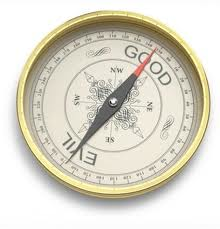 Where does a person’s moral compass come from, and is there any way of determining whether that moral compass is accurate?
I’ve been teaching philosophy for more than thirty years and there are few areas of philosophy or philosophers that have not shown up somewhere in my classroom over those years. Ethics is my favorite systematic area of philosophy to teach on an introductory level, because ethics is where the often esoteric and abstract discipline of philosophy intersects immediately and directly with real life. And in the world of ethics, no philosopher ever got it better than Aristotle. 
Aristotle’s framework for thinking about and trying to live the moral life is flexible, dynamic, creative, and practical, providing broad but identifiable boundaries for the life of human excellence within which each individual human being has the opportunity to make many important choices about what sort of person she or he will be. Aristotle’s ethic avoids both the Scylla of absolute and rigid moral rules and the Charybdis of “anything goes” relativism by continually reminding us that there is a point to a human life, that some lives are clearly not worth living, and it is up to each of us to identify the purpose of our lives as we live out the process of shaping and defining that purpose.
The most important feature of Aristotle’s ethical vision is the virtues, which he identifies as “good habits,” habits that will more often than not facilitate the living of a flourishing human life. These he contrasts with vices, bad habits that tend to hinder the living of such a life. 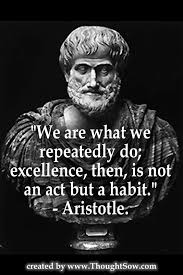 The notion of the key to the moral life being habits rather than obedience to rules is often both intriguing and confusing to eighteen-year-old freshmen; in seminar I focused my students’ attention on the “virtues as habits” idea by first brainstorming with them to produce a list of a dozen virtues, then providing them with a list of Aristotle’s examples of such habits scattered through the portions of his primary text on ethics that we had read for the day.
There were many virtues on our list that are not on Aristotle’s list. Where, for instance, are humility, honesty, patience, love, faith and hope? Perhaps even more confusing are some of the items that Aristotle does include on his list that were not on ours. There were several such items—wittiness, high-mindedness and right ambition, for instance—which raised eyebrows and provided an opportunity to consider just how different Aristotle’s definition of virtue is from our own. But the item on Aristotle’s list that bothered my students the most was “just resentment,” the idea that one of the good habits that will facilitate the life of human excellence is being able to tell when forgiveness is appropriate and when is it better to hold on to one’s resentment. Aristotle did not list forgiveness as a foundational virtue but, as many of my students pointed out, we know better. Or do we?
“How many of you think that forgiveness is a virtue?” I asked my students—every hand went up. “How many of you can think of a situation in which it would be natural not to forgive?” Most hands, but not all, went up. I gave my own example of the latter. In the earlier years of my teaching career I often taught applied ethics courses, which usually turned out to be a crash course in various moral theories for a few weeks, which we then applied to four or five tough moral problems for the rest of the semester.
The issue of capital punishment, which I consider to be one of the toughest moral nuts to crack without making a mess, was often on the syllabus. I told my students that in the abstract I believe the best moral arguments are against capital punishment, starting with the simple point that to respond to harm with more harm reduces a society to the level of the person being punished. “But,” I quickly added, “I know that if someone killed my wife or my sons and was found guilty, if I lived in a state where the death penalty was on the books I would want to be the one to administer the lethal injection or pull the switch.” There’s a place where even if I have developed the habit of forgiveness, the habit of just resentment seems more appropriate.
Several students vigorously nodded their heads in agreement, but others pressed back. One student had learned an important lesson well from Socrates two weeks earlier when he told a friend why, even though he has an opportunity to escape his prison cell and execution, he will not do so. “Who are you damaging if you don’t forgive?” my student asked. “Not the guy who’s being executed. He’s dead. But you will never move on and will never get past what has happened if you carry resentment around for the rest of your life.” “What if I don’t want to move on?” I asked. “Then you’ll never be able to live Aristotle’s life of human flourishing,” she replied. Touché.
But most of my students agreed that to forgive indiscriminately is not natural to human beings, despite the psychological damage that accompanies lack of forgiveness. “So where did we get the idea that we must forgive regardless of the situation?” I wondered. “We certainly learned that long before we considered that not forgiving might hurtful to ourselves.” “I learned it in church,” one said, while another said that she had learned it in school (which, since it was a parochial school, is pretty much the same as learning it in church).
That strikes me as the real truth. I learned that universal forgiveness is a virtue because I was taught at an early age that a first century Jewish carpenter said that we must love our enemies and told one of his followers that he should forgive his neighbor not the very challenging seven times but the impossible seventy times seven. 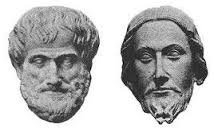 Aristotle perhaps doesn’t put such a habit on his virtue list because he lived more than three centuries before the Jewish carpenter and was not inclined to include on his list habits that are humanly impossible.
Truth be told, we all have the foundational pieces of our moral lives given to us long before we develop the capacity to challenge them—and often we never get to the challenge part. I usually urge my students to question and challenge what they have never questioned and challenged. But on this given day it struck me that in addition to questioning, it is equally important to first identify what we have been given. The fact that my students thought Aristotle was wrong about just resentment because they had been carrying around the directive to forgive their whole life was not mistaken—it is just a fact. The Jewish carpenter was on display a few weeks later in seminar, and we remembered Aristotle.
I n The Leopard, a crime drama by Jo Nesbo, the main character, an extraordinarily complex person in every way imaginable, is berating himself because he can’t seem to move past some inhibitions he has carried his whole life. A colleague suggests that he should relax.
You can’t just disregard your own feelings like that, Harry. You, like everyone else, are trying to leapfrog the fact that we are governed by notions of what’s right and wrong. Your intellect may not have all the arguments for these notions, but nonetheless they are rooted deep, deep inside you. Right and wrong. Perhaps its things you were told by your parents when you were a child, a fairy tale with a moral your grandmother read, or something unfair you experienced at school and you spent time thinking through. The sum of all these half-forgotten things. “Anchored deep within” is in fact an appropriate expression. Because it tells you that you may not be able to see the anchor in the depths, but you damn well can’t move from the spot—that’s what you float around and that’s where your home is. Accept the anchor.
Previous Post

September 6, 2023
What Does the Bible Say About . . . ?
Next Post
September 10, 2023 Is Tolerance the Most Important Virtue?
Recent Comments
"Mary did have a choice. And she was able to make it before the Holy ..."
"i cannot read beyond your recommendations for the books since i like to have a ..."
"AI will never be able to utter with honesty, feeling, or humility, the greeting: "Namaste".It ..."
"They do. I'm sure you could find discussions of the same topic from any of ..."
Browse Our Archives
Select a Category abortion Advent AI Angels Artificial intelligence atheism attention baptism Baptists beauty belief Benedictines Bible bicycling Big Bird books Bovina Camaldoli hermitage Canada Catholicism cats certainty change Christianity Christmas Collegeville Covid-19 creativity Development of Western Civilization dogs doubt Easter Enneagram Epiphany Episcopal ethics Eucharist evil extroverts Facebook faith family fear flowers forgiveness freedom friends God goodness grace happiness heaven hell history Holy Spirit Holy Week hope human nature humility humor idolatry incarnation introverts irreverence Islam Jeanne Jesus Joe Biden joy Judaism justice Kamala Harris knowledge Lent listen literature liturgy love Marsue Memorial Day miracles movies music mystery mythology NPR Old Testament optimism paradox peace Penguins philosophy piano podcast politics power prayer Protestantism Providence College Religion Rhode Island sabbatical sacrament science seeing silence Simone Weil Socrates soul sports St. John's College stories suffering tattoo teaching technology television theology thinking time tolerance transcendence travel trees trust truth Uncategorized Vermont wisdom wonder writing
Select a Month May 2026 April 2026 March 2026 February 2026 January 2026 December 2025 November 2025 October 2025 September 2025 August 2025 July 2025 June 2025 May 2025 April 2025 March 2025 February 2025 January 2025 December 2024 November 2024 October 2024 September 2024 August 2024 July 2024 June 2024 May 2024 April 2024 March 2024 February 2024 January 2024 December 2023 November 2023 October 2023 September 2023 August 2023 July 2023 June 2023 May 2023 April 2023 March 2023 February 2023 January 2023 December 2022 November 2022 October 2022 September 2022 August 2022 July 2022 June 2022 May 2022 April 2022 March 2022 February 2022 January 2022 December 2021 November 2021 October 2021 September 2021 August 2021 July 2021 June 2021 May 2021 April 2021 March 2021 February 2021 January 2021 December 2020 November 2020 October 2020 September 2020 August 2020 July 2020 June 2020 May 2020 April 2020 March 2020 February 2020 January 2020 December 2019 November 2019 October 2019 September 2019 August 2019 July 2019 June 2019 May 2019 April 2019 March 2019 February 2019 January 2019 December 2018 November 2018 October 2018 September 2018 August 2018 July 2018 June 2018 May 2018 April 2018 March 2018 February 2018 January 2018 December 2017 November 2017 October 2017 September 2017 August 2017 July 2017 June 2017 May 2017 April 2017 March 2017 February 2017 January 2017 December 2016 November 2016 October 2016 September 2016 August 2016 July 2016 June 2016 May 2016 April 2016 March 2016 February 2016 January 2016 December 2015 November 2015 October 2015 September 2015 August 2015 July 2015 June 2015 May 2015 April 2015 March 2015 February 2015 January 2015 December 2014 November 2014 October 2014 September 2014 August 2014 July 2014 June 2014 May 2014 April 2014 March 2014 February 2014 January 2014 December 2013 November 2013 October 2013 September 2013 August 2013 July 2013 June 2013 May 2013 April 2013 March 2013 February 2013 January 2013 December 2012 November 2012 October 2012 September 2012
Follow Us!
TAKE THE
Religious Wisdom Quiz
Great is your faithfulness! Your mercies are new every what?
Select your answer to see how you score.
Season Hour Day Morning
Books by This Author Books by Vance G. Morgan
Related posts from Freelance Christianity

The Lonely Pawn: On Faith, Doubt, and Meaning


AI and Love: When a Chatbot Becomes a...

TRENDING AT PATHEOS Progressive Christian

What Being a Modern-Day Apostle Means to Me
In my last column, I discussed the ins and outs of modern-day...

Did Ancient China Once Worship the God of...
Across human history, a common thread weaves through the origins of the...

Love Your Neighbor – Including Earth-Kin: Lev. 19,...
God’s command to love your neighbor means acting in an ethical and...

Lead a Church Study of “Jesus and Lao...
Guest writer Jack Thomas (The Irreverent Reverend) reflects on leading his church...

Pastoral Wisdom for Responding to Sermon Pushback
Getting sermon pushback on your social justice sermon? Learn practical, Proverbs-based strategies...

Principles for Understanding the Apostolic Ministry Today
Whenever people discover that my formal ministry title is "apostle," as in...
view all Progressive Christian blogs
What Are Your Thoughts?leave a comment
Ad-Free & Subscriber Log-In Subscription Support
- About Us
- 2026 Calendar
- Videos
- Podcasts
- Library of World Religions
- Faith In Media Tracker
- Advertise With Us
- Write for Us
- Privacy Policy
- Terms of Service
- Do Not Sell My Data
- Contact Us
- Radiant Digital
- Manage Newsletter Subscriptions
- Unsubscribe From Notifications
- Sitemap
Copyright 2008-2026, Patheos. All rights reserved.
Subscription Support Ad-Free & Subscriber Log-In
Follow Patheos