
BuddhistCatholicContemplativeEvangelicalGeneral ChristianHinduJewishLatter-day SaintMuslimNew VisionsProgressive Christian
Beliefs
- Buddhist
- Catholic
- Contemplative
- Evangelical
- General Christian
- Hindu
- Jewish
- Latter-day Saint
- More Voices
- Muslim
- New Visions
- Pagan
- Progressive Christian
Topics
- Religion News
- Food and Religion
- Sports and Religion
- Religious Art
- Religious Music and Entertainment
- Religious Events
- History and Religion
- Style and Religion
- Politics and Religion
- Women in Religion
- Recreation Outdoors and Religion
- Business Finance and Religion
- Careers Workplace and Religion
- Education and Religion
- Family Parenting and Religion
- Health Fitness and Religion
- Home and Religion
- Relationships and Religion
- Technology and Religion
- Travel and Religion
Columnists
- Buddhist Columnists
- Business Finance and Religion Columnists
- Careers Workplace and Religion Columnists
- Catholic Columnists
- Contemplative Columnists
- Education and Religion Columnists
- Evangelists Columnists
- Family Parenting and Religion Columnists
- General Christian Columnists
- Health Fitness and Religion Columnists
- Hindu Columnists
- History and Religion Columnists
- Home and Religion Columnists
- Jewish Columnists
- More Voices Columnists
- Latter Day Columnists
- Muslim Columnists
- New Visions Columnists
- Nonreligious Columnists
- Pagan Columnists
- Politics and Religion Columnists
- Progressive Columnists
- Recreation Outdoors and Religion Columnists
- Relationships and Religion Columnists
- Religion News Columnists
- Religious Art Columnists
- Religious Events Columnists
- Religious Music and Entertainment Columnists
- Sports and Religion Columnists
- Style and Religion Columnists
- Technology and Religion Columnists
- Travel and Religion Columnists
- Women in Religion Columnists
Resource Library
- 2026 Calendar
- Library of World Religions
- The 100 Most Holy Places on Earth
- Patheos Answers
- Podcasts
- Videos
- Faith Leaders Database
- Anglican Episcopalian
- Bahai
- Baptist
- Buddhism
- Christianity
- Confucianism
- Eastern Orthodoxy
- Hinduism
- Holiness and Pentecostal
- ISKCON
- Islam
- Judaism
- Lutheran
- Methodist
- The Church of Jesus Christ of Latter-day Saints
- New Age
- Paganism
- Presbytarian and Reformed
- Protestantism
- Religion Behind the Scenes
- Roman Catholic
- Scientology
- Shia Islam
- Sikhism
- Sufism
- Sunni Islam
- Taoism
- Zen
- See all religions
Research Tools
 Ad-Free & Subscriber Log-In Subscription Support
Ad-Free & Subscriber Log-In Subscription Support
Follow Patheos 

- Trending:
- Forgiveness
- |
- Marriage
- |
- Consciousness
- |
- Death Penalty
- |
- Election
- |
- Halloween

- Home
- Progressive Christian
- Fake It ‘Til You Make It
Fake It ‘Til You Make It
Last updated on: January 13, 2016 at 6:30 am by Vance Morgan
Fake It ‘Til You Make It 2016-01-13T06:30:08-04:00 Vance Morgan
Patheos Explore the world's faith through different perspectives on religion and spirituality! Patheos has the views of the prevalent religions and spiritualities of the world.
I spend a lot of time thinking and writing about God. That’s a strange thing to spend time doing, given that the very existence of God, and God’s nature if God does exist, has been seriously and vigorously debated since someone first looked into the sky and wondered if anything is out there. What sorts of evidence count for or against?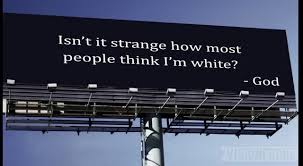 Is certainty possible? And if God exists, which God are we talking about? I am a skeptic both by nature and profession, but I also believe that God exists. How does that work?
I was recently reminded by the usual random confluence of events of a way proposed close to five hundred years ago to establish belief in God while at the same time doing an end run on all of the questions above. 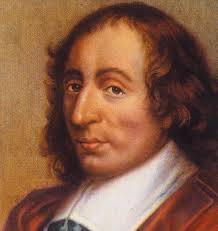 The proposer was the seventeenth century French philosopher and mathematician Blaise Pascal; the proposition has come to be known as “Pascal’s Wager,” one of the most debated and controversial arguments any philosopher has ever offered. Pascal was a world-class thinker who found himself knocked on his ass one night by what he interpreted as a direct message from the divine. It changed his life, moving him strongly in a religious direction and causing him to put his mathematical theories on the shelf.
Pascal lived in a time of skepticism; the medieval worldview had crumbled, 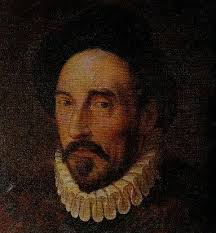 the Scientific Revolution was in full swing, and religious wars were being fought all over Europe. Michel de Montaigne, one of the most eloquent and brilliant skeptics who ever lived, was the most widely read author of the time. Pascal had no doubts about God’s existence—his “Night of Fire” had burned away any uncertainty—but he was smart enough to know that not everyone has such experiences. Lacking direct experiential evidence, and knowing that every philosophical, logical argument for the existence of God has been disputed by other philosophers using logical arguments, what would a betting person do?
Consider the options, says Pascal. Either you believe that God exists or you don’t, and either God exists or God doesn’t. That means there are four possibilities
1. I believe in God, and God does not exist
2. I do not believe in God, and God does not exist
3. I believe in God, and God exists
4. I do not believe in God, and God exists
Options 1 and 2 are essentially a wash. Believer 1 will probably live her life somewhat differently than Non-believer 2, but at the end of their lives they both are dead. End of story. But if it turns out that God does exist, then everything changes. Believer 3 is set up for an eternity of happiness, while Non-believer 4 is subject to eternal damnation. On the assumption that we cannot know for sure whether God exists but we still have to choose whether to believe or not, it makes betting sense to be a believer than to be a non-believer. As the handy chart below indicates, the believer either lives her life and dies or gets eternal happiness, while the non-believer either lives his life and dies or gets eternal damnation. So be smart and believe. QED.
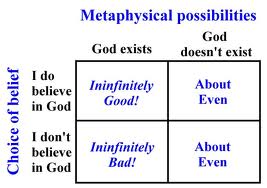
Many silent assumptions are woven into the argument, assumptions that have driven analysis and critique of Pascal’s Wager ever since. For instance, the argument assumes that there is about a 50-50 chance that God exists.  But it could be argued that the preponderance of direct evidence from the world we live in (evil, disease, natural disasters, etc.) counts against God’s existence—the likelihood of God’s nonexistence is far greater than 50 percent. Others have pointed out that the difference between 1 and 2 is not negligible at all. Believer 1 might spend her life denying herself all sorts of experiences and pleasures in the mistaken belief that a nonexistent God doesn’t like such experiences and pleasures, while Non-believer 2 will enjoy such experiences and pleasures to the fullest. And what if God exists but is of an entirely different nature and character than we think? What if the things we believe will please God actually piss God off?
I find such critiques to be compelling and do not find Pascal’s Wager to be an attractive argument at all, but I believe in God’s existence so what do I know? I am far more interested in what Pascal says after the options are laid out to the person who buys the argument but is currently a non-believer. If I don’t believe in God’s existence but am convinced that a smart betting person does believe in God’s existence, how do I make that happen?  How does one manufacture belief in something one does not believe in? Pascal’s advice is revealing.
You would like to attain faith and do not know the way; you would like to cure yourself of unbelief and ask the remedy for it. Learn of those who have been bound like you, and who now stake all their possessions. These are people who know the way which you would follow, and who are cured of an ill of which you would be cured. Follow the way by which they began; by acting as if they believed, taking the holy water, having masses said, etc. Even this will naturally make you believe, and deaden your acuteness. What have you to lose?
Pascal is borrowing a technique from Aristotle, who once said that if you want to become courageous, do the things that courageous people do. In this case, do the things believers do and one day you may find you’ve become one.
Pascal came to mind when I read a reader’s comment on my blog entry “The Imposter” a few days ago.
In response to my discussing imposter syndrome and our general human fears about inadequacy and lack of importance, the reader wrote
“Fake it until you make it” is actually almost a principle in Judaism, although not in those words. The medieval work 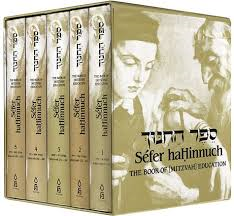 Sefer Hahinuch, which goes through the 613 commandments of the Torah according to traditional rabbinic calculation, states that a person is affected by his actions. If you do the right thing, little by little it can make you on the inside more like the act you are playing on the outside. Of course you can’t just do it to fool people. You have to intend to fulfill G-d’s will in the world and do things pleasing to Him according to what He has given us to work with. We do our job and keep refining it, and the work, the very inner struggle is pleasing to G-d because we are getting closer, because we are striving to be true to ourselves and Him, even though we know we aren’t there yet and never will be totally. But that is called doing His work.
Although this principle in Judaism reminded me of Pascal’s wager, it is actually very different. The Jewish principle supposes that one accepts that it would be good to live according to the rules and guidelines in the Torah but is not naturally inclined to do so. By putting these rules into action they become my own, all the time believing that becoming a person who does such things habitually is pleasing to God. But whether they are pleasing to God or not, they are arguably making me a better husband, father, son, 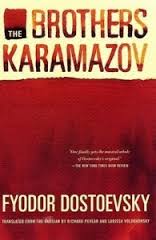 neighbor and contributing member of society.
Pascal’s suggestion is far less demanding, requiring nothing more than going through the motions of certain rituals on a daily or weekly basis. This is not likely to make me a believer or a better person so much as just a person with a very busy Sunday morning every week. In Dostoevsky’s The Brothers Karamazov, the saintly Father Zossima’s advice to an unbeliever who wants to believe is quite different: he recommends the “active and indefatigable love of your neighbor.” Much like the Sefer Hahinuch, Father Zossima provides no shortcuts to belief in God. Rather he recommends the difficult prescription of transforming one’s heart and mind by one’s actions. This doesn’t establish any metaphysical truths, but it does open the door to the good human beings are capable of. Whether God exists or not.
Previous Post

January 11, 2016
Donald Trump and Evangelicals
Next Post
January 20, 2016 Educating the Uneducated
Browse Our Archives
Select a Category abortion Advent AI Angels Artificial intelligence atheism attention baptism Baptists beauty belief Benedictines Bible bicycling Big Bird books Bovina Camaldoli hermitage Canada Catholicism cats certainty change Christianity Christmas Collegeville Covid-19 creativity Development of Western Civilization dogs doubt Easter Enneagram Epiphany Episcopal ethics Eucharist evil extroverts Facebook faith family fear flowers forgiveness freedom friends God goodness grace happiness heaven hell history Holy Spirit Holy Week hope human nature humility humor idolatry incarnation introverts irreverence Islam Jeanne Jesus Joe Biden joy Judaism justice Kamala Harris knowledge Lent listen literature liturgy love Marsue Memorial Day miracles movies music mystery mythology NPR Old Testament optimism paradox peace Penguins philosophy piano podcast politics power prayer Protestantism Providence College Religion Rhode Island sabbatical sacrament science seeing silence Simone Weil Socrates soul sports St. John's College stories suffering tattoo teaching technology television theology thinking time tolerance transcendence travel trees trust truth Uncategorized Vermont wisdom wonder writing
Select a Month May 2026 April 2026 March 2026 February 2026 January 2026 December 2025 November 2025 October 2025 September 2025 August 2025 July 2025 June 2025 May 2025 April 2025 March 2025 February 2025 January 2025 December 2024 November 2024 October 2024 September 2024 August 2024 July 2024 June 2024 May 2024 April 2024 March 2024 February 2024 January 2024 December 2023 November 2023 October 2023 September 2023 August 2023 July 2023 June 2023 May 2023 April 2023 March 2023 February 2023 January 2023 December 2022 November 2022 October 2022 September 2022 August 2022 July 2022 June 2022 May 2022 April 2022 March 2022 February 2022 January 2022 December 2021 November 2021 October 2021 September 2021 August 2021 July 2021 June 2021 May 2021 April 2021 March 2021 February 2021 January 2021 December 2020 November 2020 October 2020 September 2020 August 2020 July 2020 June 2020 May 2020 April 2020 March 2020 February 2020 January 2020 December 2019 November 2019 October 2019 September 2019 August 2019 July 2019 June 2019 May 2019 April 2019 March 2019 February 2019 January 2019 December 2018 November 2018 October 2018 September 2018 August 2018 July 2018 June 2018 May 2018 April 2018 March 2018 February 2018 January 2018 December 2017 November 2017 October 2017 September 2017 August 2017 July 2017 June 2017 May 2017 April 2017 March 2017 February 2017 January 2017 December 2016 November 2016 October 2016 September 2016 August 2016 July 2016 June 2016 May 2016 April 2016 March 2016 February 2016 January 2016 December 2015 November 2015 October 2015 September 2015 August 2015 July 2015 June 2015 May 2015 April 2015 March 2015 February 2015 January 2015 December 2014 November 2014 October 2014 September 2014 August 2014 July 2014 June 2014 May 2014 April 2014 March 2014 February 2014 January 2014 December 2013 November 2013 October 2013 September 2013 August 2013 July 2013 June 2013 May 2013 April 2013 March 2013 February 2013 January 2013 December 2012 November 2012 October 2012 September 2012
Follow Us!
TAKE THE
Religious Wisdom Quiz
What city was Paul traveling to when he encountered Jesus in a vision?
Select your answer to see how you score.
Rome Jerusalem Antioch Damascus
Books by This Author Books by Vance G. Morgan
Related posts from Freelance Christianity

The Lonely Pawn: On Faith, Doubt, and Meaning


AI and Love: When a Chatbot Becomes a...

TRENDING AT PATHEOS Progressive Christian

What Being a Modern-Day Apostle Means to Me
In my last column, I discussed the ins and outs of modern-day...

Did Ancient China Once Worship the God of...
Across human history, a common thread weaves through the origins of the...

Love Your Neighbor – Including Earth-Kin: Lev. 19,...
God’s command to love your neighbor means acting in an ethical and...

Lead a Church Study of “Jesus and Lao...
Guest writer Jack Thomas (The Irreverent Reverend) reflects on leading his church...

Pastoral Wisdom for Responding to Sermon Pushback
Getting sermon pushback on your social justice sermon? Learn practical, Proverbs-based strategies...

Principles for Understanding the Apostolic Ministry Today
Whenever people discover that my formal ministry title is "apostle," as in...
view all Progressive Christian blogs
Ad-Free & Subscriber Log-In Subscription Support
- About Us
- 2026 Calendar
- Videos
- Podcasts
- Library of World Religions
- Faith In Media Tracker
- Advertise With Us
- Write for Us
- Privacy Policy
- Terms of Service
- Do Not Sell My Data
- Contact Us
- Radiant Digital
- Manage Newsletter Subscriptions
- Unsubscribe From Notifications
- Sitemap
Copyright 2008-2026, Patheos. All rights reserved.
Subscription Support Ad-Free & Subscriber Log-In
Follow Patheos