
BuddhistCatholicContemplativeEvangelicalGeneral ChristianHinduJewishLatter-day SaintMuslimNew VisionsProgressive Christian
Beliefs
- Buddhist
- Catholic
- Contemplative
- Evangelical
- General Christian
- Hindu
- Jewish
- Latter-day Saint
- More Voices
- Muslim
- New Visions
- Pagan
- Progressive Christian
Topics
- Religion News
- Food and Religion
- Sports and Religion
- Religious Art
- Religious Music and Entertainment
- Religious Events
- History and Religion
- Style and Religion
- Politics and Religion
- Women in Religion
- Recreation Outdoors and Religion
- Business Finance and Religion
- Careers Workplace and Religion
- Education and Religion
- Family Parenting and Religion
- Health Fitness and Religion
- Home and Religion
- Relationships and Religion
- Technology and Religion
- Travel and Religion
Columnists
- Buddhist Columnists
- Business Finance and Religion Columnists
- Careers Workplace and Religion Columnists
- Catholic Columnists
- Contemplative Columnists
- Education and Religion Columnists
- Evangelists Columnists
- Family Parenting and Religion Columnists
- General Christian Columnists
- Health Fitness and Religion Columnists
- Hindu Columnists
- History and Religion Columnists
- Home and Religion Columnists
- Jewish Columnists
- More Voices Columnists
- Latter Day Columnists
- Muslim Columnists
- New Visions Columnists
- Nonreligious Columnists
- Pagan Columnists
- Politics and Religion Columnists
- Progressive Columnists
- Recreation Outdoors and Religion Columnists
- Relationships and Religion Columnists
- Religion News Columnists
- Religious Art Columnists
- Religious Events Columnists
- Religious Music and Entertainment Columnists
- Sports and Religion Columnists
- Style and Religion Columnists
- Technology and Religion Columnists
- Travel and Religion Columnists
- Women in Religion Columnists
Resource Library
- 2026 Calendar
- Library of World Religions
- The 100 Most Holy Places on Earth
- Patheos Answers
- Podcasts
- Videos
- Faith Leaders Database
- Anglican Episcopalian
- Bahai
- Baptist
- Buddhism
- Christianity
- Confucianism
- Eastern Orthodoxy
- Hinduism
- Holiness and Pentecostal
- ISKCON
- Islam
- Judaism
- Lutheran
- Methodist
- The Church of Jesus Christ of Latter-day Saints
- New Age
- Paganism
- Presbytarian and Reformed
- Protestantism
- Religion Behind the Scenes
- Roman Catholic
- Scientology
- Shia Islam
- Sikhism
- Sufism
- Sunni Islam
- Taoism
- Zen
- See all religions
Research Tools
 Ad-Free & Subscriber Log-In Subscription Support
Ad-Free & Subscriber Log-In Subscription Support
Follow Patheos 

- Trending:
- Forgiveness
- |
- Marriage
- |
- Consciousness
- |
- Death Penalty
- |
- Election
- |
- Halloween

- Home
- Progressive Christian
- Faculty-Administration War Games, or How I Learned to Appreciate (or at least tolerate) Assessment
Faculty-Administration War Games, or How I Learned to Appreciate (or at least tolerate) Assessment
Last updated on: September 26, 2014 at 7:30 am by Vance Morgan
Faculty-Administration War Games, or How I Learned to Appreciate (or at least tolerate) Assessment 2014-09-26T07:30:42-04:00 Vance Morgan
Patheos Explore the world's faith through different perspectives on religion and spirituality! Patheos has the views of the prevalent religions and spiritualities of the world.
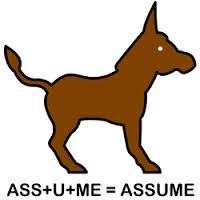 Everyone has heard the old adage, attributed to Oscar Wilde, that “When you ASSUME, you make an ASS out of U and ME.” Although it does not lend itself to such a witty and pithy saying, there is another ASS word that gets a lot of buzz on college and university campuses: ASSessment. When the term arises in conversations of any sort, the faculty says “Look out, the administrative ASSes are coming for our academic freedom!” while the administrators say “Look out, the faculty ASSes are braying about academic freedom again!” I am by training and gene pool strongly aligned with the faculty side of this divide, but over the past decade have had to play nice with administrators so regularly and often that I’ve come to realize that there just might be fewer devils in the halls of the administrative buildings than there are in the faculty offices on campus.
  But administrators and faculty are wary of each other, and fall back into stereotypical fears concerning “the other” at the drop of a hat. So when the third rail—ASSessment—becomes the topic of conversation, all bets are off.
I managed to ignore assessment while chairing an academic department, then directing an academic program for a number of years, but eventually couldn’t avoid it any more. And I had to figure out whether there was an academic Claritin available to help me with my assessment allergies. One of my friends and teaching mentors in my early years as a teacher had a favorite story about assessment that he liked to tell. During the meeting of a committee whose members came from various academic departments, the topic of assessment of faculty and students was on the agenda.  My colleague, a distinguished English professor who also ran the Liberal Arts Honors program on campus, bristled on principle. “How are you going to quantify and measure what happens when a student reads and then a room full of students with a teacher discuss a Shakespeare sonnet or a page from Dostoevsky?” he fumed. “Some things can’t be quantified!” “Rodney,” a professor from economics patiently replied—“Everything can be quantified.”
My friend did not tell this story as a remembrance of a day when he learned something new. Rather, he used it as evidence that even in the academy, even on the campus of a college whose bread-and-butter is the humanities and the liberal arts, barbarians and Philistines are at the gate, seeking to turn the richness of the humanities into a linear, number-crunching mockery—just as Dr. J. Evans Pritchard, PhD seeks to do in his introduction to a weighty poetry anthology in this scene from “Dead Poets Society”:
I remember the first time I met B____, the newly appointed assessment guru on campus—his daunting official title is Associate Vice President for Academic Affairs/Chief Institutional Effectiveness Officer. He was appointed to this position roughly ten years ago at about the same time I became chair of the philosophy department. Knowing that my department had done absolutely nothing over the years in response to regular administrative prompts to develop internal assessment strategies, I was not surprised when shortly after moving into the chair’s office I received a pleasant invitation to come to the Academic Affairs suite and have a conversation with the assessment guru. Shortly after I sat down, he said enthusiastically “Vance, I’m an assessment geek!” “This is definitely not going to go well,” I thought. “I would rather stick a fork in my eye than even think about assessment—assessment geekhood is beyond my range of comprehension.”
I was allowed to effectively thwart and ignore the whole issue during my four years as department chair, but by the time I became director of the Development of Western Civilization Program, the four semester, sixteen-credit-hour required set of courses that is the core of my college’s core curriculum three years ago, the lay of the land had changed. Due to accreditation requirements and an increasing insistence from various constituencies on the peculiar idea that teachers should be held accountable in some measurable way for what happens in the classroom, I realized that benign resistance and neglect would no longer be an effective strategy.  Oddly enough, I also realized that I had started moving incrementally in the direction believing that assessment might after all be desirable beyond the pragmatic fact that we were going to be forced to do it.
This was not the result of any John Wesley-like “heart strangely warmed” conversion experience concerning assessment. I am still wary of and uncomfortable with the very idea of quantifiable measures of what happens in a humanities-oriented classroom. But I at least had come to the realization that the standard humanities faculty insistence that any sort of assessment in the classroom is bogus and a violation of academic freedom is untenable. Unless we want to live in an Aristophanes-like educational universe that is comically removed from how the real world actually operates, we need to recognize that being held responsible for what we do on a regular basis is not a violation of anything other than our hubris and pretensions. News flash, humanities professors—even God gets held to recognizable standards on occasion.
The program I inherited had been chugging along merrily without agreed-upon standards and without being answerable to anything other than itself in any noticeable way for a couple of decades. Accordingly, the ongoing interaction between dozens of faculty and hundreds of students from semester to semester tended to produce islands of excellence and rigor in an ever-widening sea of mediocrity.  And everyone pretty much knew it, both within the program and on the campus at large. The only assessment tool used in the program was an informal “popularity poll” in which the students at the end of the year got to take out their frustrations anonymously on their professors in the manner of RateMyProfessor.com.
The biggest reason why the assessment lay of the land on campus had changed was that when I stepped into directing the program, the more-than-five-year process of core curriculum reform on campus had just ended, producing among many other things a new streamlined and improved version of the program, the first such revision in its four decades of existence. My task was to help lead the faculty from the old into the new. Amongst administrators and many faculty on campus there was a commitment to making the new core curriculum work—which meant a renewed, sharp focus on assessment. In response to B___’s request for a report on assessment progress at the end of each of my first two academic years as director, I provided a summary of conversations the faculty was engaged in related to important issues such as grade distribution and inflation— but this wasn’t exactly assessment. Then going into my third year as director, I had what at the time seemed like an Archimedean “Eureka!” moment—looking back, it was a realization and idea both disarmingly simple and obvious, but completely against the grain.
One of the reasons assessment is so problematic for faculty is that it always seems to be imposed on them from outside, antagonistic forces. What if faculty and administrators actually met in the same room with the charge of developing instruments of assessment to track the progress of students in important areas of learning over their four semesters in the program? Administrators and faculty collaborating with a common goal? Impossible! Insane! But it was worth a shot—knowing that there are assessment experts on campus, why not have them work with faculty focusing on what might work in the context of this program rather than having the faculty wait for the assessment shoe to drop?  I sent an email describing my crazy idea to B_____; he enthusiastically accepted my invitation to help form the first ever “DWC Assessment Task Force” on campus (I call them the “Assessment Posse”). Three administrators, four faculty members (specifically chosen because of interest expressed), and me.
Over the academic year, the assessment posse turned out to be one of the hardest working and most creative committees I’ve ever been involved with, producing by April a twenty-question reading assessment quiz to be administered to students at the beginning of their first semester and at the end of their third semester in the program, a tool intended to indicate whether the program is actually facilitating “deep reading” of primary texts as it claims. We did a dry run by springing the quiz on those present at the last faculty meeting of the semester, received unexpectedly positive feedback, and we were in business.
All of this is fresh in my memory because this coming Monday the newly created assessment instrument goes live as three program teams give the quiz to 250 unsuspecting freshmen. How well will it work? Will information useful for tracking the program’s success or lack of same be gathered over time? I certainly hope so, but one thing I have learned for sure. Humanities faculty and number-crunching administrators can learn to speak each other’s language sufficiently to work toward a common goal. I’ve seen it happen. Imagine that!
Development of Western Civilization
Development of Western Civilization
Previous Post

September 24, 2014
Having a Human Experience
Next Post
October 1, 2014 Suffering into Truth
Browse Our Archives
Select a Category abortion Advent AI Angels Artificial intelligence atheism attention baptism Baptists beauty belief Benedictines Bible bicycling Big Bird books Bovina Camaldoli hermitage Canada Catholicism cats certainty change Christianity Christmas Collegeville Covid-19 creativity Development of Western Civilization dogs doubt Easter Enneagram Epiphany Episcopal ethics Eucharist evil extroverts Facebook faith family fear flowers forgiveness freedom friends God goodness grace happiness heaven hell history Holy Spirit Holy Week hope human nature humility humor idolatry incarnation introverts irreverence Islam Jeanne Jesus Joe Biden joy Judaism justice Kamala Harris knowledge Lent listen literature liturgy love Marsue Memorial Day miracles movies music mystery mythology NPR Old Testament optimism paradox peace Penguins philosophy piano podcast politics power prayer Protestantism Providence College Religion Rhode Island sabbatical sacrament science seeing silence Simone Weil Socrates soul sports St. John's College stories suffering tattoo teaching technology television theology thinking time tolerance transcendence travel trees trust truth Uncategorized Vermont wisdom wonder writing
Select a Month May 2026 April 2026 March 2026 February 2026 January 2026 December 2025 November 2025 October 2025 September 2025 August 2025 July 2025 June 2025 May 2025 April 2025 March 2025 February 2025 January 2025 December 2024 November 2024 October 2024 September 2024 August 2024 July 2024 June 2024 May 2024 April 2024 March 2024 February 2024 January 2024 December 2023 November 2023 October 2023 September 2023 August 2023 July 2023 June 2023 May 2023 April 2023 March 2023 February 2023 January 2023 December 2022 November 2022 October 2022 September 2022 August 2022 July 2022 June 2022 May 2022 April 2022 March 2022 February 2022 January 2022 December 2021 November 2021 October 2021 September 2021 August 2021 July 2021 June 2021 May 2021 April 2021 March 2021 February 2021 January 2021 December 2020 November 2020 October 2020 September 2020 August 2020 July 2020 June 2020 May 2020 April 2020 March 2020 February 2020 January 2020 December 2019 November 2019 October 2019 September 2019 August 2019 July 2019 June 2019 May 2019 April 2019 March 2019 February 2019 January 2019 December 2018 November 2018 October 2018 September 2018 August 2018 July 2018 June 2018 May 2018 April 2018 March 2018 February 2018 January 2018 December 2017 November 2017 October 2017 September 2017 August 2017 July 2017 June 2017 May 2017 April 2017 March 2017 February 2017 January 2017 December 2016 November 2016 October 2016 September 2016 August 2016 July 2016 June 2016 May 2016 April 2016 March 2016 February 2016 January 2016 December 2015 November 2015 October 2015 September 2015 August 2015 July 2015 June 2015 May 2015 April 2015 March 2015 February 2015 January 2015 December 2014 November 2014 October 2014 September 2014 August 2014 July 2014 June 2014 May 2014 April 2014 March 2014 February 2014 January 2014 December 2013 November 2013 October 2013 September 2013 August 2013 July 2013 June 2013 May 2013 April 2013 March 2013 February 2013 January 2013 December 2012 November 2012 October 2012 September 2012
Follow Us!
TAKE THE
Religious Wisdom Quiz
How old was Jesus when He started His public ministry?
Select your answer to see how you score.
About 12 About 30 About 21 About 50
Books by This Author Books by Vance G. Morgan
Related posts from Freelance Christianity

The Lonely Pawn: On Faith, Doubt, and Meaning


AI and Love: When a Chatbot Becomes a...

TRENDING AT PATHEOS Progressive Christian

What Being a Modern-Day Apostle Means to Me
In my last column, I discussed the ins and outs of modern-day...

Did Ancient China Once Worship the God of...
Across human history, a common thread weaves through the origins of the...

Love Your Neighbor – Including Earth-Kin: Lev. 19,...
God’s command to love your neighbor means acting in an ethical and...

Lead a Church Study of “Jesus and Lao...
Guest writer Jack Thomas (The Irreverent Reverend) reflects on leading his church...

Pastoral Wisdom for Responding to Sermon Pushback
Getting sermon pushback on your social justice sermon? Learn practical, Proverbs-based strategies...

Principles for Understanding the Apostolic Ministry Today
Whenever people discover that my formal ministry title is "apostle," as in...
view all Progressive Christian blogs
Ad-Free & Subscriber Log-In Subscription Support
- About Us
- 2026 Calendar
- Videos
- Podcasts
- Library of World Religions
- Faith In Media Tracker
- Advertise With Us
- Write for Us
- Privacy Policy
- Terms of Service
- Do Not Sell My Data
- Contact Us
- Radiant Digital
- Manage Newsletter Subscriptions
- Unsubscribe From Notifications
- Sitemap
Copyright 2008-2026, Patheos. All rights reserved.
Subscription Support Ad-Free & Subscriber Log-In
Follow Patheos