
BuddhistCatholicContemplativeEvangelicalGeneral ChristianHinduJewishLatter-day SaintMuslimNew VisionsProgressive Christian
Beliefs
- Buddhist
- Catholic
- Contemplative
- Evangelical
- General Christian
- Hindu
- Jewish
- Latter-day Saint
- More Voices
- Muslim
- New Visions
- Pagan
- Progressive Christian
Topics
- Religion News
- Food and Religion
- Sports and Religion
- Religious Art
- Religious Music and Entertainment
- Religious Events
- History and Religion
- Style and Religion
- Politics and Religion
- Women in Religion
- Recreation Outdoors and Religion
- Business Finance and Religion
- Careers Workplace and Religion
- Education and Religion
- Family Parenting and Religion
- Health Fitness and Religion
- Home and Religion
- Relationships and Religion
- Technology and Religion
- Travel and Religion
Columnists
- Buddhist Columnists
- Business Finance and Religion Columnists
- Careers Workplace and Religion Columnists
- Catholic Columnists
- Contemplative Columnists
- Education and Religion Columnists
- Evangelists Columnists
- Family Parenting and Religion Columnists
- General Christian Columnists
- Health Fitness and Religion Columnists
- Hindu Columnists
- History and Religion Columnists
- Home and Religion Columnists
- Jewish Columnists
- More Voices Columnists
- Latter Day Columnists
- Muslim Columnists
- New Visions Columnists
- Nonreligious Columnists
- Pagan Columnists
- Politics and Religion Columnists
- Progressive Columnists
- Recreation Outdoors and Religion Columnists
- Relationships and Religion Columnists
- Religion News Columnists
- Religious Art Columnists
- Religious Events Columnists
- Religious Music and Entertainment Columnists
- Sports and Religion Columnists
- Style and Religion Columnists
- Technology and Religion Columnists
- Travel and Religion Columnists
- Women in Religion Columnists
Resource Library
- 2026 Calendar
- Library of World Religions
- The 100 Most Holy Places on Earth
- Patheos Answers
- Podcasts
- Videos
- Faith Leaders Database
- Anglican Episcopalian
- Bahai
- Baptist
- Buddhism
- Christianity
- Confucianism
- Eastern Orthodoxy
- Hinduism
- Holiness and Pentecostal
- ISKCON
- Islam
- Judaism
- Lutheran
- Methodist
- The Church of Jesus Christ of Latter-day Saints
- New Age
- Paganism
- Presbytarian and Reformed
- Protestantism
- Religion Behind the Scenes
- Roman Catholic
- Scientology
- Shia Islam
- Sikhism
- Sufism
- Sunni Islam
- Taoism
- Zen
- See all religions
Research Tools
 Ad-Free & Subscriber Log-In Subscription Support
Ad-Free & Subscriber Log-In Subscription Support
Follow Patheos 

- Trending:
- Forgiveness
- |
- Marriage
- |
- Consciousness
- |
- Death Penalty
- |
- Election
- |
- Halloween

- Home
- Progressive Christian
- Do You Want To Be Free? Face Your Demons
Do You Want To Be Free? Face Your Demons
Last updated on: June 23, 2019 at 6:00 am by Vance Morgan
Do You Want To Be Free? Face Your Demons 2019-06-22T13:49:21-04:00 Vance Morgan
Patheos Explore the world's faith through different perspectives on religion and spirituality! Patheos has the views of the prevalent religions and spiritualities of the world.
The lectionary readings for today include two fascinating texts from Scripture: Elijah collapsed under a broom tree in First Kings, and a bunch of demons cast into a herd of pigs in Luke’s gospel. Lucky me: I’m giving the sermon today at the Episcopal church I attend, then leading a monthly discussion group afterwards! Here’s what I’ll be saying:
This year is the centenary of the birth of Iris Murdoch. Her life bookended the twentieth century (she died after several year of affliction from Alzheimer’s in 1999). Iris Murdoch is a fascinating figure; she was an internationally respected philosopher who, at the height of her career in the 1960s, left academia to write novels full time. She ended up writing twenty-six of them, extraordinary investigations of the complexities and messiness of human relationships and commitments. Murdoch claimed to be an atheist, but she also believed that true moral commitment requires belief in something greater than ourselves, something transcendent not subject to the vagaries and whims of human existence. In the midst of exploring these matters in her philosophical essays and her novels, she crafted several memorable definitions of basic moral concepts.
Consider freedom, for instance. Our contemporary understanding of “freedom” often amounts to “doing whatever I want to do.” Murdoch’s view of freedom was far more complex. “To be free,” she wrote, “is something like this: To live sanely without fear, and to perceive what is real.”
Sanity. Fearlessness. Reality. These are the elements of being truly free. Murdoch said that one of the best questions one can ask oneself is: “What are you afraid of?” If facing and overcoming fear is part of being free, then identifying one’s fears is crucial. Two of this morning’s lectionary readings have to do with identifying, then facing fear.
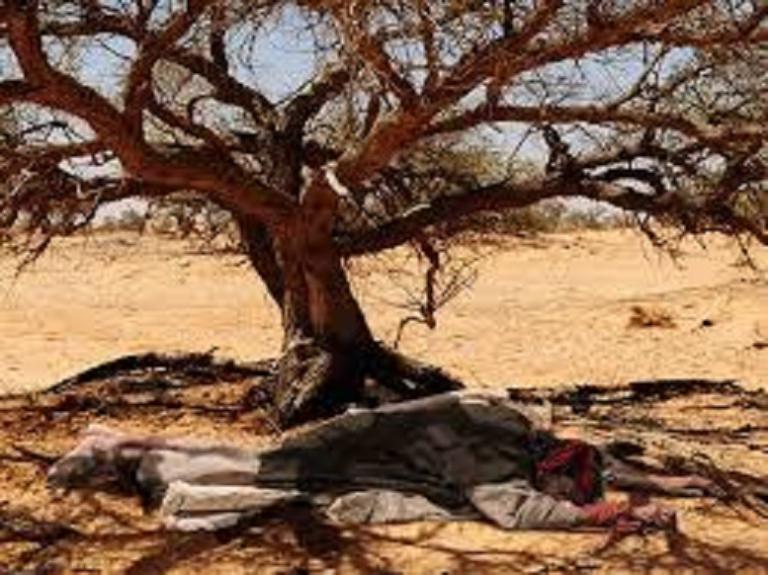
At the beginning of our first reading, we find the prophet Elijah collapsed under a broom tree. He is fresh off one of the greatest and most spectacular successes any prophet of God has ever had or will ever have, an experience described in the previous chapter of 1 Kings. In a high stakes contest with the prophets of Baal on top of Mount Carmel, God has shown up in impressive fashion, as Elijah calls down fire that consumes the sacrifice, the wood on the altar, the stones that the altar is made of, and the water surrounding it. All of this after 500 of Queen Jezebel’s prophets of Baal failed to arouse even a spark or a whiff of smoke out of their God after hours of praying, chanting, dancing, and self-mutilation. The people fall on their faces and cry, “The Lord, He is God! The Lord, He is God!” In the exhilarating glow of spectacular success, Elijah has the 500 prophets of Baal taken down the mountain to a brook and executed.
But then, King Ahab reports to Queen Jezebel – a woman who in terms of evil and just plain nastiness puts Lady Macbeth to shame – what has happened to her prophets and everything changes. Jezebel sends a message to Elijah: “So let the gods do to me, and more also, if I do not make your life as the life of one of them by tomorrow about this time.” Out of fear for his life, Elijah runs into the wilderness. One day into his flight, he gives up. He collapses into a fetal position under a broom tree and goes into a classic drama queen moment: “It is enough; now, O Lord, take away my life, for I am no better than my ancestors.”
We’ve all been there. I’ve had new teachers come to me after a bad class and say, in essence, that “if this is what teaching is really like, I’m going to quit.” Fill in the blanks from your own experience. If I had known that married life was going to be like this, I never would have gotten married. If I had known that children would be such a pain in the ass, I would have remained childless. And perhaps the biggest one: if I had known that following Jesus and living the life of faith was going to be like this, I wouldn’t have bothered. Our fears can paralyze us into inaction and apathy.
One option is to recognize that there is an alternative model to my “me-centered” framework. Maybe reality and the cosmic scheme of things are not perfectly patterned and adjusted to my preferences and what I think I need. Maybe there’s more going on than I think. Maybe, just maybe, I’m not the centre of the universe and maybe, God hasn’t fallen off the divine throne just because things aren’t working out the way I want them to.
Back to Elijah. An angel shows up, and the angelic response to Elijah’s drama queen moment is very interesting. Elijah says, “I have had enough, Lord. Take away my life; for I am no better than my ancestors,” and the angel says, “Get up and eat.” Elijah wants to die and the angel cooks him a meal. Only when his physical needs are met is Elijah ready to face his fears. Sometimes it’s as simple as that. Eat properly, rest, get some exercise, take your medication, and get over yourself.
Our strange gospel story from Luke addresses all three of Iris Murdoch’s concepts: sanity, facing one’s fears, and the burden of orienting oneself afterward to live in a new, clearer reality. It is a story of a person set free from demons and the response of those around him, those who would maybe rather live with their fears than face reality. We find Jesus in the land of the Gerasenes, in what would be modern-day Jordan. There he encounters a man “who had demons,” a man who has been living naked “among the tombs” for many years. The man (or the demons) knows Jesus on sight and begs for mercy. After a brief exchange, Jesus casts the demons out of the man and, agreeing to their request, sends them into a herd of swine minding their own business close by. The pigs rush down a hill into a nearby lake and drown. The swineherds run to town reporting what just happened (and undoubtedly also to file a legal claim against Jesus for ruining their livelihood). Although somewhat unusual, on one level the story is just another tale of Jesus’ compassion and healing powers; hidden in the narrative, however, are at least a couple of details worth considering.
The man knows Jesus’ name, but Jesus does not know his, nor apparently does he know the identity of the entities possessing the man. Jesus asks “What is your name?” to which the man answers “‘Legion,’ for many demons had entered him.” I heard Marsue Harris give a sermon on this text a number of years ago at a different church; she asked her congregation to consider Jesus’ question: What is your name? She advised the congregation to “name your demons.” For me, the first steps toward naming my demons begin with identifying those persons and situations I am most uncomfortable with and asking: “What am I so afraid of? What is its name?”
A popular and pervasive strategy concerning one’s fears in our contemporary world is to project them onto the “other,” whether defined by religious commitment, racial identity, countries of origin, or sexual orientation. It is much easier to externalize and project our fears than it is to realize that our fears and concerns always are rooted much more closely to home than we choose to accept. If my consistent answer to “what are you afraid of?” is “those who are most unlike me,” it is time to consider the possibility that I am projecting on others what I fear about myself.
After Jesus casts the demons into the pigs, the news spreads quickly and the community comes to see the healed man “clothed and in his right mind.” But instead of rejoicing in their neighbor’s healing, “all the people of the surrounding country of the Gerasenes asked Jesus to leave them; for they were seized with great fear.” What were these people afraid of? Their disturbing reaction to the healing of a tormented and troubled neighbor raises another important question. Not only does each of us need to ask “what am I afraid of?” but each of us also needs to ask “do I want to be free of that fear?” For years, the residents of Gerasa were very clear about who this demon-possessed man was and how to handle him. “Stay away from him.” “He’s dangerous.” “There’s no hope for him—best to ignore him as much as possible.” But now, all of a sudden, everything has changed.
Dealing with demons is a risky business. Risky, because I might be so comfortable with my demons that I cannot imagine life without them. As Jesus asked the man at the pool of Bethsaida in John’s Gospel: “Do you want to be made whole?” The answer might seem obvious, but this is a complicated question. Although we might deny it, the immediate answer for many of us is undoubtedly “I’m not so sure.” I can’t imagine myself without my prejudices, my preconceptions, my weaknesses—many of which I did not choose but which have defined me for longer than I can remember.
This is also risky for those around me, because now all of their preconceptions are brought to light as well. All of the categories that defined the previously demon-possessed man—someone to be avoided, a dangerous person, insane—now have to be rethought. More generally, they have discovered that the “other” is exactly the same as they are.
Challenging our preconceptions and discovering what is common among us rather than what divides us is very difficult work, work that directly challenges our comfortable categorizations. Do we really want to know that those whom we regularly keep at arm’s length are, regardless of religious commitment, race, or sexual orientation, exactly the same as we are in every respect that matters? The citizens of Gerasa knew that what had just happened to the demon-possessed man was a total game changer—and they were not ready or willing to play the new game.
We are not told how the Gerasenes responded to the healed man over time, but we do know that they asked the man responsible for the healing to leave. As Iris Murdoch suggests, being free requires not only facing our fears, but also sanely inhabiting a new, clearer reality. Naming our demons requires taking responsibility for what comes afterward—a radical reshaping of everything we think, say, and do. It might be a lot easier just to hang on to our demons. Unless, of course, we actually want to be free.
Previous Post

June 20, 2019
Faith By the Light of the Moon
Next Post

June 25, 2019 Getting Old Is God's Worst Idea
Browse Our Archives
Select a Category abortion Advent AI Angels Artificial intelligence atheism attention baptism Baptists beauty belief Benedictines Bible bicycling Big Bird books Bovina Camaldoli hermitage Canada Catholicism cats certainty change Christianity Christmas Collegeville Covid-19 creativity Development of Western Civilization dogs doubt Easter Enneagram Epiphany Episcopal ethics Eucharist evil extroverts Facebook faith family fear flowers forgiveness freedom friends God goodness grace happiness heaven hell history Holy Spirit Holy Week hope human nature humility humor idolatry incarnation introverts irreverence Islam Jeanne Jesus Joe Biden joy Judaism justice Kamala Harris knowledge Lent listen literature liturgy love Marsue Memorial Day miracles movies music mystery mythology NPR Old Testament optimism paradox peace Penguins philosophy piano podcast politics power prayer Protestantism Providence College Religion Rhode Island sabbatical sacrament science seeing silence Simone Weil Socrates soul sports St. John's College stories suffering tattoo teaching technology television theology thinking time tolerance transcendence travel trees trust truth Uncategorized Vermont wisdom wonder writing
Select a Month May 2026 April 2026 March 2026 February 2026 January 2026 December 2025 November 2025 October 2025 September 2025 August 2025 July 2025 June 2025 May 2025 April 2025 March 2025 February 2025 January 2025 December 2024 November 2024 October 2024 September 2024 August 2024 July 2024 June 2024 May 2024 April 2024 March 2024 February 2024 January 2024 December 2023 November 2023 October 2023 September 2023 August 2023 July 2023 June 2023 May 2023 April 2023 March 2023 February 2023 January 2023 December 2022 November 2022 October 2022 September 2022 August 2022 July 2022 June 2022 May 2022 April 2022 March 2022 February 2022 January 2022 December 2021 November 2021 October 2021 September 2021 August 2021 July 2021 June 2021 May 2021 April 2021 March 2021 February 2021 January 2021 December 2020 November 2020 October 2020 September 2020 August 2020 July 2020 June 2020 May 2020 April 2020 March 2020 February 2020 January 2020 December 2019 November 2019 October 2019 September 2019 August 2019 July 2019 June 2019 May 2019 April 2019 March 2019 February 2019 January 2019 December 2018 November 2018 October 2018 September 2018 August 2018 July 2018 June 2018 May 2018 April 2018 March 2018 February 2018 January 2018 December 2017 November 2017 October 2017 September 2017 August 2017 July 2017 June 2017 May 2017 April 2017 March 2017 February 2017 January 2017 December 2016 November 2016 October 2016 September 2016 August 2016 July 2016 June 2016 May 2016 April 2016 March 2016 February 2016 January 2016 December 2015 November 2015 October 2015 September 2015 August 2015 July 2015 June 2015 May 2015 April 2015 March 2015 February 2015 January 2015 December 2014 November 2014 October 2014 September 2014 August 2014 July 2014 June 2014 May 2014 April 2014 March 2014 February 2014 January 2014 December 2013 November 2013 October 2013 September 2013 August 2013 July 2013 June 2013 May 2013 April 2013 March 2013 February 2013 January 2013 December 2012 November 2012 October 2012 September 2012
Follow Us!
TAKE THE
Religious Wisdom Quiz
What Jewish festival celebrates the deliverance in Esther?
Select your answer to see how you score.
Hanukkah Passover Purim Tabernacles
Books by This Author Books by Vance G. Morgan
Related posts from Freelance Christianity

The Lonely Pawn: On Faith, Doubt, and Meaning


AI and Love: When a Chatbot Becomes a...

TRENDING AT PATHEOS Progressive Christian

Why Christians Have a Sacred Duty to Vote:...
The Bible offers strong support for the sacred duty to vote. Here...

What Being a Modern-Day Apostle Means to Me
In my last column, I discussed the ins and outs of modern-day...

Did Ancient China Once Worship the God of...
Across human history, a common thread weaves through the origins of the...

Love Your Neighbor – Including Earth-Kin: Lev. 19,...
God’s command to love your neighbor means acting in an ethical and...

Lead a Church Study of “Jesus and Lao...
Guest writer Jack Thomas (The Irreverent Reverend) reflects on leading his church...

Principles for Understanding the Apostolic Ministry Today
Whenever people discover that my formal ministry title is "apostle," as in...
view all Progressive Christian blogs
Ad-Free & Subscriber Log-In Subscription Support
- About Us
- 2026 Calendar
- Videos
- Podcasts
- Library of World Religions
- Faith In Media Tracker
- Advertise With Us
- Write for Us
- Privacy Policy
- Terms of Service
- Do Not Sell My Data
- Contact Us
- Radiant Digital
- Manage Newsletter Subscriptions
- Unsubscribe From Notifications
- Sitemap
Copyright 2008-2026, Patheos. All rights reserved.
Subscription Support Ad-Free & Subscriber Log-In
Follow Patheos