
BuddhistCatholicContemplativeEvangelicalGeneral ChristianHinduJewishLatter-day SaintMuslimNew VisionsProgressive Christian
Beliefs
- Buddhist
- Catholic
- Contemplative
- Evangelical
- General Christian
- Hindu
- Jewish
- Latter-day Saint
- More Voices
- Muslim
- New Visions
- Pagan
- Progressive Christian
Topics
- Religion News
- Food and Religion
- Sports and Religion
- Religious Art
- Religious Music and Entertainment
- Religious Events
- History and Religion
- Style and Religion
- Politics and Religion
- Women in Religion
- Recreation Outdoors and Religion
- Business Finance and Religion
- Careers Workplace and Religion
- Education and Religion
- Family Parenting and Religion
- Health Fitness and Religion
- Home and Religion
- Relationships and Religion
- Technology and Religion
- Travel and Religion
Columnists
- Buddhist Columnists
- Business Finance and Religion Columnists
- Careers Workplace and Religion Columnists
- Catholic Columnists
- Contemplative Columnists
- Education and Religion Columnists
- Evangelists Columnists
- Family Parenting and Religion Columnists
- General Christian Columnists
- Health Fitness and Religion Columnists
- Hindu Columnists
- History and Religion Columnists
- Home and Religion Columnists
- Jewish Columnists
- More Voices Columnists
- Latter Day Columnists
- Muslim Columnists
- New Visions Columnists
- Nonreligious Columnists
- Pagan Columnists
- Politics and Religion Columnists
- Progressive Columnists
- Recreation Outdoors and Religion Columnists
- Relationships and Religion Columnists
- Religion News Columnists
- Religious Art Columnists
- Religious Events Columnists
- Religious Music and Entertainment Columnists
- Sports and Religion Columnists
- Style and Religion Columnists
- Technology and Religion Columnists
- Travel and Religion Columnists
- Women in Religion Columnists
Resource Library
- 2026 Calendar
- Library of World Religions
- The 100 Most Holy Places on Earth
- Patheos Answers
- Podcasts
- Videos
- Faith Leaders Database
- Anglican Episcopalian
- Bahai
- Baptist
- Buddhism
- Christianity
- Confucianism
- Eastern Orthodoxy
- Hinduism
- Holiness and Pentecostal
- ISKCON
- Islam
- Judaism
- Lutheran
- Methodist
- The Church of Jesus Christ of Latter-day Saints
- New Age
- Paganism
- Presbytarian and Reformed
- Protestantism
- Religion Behind the Scenes
- Roman Catholic
- Scientology
- Shia Islam
- Sikhism
- Sufism
- Sunni Islam
- Taoism
- Zen
- See all religions
Research Tools
 Ad-Free & Subscriber Log-In Subscription Support
Ad-Free & Subscriber Log-In Subscription Support
Follow Patheos 

- Trending:
- Forgiveness
- |
- Marriage
- |
- Consciousness
- |
- Death Penalty
- |
- Election
- |
- Halloween

- Home
- Progressive Christian
- History and Religion
- Did the Early Christians Practice Socialism?
Did the Early Christians Practice Socialism?
Last updated on: April 29, 2025 at 3:43 pm by Vance Morgan
Did the Early Christians Practice Socialism? 2025-04-29T15:43:26-04:00 Vance Morgan
Patheos Explore the world's faith through different perspectives on religion and spirituality! Patheos has the views of the prevalent religions and spiritualities of the world.
Doubt is Next to Godliness
Last Friday’s post imagined a conversation between Karl Marx and Jesus in which they discuss a passage or two from Richard Rorty’s essay “Failed Prophecies, Glorious Hope,” an essay that just happened to be the focus of class discussion in my American Philosophy class last week.
One of Rorty’s many interesting and controversial claims in that essay is that “We should read [The Communist Manifesto and the New Testament] as inspirational documents, appeals to what Lincoln called the ‘better angels of our nature,’ rather than as accurate accounts of human history or of human decency.” I opened the class with one of my favorite texts from the New Testament, one that regularly suprises and often offends my students–most of whom have never read or heard the passage.
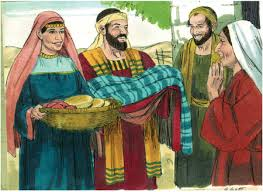
Distant Shores Media/Sweet Publishing, CC BY-SA 3.0, via Wikimedia Commons

Now the whole group of those who believed were of one heart and soul, and no one claimed private ownership of any possessions, but everything they owned was held in common. With great power the apostles gave their testimony to the resurrection of the Lord Jesus, and great grace was upon them all. There was not a needy person among them, for as many as owned lands or houses sold them and brought the proceeds of what was sold. They laid it at the apostles’ feet, and it was distributed to each as any had need.
Unquestioned Assumptions
After we read the passage together off a PowerPoint slide, I asked the students how they would describe this passage from Acts that describes how early communities of Jesus followers chose to organize themselves economically. “Socialism!” was the first response, not surprisingly. I have used this text many times over the years in class to poke at the unquestioned assumptions carried by students who, often coming from a faith-based upbringing in an upper middle class or wealthy household, have come to believe that somehow, as if by magic, their capitalist free-market attachments and their background framework of religious values will fit seamlessly together. “They sound like a bunch of communists!” more than one student has remarked in shock, and indeed they (anachronistically) do.
In some liturgical years, this passage from Acts is paired with today’s gospel from John. The familiar story of “Doubting Thomas” is the Second Sunday of Easter reading for all three liturgical years. In spite of the bad rap Thomas has gotten over the centuries for being the one disciple loser who refused to believe that Jesus had risen until he had seen him and touched him first person (of course, none of the other disciples believed until they had first-hand contact either, but let’s not go there), he is one of my all-time heroes.
Sterile Religion
By both personality and profession, I am naturally skeptical–I think that doubt is closer to godliness than cleanliness is. Just as I take the great skeptic Michel de Montaigne as a model for how to do philosophy, I consider Thomas as one of my models for how to approach the life of faith, something I share with many of my spiritual guides ranging from Kathleen Norris, Christian Wiman and Joan Chittister to Anne Lamott, Rowan Williams and Barbara Brown Taylor. Most homilies about this gospel draw the moral of the story from Jesus’ gentle criticism of Thomas’ attitude: “Have you believed because you have seen me? Blessed are those who have not seen and yet have come to believe.” But there is seeing and then there is seeing. Except for a select few, those who have committed themselves to Jesus in any way over the centuries have never seen him physically. But without a direct encounter—without truly seeing something worth committing to—faith commitment can easily become sterile religion.
Why, I have often wondered (and have often asked my students), did the early Christian communities choose to organize themselves in the manner described in Acts? They are close enough in time to Jesus’ physical presence that undoubtedly some of their members actually knew him in the flesh, or at least knew some people who did. But if the vision is not going to fade, such communities cannot rely on first-hand remembrance of the source. Practices and attitudes reflective of the values the community is committed to must be embedded in the very fiber and structure of the common life of the group.
Walk Humbly
At some point, given that a new community of followers of Jesus was seeking both stability and faithfulness to the message, someone must have asked “How would Jesus have organized this community if he were here?” Somebody remembers the parables, another person recalls the Beatitudes, and pretty soon they become a small, primitive laboratory for living the Gospel in real time. How to truly become Jesus in community form? By putting into action what the man supposedly said and lived. Feed the hungry. Clothe the naked. Shelter the homeless. Love each other as God loves us. This wasn’t church for them—this was life. Most likely their very survival depended on it.
Two thousand years later, persons who profess a Christian faith share a lot in common with these early followers of Jesus. We have not seen Jesus in the flesh, just as most—and pretty soon all—of the members of these early communities had not. We are bound together by having seen Jesus in ways far deeper and more profound than physical vision. And our challenge is the same as theirs, to figure out what it means to actually live it rather than just say it. As I often do, I fall back here on the prophetic words of Micah who asked, just as these early communities did, just as we do today, “What does the Lord require of us?” Do justice. Love mercy. Walk humbly with your God. And, I might add, doubt is an appropriate seasoning for each of these.
General Christian
History and Religion
Politics and Religion
Previous Post

April 25, 2025
Why "Christian Socialism" is not an oxymoron
Next Post

April 29, 2025 Being a Philosopher and a Christian
Recent Comments
"Mary did have a choice. And she was able to make it before the Holy ..."
"i cannot read beyond your recommendations for the books since i like to have a ..."
"AI will never be able to utter with honesty, feeling, or humility, the greeting: "Namaste".It ..."
"They do. I'm sure you could find discussions of the same topic from any of ..."
Browse Our Archives
Select a Category abortion Advent AI Angels Artificial intelligence atheism attention baptism Baptists beauty belief Benedictines Bible bicycling Big Bird books Bovina Camaldoli hermitage Canada Catholicism cats certainty change Christianity Christmas Collegeville Covid-19 creativity Development of Western Civilization dogs doubt Easter Enneagram Epiphany Episcopal ethics Eucharist evil extroverts Facebook faith family fear flowers forgiveness freedom friends God goodness grace happiness heaven hell history Holy Spirit Holy Week hope human nature humility humor idolatry incarnation introverts irreverence Islam Jeanne Jesus Joe Biden joy Judaism justice Kamala Harris knowledge Lent listen literature liturgy love Marsue Memorial Day miracles movies music mystery mythology NPR Old Testament optimism paradox peace Penguins philosophy piano podcast politics power prayer Protestantism Providence College Religion Rhode Island sabbatical sacrament science seeing silence Simone Weil Socrates soul sports St. John's College stories suffering tattoo teaching technology television theology thinking time tolerance transcendence travel trees trust truth Uncategorized Vermont wisdom wonder writing
Select a Month May 2026 April 2026 March 2026 February 2026 January 2026 December 2025 November 2025 October 2025 September 2025 August 2025 July 2025 June 2025 May 2025 April 2025 March 2025 February 2025 January 2025 December 2024 November 2024 October 2024 September 2024 August 2024 July 2024 June 2024 May 2024 April 2024 March 2024 February 2024 January 2024 December 2023 November 2023 October 2023 September 2023 August 2023 July 2023 June 2023 May 2023 April 2023 March 2023 February 2023 January 2023 December 2022 November 2022 October 2022 September 2022 August 2022 July 2022 June 2022 May 2022 April 2022 March 2022 February 2022 January 2022 December 2021 November 2021 October 2021 September 2021 August 2021 July 2021 June 2021 May 2021 April 2021 March 2021 February 2021 January 2021 December 2020 November 2020 October 2020 September 2020 August 2020 July 2020 June 2020 May 2020 April 2020 March 2020 February 2020 January 2020 December 2019 November 2019 October 2019 September 2019 August 2019 July 2019 June 2019 May 2019 April 2019 March 2019 February 2019 January 2019 December 2018 November 2018 October 2018 September 2018 August 2018 July 2018 June 2018 May 2018 April 2018 March 2018 February 2018 January 2018 December 2017 November 2017 October 2017 September 2017 August 2017 July 2017 June 2017 May 2017 April 2017 March 2017 February 2017 January 2017 December 2016 November 2016 October 2016 September 2016 August 2016 July 2016 June 2016 May 2016 April 2016 March 2016 February 2016 January 2016 December 2015 November 2015 October 2015 September 2015 August 2015 July 2015 June 2015 May 2015 April 2015 March 2015 February 2015 January 2015 December 2014 November 2014 October 2014 September 2014 August 2014 July 2014 June 2014 May 2014 April 2014 March 2014 February 2014 January 2014 December 2013 November 2013 October 2013 September 2013 August 2013 July 2013 June 2013 May 2013 April 2013 March 2013 February 2013 January 2013 December 2012 November 2012 October 2012 September 2012
Follow Us!
TAKE THE
Religious Wisdom Quiz
What does Paul tell the Thessalonians to do without ceasing?
Select your answer to see how you score.
Rejoice Study the word Give thanks Pray
Books by This Author Books by Vance G. Morgan
Related posts from Freelance Christianity

The Lonely Pawn: On Faith, Doubt, and Meaning


AI and Love: When a Chatbot Becomes a...

TRENDING AT PATHEOS Progressive Christian

What Being a Modern-Day Apostle Means to Me
In my last column, I discussed the ins and outs of modern-day...

Did Ancient China Once Worship the God of...
Across human history, a common thread weaves through the origins of the...

Love Your Neighbor – Including Earth-Kin: Lev. 19,...
God’s command to love your neighbor means acting in an ethical and...

Lead a Church Study of “Jesus and Lao...
Guest writer Jack Thomas (The Irreverent Reverend) reflects on leading his church...

Pastoral Wisdom for Responding to Sermon Pushback
Getting sermon pushback on your social justice sermon? Learn practical, Proverbs-based strategies...

Principles for Understanding the Apostolic Ministry Today
Whenever people discover that my formal ministry title is "apostle," as in...
view all Progressive Christian blogs
What Are Your Thoughts?leave a comment
Ad-Free & Subscriber Log-In Subscription Support
- About Us
- 2026 Calendar
- Videos
- Podcasts
- Library of World Religions
- Faith In Media Tracker
- Advertise With Us
- Write for Us
- Privacy Policy
- Terms of Service
- Do Not Sell My Data
- Contact Us
- Radiant Digital
- Manage Newsletter Subscriptions
- Unsubscribe From Notifications
- Sitemap
Copyright 2008-2026, Patheos. All rights reserved.
Subscription Support Ad-Free & Subscriber Log-In
Follow Patheos