
BuddhistCatholicContemplativeEvangelicalGeneral ChristianHinduJewishLatter-day SaintMuslimNew VisionsProgressive Christian
Beliefs
- Buddhist
- Catholic
- Contemplative
- Evangelical
- General Christian
- Hindu
- Jewish
- Latter-day Saint
- More Voices
- Muslim
- New Visions
- Pagan
- Progressive Christian
Topics
- Religion News
- Food and Religion
- Sports and Religion
- Religious Art
- Religious Music and Entertainment
- Religious Events
- History and Religion
- Style and Religion
- Politics and Religion
- Women in Religion
- Recreation Outdoors and Religion
- Business Finance and Religion
- Careers Workplace and Religion
- Education and Religion
- Family Parenting and Religion
- Health Fitness and Religion
- Home and Religion
- Relationships and Religion
- Technology and Religion
- Travel and Religion
Columnists
- Buddhist Columnists
- Business Finance and Religion Columnists
- Careers Workplace and Religion Columnists
- Catholic Columnists
- Contemplative Columnists
- Education and Religion Columnists
- Evangelists Columnists
- Family Parenting and Religion Columnists
- General Christian Columnists
- Health Fitness and Religion Columnists
- Hindu Columnists
- History and Religion Columnists
- Home and Religion Columnists
- Jewish Columnists
- More Voices Columnists
- Latter Day Columnists
- Muslim Columnists
- New Visions Columnists
- Nonreligious Columnists
- Pagan Columnists
- Politics and Religion Columnists
- Progressive Columnists
- Recreation Outdoors and Religion Columnists
- Relationships and Religion Columnists
- Religion News Columnists
- Religious Art Columnists
- Religious Events Columnists
- Religious Music and Entertainment Columnists
- Sports and Religion Columnists
- Style and Religion Columnists
- Technology and Religion Columnists
- Travel and Religion Columnists
- Women in Religion Columnists
Resource Library
- 2026 Calendar
- Library of World Religions
- The 100 Most Holy Places on Earth
- Patheos Answers
- Podcasts
- Videos
- Faith Leaders Database
- Anglican Episcopalian
- Bahai
- Baptist
- Buddhism
- Christianity
- Confucianism
- Eastern Orthodoxy
- Hinduism
- Holiness and Pentecostal
- ISKCON
- Islam
- Judaism
- Lutheran
- Methodist
- The Church of Jesus Christ of Latter-day Saints
- New Age
- Paganism
- Presbytarian and Reformed
- Protestantism
- Religion Behind the Scenes
- Roman Catholic
- Scientology
- Shia Islam
- Sikhism
- Sufism
- Sunni Islam
- Taoism
- Zen
- See all religions
Research Tools
 Ad-Free & Subscriber Log-In Subscription Support
Ad-Free & Subscriber Log-In Subscription Support
Follow Patheos 

- Trending:
- Forgiveness
- |
- Marriage
- |
- Consciousness
- |
- Death Penalty
- |
- Election
- |
- Halloween

- Home
- Progressive Christian
- When an Atheist Finds Out That There is More Than One Kind of Christian
When an Atheist Finds Out That There is More Than One Kind of Christian
Last updated on: September 23, 2018 at 6:00 am by Vance Morgan
When an Atheist Finds Out That There is More Than One Kind of Christian 2018-09-22T21:58:25-04:00 Vance Morgan
Patheos Explore the world's faith through different perspectives on religion and spirituality! Patheos has the views of the prevalent religions and spiritualities of the world.
One of the many things that make teaching a rewarding vocation is receiving unsolicited testimonials from former students about things they have carried away from a class they took with you. I particularly enjoy such testimonials when enough time has passed for the student to truly test whatever she or he has taken from the class in the crucible of real life, when what the student has learned has percolated and matured for a while. I received such a testimonial in an email the other day from a student who was part of my Philosophy of Knowledge class two years ago—his email caused me to go back into my archives to remind myself of some of the fascinating exchanges we had during that semester.
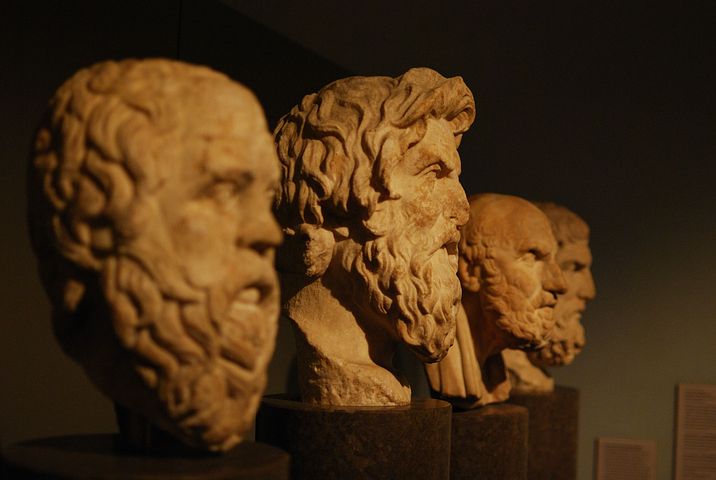
This student (whom I will call Billy) had one of the most fertile and unharnessed intellects and imaginations I have ever encountered in a 19- or 20-year-old. Billy was a junior at the time (he graduated with a BA in psychology last May); our relationship did not start out in a particularly positive way. At our college a student can register for a class up to two weeks after the semester begins as long as there is a seat available. I’ve always thought that this is far too permissive, especially for a course that meets only once per week for three hours as this particularly course did. Billy contacted me several days after the class’s first meeting, indicating that he had just dropped a class because he found it “boring,” and wanted to join my class because it looked like it would be “interesting.”
I resisted at first, mentioning that he had missed a week’s worth of work already, that this was an upper division course primarily designed for philosophy majors and minors, that we would be reading nothing but primary text (Plato, Aristotle, Montaigne, Descartes, Pascal, James, and more), that students would be producing at least fifty pages worth of written material, and so on. In other words, I tried to scare Billy off because I assumed this course might be far more demanding than someone simply looking for three credits of something “interesting” would be willing to commit to. To my chagrin, my resistance did not scare Billy off. Once I got to know him, it became clear why.
In a class filled primarily with philosophy and theology majors and minors, most of whom were open about their Catholic faith (as the majority students on my Catholic campus are), Billy was an outlier. In one of his first online short reflections (an ongoing required writing assignment throughout the semester), he wrote that “Most people would probably call me Machiavellian, a hound for scientific proof, and a rather devout atheist.” He was not at all shy in class about expressing his disdain for organized religion and for people who adopt their beliefs from authority figures rather than thinking for themselves.
In his weekly reflections, it became clear that he felt empowered in his resistance to the shared faith commitment of many of his fellow students by what he perceived my own commitments to be, a perception undoubtedly formed because I made it clear early in the semester that philosophy invites us to challenge our most cherished assumptions on a regular basis, even when those assumptions are life-defining as religious assumptions often are. “There are no sacred cows in philosophy,” I said. “Everything is up for scrutiny and is fair game to be challenged.” The fact that I did not include any philosophers from the Catholic philosophical tradition such as Augustine or Aquinas reinforced Billy’s willingness to inhabit in class discussion a contrarian role that he obviously relished.
Then one day in class, in the middle of a discussion about Descartes’ Discourse on Method, I happened to mention that I am a person of faith. I don’t do that very often in class, and I don’t recall why I did that particular day. But it caught Billy’s attention, something that he brought up in his weekly short reflection a couple of days later:
When you said in class the other day that you were a person of faith I was taken aback. How did that happen? How did you get yourself to believe in what you believe? You mentioned that your father was a preacher or priest? Did you have a vision? Did God speak to you? Every time I reach certainty, life takes a wrecking ball to it. . . . Lots of people think that the moral life only makes sense in the context of religion, but I don’t buy it. Morality isn’t some heroic choice, it is the only way man can put nature in checkmate . . . Here I am, programmed by the varying organs in my body to act in certain ways, to be greedy, manipulative, cooperative when necessary but only for a reward in the end. The only way to give the finger to this system that takes so much and gives so little, that doesn’t allow some the freedom of movement and puts within children tumors that kill them, is to choose to be good . . . There is no Godhead involved in that, there is only a petty choice to do right. But yeah, why/how are you religious?
I answered Billy in my comments on his reflection as follows:
Without going into too much detail, let me say this about being a person of faith. I have often described myself as Novalis described Spinoza, as a “God-obsessed person.” I was born into a religious world and struggled with it from as early as I can remember. But I have never lost the suspicion that there is something greater than us, although I have always resisted the claims to certainty that most traditionally religious persons will express. If you are waiting for an experience or a logical proof to convince you of the existence of something greater than us, my guess is that you will be disappointed. Or at least I have never experienced a vision, had a “born again” experience, or anything similar. When I say I am a person of faith, that is not synonymous with being religious—not even close. That might be where you could start, by not adopting familiar vocabulary as if it is not capable of infinite nuance.
This exchange led to many more discussions, both in writing and during my office hours. By his own admission, I was the first person of faith Billy had ever encountered who embraced both doubt and uncertainty as integral parts of their faith. I was the first person of faith he’d ever met who wasn’t trying to sell him anything or convert him to any particular set of beliefs. That confused him, but—as it turned out—began to open him to possibilities he had never considered.
Billy earned a well-deserved “A-minus” that semester; he dropped in a couple of times during my office hours during the next academic year just to “shoot the shit,” as he said. I shook his hand at graduation, and had not heard from him since. Until an email just a few days ago. After catching me up on what he’s been doing since graduation (traveling the world, as it turns out), he ended with this:
Overall, I think the world has gotten a lot less “black and white” and a lot less bland for me since I took your course. I have discovered that even if my beliefs orient me towards a given conclusion there is no weakness in saying that I may be wrong or even hoping that I am wrong. Sure, it is noble for a human being to stick to their principles, but it is also an injustice to the self if we let these principles completely wipe out any possibility for change. For me, excitement festers in the face of mystery and in the face of hope for the endless amount of happiness that can be found in the world. However, the path to this happiness, I believe now, is not formulaic, nor is it in always being the best or even always having the truth. Instead, it is found when every day we can honestly live unafraid of being ourselves and unafraid that doing what makes us happy is the only path to a fulfilling life.
I’m always grateful for such reminders that I have the greatest job in the world.
Previous Post

September 20, 2018
Calling God Back to the Mountain
Next Post

September 25, 2018 Obsessed with the Apocalypse
Browse Our Archives
Select a Category abortion Advent AI Angels Artificial intelligence atheism attention baptism Baptists beauty belief Benedictines Bible bicycling Big Bird books Bovina Camaldoli hermitage Canada Catholicism cats certainty change Christianity Christmas Collegeville Covid-19 creativity Development of Western Civilization dogs doubt Easter Enneagram Epiphany Episcopal ethics Eucharist evil extroverts Facebook faith family fear flowers forgiveness freedom friends God goodness grace happiness heaven hell history Holy Spirit Holy Week hope human nature humility humor idolatry incarnation introverts irreverence Islam Jeanne Jesus Joe Biden joy Judaism justice Kamala Harris knowledge Lent listen literature liturgy love Marsue Memorial Day miracles movies music mystery mythology NPR Old Testament optimism paradox peace Penguins philosophy piano podcast politics power prayer Protestantism Providence College Religion Rhode Island sabbatical sacrament science seeing silence Simone Weil Socrates soul sports St. John's College stories suffering tattoo teaching technology television theology thinking time tolerance transcendence travel trees trust truth Uncategorized Vermont wisdom wonder writing
Select a Month May 2026 April 2026 March 2026 February 2026 January 2026 December 2025 November 2025 October 2025 September 2025 August 2025 July 2025 June 2025 May 2025 April 2025 March 2025 February 2025 January 2025 December 2024 November 2024 October 2024 September 2024 August 2024 July 2024 June 2024 May 2024 April 2024 March 2024 February 2024 January 2024 December 2023 November 2023 October 2023 September 2023 August 2023 July 2023 June 2023 May 2023 April 2023 March 2023 February 2023 January 2023 December 2022 November 2022 October 2022 September 2022 August 2022 July 2022 June 2022 May 2022 April 2022 March 2022 February 2022 January 2022 December 2021 November 2021 October 2021 September 2021 August 2021 July 2021 June 2021 May 2021 April 2021 March 2021 February 2021 January 2021 December 2020 November 2020 October 2020 September 2020 August 2020 July 2020 June 2020 May 2020 April 2020 March 2020 February 2020 January 2020 December 2019 November 2019 October 2019 September 2019 August 2019 July 2019 June 2019 May 2019 April 2019 March 2019 February 2019 January 2019 December 2018 November 2018 October 2018 September 2018 August 2018 July 2018 June 2018 May 2018 April 2018 March 2018 February 2018 January 2018 December 2017 November 2017 October 2017 September 2017 August 2017 July 2017 June 2017 May 2017 April 2017 March 2017 February 2017 January 2017 December 2016 November 2016 October 2016 September 2016 August 2016 July 2016 June 2016 May 2016 April 2016 March 2016 February 2016 January 2016 December 2015 November 2015 October 2015 September 2015 August 2015 July 2015 June 2015 May 2015 April 2015 March 2015 February 2015 January 2015 December 2014 November 2014 October 2014 September 2014 August 2014 July 2014 June 2014 May 2014 April 2014 March 2014 February 2014 January 2014 December 2013 November 2013 October 2013 September 2013 August 2013 July 2013 June 2013 May 2013 April 2013 March 2013 February 2013 January 2013 December 2012 November 2012 October 2012 September 2012
Follow Us!
TAKE THE
Religious Wisdom Quiz
In this Gospel, Jesus' first miracle is not recorded, and the narrative begins with a voice crying in the wilderness. Which Gospel starts with John the Baptist's ministry?
Select your answer to see how you score.
Luke Mark Matthew John
Books by This Author Books by Vance G. Morgan
Related posts from Freelance Christianity

The Lonely Pawn: On Faith, Doubt, and Meaning


AI and Love: When a Chatbot Becomes a...

TRENDING AT PATHEOS Progressive Christian

What Being a Modern-Day Apostle Means to Me
In my last column, I discussed the ins and outs of modern-day...

Did Ancient China Once Worship the God of...
Across human history, a common thread weaves through the origins of the...

Love Your Neighbor – Including Earth-Kin: Lev. 19,...
God’s command to love your neighbor means acting in an ethical and...

Lead a Church Study of “Jesus and Lao...
Guest writer Jack Thomas (The Irreverent Reverend) reflects on leading his church...

Pastoral Wisdom for Responding to Sermon Pushback
Getting sermon pushback on your social justice sermon? Learn practical, Proverbs-based strategies...

Principles for Understanding the Apostolic Ministry Today
Whenever people discover that my formal ministry title is "apostle," as in...
view all Progressive Christian blogs
Ad-Free & Subscriber Log-In Subscription Support
- About Us
- 2026 Calendar
- Videos
- Podcasts
- Library of World Religions
- Faith In Media Tracker
- Advertise With Us
- Write for Us
- Privacy Policy
- Terms of Service
- Do Not Sell My Data
- Contact Us
- Radiant Digital
- Manage Newsletter Subscriptions
- Unsubscribe From Notifications
- Sitemap
Copyright 2008-2026, Patheos. All rights reserved.
Subscription Support Ad-Free & Subscriber Log-In
Follow Patheos