
BuddhistCatholicContemplativeEvangelicalGeneral ChristianHinduJewishLatter-day SaintMuslimNew VisionsProgressive Christian
Beliefs
- Buddhist
- Catholic
- Contemplative
- Evangelical
- General Christian
- Hindu
- Jewish
- Latter-day Saint
- More Voices
- Muslim
- New Visions
- Pagan
- Progressive Christian
Topics
- Religion News
- Food and Religion
- Sports and Religion
- Religious Art
- Religious Music and Entertainment
- Religious Events
- History and Religion
- Style and Religion
- Politics and Religion
- Women in Religion
- Recreation Outdoors and Religion
- Business Finance and Religion
- Careers Workplace and Religion
- Education and Religion
- Family Parenting and Religion
- Health Fitness and Religion
- Home and Religion
- Relationships and Religion
- Technology and Religion
- Travel and Religion
Columnists
- Buddhist Columnists
- Business Finance and Religion Columnists
- Careers Workplace and Religion Columnists
- Catholic Columnists
- Contemplative Columnists
- Education and Religion Columnists
- Evangelists Columnists
- Family Parenting and Religion Columnists
- General Christian Columnists
- Health Fitness and Religion Columnists
- Hindu Columnists
- History and Religion Columnists
- Home and Religion Columnists
- Jewish Columnists
- More Voices Columnists
- Latter Day Columnists
- Muslim Columnists
- New Visions Columnists
- Nonreligious Columnists
- Pagan Columnists
- Politics and Religion Columnists
- Progressive Columnists
- Recreation Outdoors and Religion Columnists
- Relationships and Religion Columnists
- Religion News Columnists
- Religious Art Columnists
- Religious Events Columnists
- Religious Music and Entertainment Columnists
- Sports and Religion Columnists
- Style and Religion Columnists
- Technology and Religion Columnists
- Travel and Religion Columnists
- Women in Religion Columnists
Resource Library
- 2026 Calendar
- Library of World Religions
- The 100 Most Holy Places on Earth
- Patheos Answers
- Podcasts
- Videos
- Faith Leaders Database
- Anglican Episcopalian
- Bahai
- Baptist
- Buddhism
- Christianity
- Confucianism
- Eastern Orthodoxy
- Hinduism
- Holiness and Pentecostal
- ISKCON
- Islam
- Judaism
- Lutheran
- Methodist
- The Church of Jesus Christ of Latter-day Saints
- New Age
- Paganism
- Presbytarian and Reformed
- Protestantism
- Religion Behind the Scenes
- Roman Catholic
- Scientology
- Shia Islam
- Sikhism
- Sufism
- Sunni Islam
- Taoism
- Zen
- See all religions
Research Tools
 Ad-Free & Subscriber Log-In Subscription Support
Ad-Free & Subscriber Log-In Subscription Support
Follow Patheos 

- Trending:
- Forgiveness
- |
- Marriage
- |
- Consciousness
- |
- Death Penalty
- |
- Election
- |
- Halloween

- Home
- Progressive Christian
- Do You Love Your Life?
Do You Love Your Life?
Last updated on: March 10, 2020 at 6:00 am by Vance Morgan
Do You Love Your Life? 2020-03-09T12:40:01-04:00 Vance Morgan
Patheos Explore the world's faith through different perspectives on religion and spirituality! Patheos has the views of the prevalent religions and spiritualities of the world.
Although I read all the time–I once told my ophthalmologist that that I read for a living–I seldom read any book that I’m not teaching out of more than once. So, it is unusual that I am currently reading Stephanie Saldana’s The Bread of Angels for the third time in the past few years. It is a book that was very meaningful to Jeanne and me a few years ago, so meaningful that she gave our copy of it to a friend who never returned it. Not long ago, Jeanne mentioned that she would like to read it again, it arrived from Amazon two days later, and Jeanne devoured it once again. Looking for something different to read for the first few days of spring break, I picked the book up from Jeanne’s nightstand a couple of days ago and started reading. It’s a truly beautiful book, and particularly fitting for Lent.
The very appropriate subtitle of The Bread of Angels is “A Journey to Love and Faith,” described on the flyleaf of the hardback edition as “the unforgettable memoir of one woman’s search for faith, love, and the meaning of her life in the place she least expects to find it.” In the Fall of 2004, after several years as a journalist and finishing a Master’s degree in Religious Studies at Harvard, Stephanie Saldana traveled to Syria on a year-long Fulbright scholarship to study Arabic. She is a restless wanderer, seeking God, relationship and professional happiness, while at the same time running from a dark family history and her latest failed relationship.

Saldana’s story is both poignant and inspirational—I won’t spoil much of it for you. Of particular interest in the first half of her memoir is her visit to Deir Mar Musa, a monastery of the Syriac Catholic rite in west-central Syria. Stephanie had visited this ancient monastery, literally carved out of rocky cliffs in the desert, during a previous trip to the Middle East; during Advent of 2004 she travelled to Mar Musa from Damascus for an intense, several week-long retreat shaped by the rigorous “Spiritual Exercises” of Ignatius of Loyola, the training manual for the Jesuits.
At the end of her retreat, Stephanie was convinced that she was called to become a nun at this monastery upon her return from visiting her family in Texas for the Christmas holidays. But her trip to the US confused her, shook her resolve, and upon returning to Syria and the monastery in the New Year she informs the abbot that she is no longer certain of her decision to enter holy orders. During a conversation with Frederic, a young novice monk from France, Stephanie shares her uncertainty. In response, Frederic says “Stephanie, you know, I never really thought that you should become a nun.” Hurt, Stephanie wants to know why? “Because you don’t believe in the resurrection,” Frederic replies. “You don’t love your life.”
I am much more of a marker of my books than Jeanne, but in the margin next to “You don’t believe in the resurrection . . . you don’t love your life,” Jeanne wrote “WOW” in big capital letters. Putting loving one’s life and resurrection into the same sentence, let alone implying that they are roughly the same thing, is unusual to say the least. In the gospels, Jesus tells various people who want to follow him that unless they are willing to leave their lives entirely behind, they cannot be his true disciple, and in John’s gospel Jesus says that “he who loves his life will lose it, but he hates his life will find it.”
And then there’s the story of a landowner whose fields are so fruitful that he has to tear down his barns and build larger ones in order to create room for “all my grain and my goods.” A first century success story, in other words. Nothing wrong with being successful, I suppose, but then the guy says to himself “You have ample goods laid up for many years; relax, eat, drink, be merry.” To which God replies, “You fool! This very night your life is being demanded of you. And the things you have prepared, whose will they be?”
Well, we certainly saw that one coming. If there’s anything that is clear from Jesus’s stories and teaching, it is that God does not like complacency, smugness, or self-satisfaction. With God, one is never “all set” (as Rhode Islanders like to say). The rich landowner had built a life that, by most human standards, was one to be envied and admired. He probably “loved his life.” And look what happened to him. He is a perfect illustration of what Jesus tells his disciples on another occasion—it is easier for a camel to go through the eye of a needle than for a rich person to enter the kingdom of God.
Which makes Frederic’s equating believing in the resurrection with loving one’s life all the more difficult to understand. Stephanie is a bit offended, more than a little confused, and takes his cryptic challenge with her from the monastic mountain into her real life in Damascus. Strangely, the project of learning Arabic—the supposed reason for Stephanie’s being in Syria in the first place—begins to take on an entirely new form. The vocabulary she has learned from her studies thus far—“disciples,” “Lamb of God,” “salvation,” and the like—are of little use in the marketplace. Upon her return from the monastery, she decides to walk the streets instead of going to class, learning the words for “drinking straw,” “knife,” “afternoon,” “carrot,” colloquial phrases that everyone uses but that are never in a text-book, and how to swear like an Arabic longshoreman. Stephanie, in other words, starts learning Arabic rather than learning about it. She is living the language rather than taking vocabulary quizzes—her first lesson in living her life rather than studying about it as if it were something separate from her.
And this is what Frederic had in mind when he said that only someone who loves her or his life truly believes in the resurrection. Because the whole point of the resurrection, Jesus’s conquering of death, was to make it possible for the divine to be embedded in our daily lives. Living a life of faith has little or nothing to do with learning the correct vocabulary, the canonical phrases, the accepted rituals. It rather has to do with infusing the daily with the divine that is the gift in us.
The rich landowner’s mistake was not that he was successful and rich. It was not even that he was happy with his life. It was rather than he loved the wrong things about his life—his money and his apparent security. In the divine economy, success is measured by the extent to which I am willing to bring God into each corner of my life, even the dark and neglected ones, and learn to love and celebrate my life because God is an inextricably intimate part of it. As Frederic tells Stephanie on another occasion concerning her choice to follow Christ: “Your choice doesn’t mean anything until it becomes incarnate, until you take it back into the world.”
Previous Post

March 8, 2020
God Is Not Choosing the Next President--We Are
Next Post
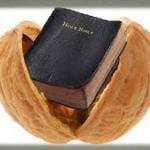
March 11, 2020 The Gospel in a Nutshell
Browse Our Archives
Select a Category abortion Advent AI Angels Artificial intelligence atheism attention baptism Baptists beauty belief Benedictines Bible bicycling Big Bird books Bovina Camaldoli hermitage Canada Catholicism cats certainty change Christianity Christmas Collegeville Covid-19 creativity Development of Western Civilization dogs doubt Easter Enneagram Epiphany Episcopal ethics Eucharist evil extroverts Facebook faith family fear flowers forgiveness freedom friends God goodness grace happiness heaven hell history Holy Spirit Holy Week hope human nature humility humor idolatry incarnation introverts irreverence Islam Jeanne Jesus Joe Biden joy Judaism justice Kamala Harris knowledge Lent listen literature liturgy love Marsue Memorial Day miracles movies music mystery mythology NPR Old Testament optimism paradox peace Penguins philosophy piano podcast politics power prayer Protestantism Providence College Religion Rhode Island sabbatical sacrament science seeing silence Simone Weil Socrates soul sports St. John's College stories suffering tattoo teaching technology television theology thinking time tolerance transcendence travel trees trust truth Uncategorized Vermont wisdom wonder writing
Select a Month May 2026 April 2026 March 2026 February 2026 January 2026 December 2025 November 2025 October 2025 September 2025 August 2025 July 2025 June 2025 May 2025 April 2025 March 2025 February 2025 January 2025 December 2024 November 2024 October 2024 September 2024 August 2024 July 2024 June 2024 May 2024 April 2024 March 2024 February 2024 January 2024 December 2023 November 2023 October 2023 September 2023 August 2023 July 2023 June 2023 May 2023 April 2023 March 2023 February 2023 January 2023 December 2022 November 2022 October 2022 September 2022 August 2022 July 2022 June 2022 May 2022 April 2022 March 2022 February 2022 January 2022 December 2021 November 2021 October 2021 September 2021 August 2021 July 2021 June 2021 May 2021 April 2021 March 2021 February 2021 January 2021 December 2020 November 2020 October 2020 September 2020 August 2020 July 2020 June 2020 May 2020 April 2020 March 2020 February 2020 January 2020 December 2019 November 2019 October 2019 September 2019 August 2019 July 2019 June 2019 May 2019 April 2019 March 2019 February 2019 January 2019 December 2018 November 2018 October 2018 September 2018 August 2018 July 2018 June 2018 May 2018 April 2018 March 2018 February 2018 January 2018 December 2017 November 2017 October 2017 September 2017 August 2017 July 2017 June 2017 May 2017 April 2017 March 2017 February 2017 January 2017 December 2016 November 2016 October 2016 September 2016 August 2016 July 2016 June 2016 May 2016 April 2016 March 2016 February 2016 January 2016 December 2015 November 2015 October 2015 September 2015 August 2015 July 2015 June 2015 May 2015 April 2015 March 2015 February 2015 January 2015 December 2014 November 2014 October 2014 September 2014 August 2014 July 2014 June 2014 May 2014 April 2014 March 2014 February 2014 January 2014 December 2013 November 2013 October 2013 September 2013 August 2013 July 2013 June 2013 May 2013 April 2013 March 2013 February 2013 January 2013 December 2012 November 2012 October 2012 September 2012
Follow Us!
TAKE THE
Religious Wisdom Quiz
What does "Barnabas" mean?
Select your answer to see how you score.
Son of Encouragement Servant of the Lord God is my help The Chosen One
Books by This Author Books by Vance G. Morgan
Related posts from Freelance Christianity

The Lonely Pawn: On Faith, Doubt, and Meaning


AI and Love: When a Chatbot Becomes a...

TRENDING AT PATHEOS Progressive Christian

What Being a Modern-Day Apostle Means to Me
In my last column, I discussed the ins and outs of modern-day...

Did Ancient China Once Worship the God of...
Across human history, a common thread weaves through the origins of the...

Love Your Neighbor – Including Earth-Kin: Lev. 19,...
God’s command to love your neighbor means acting in an ethical and...

Lead a Church Study of “Jesus and Lao...
Guest writer Jack Thomas (The Irreverent Reverend) reflects on leading his church...

Pastoral Wisdom for Responding to Sermon Pushback
Getting sermon pushback on your social justice sermon? Learn practical, Proverbs-based strategies...

Principles for Understanding the Apostolic Ministry Today
Whenever people discover that my formal ministry title is "apostle," as in...
view all Progressive Christian blogs
Ad-Free & Subscriber Log-In Subscription Support
- About Us
- 2026 Calendar
- Videos
- Podcasts
- Library of World Religions
- Faith In Media Tracker
- Advertise With Us
- Write for Us
- Privacy Policy
- Terms of Service
- Do Not Sell My Data
- Contact Us
- Radiant Digital
- Manage Newsletter Subscriptions
- Unsubscribe From Notifications
- Sitemap
Copyright 2008-2026, Patheos. All rights reserved.
Subscription Support Ad-Free & Subscriber Log-In
Follow Patheos