
BuddhistCatholicContemplativeEvangelicalGeneral ChristianHinduJewishLatter-day SaintMuslimNew VisionsProgressive Christian
Beliefs
- Buddhist
- Catholic
- Contemplative
- Evangelical
- General Christian
- Hindu
- Jewish
- Latter-day Saint
- More Voices
- Muslim
- New Visions
- Pagan
- Progressive Christian
Topics
- Religion News
- Food and Religion
- Sports and Religion
- Religious Art
- Religious Music and Entertainment
- Religious Events
- History and Religion
- Style and Religion
- Politics and Religion
- Women in Religion
- Recreation Outdoors and Religion
- Business Finance and Religion
- Careers Workplace and Religion
- Education and Religion
- Family Parenting and Religion
- Health Fitness and Religion
- Home and Religion
- Relationships and Religion
- Technology and Religion
- Travel and Religion
Columnists
- Buddhist Columnists
- Business Finance and Religion Columnists
- Careers Workplace and Religion Columnists
- Catholic Columnists
- Contemplative Columnists
- Education and Religion Columnists
- Evangelists Columnists
- Family Parenting and Religion Columnists
- General Christian Columnists
- Health Fitness and Religion Columnists
- Hindu Columnists
- History and Religion Columnists
- Home and Religion Columnists
- Jewish Columnists
- More Voices Columnists
- Latter Day Columnists
- Muslim Columnists
- New Visions Columnists
- Nonreligious Columnists
- Pagan Columnists
- Politics and Religion Columnists
- Progressive Columnists
- Recreation Outdoors and Religion Columnists
- Relationships and Religion Columnists
- Religion News Columnists
- Religious Art Columnists
- Religious Events Columnists
- Religious Music and Entertainment Columnists
- Sports and Religion Columnists
- Style and Religion Columnists
- Technology and Religion Columnists
- Travel and Religion Columnists
- Women in Religion Columnists
Resource Library
- 2026 Calendar
- Library of World Religions
- The 100 Most Holy Places on Earth
- Patheos Answers
- Podcasts
- Videos
- Faith Leaders Database
- Anglican Episcopalian
- Bahai
- Baptist
- Buddhism
- Christianity
- Confucianism
- Eastern Orthodoxy
- Hinduism
- Holiness and Pentecostal
- ISKCON
- Islam
- Judaism
- Lutheran
- Methodist
- The Church of Jesus Christ of Latter-day Saints
- New Age
- Paganism
- Presbytarian and Reformed
- Protestantism
- Religion Behind the Scenes
- Roman Catholic
- Scientology
- Shia Islam
- Sikhism
- Sufism
- Sunni Islam
- Taoism
- Zen
- See all religions
Research Tools
 Ad-Free & Subscriber Log-In Subscription Support
Ad-Free & Subscriber Log-In Subscription Support
Follow Patheos 

- Trending:
- Forgiveness
- |
- Marriage
- |
- Consciousness
- |
- Death Penalty
- |
- Election
- |
- Halloween

- Home
- Progressive Christian
- Disturbing the Peace
Disturbing the Peace
Last updated on: September 19, 2016 at 7:21 am by Vance Morgan
Disturbing the Peace 2016-09-19T07:21:35-04:00 Vance Morgan
Patheos Explore the world's faith through different perspectives on religion and spirituality! Patheos has the views of the prevalent religions and spiritualities of the world.
Last Friday I attended a talk on campus by civil rights lawyer and and law professor Greg Lukianoff on issues of free speech, trigger warnings, and a related host of matters on college and university matters that are regularly in the news. He is the co-author of an article in The Atlantic a bit over a year ago that raised a lot of eyebrows and generated a lot of conversation. I wrote about it in the early weeks of my sabbatical last August:
I do not know how to teach philosophy without becoming a disturber of the peace Baruch Spinoza 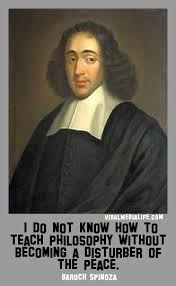
One of the lead articles in the most recent edition of The Atlantic magazine is “The Coddling of the American Mind.”
Lukianoff and Haidt: The Coddling of the American Mind
Co-authored by Greg Lukianoff and Jonathan Haidt, the teaser blurb for the article in the Table of Contents says “How a new strain of political correctness on campus is damaging higher education—and may be threatening students’ mental health.” It is an interesting read. Given Donald Trump’s current more-than-fifteen-minutes of fame, concerns about political correctness are in the news, 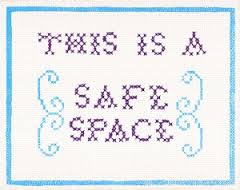 but in this article Lukianoff and Haidt are drawing our attention to what might be called “political correctness with a twist”:
The current movement is largely about emotional well-being. . . . It presumes an extraordinary fragility of the collegiate psyche, and therefore elevates the goal of protecting students from psychological harm. The ultimate aim, it seems, is to turn campuses into “safe spaces” where young adults are shielded from words and ideas that make some uncomfortable. And more than the last, this movement seeks to punish anyone who interferes with that aim, even accidentally.
The authors’ argument is largely anecdotal, relying either on their own experiences or on recent anecdotal stories and essays from various campuses across the country.  There is a great deal of speculation about the causes of this perceived seismic psychological shift among students over the past couple of decades, although virtually no data is provided to substantiate many of the authors’ claims.
In the first column of the article readers are introduced to two important terms that “have risen quickly from obscurity into common campus parlance: Microaggression and Trigger warnings. Microaggressions “are small actions or word choices that seem on their face to have no malicious intent but that are thought of as a kind of violence nonetheless.” Examples provided include asking an Asian American or Latino American “Where were you born?,” because this implies that she or he is not a real American.  Trigger warnings are “alerts that professors are expected to issue if something in a course might cause a strong emotional response”; examples of texts deemed as needing trigger warnings on various campuses include Virginia Woolf’s Mrs. Dalloway (suicidal inclinations) and Ovid’s Metamorphoses (sexual assault). The many examples of these and related problems in the article are chosen and presented with the clear intention of “triggering” the reader into concluding “well that’s just stupid—political correctness, like a hydra, rears a new ugly head.” One of the authors’ primary concerns, repeated frequently throughout the article is that such attention to words and actions that might possibly somewhere, somehow offend someone will leave students unprepared to live and work in a world that doesn’t give a crap about what makes them feel uncomfortable.
What are we doing to our students if we encourage them to develop extra-thin skin in the years just before they leave the cocoon of adult protection and enter the workforce? Would they not be better prepared to flourish if we taught them to question their own emotional reactions, and to give people the benefit of a doubt?
Even though I have twenty-five years of college teaching under my belt, my experience on college campuses is deep but narrow, given that I have taught at my current college home for twenty-one years and have shaped my teaching and professional life within the confines of its “105 acre, park-like campus.” Serious conversations about the negative power of language on students in various groups defined racially, economically, by gender or by sexual preference have been ongoing on my campus for some time now. In my own philosophy department regular, continuing, and often heated debates occur about what constitutes appropriate and inappropriate language in the classroom, in job candidate interviews, and in basic conversation with each other. What strikes some as obviously benign, scholarly, and insightful strikes others as ill-advised, insensitive, and downright offensive. That said, the tsunami described by Lukianoff and Haidt as drowning campuses nationwide has escaped my notice where I teach—at least in my classrooms. Perhaps this is because I have included this general “trigger warning” in every syllabus for every one of my courses for at least the past fifteen years:
Ine this course we will be considering some of the most important questions a human being can ask. Perhaps the most important feature of our considerations is learning to ask these questions clearly and precisely. Only then can possible answers be considered fairly. Although I have definite positions on the questions we will be addressing, my role as professor is not to tell you what to think. My role is rather to get you to think. Expect your assumptions to be challenged and comfortable ways of thinking to be disturbed. As the great 17th century philosopher Spinoza once said, I do not know how to teach philosophy without becoming a disturber of the peace.
During an oral final exam a couple of semesters ago a student told me that “This class really messed me up—but in a good way!” Mission accomplished.
The new fall semester is just three weeks old–here’s a bit of advice related to safe spaces and learning for the incoming freshmen:
- Free speech dictates that everyone has the right to their opinion, but not all opinions are equal.
 One of the purposes of a liberal education is to help you become skillful at using the tools of lifetime learning; some of these tools, used properly, will help you learn how to distinguish a good argument from bullshit—even when it is your own argument. I often say that a liberally educated person earns the right to have an opinion. The process of earning that right begins with realizing that your opinion is not special just because it is yours, and without challenge and analysis it means nothing with regard to whether it is true (or even a defensible position).
 - In the life of learning, comfort is vastly overrated.
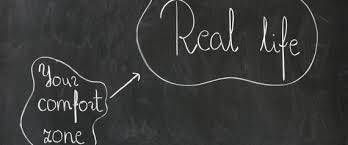
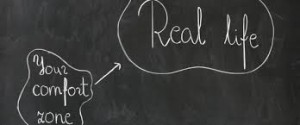 Expect to encounter people, ideas, situations and expectations that are both unfamiliar and well outside your comfort zone. You should be looking for these rather than trying to avoid them. If you manage to make it through your undergraduate college career without changing any opinion, belief, perspective or attitude, then your tuition dollars have been wasted.
 - The world of adulthood into which you are making your first, tentative forays can be a tough, nasty place. The world out there is full of people, ideas, things, and events that couldn’t care less if they lie within your current comfort zone.
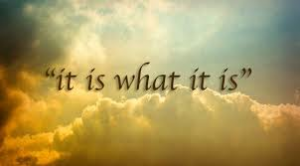 As my wife would say, the world is what it is. Your years in college are not so much about your landing a well-paying job after you graduate as they are about the construction of a powerful and flexible moral and psychological framework of belief and commitment, from within which you will engage with what’s “out there” on a daily basis. It is not the world’s responsibility to provide you with comfort and security. It is your task to create and maintain a moral and psychological home for yourself in that world using all of the resources available to you, resources to sustain you on a life-long journey. By the way, you’ll be making significant renovations and additions to this home your whole life. Your professors are here to assist you in the construction of that home—good luck!
A liberal education, especially, inspires students to value struggle. By grappling with authors and ideas that demand the greatest level of intellectual intensity—and this is especially true in subjects that are difficult and uncongenial—students learn that they stretch themselves more through struggle, whether or not they win the match. Christopher Nelson
Previous Post

September 16, 2016
The Fruit of the Blackberry
Next Post
September 23, 2016 The Right Niyyah
Browse Our Archives
Select a Category abortion Advent AI Angels Artificial intelligence atheism attention baptism Baptists beauty belief Benedictines Bible bicycling Big Bird books Bovina Camaldoli hermitage Canada Catholicism cats certainty change Christianity Christmas Collegeville Covid-19 creativity Development of Western Civilization dogs doubt Easter Enneagram Epiphany Episcopal ethics Eucharist evil extroverts Facebook faith family fear flowers forgiveness freedom friends God goodness grace happiness heaven hell history Holy Spirit Holy Week hope human nature humility humor idolatry incarnation introverts irreverence Islam Jeanne Jesus Joe Biden joy Judaism justice Kamala Harris knowledge Lent listen literature liturgy love Marsue Memorial Day miracles movies music mystery mythology NPR Old Testament optimism paradox peace Penguins philosophy piano podcast politics power prayer Protestantism Providence College Religion Rhode Island sabbatical sacrament science seeing silence Simone Weil Socrates soul sports St. John's College stories suffering tattoo teaching technology television theology thinking time tolerance transcendence travel trees trust truth Uncategorized Vermont wisdom wonder writing
Select a Month May 2026 April 2026 March 2026 February 2026 January 2026 December 2025 November 2025 October 2025 September 2025 August 2025 July 2025 June 2025 May 2025 April 2025 March 2025 February 2025 January 2025 December 2024 November 2024 October 2024 September 2024 August 2024 July 2024 June 2024 May 2024 April 2024 March 2024 February 2024 January 2024 December 2023 November 2023 October 2023 September 2023 August 2023 July 2023 June 2023 May 2023 April 2023 March 2023 February 2023 January 2023 December 2022 November 2022 October 2022 September 2022 August 2022 July 2022 June 2022 May 2022 April 2022 March 2022 February 2022 January 2022 December 2021 November 2021 October 2021 September 2021 August 2021 July 2021 June 2021 May 2021 April 2021 March 2021 February 2021 January 2021 December 2020 November 2020 October 2020 September 2020 August 2020 July 2020 June 2020 May 2020 April 2020 March 2020 February 2020 January 2020 December 2019 November 2019 October 2019 September 2019 August 2019 July 2019 June 2019 May 2019 April 2019 March 2019 February 2019 January 2019 December 2018 November 2018 October 2018 September 2018 August 2018 July 2018 June 2018 May 2018 April 2018 March 2018 February 2018 January 2018 December 2017 November 2017 October 2017 September 2017 August 2017 July 2017 June 2017 May 2017 April 2017 March 2017 February 2017 January 2017 December 2016 November 2016 October 2016 September 2016 August 2016 July 2016 June 2016 May 2016 April 2016 March 2016 February 2016 January 2016 December 2015 November 2015 October 2015 September 2015 August 2015 July 2015 June 2015 May 2015 April 2015 March 2015 February 2015 January 2015 December 2014 November 2014 October 2014 September 2014 August 2014 July 2014 June 2014 May 2014 April 2014 March 2014 February 2014 January 2014 December 2013 November 2013 October 2013 September 2013 August 2013 July 2013 June 2013 May 2013 April 2013 March 2013 February 2013 January 2013 December 2012 November 2012 October 2012 September 2012
Follow Us!
TAKE THE
Religious Wisdom Quiz
True or False: Naaman was healed of leprosy by washing seven times in the Jordan River.
Select your answer to see how you score.
TRUE FALSE
Books by This Author Books by Vance G. Morgan
Related posts from Freelance Christianity

The Lonely Pawn: On Faith, Doubt, and Meaning


AI and Love: When a Chatbot Becomes a...

TRENDING AT PATHEOS Progressive Christian

What Being a Modern-Day Apostle Means to Me
In my last column, I discussed the ins and outs of modern-day...

Did Ancient China Once Worship the God of...
Across human history, a common thread weaves through the origins of the...

Love Your Neighbor – Including Earth-Kin: Lev. 19,...
God’s command to love your neighbor means acting in an ethical and...

Lead a Church Study of “Jesus and Lao...
Guest writer Jack Thomas (The Irreverent Reverend) reflects on leading his church...

Pastoral Wisdom for Responding to Sermon Pushback
Getting sermon pushback on your social justice sermon? Learn practical, Proverbs-based strategies...

Principles for Understanding the Apostolic Ministry Today
Whenever people discover that my formal ministry title is "apostle," as in...
view all Progressive Christian blogs
Ad-Free & Subscriber Log-In Subscription Support
- About Us
- 2026 Calendar
- Videos
- Podcasts
- Library of World Religions
- Faith In Media Tracker
- Advertise With Us
- Write for Us
- Privacy Policy
- Terms of Service
- Do Not Sell My Data
- Contact Us
- Radiant Digital
- Manage Newsletter Subscriptions
- Unsubscribe From Notifications
- Sitemap
Copyright 2008-2026, Patheos. All rights reserved.
Subscription Support Ad-Free & Subscriber Log-In
Follow Patheos