
BuddhistCatholicContemplativeEvangelicalGeneral ChristianHinduJewishLatter-day SaintMuslimNew VisionsProgressive Christian
Beliefs
- Buddhist
- Catholic
- Contemplative
- Evangelical
- General Christian
- Hindu
- Jewish
- Latter-day Saint
- More Voices
- Muslim
- New Visions
- Pagan
- Progressive Christian
Topics
- Religion News
- Food and Religion
- Sports and Religion
- Religious Art
- Religious Music and Entertainment
- Religious Events
- History and Religion
- Style and Religion
- Politics and Religion
- Women in Religion
- Recreation Outdoors and Religion
- Business Finance and Religion
- Careers Workplace and Religion
- Education and Religion
- Family Parenting and Religion
- Health Fitness and Religion
- Home and Religion
- Relationships and Religion
- Technology and Religion
- Travel and Religion
Columnists
- Buddhist Columnists
- Business Finance and Religion Columnists
- Careers Workplace and Religion Columnists
- Catholic Columnists
- Contemplative Columnists
- Education and Religion Columnists
- Evangelists Columnists
- Family Parenting and Religion Columnists
- General Christian Columnists
- Health Fitness and Religion Columnists
- Hindu Columnists
- History and Religion Columnists
- Home and Religion Columnists
- Jewish Columnists
- More Voices Columnists
- Latter Day Columnists
- Muslim Columnists
- New Visions Columnists
- Nonreligious Columnists
- Pagan Columnists
- Politics and Religion Columnists
- Progressive Columnists
- Recreation Outdoors and Religion Columnists
- Relationships and Religion Columnists
- Religion News Columnists
- Religious Art Columnists
- Religious Events Columnists
- Religious Music and Entertainment Columnists
- Sports and Religion Columnists
- Style and Religion Columnists
- Technology and Religion Columnists
- Travel and Religion Columnists
- Women in Religion Columnists
Resource Library
- 2026 Calendar
- Library of World Religions
- The 100 Most Holy Places on Earth
- Patheos Answers
- Podcasts
- Videos
- Faith Leaders Database
- Anglican Episcopalian
- Bahai
- Baptist
- Buddhism
- Christianity
- Confucianism
- Eastern Orthodoxy
- Hinduism
- Holiness and Pentecostal
- ISKCON
- Islam
- Judaism
- Lutheran
- Methodist
- The Church of Jesus Christ of Latter-day Saints
- New Age
- Paganism
- Presbytarian and Reformed
- Protestantism
- Religion Behind the Scenes
- Roman Catholic
- Scientology
- Shia Islam
- Sikhism
- Sufism
- Sunni Islam
- Taoism
- Zen
- See all religions
Research Tools
 Ad-Free & Subscriber Log-In Subscription Support
Ad-Free & Subscriber Log-In Subscription Support
Follow Patheos 

- Trending:
- Forgiveness
- |
- Marriage
- |
- Consciousness
- |
- Death Penalty
- |
- Election
- |
- Halloween

- Home
- Progressive Christian
- Determined to Believe that We are Not Determined
Determined to Believe that We are Not Determined
Last updated on: May 9, 2023 at 6:00 am by Vance Morgan
Determined to Believe that We are Not Determined 2023-05-08T13:38:27-04:00 Vance Morgan
Patheos Explore the world's faith through different perspectives on religion and spirituality! Patheos has the views of the prevalent religions and spiritualities of the world.
In a recent edition of The New Yorker, Adam Gopnik reviews two or three books about the English Revolution that occurred during the middle of the 17th century (Charles I losing his head, the meteoric rise and fall of Oliver Cromwell, and so on). Gopnik, always an excellent wordsmith, waxes philosophical toward the end of the essay as he reflects on what we learn about human nature by studying such events.
The baseline anxiety of human beings so often turns on questions of how transformable we creatures are—on how it is that these meat-and-blood bodies we live within can somehow become the sites of spirit and speculation and grace, by which we include free will. These issues of body and soul, however soluble they may seem in retrospect, are the ones that cause societies to light up and sometimes conflagrate.
Free will has frequently arisen in both of my team-taught courses this semester that just finished last week. I often find that in order to intelligently explore what free will might be, it is often important to identify what it is not.
Several years ago The Atlantic (the other magazine I read regularly) published an article by philosopher Stephen Cave called “There’s No Such Thing As Free Will: Here’s why we may all be better off believing in it anyway.”
Stephen Cave: There’s No Such Thing As Free Will
Cave runs a “Center for the Future of Intelligence” at the University of Cambridge. First, it’s important to clarify what philosophers usually are referring to when they use terms like “free will” or “freedom.” Just before the final battle in his 1995 epic “Braveheart,” Mel Gibson’s William Wallace screams to the Scottish army that They may take our lives, but they’ll never take our freedom!!
That sort of freedom, the kind enshrined in this country’s founding documents as “rights” that each citizen possesses and that must not be violated or taken away, is not what philosophers mean by freedom.
Instead, “free will” refers to the human ability to deliberate between options and eventually choose, then act on, one of the options all the time knowing that she or he did not have to choose that option— in other words, she or he could have chosen otherwise. This vaunted human ability to freely choose is, for many (including me), the fundamental and defining feature of what it means to be human.
Stephen Cave points out that our legal systems, as well as our general beliefs concerning praise, blame, reward, punishment, and all things moral depend on our basic belief in human free will. And it is under attack—scientists, psychologists, philosophers, and just about everyone “in the know” have been trying to take it away for decades.
The “free will problem” is a go-to issue in all philosophy courses, the philosophical version of the divine foreknowledge/free will problem in theology. Just it is impossible to make room for free choice in a world governed by an omniscient deity, so in a world where everything that occurs is governed in a cause-and-effect manner by the physical laws of matter, there is no room for true human free will. Cave reminds us of Charles Darwin’s argument in The Origin of Species that everything about human beings—including our vaunted reasoning abilities where the ability to choose is located—is a result of natural evolutionary processes rather than a mystical, magical, or divine “spark” that lies outside the physical laws of matter.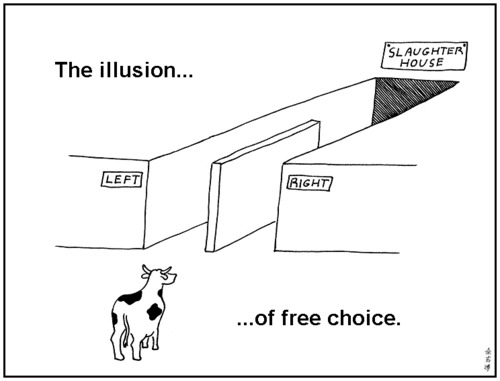
Ever since, science has reinforced the conclusion that whatever human consciousness and deliberate choice are, they are to be placed squarely in the material world. Making it impossible, of course, to squeeze out the special place we desire for freedom of the sort that accomodates “could have done otherwise.” Our choices may “feel” free, “as if” they are up to us, but Cave pulls no punches in describing the truth about us:
The contemporary scientific image of human behavior is one of neurons firing, causing other neurons to fire, causing our thoughts and deeds, in an unbroken chain that stretches back to our birth and beyond. In principle, we are therefore completely predictable. If we could understand any individual’s brain architecture and chemistry well enough, we could, in theory, predict that individual’s response to any given stimulus with 100 percent accuracy.
Experiments by psychologists and neuroscientists have shown that the brain’s neurons fire in new patterns causing a specific action before a person is conscious of “choosing” to act. My conscious “choice,” in other words, is an illusion that actually doesn’t cause anything. Debates rage concerning how much a human’s actions are caused by “nature”—one’s hardwiring—and how much is caused by “nurture”—one’s environment—but there is general agreement that none of them are caused by conscious choice. We are determined through and through.
The ensuing discussion among those “in the know” is often amusingly similar to conversations that couples considering a divorce might have: Should we tell the children, and if so, when? In the service of nothing but truth all the time, some argue that non-philosophers and non-scientists should be made aware that free choice is an illusion and they should stop believing in it. Others insist that such a revelation would be damaging to the basic human’s commitment to morality, law, reward, punishment, and all of the other cool things that rely on our apparently mistaken belief that our choices make a difference and that we are responsible for them.
My own classroom experiences indicate that it doesn’t matter. I regularly use a very simple thought experiment with my students at the beginning of the “free will” unit on the syllabus:
Suppose that in the near future a super-duper computer can read your brain and physiology sufficiently to predict the rest of your life, from large events to the minutest second-to-second thoughts and feelings, from now until you die. For a nominal fee you can purchase a printout of every event, thought, and feeling that you will experience for the rest of your life. Some printouts will be yards in length, while others will be very short. Do you want to see yours?
In a typical class of twenty-five students, no more than one or two students will say that she or he wants to see it. Why? Because even with direct proof available that the rest of my history is determined down to the minutest level—including my “free” choices—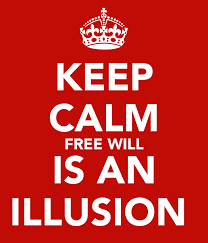 I prefer to believe that my choices make a difference in my life and in the world around me. I prefer to embrace the illusion. It appears, in other words, that human beings are determined to believe that they are not fully determined.
On this particular issue I find myself swimming against the tide of those “in the know.” I not only believe that human beings have the ability, at least on occasion, to make choices that are not entirely determined by their biology, history, and environment—I also believe that this ability is not an illusion. It’s real. The free will/determinism issue as contemporary philosophy defines it has its current shape because virtually everyone accepts a starting assumption—everything that exists is material stuff subject to inflexible physical laws.
Given that assumption, the claim that human beings have the capacity to jump outside the limitations of matter and make choices that avoid the determinism of cause and effect makes no sense. But as I often tell my students, if the answers one is getting are unacceptable, change the question. If the ability to freely choose is fundamental to what a human being is, and if our current assumptions about how reality is constructed make no room for that ability, then perhaps instead of accepting that choice is an illusion we should challenge the assumptions that forced us to this acceptance. Be watching for “What Freedom Amounts To” next week, where I’ll describe a very different way to think about human choice!
Previous Post

May 7, 2023
Getting Stoned for Jesus
Next Post
May 10, 2023 What I Learned From My Father
Recent Comments
"Mary did have a choice. And she was able to make it before the Holy ..."
"i cannot read beyond your recommendations for the books since i like to have a ..."
"AI will never be able to utter with honesty, feeling, or humility, the greeting: "Namaste".It ..."
"They do. I'm sure you could find discussions of the same topic from any of ..."
Browse Our Archives
Select a Category abortion Advent AI Angels Artificial intelligence atheism attention baptism Baptists beauty belief Benedictines Bible bicycling Big Bird books Bovina Camaldoli hermitage Canada Catholicism cats certainty change Christianity Christmas Collegeville Covid-19 creativity Development of Western Civilization dogs doubt Easter Enneagram Epiphany Episcopal ethics Eucharist evil extroverts Facebook faith family fear flowers forgiveness freedom friends God goodness grace happiness heaven hell history Holy Spirit Holy Week hope human nature humility humor idolatry incarnation introverts irreverence Islam Jeanne Jesus Joe Biden joy Judaism justice Kamala Harris knowledge Lent listen literature liturgy love Marsue Memorial Day miracles movies music mystery mythology NPR Old Testament optimism paradox peace Penguins philosophy piano podcast politics power prayer Protestantism Providence College Religion Rhode Island sabbatical sacrament science seeing silence Simone Weil Socrates soul sports St. John's College stories suffering tattoo teaching technology television theology thinking time tolerance transcendence travel trees trust truth Uncategorized Vermont wisdom wonder writing
Select a Month May 2026 April 2026 March 2026 February 2026 January 2026 December 2025 November 2025 October 2025 September 2025 August 2025 July 2025 June 2025 May 2025 April 2025 March 2025 February 2025 January 2025 December 2024 November 2024 October 2024 September 2024 August 2024 July 2024 June 2024 May 2024 April 2024 March 2024 February 2024 January 2024 December 2023 November 2023 October 2023 September 2023 August 2023 July 2023 June 2023 May 2023 April 2023 March 2023 February 2023 January 2023 December 2022 November 2022 October 2022 September 2022 August 2022 July 2022 June 2022 May 2022 April 2022 March 2022 February 2022 January 2022 December 2021 November 2021 October 2021 September 2021 August 2021 July 2021 June 2021 May 2021 April 2021 March 2021 February 2021 January 2021 December 2020 November 2020 October 2020 September 2020 August 2020 July 2020 June 2020 May 2020 April 2020 March 2020 February 2020 January 2020 December 2019 November 2019 October 2019 September 2019 August 2019 July 2019 June 2019 May 2019 April 2019 March 2019 February 2019 January 2019 December 2018 November 2018 October 2018 September 2018 August 2018 July 2018 June 2018 May 2018 April 2018 March 2018 February 2018 January 2018 December 2017 November 2017 October 2017 September 2017 August 2017 July 2017 June 2017 May 2017 April 2017 March 2017 February 2017 January 2017 December 2016 November 2016 October 2016 September 2016 August 2016 July 2016 June 2016 May 2016 April 2016 March 2016 February 2016 January 2016 December 2015 November 2015 October 2015 September 2015 August 2015 July 2015 June 2015 May 2015 April 2015 March 2015 February 2015 January 2015 December 2014 November 2014 October 2014 September 2014 August 2014 July 2014 June 2014 May 2014 April 2014 March 2014 February 2014 January 2014 December 2013 November 2013 October 2013 September 2013 August 2013 July 2013 June 2013 May 2013 April 2013 March 2013 February 2013 January 2013 December 2012 November 2012 October 2012 September 2012
Follow Us!
TAKE THE
Religious Wisdom Quiz
What sea bordered the land of Canaan to the west?
Select your answer to see how you score.
Dead Sea Mediterranean Sea Red Sea Sea of Galilee
Books by This Author Books by Vance G. Morgan
Related posts from Freelance Christianity

The Lonely Pawn: On Faith, Doubt, and Meaning


AI and Love: When a Chatbot Becomes a...

TRENDING AT PATHEOS Progressive Christian

What Being a Modern-Day Apostle Means to Me
In my last column, I discussed the ins and outs of modern-day...

Did Ancient China Once Worship the God of...
Across human history, a common thread weaves through the origins of the...

Love Your Neighbor – Including Earth-Kin: Lev. 19,...
God’s command to love your neighbor means acting in an ethical and...

Lead a Church Study of “Jesus and Lao...
Guest writer Jack Thomas (The Irreverent Reverend) reflects on leading his church...

Pastoral Wisdom for Responding to Sermon Pushback
Getting sermon pushback on your social justice sermon? Learn practical, Proverbs-based strategies...

Principles for Understanding the Apostolic Ministry Today
Whenever people discover that my formal ministry title is "apostle," as in...
view all Progressive Christian blogs
What Are Your Thoughts?leave a comment
Ad-Free & Subscriber Log-In Subscription Support
- About Us
- 2026 Calendar
- Videos
- Podcasts
- Library of World Religions
- Faith In Media Tracker
- Advertise With Us
- Write for Us
- Privacy Policy
- Terms of Service
- Do Not Sell My Data
- Contact Us
- Radiant Digital
- Manage Newsletter Subscriptions
- Unsubscribe From Notifications
- Sitemap
Copyright 2008-2026, Patheos. All rights reserved.
Subscription Support Ad-Free & Subscriber Log-In
Follow Patheos