
BuddhistCatholicContemplativeEvangelicalGeneral ChristianHinduJewishLatter-day SaintMuslimNew VisionsProgressive Christian
Beliefs
- Buddhist
- Catholic
- Contemplative
- Evangelical
- General Christian
- Hindu
- Jewish
- Latter-day Saint
- More Voices
- Muslim
- New Visions
- Pagan
- Progressive Christian
Topics
- Religion News
- Food and Religion
- Sports and Religion
- Religious Art
- Religious Music and Entertainment
- Religious Events
- History and Religion
- Style and Religion
- Politics and Religion
- Women in Religion
- Recreation Outdoors and Religion
- Business Finance and Religion
- Careers Workplace and Religion
- Education and Religion
- Family Parenting and Religion
- Health Fitness and Religion
- Home and Religion
- Relationships and Religion
- Technology and Religion
- Travel and Religion
Columnists
- Buddhist Columnists
- Business Finance and Religion Columnists
- Careers Workplace and Religion Columnists
- Catholic Columnists
- Contemplative Columnists
- Education and Religion Columnists
- Evangelists Columnists
- Family Parenting and Religion Columnists
- General Christian Columnists
- Health Fitness and Religion Columnists
- Hindu Columnists
- History and Religion Columnists
- Home and Religion Columnists
- Jewish Columnists
- More Voices Columnists
- Latter Day Columnists
- Muslim Columnists
- New Visions Columnists
- Nonreligious Columnists
- Pagan Columnists
- Politics and Religion Columnists
- Progressive Columnists
- Recreation Outdoors and Religion Columnists
- Relationships and Religion Columnists
- Religion News Columnists
- Religious Art Columnists
- Religious Events Columnists
- Religious Music and Entertainment Columnists
- Sports and Religion Columnists
- Style and Religion Columnists
- Technology and Religion Columnists
- Travel and Religion Columnists
- Women in Religion Columnists
Resource Library
- 2026 Calendar
- Library of World Religions
- The 100 Most Holy Places on Earth
- Patheos Answers
- Podcasts
- Videos
- Faith Leaders Database
- Anglican Episcopalian
- Bahai
- Baptist
- Buddhism
- Christianity
- Confucianism
- Eastern Orthodoxy
- Hinduism
- Holiness and Pentecostal
- ISKCON
- Islam
- Judaism
- Lutheran
- Methodist
- The Church of Jesus Christ of Latter-day Saints
- New Age
- Paganism
- Presbytarian and Reformed
- Protestantism
- Religion Behind the Scenes
- Roman Catholic
- Scientology
- Shia Islam
- Sikhism
- Sufism
- Sunni Islam
- Taoism
- Zen
- See all religions
Research Tools
 Ad-Free & Subscriber Log-In Subscription Support
Ad-Free & Subscriber Log-In Subscription Support
Follow Patheos 

- Trending:
- Forgiveness
- |
- Marriage
- |
- Consciousness
- |
- Death Penalty
- |
- Election
- |
- Halloween

- Home
- Progressive Christian
- Computer Sabbath
Computer Sabbath
Last updated on: January 9, 2015 at 7:30 am by Vance Morgan
Computer Sabbath 2015-01-09T07:30:19-04:00 Vance Morgan
Patheos Explore the world's faith through different perspectives on religion and spirituality! Patheos has the views of the prevalent religions and spiritualities of the world.
If multitasking is the enemy of reverence, which I’m quite sure it is, then I’m in trouble. Me, a week ago
 And on the seventh day God rested. According to the Hebrew Scriptures, God’s decision to take a day off after six days of hard work was intended to serve as a model for how human beings should structure their lives. If the Big Guy thought it a good idea to take a break from the usual “creating the heavens and the earth” grind, then perhaps mere mortals should also schedule regular breaks from their usual routines. Hence the Fourth Commandment:
 Remember the Sabbath day, to keep it holy. Six days you shall labor and do all your work, but the seventh day is the Sabbath of the LORD your God. . . . For in six days the LORD made the heavens and the earth, the sea, and all that is in them, and rested the seventh day. Therefore the LORD blessed the Sabbath day and hallowed it.
To which the general contemporary American attitude is “Whatever.” You can’t run a business or a career that way—it’s not clear that a modern life can be lived that way either.
But I’ve had the first cousin of the Sabbath—sabbatical—on my radar screen for a while. The early books of the Hebrew Scriptures have a lot to say about how the newly liberated children of Israel are to organize their communities once the Promised Land is occupied and the pesky inhabitants are killed or thrown out. 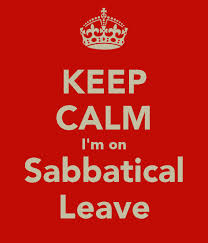 On a once-every-seventh-year rotating basis, slaves are to be set free, fields are to be left fallow, debts are to be forgiven—behold, all things are become new. The Sabbath/sabbatical idea incorporates some sort of divine insight into how things work; fortunately, in my profession the opportunity for sabbatical is still available for the fortunate few. And I am one of them—my third sabbatical, the first one to last a full year, will begin on July 1. To my non-academic friends and family who believe that I will be on a year-long vacation doing nothing, I respond that sabbatical is not about doing nothing. It is definitely about doing different things, but even more is about doing things differently. And so, I suspect, is the core Sabbath idea. The point is not to stop doing things one day out of seven. The point rather is to include in my life a structured reminder to see, think, and act differently than usual. Doing that on a weekly basis is far more challenging than planning for a once-every-seven-years extended sabbatical.
In last Monday’s blog post I revealed that my one New Year’s resolution is to be a more reverent person in 2015:
Freelance Christianity: One Thing
I’m sure that this decision is a confluence of thinking about sabbatical and reading  Barbara Brown Taylor’s An Altar in the World in which she writes engagingly about how important taking a true Sabbath every week has been to her in the years since she stepped down from the manic energies required by being the rector of a thriving Episcopal parish. As I thought about what reverence might mean outside the confines of its usual religious implications—what “secular reverence” might be, if you will—I kept circling back to a negative definition: Reverence is the opposite of multitasking. If being reverent means paying careful attention to the tasks, persons and items in my life as they show themselves, it also means not dividing that attention fifteen different ways.
As I sat in our lovely little library room before dawn last Saturday morning, the first morning after choosing reverence as the focus of my one New Year’s resolution, I wondered “What is the thing most likely to suck me into multitasking?” The answer was obvious—my greatest temptation to non-reverence was (and is) my beloved  Surface II tablet, recharged and waiting for my use, laying on the bottom shelf of the table next to my chair. And I had a “What If?” moment. What if I tried to spend twenty-four hours without turning my tablet (or either of the other laptops in the house) on? What if I deliberately removed the greatest temptation to multitask and lived in a “tablet-free” zone for twenty-four hours? What if, in other words, Saturday January 3, 2015 was a “Computer Sabbatical”?
Immediately a swarm of questions and concerns swept over me like locusts over Egypt.
- But what if I want to work on some essays today?
- What if an answer to one or more of the cosmically important emails I sent out yesterday comes in today?
- How am I going to be able to track how my blog numbers are doing?
- I was going to finish the syllabus for my upcoming Philosophy of the Human Person class today.
- Should I tell Jeanne what I’m doing?
- Would using my cell phone count as a violation of computer sabbatical?
- How am I going to print off the essay I wrote yesterday that I’ll be using at Living Stones seminar tomorrow after church?
- Most importantly, how am I going to find out when the Friars game this afternoon is?
As the above concerns flooded into my awareness (all within five minutes of my declaring the day “computer free”), I scribbled them down in a yellow pad of paper. Which immediately answered concerns 1 and 4 above—there is a remarkable invention, almost as amazing as tablets, called “paper” upon which one can record one’s most profound thoughts even when no computer is available. I did indeed write a new essay last Saturday; I dutifully typed it into my tablet on Sunday. I also finished off a few syllabus-related items in long hand. I had forgotten how horrible my handwriting is.
I’m not sure how #5 ever came up, since the sight of me without my tablet surgically attached everywhere I go would have alerted Jeanne that something was up. I did tell her what I was up to as soon as she arose because I needed her wisdom concerning #6.  Does my computer sabbatical apply to my phone (which isn’t technically a computer after all)? “Yes it does apply,” she immediately said, “since you use your phone like a computer instead of a phone.” True enough. I hate getting phone calls, but love checking my emails and blog numbers on my phone. Which focused my attention on #2 and #3. On Sunday morning I found out that although about twenty-five emails came in on Saturday, none of them were the responses I was looking for; I deleted all but two of the twenty-five without even reading them. Which tells me, I guess, that perhaps the emails I sent weren’t cosmically important after all.
As for checking my blog numbers, this was a big problem. I had no idea how often I do this habitually until computer sabbatical day. I have taught logic classes before and know all about the 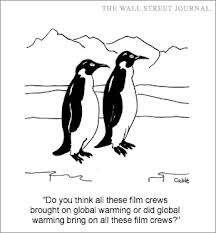 “post hoc, ergo propter hoc” (“after this, therefore because of this”) fallacy, but I have been convinced for a long time that the number of visits to my blog during a given day is directly proportional to the number of times I check my blog numbers. And guess what? Computer sabbatical day proved my theory to be correct. Last Saturday was my worst blog activity day in close to a year—obviously because I didn’t check the numbers all day. By the way, I found out when the Friars game was when I remembered I had a calendar in my backpack with all of the college sports events for the year listed by day and time. I shouldn’t have bothered. They lost.
I did make it through the day without turning a computer on or messing with my phone. Instead I took down the Christmas tree, wrote a new essay, finished An Altar in the World, listened to the Friars lose on the radio, watched a bunch of TV (only some of it worth watching), ate more than usual, and sort of felt like I didn’t get that much done in the day. But the evidence of baby steps in reverence was there. For instance, I am in the habit of noting in the index the chapters of any book I am reading that I especially like or find insightful. Was it a coincidence that three of my four favorite chapters in  An Altar in the World are chapters that I read without tablet interruption on Saturday morning? And when Jeanne told me early in the evening on Saturday that I looked “extremely content” sitting in my chair in the living room, I concluded that maybe the computer sabbatical experiment is worth repeating every Saturday for the foreseeable future. As regular “no computer” days become habitual, I hope to notice that at least once a week less multitasking means more reverence. And as to #7 above: I did not have print off a hard copy of my new essay for Living Stones on Sunday morning after all. I just brought my tablet to church and read it off the screen.
Development of Western Civilization
Previous Post

January 2, 2015
Random Resolutions Revisited
Next Post
January 19, 2015 What I Would Love to Find
Browse Our Archives
Select a Category abortion Advent AI Angels Artificial intelligence atheism attention baptism Baptists beauty belief Benedictines Bible bicycling Big Bird books Bovina Camaldoli hermitage Canada Catholicism cats certainty change Christianity Christmas Collegeville Covid-19 creativity Development of Western Civilization dogs doubt Easter Enneagram Epiphany Episcopal ethics Eucharist evil extroverts Facebook faith family fear flowers forgiveness freedom friends God goodness grace happiness heaven hell history Holy Spirit Holy Week hope human nature humility humor idolatry incarnation introverts irreverence Islam Jeanne Jesus Joe Biden joy Judaism justice Kamala Harris knowledge Lent listen literature liturgy love Marsue Memorial Day miracles movies music mystery mythology NPR Old Testament optimism paradox peace Penguins philosophy piano podcast politics power prayer Protestantism Providence College Religion Rhode Island sabbatical sacrament science seeing silence Simone Weil Socrates soul sports St. John's College stories suffering tattoo teaching technology television theology thinking time tolerance transcendence travel trees trust truth Uncategorized Vermont wisdom wonder writing
Select a Month May 2026 April 2026 March 2026 February 2026 January 2026 December 2025 November 2025 October 2025 September 2025 August 2025 July 2025 June 2025 May 2025 April 2025 March 2025 February 2025 January 2025 December 2024 November 2024 October 2024 September 2024 August 2024 July 2024 June 2024 May 2024 April 2024 March 2024 February 2024 January 2024 December 2023 November 2023 October 2023 September 2023 August 2023 July 2023 June 2023 May 2023 April 2023 March 2023 February 2023 January 2023 December 2022 November 2022 October 2022 September 2022 August 2022 July 2022 June 2022 May 2022 April 2022 March 2022 February 2022 January 2022 December 2021 November 2021 October 2021 September 2021 August 2021 July 2021 June 2021 May 2021 April 2021 March 2021 February 2021 January 2021 December 2020 November 2020 October 2020 September 2020 August 2020 July 2020 June 2020 May 2020 April 2020 March 2020 February 2020 January 2020 December 2019 November 2019 October 2019 September 2019 August 2019 July 2019 June 2019 May 2019 April 2019 March 2019 February 2019 January 2019 December 2018 November 2018 October 2018 September 2018 August 2018 July 2018 June 2018 May 2018 April 2018 March 2018 February 2018 January 2018 December 2017 November 2017 October 2017 September 2017 August 2017 July 2017 June 2017 May 2017 April 2017 March 2017 February 2017 January 2017 December 2016 November 2016 October 2016 September 2016 August 2016 July 2016 June 2016 May 2016 April 2016 March 2016 February 2016 January 2016 December 2015 November 2015 October 2015 September 2015 August 2015 July 2015 June 2015 May 2015 April 2015 March 2015 February 2015 January 2015 December 2014 November 2014 October 2014 September 2014 August 2014 July 2014 June 2014 May 2014 April 2014 March 2014 February 2014 January 2014 December 2013 November 2013 October 2013 September 2013 August 2013 July 2013 June 2013 May 2013 April 2013 March 2013 February 2013 January 2013 December 2012 November 2012 October 2012 September 2012
Follow Us!
TAKE THE
Religious Wisdom Quiz
Which book of the Bible is known as the 'Gospel of Joy'?
Select your answer to see how you score.
Colossians Ephesians Philippians Romans
Books by This Author Books by Vance G. Morgan
Related posts from Freelance Christianity

The Lonely Pawn: On Faith, Doubt, and Meaning


AI and Love: When a Chatbot Becomes a...

TRENDING AT PATHEOS Progressive Christian

What Being a Modern-Day Apostle Means to Me
In my last column, I discussed the ins and outs of modern-day...

Did Ancient China Once Worship the God of...
Across human history, a common thread weaves through the origins of the...

Love Your Neighbor – Including Earth-Kin: Lev. 19,...
God’s command to love your neighbor means acting in an ethical and...

Lead a Church Study of “Jesus and Lao...
Guest writer Jack Thomas (The Irreverent Reverend) reflects on leading his church...

Pastoral Wisdom for Responding to Sermon Pushback
Getting sermon pushback on your social justice sermon? Learn practical, Proverbs-based strategies...

Principles for Understanding the Apostolic Ministry Today
Whenever people discover that my formal ministry title is "apostle," as in...
view all Progressive Christian blogs
Ad-Free & Subscriber Log-In Subscription Support
- About Us
- 2026 Calendar
- Videos
- Podcasts
- Library of World Religions
- Faith In Media Tracker
- Advertise With Us
- Write for Us
- Privacy Policy
- Terms of Service
- Do Not Sell My Data
- Contact Us
- Radiant Digital
- Manage Newsletter Subscriptions
- Unsubscribe From Notifications
- Sitemap
Copyright 2008-2026, Patheos. All rights reserved.
Subscription Support Ad-Free & Subscriber Log-In
Follow Patheos