
BuddhistCatholicContemplativeEvangelicalGeneral ChristianHinduJewishLatter-day SaintMuslimNew VisionsProgressive Christian
Beliefs
- Buddhist
- Catholic
- Contemplative
- Evangelical
- General Christian
- Hindu
- Jewish
- Latter-day Saint
- More Voices
- Muslim
- New Visions
- Pagan
- Progressive Christian
Topics
- Religion News
- Food and Religion
- Sports and Religion
- Religious Art
- Religious Music and Entertainment
- Religious Events
- History and Religion
- Style and Religion
- Politics and Religion
- Women in Religion
- Recreation Outdoors and Religion
- Business Finance and Religion
- Careers Workplace and Religion
- Education and Religion
- Family Parenting and Religion
- Health Fitness and Religion
- Home and Religion
- Relationships and Religion
- Technology and Religion
- Travel and Religion
Columnists
- Buddhist Columnists
- Business Finance and Religion Columnists
- Careers Workplace and Religion Columnists
- Catholic Columnists
- Contemplative Columnists
- Education and Religion Columnists
- Evangelists Columnists
- Family Parenting and Religion Columnists
- General Christian Columnists
- Health Fitness and Religion Columnists
- Hindu Columnists
- History and Religion Columnists
- Home and Religion Columnists
- Jewish Columnists
- More Voices Columnists
- Latter Day Columnists
- Muslim Columnists
- New Visions Columnists
- Nonreligious Columnists
- Pagan Columnists
- Politics and Religion Columnists
- Progressive Columnists
- Recreation Outdoors and Religion Columnists
- Relationships and Religion Columnists
- Religion News Columnists
- Religious Art Columnists
- Religious Events Columnists
- Religious Music and Entertainment Columnists
- Sports and Religion Columnists
- Style and Religion Columnists
- Technology and Religion Columnists
- Travel and Religion Columnists
- Women in Religion Columnists
Resource Library
- 2026 Calendar
- Library of World Religions
- The 100 Most Holy Places on Earth
- Patheos Answers
- Podcasts
- Videos
- Faith Leaders Database
- Anglican Episcopalian
- Bahai
- Baptist
- Buddhism
- Christianity
- Confucianism
- Eastern Orthodoxy
- Hinduism
- Holiness and Pentecostal
- ISKCON
- Islam
- Judaism
- Lutheran
- Methodist
- The Church of Jesus Christ of Latter-day Saints
- New Age
- Paganism
- Presbytarian and Reformed
- Protestantism
- Religion Behind the Scenes
- Roman Catholic
- Scientology
- Shia Islam
- Sikhism
- Sufism
- Sunni Islam
- Taoism
- Zen
- See all religions
Research Tools
 Ad-Free & Subscriber Log-In Subscription Support
Ad-Free & Subscriber Log-In Subscription Support
Follow Patheos 

- Trending:
- Forgiveness
- |
- Marriage
- |
- Consciousness
- |
- Death Penalty
- |
- Election
- |
- Halloween

- Home
- Progressive Christian
- Colorblindness
Colorblindness
Last updated on: May 29, 2015 at 7:30 am by Vance Morgan
Colorblindness 2015-05-29T07:30:31-04:00 Vance Morgan
Patheos Explore the world's faith through different perspectives on religion and spirituality! Patheos has the views of the prevalent religions and spiritualities of the world.
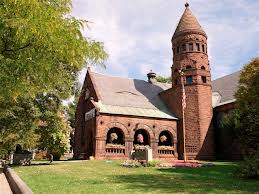 When I was growing up in northeastern Vermont, the Fairbanks Museum in St. Johnsbury was a favorite point of destination. It is an impressive stone structure, a small natural science and history museum, planetarium, and place to hang out all rolled into one. Admission was free for residents of St. Johnsbury, where my cousins lived, as well as for residents of neighboring towns, which included me. My cousins and I spent many Saturdays with nothing to do at the Fairbanks, followed, if we had any money, by a few strings of
  bowling at the alley just a few blocks farther down Main Street. Since the Fairbanks was also a favorite place for grade school classes to take their field trips (it was free, after all), I got to know the place very well.

Click on picture!
I’m sure it is now a cutting edge twenty-first century establishment (or maybe not), but in the sixties and early seventies when I frequented it, some of it was up to date (the planetarium), some was quaintly dated (the rest of it), and a few things were just plain creepy (such as the curators’ obsession with bad taxidermy and endless glass cases filled with decaying moths, butterflies, and other assorted insects). Other than the planetarium, my favorite part of the museum is one that I’ll wager has either been thoroughly revamped or discarded entirely—the “hands-on” science experiments in the crypt-like basement. The displays were as far removed from what one would find nowadays at even a mediocre science museum as Pac Man and Pong are from today’s video games, but Pong came out when I was in middle school, so it doesn’t take much to entertain me.
I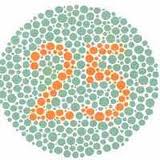 t was in the basement of the Fairbanks Museum that I gained, for the first time, empirical evidence supporting what I had suspected for my whole life—I’m partially color-blind. In a glass display at the bottom of the basement stairs was a row of color test plates (I learned today from Wikipedia that they are called “Ishihara color test plates”), circles containing colored spots within which were embedded a figure, usually a number, made of spots with a slightly different color. People with normal color vision can see the number easily, but those with certain color deficiencies can’t. I couldn’t. My normal color-seeing companions could immediately see the “25” in the circle, while I only saw spots. I learned that I have red/green color deficiency—nobody’s perfect.
Being color-blind has not turned out to be a big deal. I always ask Jeanne to endorse my clothing choices and especially to match a tie to a shirt when she’s home; when she’s not, I dress in safe colors, primarily blue, gray, black, red, yellow—anything that doesn’t require me to tell the difference between shades of green and brown, or various permutations of purple. Actually, purple turns out to be the biggest problem for this particular red/green colorblind person—go figure. But when I was a kid, my colorblindness was frequently a source of unwanted attention. My father and brother, for instance, entertained themselves by finding a house, a billboard, or car with the sort of color that I didn’t see as they did. “What color is that?” they would ask, and would laugh like hyenas when I got it wrong. When I finally started saying petulantly “I’m not playing that game anymore,” they laughed even harder.
Color-blindness, at least of the sort I have, is not a debilitating condition—it’s just good to know that I have it so that I can adjust accordingly. Far more important, I think, are the sorts of blindness that all of us are afflicted with, limitations so insidious that every one of is convinced that we see perfectly (even if no one else does). One of the continuing issues that I’ve grappled with over the past few years has to do with the importance of seeing, not just clearly, but differently. The natural human procedure is to view everything through filters and screens that tend to be invisible, yet distort everything that we see. A recent Sunday gospel provides a powerful example of the power of seeing differently. Jesus’ ministry of healing and teaching is in full swing. The crowds are so unrelenting that Jesus and the disciples do not even have time for a proper meal. J esus has a good idea—let’s get away to a deserted place and rest for a while. With that in mind, Jesus and his inner circle hop into their boat and sail on the Sea of Galilee to where they think they can have a bit of quality down time together. But word spreads so fast that a new crowd is waiting for them when they land. So they try it again, jumping in the boat and sailing away. But the masses are waiting for them wherever they land.
Put yourself in Jesus’ sandals—what do you see? I remember Andrew Lloyd Webber’s interpretation of a scene just like this in his 1970 rock opera “Jesus Christ Superstar.” Crowds of people in need of healing are swarming around Jesus demanding his attention, which he tries to provide. But for every person he touches, five more show up.  The crowd becomes larger and more insistent, grabbing at his clothes, blocking his way, surrounding him in a closer and tighter circle. Their musical chant increases in intensity and pitch; Jesus begins to sing “There’s too many of you, don’t push me, please don’t crowd me” in a high pitched wail above the cacophony. Finally he screams at the top of his lungs—“HEAL YOURSELVES!!!” and the stage goes black. Then one spotlight shines on Mary Magdalene as she soothingly sings “Try not to get worried, try not to turn on to problems that upset you; don’t you know everything’s all right, yes everything’s fine.”
Webber’s imaginative score is brilliant because it is so real. Trust me; the reaction of Webber’s Jesus to the crowd is exactly what my reaction would have been, except I might have included an f-bomb or two. In Jesus’ sandals, I would have seen a mob seeking to suck me dry of everything I have to offer, treating me like a miracle-dispensing ATM instead of a human being who gets exhausted and needs to get his batteries recharged. And there is an element of that in Mark’s account—Jesus is trying (twice, no less) to get away from the crowds that are demanding more than he presently has to offer.
And that’s the beauty of the story. Because although Jesus wants and needs to be alone with his friends and rest, he ultimately does not run from the crowd—he sees them for what they are. 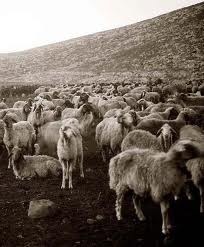 “He had compassion for them, because they were like sheep without a shepherd; and he began to teach them many things.” Yes Jesus was the Son of God and yes he perhaps had more to offer than we do, but his compassion for the crowd is not due to his divinity. It is due to his choosing to see differently, to get past the normal human self-centered filters and look at what is in front of him. He sees a need that he can address and addresses it, even though he’d rather be doing something else. Iris Murdoch defines love as “the extremely difficult realization that something other than oneself is real,” and Jesus’ compassionate gaze on the crowd is one of pure love.
Color-blindness isn’t so bad. But other-blindness, the blindness that is part and parcel of being human, is. In John 14, Jesus promises that because he is going back to his Father and because of the coming of the Holy Spirit, we will do “greater works than these.” And although I don’t completely rule out the possibility of healings and other spectacular miracles today, these are not the works Jesus is talking about. Our greatest works will flow from our divinely energized ability to see things as they are, not as we would like them to be or as we wish they were, and to address the needs with unfiltered directness. Jesus looked at what was right in front of him with compassion. Let’s go and do likewise.
Previous Post

May 20, 2015
Cracked Spines
Next Post
June 1, 2015 Justifying My Existence
Browse Our Archives
Select a Category abortion Advent AI Angels Artificial intelligence atheism attention baptism Baptists beauty belief Benedictines Bible bicycling Big Bird books Bovina Camaldoli hermitage Canada Catholicism cats certainty change Christianity Christmas Collegeville Covid-19 creativity Development of Western Civilization dogs doubt Easter Enneagram Epiphany Episcopal ethics Eucharist evil extroverts Facebook faith family fear flowers forgiveness freedom friends God goodness grace happiness heaven hell history Holy Spirit Holy Week hope human nature humility humor idolatry incarnation introverts irreverence Islam Jeanne Jesus Joe Biden joy Judaism justice Kamala Harris knowledge Lent listen literature liturgy love Marsue Memorial Day miracles movies music mystery mythology NPR Old Testament optimism paradox peace Penguins philosophy piano podcast politics power prayer Protestantism Providence College Religion Rhode Island sabbatical sacrament science seeing silence Simone Weil Socrates soul sports St. John's College stories suffering tattoo teaching technology television theology thinking time tolerance transcendence travel trees trust truth Uncategorized Vermont wisdom wonder writing
Select a Month May 2026 April 2026 March 2026 February 2026 January 2026 December 2025 November 2025 October 2025 September 2025 August 2025 July 2025 June 2025 May 2025 April 2025 March 2025 February 2025 January 2025 December 2024 November 2024 October 2024 September 2024 August 2024 July 2024 June 2024 May 2024 April 2024 March 2024 February 2024 January 2024 December 2023 November 2023 October 2023 September 2023 August 2023 July 2023 June 2023 May 2023 April 2023 March 2023 February 2023 January 2023 December 2022 November 2022 October 2022 September 2022 August 2022 July 2022 June 2022 May 2022 April 2022 March 2022 February 2022 January 2022 December 2021 November 2021 October 2021 September 2021 August 2021 July 2021 June 2021 May 2021 April 2021 March 2021 February 2021 January 2021 December 2020 November 2020 October 2020 September 2020 August 2020 July 2020 June 2020 May 2020 April 2020 March 2020 February 2020 January 2020 December 2019 November 2019 October 2019 September 2019 August 2019 July 2019 June 2019 May 2019 April 2019 March 2019 February 2019 January 2019 December 2018 November 2018 October 2018 September 2018 August 2018 July 2018 June 2018 May 2018 April 2018 March 2018 February 2018 January 2018 December 2017 November 2017 October 2017 September 2017 August 2017 July 2017 June 2017 May 2017 April 2017 March 2017 February 2017 January 2017 December 2016 November 2016 October 2016 September 2016 August 2016 July 2016 June 2016 May 2016 April 2016 March 2016 February 2016 January 2016 December 2015 November 2015 October 2015 September 2015 August 2015 July 2015 June 2015 May 2015 April 2015 March 2015 February 2015 January 2015 December 2014 November 2014 October 2014 September 2014 August 2014 July 2014 June 2014 May 2014 April 2014 March 2014 February 2014 January 2014 December 2013 November 2013 October 2013 September 2013 August 2013 July 2013 June 2013 May 2013 April 2013 March 2013 February 2013 January 2013 December 2012 November 2012 October 2012 September 2012
Follow Us!
TAKE THE
Religious Wisdom Quiz
How lonely sits the city once full of people! How like a widow has she become! Which destroyed city does this mourn?
Select your answer to see how you score.
Nineveh Jerusalem Samaria Babylon
Books by This Author Books by Vance G. Morgan
Related posts from Freelance Christianity

AI and Love: When a Chatbot Becomes a...



TRENDING AT PATHEOS Progressive Christian

What Being a Modern-Day Apostle Means to Me
In my last column, I discussed the ins and outs of modern-day...

Did Ancient China Once Worship the God of...
Across human history, a common thread weaves through the origins of the...

Love Your Neighbor – Including Earth-Kin: Lev. 19,...
God’s command to love your neighbor means acting in an ethical and...

Lead a Church Study of “Jesus and Lao...
Guest writer Jack Thomas (The Irreverent Reverend) reflects on leading his church...

Pastoral Wisdom for Responding to Sermon Pushback
Getting sermon pushback on your social justice sermon? Learn practical, Proverbs-based strategies...

Principles for Understanding the Apostolic Ministry Today
Whenever people discover that my formal ministry title is "apostle," as in...
view all Progressive Christian blogs
Ad-Free & Subscriber Log-In Subscription Support
- About Us
- 2026 Calendar
- Videos
- Podcasts
- Library of World Religions
- Faith In Media Tracker
- Advertise With Us
- Write for Us
- Privacy Policy
- Terms of Service
- Do Not Sell My Data
- Contact Us
- Radiant Digital
- Manage Newsletter Subscriptions
- Unsubscribe From Notifications
- Sitemap
Copyright 2008-2026, Patheos. All rights reserved.
Subscription Support Ad-Free & Subscriber Log-In
Follow Patheos