
BuddhistCatholicContemplativeEvangelicalGeneral ChristianHinduJewishLatter-day SaintMuslimNew VisionsProgressive Christian
Beliefs
- Buddhist
- Catholic
- Contemplative
- Evangelical
- General Christian
- Hindu
- Jewish
- Latter-day Saint
- More Voices
- Muslim
- New Visions
- Pagan
- Progressive Christian
Topics
- Religion News
- Food and Religion
- Sports and Religion
- Religious Art
- Religious Music and Entertainment
- Religious Events
- History and Religion
- Style and Religion
- Politics and Religion
- Women in Religion
- Recreation Outdoors and Religion
- Business Finance and Religion
- Careers Workplace and Religion
- Education and Religion
- Family Parenting and Religion
- Health Fitness and Religion
- Home and Religion
- Relationships and Religion
- Technology and Religion
- Travel and Religion
Columnists
- Buddhist Columnists
- Business Finance and Religion Columnists
- Careers Workplace and Religion Columnists
- Catholic Columnists
- Contemplative Columnists
- Education and Religion Columnists
- Evangelists Columnists
- Family Parenting and Religion Columnists
- General Christian Columnists
- Health Fitness and Religion Columnists
- Hindu Columnists
- History and Religion Columnists
- Home and Religion Columnists
- Jewish Columnists
- More Voices Columnists
- Latter Day Columnists
- Muslim Columnists
- New Visions Columnists
- Nonreligious Columnists
- Pagan Columnists
- Politics and Religion Columnists
- Progressive Columnists
- Recreation Outdoors and Religion Columnists
- Relationships and Religion Columnists
- Religion News Columnists
- Religious Art Columnists
- Religious Events Columnists
- Religious Music and Entertainment Columnists
- Sports and Religion Columnists
- Style and Religion Columnists
- Technology and Religion Columnists
- Travel and Religion Columnists
- Women in Religion Columnists
Resource Library
- 2026 Calendar
- Library of World Religions
- The 100 Most Holy Places on Earth
- Patheos Answers
- Podcasts
- Videos
- Faith Leaders Database
- Anglican Episcopalian
- Bahai
- Baptist
- Buddhism
- Christianity
- Confucianism
- Eastern Orthodoxy
- Hinduism
- Holiness and Pentecostal
- ISKCON
- Islam
- Judaism
- Lutheran
- Methodist
- The Church of Jesus Christ of Latter-day Saints
- New Age
- Paganism
- Presbytarian and Reformed
- Protestantism
- Religion Behind the Scenes
- Roman Catholic
- Scientology
- Shia Islam
- Sikhism
- Sufism
- Sunni Islam
- Taoism
- Zen
- See all religions
Research Tools
 Ad-Free & Subscriber Log-In Subscription Support
Ad-Free & Subscriber Log-In Subscription Support
Follow Patheos 

- Trending:
- Forgiveness
- |
- Marriage
- |
- Consciousness
- |
- Death Penalty
- |
- Election
- |
- Halloween

- Home
- Progressive Christian
- What Christians Get Wrong About Jesus
What Christians Get Wrong About Jesus
Last updated on: May 10, 2018 at 4:23 pm by Vance Morgan
What Christians Get Wrong About Jesus 2018-05-10T16:23:49-04:00 Vance Morgan
Patheos Explore the world's faith through different perspectives on religion and spirituality! Patheos has the views of the prevalent religions and spiritualities of the world.
Historical Christianity has fallen into the error that corrupts all attempts to communicate religion . . . It has dwelt, it dwells, with noxious exaggeration about the person of Jesus. Ralph Waldo Emerson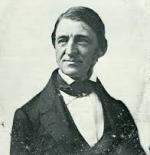
On July 5, 1838, in the middle of what he called “this refulgent summer,” during which “it has been a luxury to draw the breath of life,” thirty-five-year-old Ralph Waldo Emerson delivered what has come to be known as his “Divinity School Address” to the graduating class of the Harvard Divinity School. At this time, the Divinity School was the acknowledged center of Unitarian thought; even though Unitarianism was close to the fringes of liberal Christianity, Emerson’s words were so stunning and radical that he wasn’t invited back to campus for 30 years (some sources say 40).
As I reread the address for the first time in several years, in preparation for a class in the American Philosophy course I taught recently, two things occurred to me almost simultaneously:
- I completely understand why even the most liberal Christian scholars and professors at Harvard didn’t want this guy on campus.
- I can’t believe how strongly I have come to agree with even the most “out there” parts of his address.
Maybe that’s why I’ve never been invited to give a talk at Harvard.
Emerson’s theme is what he calls “the religious sentiment,” a recognition that the moral law is present equally in each individual and that I am, as are all human beings, a part of something greater and sublime.
This sentiment . . . is a reverence and delight in the presence of certain divine laws. It perceives that this homely game of life we play, covers, under what seem foolish details, principles that astonish . . . This sentiment is the essence of all religion.
Emerson seeks to convince us that “This sentiment is divine and deifying. showing the fountain of all good to be within.” In case one might think he is speaking hyperbolically, Emerson drives his point home: If a man is at heart just, then in so far is he God. And, Emerson insists, almost without exception our human attempts to codify and systematize this sentiment—attempts that we usually call “organized religion”—have screwed things up.
Without fail, organized religions teach their adherents that the divine nature that is in all of us actually is only to be found in a limited number of human beings; the natural divinity in all human beings accordingly is “denied to all the rest, and denied with fury.” In the case of Christianity, the problem arises from a complete misunderstanding of and overemphasis on the person of Jesus.
Historical Christianity has fallen into the error that corrupts all attempts to communicate religion . . . an exaggeration of the personal, the positive, the ritual. It has dwelt, it dwells, with noxious exaggeration about the person of Jesus.
The Harvard Divinity School faculty and graduates in the audience undoubtedly thought, with justification, that a Christianity that does not focus centrally on the person of Jesus hardly deserves the name.
But Emerson is just beginning. By raising the person of Jesus to exalted status, Christianity has managed to convince its adherents that God no longer speaks. Anticipating Friedrich Nietzsche’s infamous proclamation fifty years later, Emerson tell his audience that
The Moral Nature, that Law of laws whose revelations introduce greatness—yea, God himself—into the open soul, is not explored as the fountain of the established teaching in society. Men have come to speak of the revelation as somewhat long ago given and done, as if God were dead.
The person of Jesus, the activities of the divine in the world, the miracles that accompanied God’s presence in human form, have been shut up between the leather covers of a book and ossified into doctrines and rituals. No wonder Emerson speaks favorably of the man who once told him privately that he felt as if he was doing something immoral when he attended Sunday services at his church.
So who was Jesus? Is Emerson one of those heretics who wants to sell Jesus to us as just another excellent teacher, a fine moral exemplar, an admirable human being but not divine? Hardly. Jesus’ greatness and uniqueness lie in recognizing who he truly was—and through this recognition each subsequent individual can find empowerment and inspiration.
Alone in history he estimated the greatness of man. One man was true to what is in you and me. He saw that God incarnates himself in man, and evermore goes forth anew to take possession of his World. He said, in this jubilee of sublime emotion, ‘I am divine. Through me, God acts; through me, speaks. Would you see God, see me; or see thee, when thou also thinkest as I now think’ . . . He was the only soul in history who has appreciated the worth of man.
Emerson does not deny the truth of the Incarnation, the seminal and central truth of Christianity. Jesus was truly both human and divine. But his greatness lies in his awareness that this was not unique to him. Humanity and divinity belong together, and are fused in every human being. Jesus’ empowering gospel directive to his disciples was that they would do even greater works than his; his message to us is “Dare to love God without mediator or veil . . . Yourself a newborn bard of the Holy Ghost, cast behind you all conformity, and acquaint man with Deity.” We would do well to remember Catherine of Genoa’s insight: “My deepest me is God.”
I smile as I imagine the faces of the faculty and graduates as they listened to Emerson’s message of radical incarnation. One can hardly build a functioning, hierarchical religion around the shockingly democratic idea that all human beings share the spark and the mark of the divine. Yet Emerson suggests that there remains an important place for teaching and preaching: “It is the office of a true teacher to show us that God is, not was; that God speaks, not spoke . . . the true Christianity is a faith like Christ’s in the infinitude of man.”
Several years ago, my long dormant and atrophying faith awakened when I embraced the Incarnation story in a new way. God not only became human, but we human beings remain the only way in which God gets into the world. Jesus told his critics that “He who has seen me has seen the Father.” Emerson’s radical but empowering insight is that each of us, once we embrace who we truly are, can say the same thing.
Previous Post
May 3, 2018
One Nation, Under God?
Next Post

May 8, 2018 The Lord Be With You . . .
Browse Our Archives
Select a Category abortion Advent AI Angels Artificial intelligence atheism attention baptism Baptists beauty belief Benedictines Bible bicycling Big Bird books Bovina Camaldoli hermitage Canada Catholicism cats certainty change Christianity Christmas Collegeville Covid-19 creativity Development of Western Civilization dogs doubt Easter Enneagram Epiphany Episcopal ethics Eucharist evil extroverts Facebook faith family fear flowers forgiveness freedom friends God goodness grace happiness heaven hell history Holy Spirit Holy Week hope human nature humility humor idolatry incarnation introverts irreverence Islam Jeanne Jesus Joe Biden joy Judaism justice Kamala Harris knowledge Lent listen literature liturgy love Marsue Memorial Day miracles movies music mystery mythology NPR Old Testament optimism paradox peace Penguins philosophy piano podcast politics power prayer Protestantism Providence College Religion Rhode Island sabbatical sacrament science seeing silence Simone Weil Socrates soul sports St. John's College stories suffering tattoo teaching technology television theology thinking time tolerance transcendence travel trees trust truth Uncategorized Vermont wisdom wonder writing
Select a Month May 2026 April 2026 March 2026 February 2026 January 2026 December 2025 November 2025 October 2025 September 2025 August 2025 July 2025 June 2025 May 2025 April 2025 March 2025 February 2025 January 2025 December 2024 November 2024 October 2024 September 2024 August 2024 July 2024 June 2024 May 2024 April 2024 March 2024 February 2024 January 2024 December 2023 November 2023 October 2023 September 2023 August 2023 July 2023 June 2023 May 2023 April 2023 March 2023 February 2023 January 2023 December 2022 November 2022 October 2022 September 2022 August 2022 July 2022 June 2022 May 2022 April 2022 March 2022 February 2022 January 2022 December 2021 November 2021 October 2021 September 2021 August 2021 July 2021 June 2021 May 2021 April 2021 March 2021 February 2021 January 2021 December 2020 November 2020 October 2020 September 2020 August 2020 July 2020 June 2020 May 2020 April 2020 March 2020 February 2020 January 2020 December 2019 November 2019 October 2019 September 2019 August 2019 July 2019 June 2019 May 2019 April 2019 March 2019 February 2019 January 2019 December 2018 November 2018 October 2018 September 2018 August 2018 July 2018 June 2018 May 2018 April 2018 March 2018 February 2018 January 2018 December 2017 November 2017 October 2017 September 2017 August 2017 July 2017 June 2017 May 2017 April 2017 March 2017 February 2017 January 2017 December 2016 November 2016 October 2016 September 2016 August 2016 July 2016 June 2016 May 2016 April 2016 March 2016 February 2016 January 2016 December 2015 November 2015 October 2015 September 2015 August 2015 July 2015 June 2015 May 2015 April 2015 March 2015 February 2015 January 2015 December 2014 November 2014 October 2014 September 2014 August 2014 July 2014 June 2014 May 2014 April 2014 March 2014 February 2014 January 2014 December 2013 November 2013 October 2013 September 2013 August 2013 July 2013 June 2013 May 2013 April 2013 March 2013 February 2013 January 2013 December 2012 November 2012 October 2012 September 2012
Follow Us!
TAKE THE
Religious Wisdom Quiz
Who walked with God and was taken to heaven without dying?
Select your answer to see how you score.
Elijah Daniel Moses Enoch
Books by This Author Books by Vance G. Morgan
Related posts from Freelance Christianity

The Lonely Pawn: On Faith, Doubt, and Meaning


AI and Love: When a Chatbot Becomes a...

TRENDING AT PATHEOS Progressive Christian

What Being a Modern-Day Apostle Means to Me
In my last column, I discussed the ins and outs of modern-day...

Did Ancient China Once Worship the God of...
Across human history, a common thread weaves through the origins of the...

Love Your Neighbor – Including Earth-Kin: Lev. 19,...
God’s command to love your neighbor means acting in an ethical and...

Lead a Church Study of “Jesus and Lao...
Guest writer Jack Thomas (The Irreverent Reverend) reflects on leading his church...

Pastoral Wisdom for Responding to Sermon Pushback
Getting sermon pushback on your social justice sermon? Learn practical, Proverbs-based strategies...

Principles for Understanding the Apostolic Ministry Today
Whenever people discover that my formal ministry title is "apostle," as in...
view all Progressive Christian blogs
Ad-Free & Subscriber Log-In Subscription Support
- About Us
- 2026 Calendar
- Videos
- Podcasts
- Library of World Religions
- Faith In Media Tracker
- Advertise With Us
- Write for Us
- Privacy Policy
- Terms of Service
- Do Not Sell My Data
- Contact Us
- Radiant Digital
- Manage Newsletter Subscriptions
- Unsubscribe From Notifications
- Sitemap
Copyright 2008-2026, Patheos. All rights reserved.
Subscription Support Ad-Free & Subscriber Log-In
Follow Patheos