
BuddhistCatholicContemplativeEvangelicalGeneral ChristianHinduJewishLatter-day SaintMuslimNew VisionsProgressive Christian
Beliefs
- Buddhist
- Catholic
- Contemplative
- Evangelical
- General Christian
- Hindu
- Jewish
- Latter-day Saint
- More Voices
- Muslim
- New Visions
- Pagan
- Progressive Christian
Topics
- Religion News
- Food and Religion
- Sports and Religion
- Religious Art
- Religious Music and Entertainment
- Religious Events
- History and Religion
- Style and Religion
- Politics and Religion
- Women in Religion
- Recreation Outdoors and Religion
- Business Finance and Religion
- Careers Workplace and Religion
- Education and Religion
- Family Parenting and Religion
- Health Fitness and Religion
- Home and Religion
- Relationships and Religion
- Technology and Religion
- Travel and Religion
Columnists
- Buddhist Columnists
- Business Finance and Religion Columnists
- Careers Workplace and Religion Columnists
- Catholic Columnists
- Contemplative Columnists
- Education and Religion Columnists
- Evangelists Columnists
- Family Parenting and Religion Columnists
- General Christian Columnists
- Health Fitness and Religion Columnists
- Hindu Columnists
- History and Religion Columnists
- Home and Religion Columnists
- Jewish Columnists
- More Voices Columnists
- Latter Day Columnists
- Muslim Columnists
- New Visions Columnists
- Nonreligious Columnists
- Pagan Columnists
- Politics and Religion Columnists
- Progressive Columnists
- Recreation Outdoors and Religion Columnists
- Relationships and Religion Columnists
- Religion News Columnists
- Religious Art Columnists
- Religious Events Columnists
- Religious Music and Entertainment Columnists
- Sports and Religion Columnists
- Style and Religion Columnists
- Technology and Religion Columnists
- Travel and Religion Columnists
- Women in Religion Columnists
Resource Library
- 2026 Calendar
- Library of World Religions
- The 100 Most Holy Places on Earth
- Patheos Answers
- Podcasts
- Videos
- Faith Leaders Database
- Anglican Episcopalian
- Bahai
- Baptist
- Buddhism
- Christianity
- Confucianism
- Eastern Orthodoxy
- Hinduism
- Holiness and Pentecostal
- ISKCON
- Islam
- Judaism
- Lutheran
- Methodist
- The Church of Jesus Christ of Latter-day Saints
- New Age
- Paganism
- Presbytarian and Reformed
- Protestantism
- Religion Behind the Scenes
- Roman Catholic
- Scientology
- Shia Islam
- Sikhism
- Sufism
- Sunni Islam
- Taoism
- Zen
- See all religions
Research Tools
 Ad-Free & Subscriber Log-In Subscription Support
Ad-Free & Subscriber Log-In Subscription Support
Follow Patheos 

- Trending:
- Forgiveness
- |
- Marriage
- |
- Consciousness
- |
- Death Penalty
- |
- Election
- |
- Halloween

- Home
- Progressive Christian
- How I can be a Philosopher and a Christian at the same time
How I can be a Philosopher and a Christian at the same time
Last updated on: August 22, 2017 at 7:00 am by Vance Morgan
How I can be a Philosopher and a Christian at the same time 2017-08-21T11:21:08-04:00 Vance Morgan
Patheos Explore the world's faith through different perspectives on religion and spirituality! Patheos has the views of the prevalent religions and spiritualities of the world.
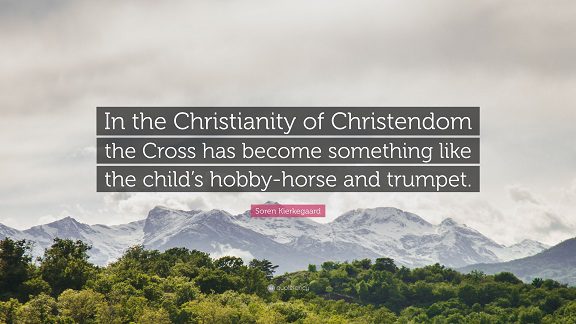
There is a big difference between “Christendom” (an institution) and “Christianity” (a way of life)–it is a difference that persons of Christian faith should always keep in mind.
I’ve spent my entire professional career as a philosophy professor teaching in Catholic institutions of higher education. Since I’ve always been straightforward with those interviewing me, my colleagues, and my students that I am not Catholic, I’ve never been accused of being a “Catholic philosopher” (although many of my colleagues wear that description as a badge of honor). I used to struggle, however, with whether I am a “Christian philosopher.” Somewhere along the line in my early years of being a professor I became defensive when talking with others about this. I regularly would say that “I’m not a Christian philosopher. I’m a philosopher who happens to be a Christian,” as if I freely chose to become a philosopher but was saddled with being a Christian in the same way I was saddled with curly hair, blue eyes, and bad teeth.
More than twenty-five years ago, Jeanne and I went to visit Forrest and Nancy, a couple who had been very important in my life before Jeanne and I met. In the seven or eight years since I had last seen this couple, a number of big things had happened in my life, including a divorce, a bitter custody battle, a remarriage, and completing my PhD in philosophy. In the middle of one conversation, Nancy asked me a question that has stayed with me ever since: “How can you be a Christian and a philosopher?” The question was sincere, without a hint of challenge or judgment. She simply wanted to know. Nancy admittedly knew little about philosophy, but she’d at least heard that philosophy is the art of questioning, of asking better and better questions about the biggest possible issues.
The problem, as she saw it, was that for a Christian, most if not all of these questions are already answered. Why, if as a Christian I know all of the answers to these questions, would I spend my professional life continuing to ask them and inspiring others to do the same? Why not just introduce everyone to the truth? Nancy’s question returned me to my youth, to bumper stickers on cars in the church parking lot that read “God said it, I believe it, That settles it,” to sensing from those around me that I thought too much, that I asked too many questions, that I was too smart for my own good and too big for my britches. What I needed to do was simply believe and shut up. It would make my life, and that of those around me, a lot easier.
As I have processed Nancy’s question over time, I’ve came to realize that the joy and fulfillment I find in life of the mind, of academia, and of open-ended questioning is partially, at least a teeny bit, the working out of a rebellious “up yours” to everyone who sought to fit me for their straitjacket. Philosophy on the one hand, as a life-defining activity, is who I am, and I even get paid for doing it. Being a Christian, on the other hand, is something I was born into. It was part of the atmosphere I breathed from birth. My family and community were Christian, the first words I learned were Christian, the first songs I sang were Christian. One doesn’t just walk away from that or shed it as a snake sheds its skin. I’ve never really believed someone who smugly with an air of superiority says something like “I was raised in (fill in the blank religion), but now I know better and I’m an atheist.” If you were really raised in a religious tradition that seeped into your bones and psyche before you even became fully conscious and self-aware, then that influence does not end by flipping an intellectual switch. So I’m a philosopher who happens to be a Christian.
Along the way, a philosopher friend reminded me of a distinction that Kierkegaard makes between “Christendom” and “Christianity.” Christendom, on the one hand, is an institution, a top-down hierarchy, the various rules, prescribed actions, and rituals that human beings have constructed to limit and control human behavior and various dangerous elements of Christ’s message. This is what Simone Weil called “the Great Beast,” the powerful collective which attempts to control human freedom and choice in the name of God. For better or for worse, I was born into one specific, very powerful version of Christendom. Christianity for Kierkegaard, on the other hand, is a radical, individual commitment to following Christ at all costs, a commitment to the law of freedom and love so challenging and frightening that it shows Christendom to be a timid and safe mockery of faith.
When it’s put that way, I realize that I can be a Christian philosopher—the two could very well go perfectly hand in hand. Working this possibility out in real time has been the focus of this blog for the past five years, as well as the central theme of (shameless plug) my recently published book (check out the “Publications” tab at the top of the page!). A few weeks ago, a person in media and promotions at my college taped a 10-15 minute interview with me about the book; she sent me the edited and distilled two-minute version last week. During the interview she asked me the million dollar question: “How can you be a philosopher and a Christian?” Here’s what I said in response:
Intellect challenges faith with questions, with doubt, while faith provides a framework within which you can be free and fearless to ask those questions. Faith provides a certain amount of security that lets you be fearless, because you know that the answers are there, even if you might never fully know what they are.
I don’t actually remember saying that, but I like it! It is the brief version of where I am after a number of years of consciously grappling with how to get my intellect and my faith to talk to and cohabit with each other fruitfully. It is possible to be a philosopher and a Christian after all.
Previous Post

August 20, 2017
What if . . . we stopped asking "What If"?
Next Post
August 24, 2017 The Point of a Professor
Browse Our Archives
Select a Category abortion Advent AI Angels Artificial intelligence atheism attention baptism Baptists beauty belief Benedictines Bible bicycling Big Bird books Bovina Camaldoli hermitage Canada Catholicism cats certainty change Christianity Christmas Collegeville Covid-19 creativity Development of Western Civilization dogs doubt Easter Enneagram Epiphany Episcopal ethics Eucharist evil extroverts Facebook faith family fear flowers forgiveness freedom friends God goodness grace happiness heaven hell history Holy Spirit Holy Week hope human nature humility humor idolatry incarnation introverts irreverence Islam Jeanne Jesus Joe Biden joy Judaism justice Kamala Harris knowledge Lent listen literature liturgy love Marsue Memorial Day miracles movies music mystery mythology NPR Old Testament optimism paradox peace Penguins philosophy piano podcast politics power prayer Protestantism Providence College Religion Rhode Island sabbatical sacrament science seeing silence Simone Weil Socrates soul sports St. John's College stories suffering tattoo teaching technology television theology thinking time tolerance transcendence travel trees trust truth Uncategorized Vermont wisdom wonder writing
Select a Month May 2026 April 2026 March 2026 February 2026 January 2026 December 2025 November 2025 October 2025 September 2025 August 2025 July 2025 June 2025 May 2025 April 2025 March 2025 February 2025 January 2025 December 2024 November 2024 October 2024 September 2024 August 2024 July 2024 June 2024 May 2024 April 2024 March 2024 February 2024 January 2024 December 2023 November 2023 October 2023 September 2023 August 2023 July 2023 June 2023 May 2023 April 2023 March 2023 February 2023 January 2023 December 2022 November 2022 October 2022 September 2022 August 2022 July 2022 June 2022 May 2022 April 2022 March 2022 February 2022 January 2022 December 2021 November 2021 October 2021 September 2021 August 2021 July 2021 June 2021 May 2021 April 2021 March 2021 February 2021 January 2021 December 2020 November 2020 October 2020 September 2020 August 2020 July 2020 June 2020 May 2020 April 2020 March 2020 February 2020 January 2020 December 2019 November 2019 October 2019 September 2019 August 2019 July 2019 June 2019 May 2019 April 2019 March 2019 February 2019 January 2019 December 2018 November 2018 October 2018 September 2018 August 2018 July 2018 June 2018 May 2018 April 2018 March 2018 February 2018 January 2018 December 2017 November 2017 October 2017 September 2017 August 2017 July 2017 June 2017 May 2017 April 2017 March 2017 February 2017 January 2017 December 2016 November 2016 October 2016 September 2016 August 2016 July 2016 June 2016 May 2016 April 2016 March 2016 February 2016 January 2016 December 2015 November 2015 October 2015 September 2015 August 2015 July 2015 June 2015 May 2015 April 2015 March 2015 February 2015 January 2015 December 2014 November 2014 October 2014 September 2014 August 2014 July 2014 June 2014 May 2014 April 2014 March 2014 February 2014 January 2014 December 2013 November 2013 October 2013 September 2013 August 2013 July 2013 June 2013 May 2013 April 2013 March 2013 February 2013 January 2013 December 2012 November 2012 October 2012 September 2012
Follow Us!
TAKE THE
Religious Wisdom Quiz
In John 6:35, Jesus said, "I am the ______."
Select your answer to see how you score.
True Vine Good Shepherd Bread of Life Light of the World
Books by This Author Books by Vance G. Morgan
Related posts from Freelance Christianity

The Lonely Pawn: On Faith, Doubt, and Meaning


AI and Love: When a Chatbot Becomes a...

TRENDING AT PATHEOS Progressive Christian

What Being a Modern-Day Apostle Means to Me
In my last column, I discussed the ins and outs of modern-day...

Did Ancient China Once Worship the God of...
Across human history, a common thread weaves through the origins of the...

Love Your Neighbor – Including Earth-Kin: Lev. 19,...
God’s command to love your neighbor means acting in an ethical and...

Lead a Church Study of “Jesus and Lao...
Guest writer Jack Thomas (The Irreverent Reverend) reflects on leading his church...

Pastoral Wisdom for Responding to Sermon Pushback
Getting sermon pushback on your social justice sermon? Learn practical, Proverbs-based strategies...

Principles for Understanding the Apostolic Ministry Today
Whenever people discover that my formal ministry title is "apostle," as in...
view all Progressive Christian blogs
Ad-Free & Subscriber Log-In Subscription Support
- About Us
- 2026 Calendar
- Videos
- Podcasts
- Library of World Religions
- Faith In Media Tracker
- Advertise With Us
- Write for Us
- Privacy Policy
- Terms of Service
- Do Not Sell My Data
- Contact Us
- Radiant Digital
- Manage Newsletter Subscriptions
- Unsubscribe From Notifications
- Sitemap
Copyright 2008-2026, Patheos. All rights reserved.
Subscription Support Ad-Free & Subscriber Log-In
Follow Patheos