
BuddhistCatholicContemplativeEvangelicalGeneral ChristianHinduJewishLatter-day SaintMuslimNew VisionsProgressive Christian
Beliefs
- Buddhist
- Catholic
- Contemplative
- Evangelical
- General Christian
- Hindu
- Jewish
- Latter-day Saint
- More Voices
- Muslim
- New Visions
- Pagan
- Progressive Christian
Topics
- Religion News
- Food and Religion
- Sports and Religion
- Religious Art
- Religious Music and Entertainment
- Religious Events
- History and Religion
- Style and Religion
- Politics and Religion
- Women in Religion
- Recreation Outdoors and Religion
- Business Finance and Religion
- Careers Workplace and Religion
- Education and Religion
- Family Parenting and Religion
- Health Fitness and Religion
- Home and Religion
- Relationships and Religion
- Technology and Religion
- Travel and Religion
Columnists
- Buddhist Columnists
- Business Finance and Religion Columnists
- Careers Workplace and Religion Columnists
- Catholic Columnists
- Contemplative Columnists
- Education and Religion Columnists
- Evangelists Columnists
- Family Parenting and Religion Columnists
- General Christian Columnists
- Health Fitness and Religion Columnists
- Hindu Columnists
- History and Religion Columnists
- Home and Religion Columnists
- Jewish Columnists
- More Voices Columnists
- Latter Day Columnists
- Muslim Columnists
- New Visions Columnists
- Nonreligious Columnists
- Pagan Columnists
- Politics and Religion Columnists
- Progressive Columnists
- Recreation Outdoors and Religion Columnists
- Relationships and Religion Columnists
- Religion News Columnists
- Religious Art Columnists
- Religious Events Columnists
- Religious Music and Entertainment Columnists
- Sports and Religion Columnists
- Style and Religion Columnists
- Technology and Religion Columnists
- Travel and Religion Columnists
- Women in Religion Columnists
Resource Library
- 2026 Calendar
- Library of World Religions
- The 100 Most Holy Places on Earth
- Patheos Answers
- Podcasts
- Videos
- Faith Leaders Database
- Anglican Episcopalian
- Bahai
- Baptist
- Buddhism
- Christianity
- Confucianism
- Eastern Orthodoxy
- Hinduism
- Holiness and Pentecostal
- ISKCON
- Islam
- Judaism
- Lutheran
- Methodist
- The Church of Jesus Christ of Latter-day Saints
- New Age
- Paganism
- Presbytarian and Reformed
- Protestantism
- Religion Behind the Scenes
- Roman Catholic
- Scientology
- Shia Islam
- Sikhism
- Sufism
- Sunni Islam
- Taoism
- Zen
- See all religions
Research Tools
 Ad-Free & Subscriber Log-In Subscription Support
Ad-Free & Subscriber Log-In Subscription Support
Follow Patheos 

- Trending:
- Forgiveness
- |
- Marriage
- |
- Consciousness
- |
- Death Penalty
- |
- Election
- |
- Halloween

- Home
- Progressive Christian
- Calling God Back to the Mountain
Calling God Back to the Mountain
Last updated on: September 20, 2018 at 6:00 am by Vance Morgan
Calling God Back to the Mountain 2018-09-19T21:24:54-04:00 Vance Morgan
Patheos Explore the world's faith through different perspectives on religion and spirituality! Patheos has the views of the prevalent religions and spiritualities of the world.
What is the difference between a cathedral and a physics lab? Are they not both saying: Hello? Annie Dillard, “Teaching a Stone to Talk”
A bit over a year ago, Harvard political philosopher and professor of government Danielle Allen gave a talk on campus as part of my college’s year-long centennial celebration. I was fortunate enough to be invited to join ten or so faculty and administrators at the President’s house for dinner after the talk. Allen’s most recent book is Our Declaration: A Reading of the Declaration of Independence in Defense of Equality; her talk and the conversation at dinner were so good that I ordered a copy from Amazon that night. It’s terrific, so good that it should be required reading for all American citizens, starting with the President (I wish). But my first “aha!” moment while reading the book had nothing to do with politics or citizenship—it was sparked by the reference to “Nature and Nature’s God” in the first sentence of the Declaration of Independence. “Wow,” I thought. “That’s what my Honors colloquium is about.”
About once every four years I have the opportunity to teach a capstone colloquium for juniors and seniors in our Liberal Arts Honors Program. The semester that Danielle Allen visited, I was teaching “Beauty and Violence: The Problem of Natural Evil,” for the third time, a class that I have come to consider as my “signature course.” My fourteen students reflected the eclectic nature of the texts we studied, with four Accounting majors, two in Biology, two in Sociology, two in Education, and one each in Finance, Marketing, Biochemistry, and Engineering/Physical Systems.
“Mostly left-brain people,” Jeanne observed. No humanities majors, in a course taught by a philosopher who over the years has morphed into more of an interdisciplinary humanities professor than anything else. We considered texts by theologians, biologists, philosophers, novelists, and a couple of people who cannot be categorized, with a Jesuit paleontologist, a Benedictine nun, and an Anglican physicist thrown in for good measure. My kind of course, in other words—I had a ball, and the students (per their comments in class and on discussion forums) had their minds blown. Our connecting theme, as the Declaration’s phrase states, was “Nature and Nature’s God.” From careful observation of the natural world, what might we intelligently speculate concerning what or who put it in place?
Our initial three weeks were spent with reading several essays by Annie Dillard, then her brilliant Pilgrim at Tinker Creek in its entirety. Dillard models the energy and curiosity that I seek to s in this course. As she records her detailed observations of the natural world in all its beauty and violence, then uses them as a springboard for intense and irreverent questions shot heavenward, I am reminded of a verse from Proverbs in the Jewish Scriptures: “It is the glory of God to conceal a thing, and the glory of kings to search it out.” This hide-and-seek game, with the divine hiding after leaving cryptic clues behind, and we mortals trying to figure out what they point toward, is Dillard’s continuing obsession.
What have we been trying to do all these centuries but trying to call God back to the mountain, or, failing that, raise a peep out of anything that isn’t us? What is the difference between a cathedral and a physics lab? Are they not both saying: Hello?
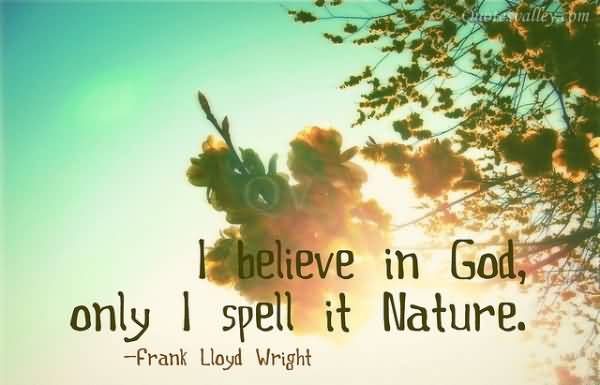
Dillard once described liturgy as a set of words and practices that human beings over the years have managed to direct toward God without getting killed; is science a similar sort of activity, attempting to get a glimpse of the most elusive of prey? Many, probably most, scientists would say that questions of what lies behind the natural world are not within their purview—their task is to figure out what is the case, not why it is the case. But one does not have to look too far to find scientists who think otherwise.
One of my favorite sources of conversations with persons who have spent their lives getting science and faith to talk to each other is Krista Tippett’s public radio program “On Being.” For instance, geneticist and Anglican priest Lindon Eaves describes how although he needs to separate his inner scientist and priest at times, he often notes just how close the energies of his two life-defining activities are.
To be a thorough-going scientist I am compelled in the short term to see really good reasons for not believing the current model for reality because that’s how science perceives . . . You can either think of, let’s say the creeds of the great traditions as it were, as telling you what you ought to think. Or you can say they are in some sense comparable to the theories of science. They are the best distillations of where we’ve been. But we don’t approach reality treating those models as if they are the last word. We treat them as operational hypotheses.
The creeds of the faith as operational hypotheses, our current best shot at what might be appropriate to believe about God? Both science and faith at their best are reflections that any conviction worth its salt must cohabit with a piece of mystery. All of our traditions insist on a reverence for what we do not know now and cannot tie up with explanations in this lifetime.
In a different conversation, Vatican observatory astronomer Fr. George Coyne tells the story of how, during the question and answer period after he gave a conference paper on the uncertainties of determining the age of the universe, an audience member commented, “Father, it must be wonderful that, with all the uncertainties we have in our scientific pursuits, that you have this faith, this rock of faith to stand upon.” Father Coyne was not amused.
I took off my Roman collar and faced him down and said, “Who told you that my faith was kind of a rock?” I said, “Every morning I wake up I have my doubts. I have my uncertainties. I have to struggle to help my faith grow.” Because faith is love. Love in marriage, love with friends, love of brothers and sisters is not something that’s there once and for all and always kind of a rock that gives us support. What I want to say is, ignorance in doing science creates the excitement of doing science, and anyone who does it knows that discoveries lead to a further ignorance.
Ignorance and doubt are wonderful places to be as we turn our attention toward the unknown. As Rabbi Jonathan Sacks told Krista Tippett, “Whatever God is, he is not as simple as we are. He is in places you would never expect him to be . . . Don’t think we can confine God into our categories. God is bigger than religion.” And than science, I might add.
One of the late Harvard biologist Stephen Jay Gould’s last books was Rocks of Ages, in which he argued that religion/faith and science should be treated as “non-overlapping magisteria,” equally important areas of human endeavor and belief that operate according to entirely different principles and, therefore, should not be allowed to talk to each other. At the beginning of the book, Gould favorably quotes the old cliché that “science gets the age of rocks, and religion gets the Rock of Ages.” With all due respect, Gould is wrong. Charles Sanders Peirce once wrote that the point of investigation is to find out something we don’t know by using those things that we do know. When the stakes are the highest, when the object of investigation is what is greater than us, all of our best human tools are appropriate for use.
Previous Post

September 18, 2018
Is it THE truth, or is it MY truth?
Next Post
September 23, 2018 When an Atheist Finds Out That There is More Than One Kind of Christian
Browse Our Archives
Select a Category abortion Advent AI Angels Artificial intelligence atheism attention baptism Baptists beauty belief Benedictines Bible bicycling Big Bird books Bovina Camaldoli hermitage Canada Catholicism cats certainty change Christianity Christmas Collegeville Covid-19 creativity Development of Western Civilization dogs doubt Easter Enneagram Epiphany Episcopal ethics Eucharist evil extroverts Facebook faith family fear flowers forgiveness freedom friends God goodness grace happiness heaven hell history Holy Spirit Holy Week hope human nature humility humor idolatry incarnation introverts irreverence Islam Jeanne Jesus Joe Biden joy Judaism justice Kamala Harris knowledge Lent listen literature liturgy love Marsue Memorial Day miracles movies music mystery mythology NPR Old Testament optimism paradox peace Penguins philosophy piano podcast politics power prayer Protestantism Providence College Religion Rhode Island sabbatical sacrament science seeing silence Simone Weil Socrates soul sports St. John's College stories suffering tattoo teaching technology television theology thinking time tolerance transcendence travel trees trust truth Uncategorized Vermont wisdom wonder writing
Select a Month May 2026 April 2026 March 2026 February 2026 January 2026 December 2025 November 2025 October 2025 September 2025 August 2025 July 2025 June 2025 May 2025 April 2025 March 2025 February 2025 January 2025 December 2024 November 2024 October 2024 September 2024 August 2024 July 2024 June 2024 May 2024 April 2024 March 2024 February 2024 January 2024 December 2023 November 2023 October 2023 September 2023 August 2023 July 2023 June 2023 May 2023 April 2023 March 2023 February 2023 January 2023 December 2022 November 2022 October 2022 September 2022 August 2022 July 2022 June 2022 May 2022 April 2022 March 2022 February 2022 January 2022 December 2021 November 2021 October 2021 September 2021 August 2021 July 2021 June 2021 May 2021 April 2021 March 2021 February 2021 January 2021 December 2020 November 2020 October 2020 September 2020 August 2020 July 2020 June 2020 May 2020 April 2020 March 2020 February 2020 January 2020 December 2019 November 2019 October 2019 September 2019 August 2019 July 2019 June 2019 May 2019 April 2019 March 2019 February 2019 January 2019 December 2018 November 2018 October 2018 September 2018 August 2018 July 2018 June 2018 May 2018 April 2018 March 2018 February 2018 January 2018 December 2017 November 2017 October 2017 September 2017 August 2017 July 2017 June 2017 May 2017 April 2017 March 2017 February 2017 January 2017 December 2016 November 2016 October 2016 September 2016 August 2016 July 2016 June 2016 May 2016 April 2016 March 2016 February 2016 January 2016 December 2015 November 2015 October 2015 September 2015 August 2015 July 2015 June 2015 May 2015 April 2015 March 2015 February 2015 January 2015 December 2014 November 2014 October 2014 September 2014 August 2014 July 2014 June 2014 May 2014 April 2014 March 2014 February 2014 January 2014 December 2013 November 2013 October 2013 September 2013 August 2013 July 2013 June 2013 May 2013 April 2013 March 2013 February 2013 January 2013 December 2012 November 2012 October 2012 September 2012
Follow Us!
TAKE THE
Religious Wisdom Quiz
Who wrote the Book of Acts?
Select your answer to see how you score.
Luke Peter Mark Paul
Books by This Author Books by Vance G. Morgan
Related posts from Freelance Christianity

The Lonely Pawn: On Faith, Doubt, and Meaning


AI and Love: When a Chatbot Becomes a...

TRENDING AT PATHEOS Progressive Christian

What Being a Modern-Day Apostle Means to Me
In my last column, I discussed the ins and outs of modern-day...

Did Ancient China Once Worship the God of...
Across human history, a common thread weaves through the origins of the...

Love Your Neighbor – Including Earth-Kin: Lev. 19,...
God’s command to love your neighbor means acting in an ethical and...

Lead a Church Study of “Jesus and Lao...
Guest writer Jack Thomas (The Irreverent Reverend) reflects on leading his church...

Pastoral Wisdom for Responding to Sermon Pushback
Getting sermon pushback on your social justice sermon? Learn practical, Proverbs-based strategies...

Principles for Understanding the Apostolic Ministry Today
Whenever people discover that my formal ministry title is "apostle," as in...
view all Progressive Christian blogs
Ad-Free & Subscriber Log-In Subscription Support
- About Us
- 2026 Calendar
- Videos
- Podcasts
- Library of World Religions
- Faith In Media Tracker
- Advertise With Us
- Write for Us
- Privacy Policy
- Terms of Service
- Do Not Sell My Data
- Contact Us
- Radiant Digital
- Manage Newsletter Subscriptions
- Unsubscribe From Notifications
- Sitemap
Copyright 2008-2026, Patheos. All rights reserved.
Subscription Support Ad-Free & Subscriber Log-In
Follow Patheos