
BuddhistCatholicContemplativeEvangelicalGeneral ChristianHinduJewishLatter-day SaintMuslimNew VisionsProgressive Christian
Beliefs
- Buddhist
- Catholic
- Contemplative
- Evangelical
- General Christian
- Hindu
- Jewish
- Latter-day Saint
- More Voices
- Muslim
- New Visions
- Pagan
- Progressive Christian
Topics
- Religion News
- Food and Religion
- Sports and Religion
- Religious Art
- Religious Music and Entertainment
- Religious Events
- History and Religion
- Style and Religion
- Politics and Religion
- Women in Religion
- Recreation Outdoors and Religion
- Business Finance and Religion
- Careers Workplace and Religion
- Education and Religion
- Family Parenting and Religion
- Health Fitness and Religion
- Home and Religion
- Relationships and Religion
- Technology and Religion
- Travel and Religion
Columnists
- Buddhist Columnists
- Business Finance and Religion Columnists
- Careers Workplace and Religion Columnists
- Catholic Columnists
- Contemplative Columnists
- Education and Religion Columnists
- Evangelists Columnists
- Family Parenting and Religion Columnists
- General Christian Columnists
- Health Fitness and Religion Columnists
- Hindu Columnists
- History and Religion Columnists
- Home and Religion Columnists
- Jewish Columnists
- More Voices Columnists
- Latter Day Columnists
- Muslim Columnists
- New Visions Columnists
- Nonreligious Columnists
- Pagan Columnists
- Politics and Religion Columnists
- Progressive Columnists
- Recreation Outdoors and Religion Columnists
- Relationships and Religion Columnists
- Religion News Columnists
- Religious Art Columnists
- Religious Events Columnists
- Religious Music and Entertainment Columnists
- Sports and Religion Columnists
- Style and Religion Columnists
- Technology and Religion Columnists
- Travel and Religion Columnists
- Women in Religion Columnists
Resource Library
- 2026 Calendar
- Library of World Religions
- The 100 Most Holy Places on Earth
- Patheos Answers
- Podcasts
- Videos
- Faith Leaders Database
- Anglican Episcopalian
- Bahai
- Baptist
- Buddhism
- Christianity
- Confucianism
- Eastern Orthodoxy
- Hinduism
- Holiness and Pentecostal
- ISKCON
- Islam
- Judaism
- Lutheran
- Methodist
- The Church of Jesus Christ of Latter-day Saints
- New Age
- Paganism
- Presbytarian and Reformed
- Protestantism
- Religion Behind the Scenes
- Roman Catholic
- Scientology
- Shia Islam
- Sikhism
- Sufism
- Sunni Islam
- Taoism
- Zen
- See all religions
Research Tools
 Ad-Free & Subscriber Log-In Subscription Support
Ad-Free & Subscriber Log-In Subscription Support
Follow Patheos 

- Trending:
- Forgiveness
- |
- Marriage
- |
- Consciousness
- |
- Death Penalty
- |
- Election
- |
- Halloween

- Home
- Progressive Christian
- Bored with Thinking
Bored with Thinking
Last updated on: February 22, 2016 at 7:30 am by Vance Morgan
Bored with Thinking 2016-02-22T07:30:28-04:00 Vance Morgan
Patheos Explore the world's faith through different perspectives on religion and spirituality! Patheos has the views of the prevalent religions and spiritualities of the world.
Many years ago I read a paragraph in Vera Brittain’s Testament of Youth that was the single most helpful piece of advice I ever received concerning teaching. Brittain writes that
There is still, I think, not enough recognition by teachers of the fact that the desire to think–which is fundamentally a moral problem–must be awakened before learning can occur. Most people wish above all else to be comfortable, and thought is a pre-eminently uncomfortable process.
The idea of thinking and learning as being intimately connected to the desire to think and learn has driven my pedagogy for a long time, but perhaps even more important in this passage is Brittain’s claim that wanting to think and learn is a moral issue. In our contemporary world, learning is often understood in terms of processing information and then applying it, usually with a view to becoming a more and more efficient and productive member of society. But how might the cultivation of thought and learning be transformed if we paid close attention to the moral aspects of these foundational human activities?
Hannah Arendt once said that “every year the world is invaded by millions of tiny barbarians. We call them children.” We all know that part of the process of civilizing these little barbarians is equipping them with values and with a moral compass, as well as providing training in how to use these moral tools. If thinking well and being committed to lifetime learning is part of being a moral human being, then muddled and sloppy thinking, as well as the attitude that no further learning is necessary, are moral failings of the same order as lying, cheating, and stealing. We live in a world in which we are in danger of—if we have not already arrived at—cognitive immorality. Not because of the immoral contents of our thoughts, but rather because of our collective unwillingness to commit to the hard work of thinking clearly, work that takes the sort of time and commitment that modern human beings are often loathe to engage with.
I began thinking anew about the moral features of thinking and learning after listening to an interview that Krista Tippett did on her On Being radio program with Maria Popova.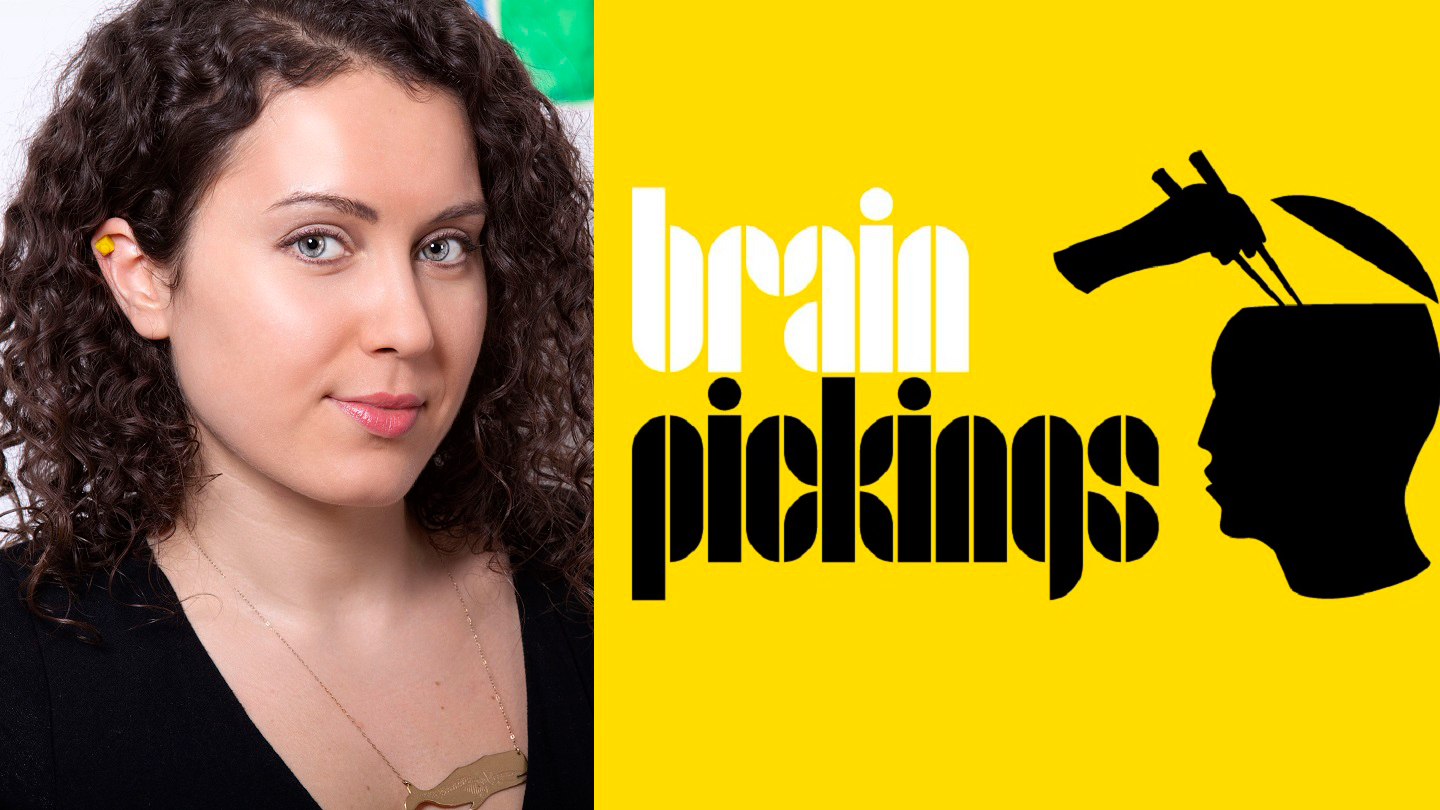
Maria Popova: Cartographer of Meaning in a Digital Age
Popova is a bit of social media phenomenon; she is most notable for Brain Pickings, a popular blog that began as a weekly email to seven of her friends. Now a website, Twitter feed and weekly digest, Brain Pickings covers a wide variety of cultural topics: history, current events, and images and texts from the past. In the introduction to their conversation, Tippett called Popova a “cartographer of meaning in a digital age.” Popova observes that
As a culture, we seem somehow bored with thinking. We want to instantly know. We’ve been infected with this kind of pathological impatience that makes us want to have the knowledge but not do the work of claiming it. The true material of knowledge is meaning. And the meaningful is the opposite of the trivial. And the only thing that we have gleaned by skimming and skipping forward is really trivia. The only way to glean knowledge is contemplation. And the road to that is time. There’s nothing else.
I can think of no better contemporary example of this than our current political cycle. The sense I get is not so much that candidates and voters are incapable of thinking. Rather, there appears to be general agreement with  Violet, Dowager Countess of Downton Abbey, who once quipped that “All this thinking is overrated.” Donald Trump or Bernie Sanders telling us “I will do this” should be enough—why insist on an explanation or account of how this will be done? Most of us remember being told on a middle or high school mathematics exam to “show your work”—no shortcuts allowed, in other words. How then have we come collectively to a place where we cannot be bothered to “show our work” when it comes to some of the most important decisions we will make in the next several years?
During my childhood and adolescent years I was occasionally told, particularly by family members and people who attended our church, that “you think too much.” A corollary was often that “things really aren’t that complicated.” The truth, of course, is that there are very few times in life where more thought is unnecessary, and things really are that complicated. There is a strong tendency in human nature to want things simplified; even more, there is a strong desire to move from premise to conclusion without having to do any of the nasty and time-consuming work in between. Part of moral and cognitive maturity is to move forward with intelligence and conviction through a very complicated and messy world. We would like everything to be reducible to a bumper sticker or sound bite but, as 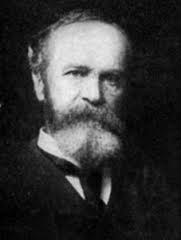 William James reminds us, “Nature is not bound to satisfy our presuppositions. In the great boarding house of nature, the cakes and the butter and the syrup seldom come out so even and leave the plates so clean.”
The moral aspects of teaching often begin with resisting the temptation to deliver a product, to give the customer what she wants. Sometimes, Maria Popova suggests, what people want is the last thing they should get.
Giving people what they want isn’t nearly as powerful as teaching people what they need. There’s always a shortcut available, a way to be a little more ironic, cheaper, more instantly understandable. There’s the chance to play into our desire to be entertained and distracted regardless of the cost. Most of all, there’s the temptation to encourage people to be selfish, afraid, and angry. Or you can dig in, take your time, and invest in a process that helps people see what they truly need.
I try to focus on the importance of “digging in” every time I’m in the classroom. But observing myself outside of the classroom, I find that I have a lot of work to do. I spend time on Twitter, even though communicating in 120 characters or less is hardly an example of in-depth discourse. I quickly block or unfriend Facebook people who clearly hold political views that are radically different from mine. I bristle when someone challenges me in the “Comments” section of this blog. If I am going to call for moral maturity in thinking and learning, that maturation process begins with me.
Previous Post

February 17, 2016
Stranger in a Strange Land
Next Post
February 24, 2016 Academics in No-Man's Land
Browse Our Archives
Select a Category abortion Advent AI Angels Artificial intelligence atheism attention baptism Baptists beauty belief Benedictines Bible bicycling Big Bird books Bovina Camaldoli hermitage Canada Catholicism cats certainty change Christianity Christmas Collegeville Covid-19 creativity Development of Western Civilization dogs doubt Easter Enneagram Epiphany Episcopal ethics Eucharist evil extroverts Facebook faith family fear flowers forgiveness freedom friends God goodness grace happiness heaven hell history Holy Spirit Holy Week hope human nature humility humor idolatry incarnation introverts irreverence Islam Jeanne Jesus Joe Biden joy Judaism justice Kamala Harris knowledge Lent listen literature liturgy love Marsue Memorial Day miracles movies music mystery mythology NPR Old Testament optimism paradox peace Penguins philosophy piano podcast politics power prayer Protestantism Providence College Religion Rhode Island sabbatical sacrament science seeing silence Simone Weil Socrates soul sports St. John's College stories suffering tattoo teaching technology television theology thinking time tolerance transcendence travel trees trust truth Uncategorized Vermont wisdom wonder writing
Select a Month May 2026 April 2026 March 2026 February 2026 January 2026 December 2025 November 2025 October 2025 September 2025 August 2025 July 2025 June 2025 May 2025 April 2025 March 2025 February 2025 January 2025 December 2024 November 2024 October 2024 September 2024 August 2024 July 2024 June 2024 May 2024 April 2024 March 2024 February 2024 January 2024 December 2023 November 2023 October 2023 September 2023 August 2023 July 2023 June 2023 May 2023 April 2023 March 2023 February 2023 January 2023 December 2022 November 2022 October 2022 September 2022 August 2022 July 2022 June 2022 May 2022 April 2022 March 2022 February 2022 January 2022 December 2021 November 2021 October 2021 September 2021 August 2021 July 2021 June 2021 May 2021 April 2021 March 2021 February 2021 January 2021 December 2020 November 2020 October 2020 September 2020 August 2020 July 2020 June 2020 May 2020 April 2020 March 2020 February 2020 January 2020 December 2019 November 2019 October 2019 September 2019 August 2019 July 2019 June 2019 May 2019 April 2019 March 2019 February 2019 January 2019 December 2018 November 2018 October 2018 September 2018 August 2018 July 2018 June 2018 May 2018 April 2018 March 2018 February 2018 January 2018 December 2017 November 2017 October 2017 September 2017 August 2017 July 2017 June 2017 May 2017 April 2017 March 2017 February 2017 January 2017 December 2016 November 2016 October 2016 September 2016 August 2016 July 2016 June 2016 May 2016 April 2016 March 2016 February 2016 January 2016 December 2015 November 2015 October 2015 September 2015 August 2015 July 2015 June 2015 May 2015 April 2015 March 2015 February 2015 January 2015 December 2014 November 2014 October 2014 September 2014 August 2014 July 2014 June 2014 May 2014 April 2014 March 2014 February 2014 January 2014 December 2013 November 2013 October 2013 September 2013 August 2013 July 2013 June 2013 May 2013 April 2013 March 2013 February 2013 January 2013 December 2012 November 2012 October 2012 September 2012
Follow Us!
TAKE THE
Religious Wisdom Quiz
This Gospel alone records seven 'I am' statements from Jesus. Which of these is NOT one of them: the bread of life, the good shepherd, the way and the truth and the life, or the Alpha and Omega?
Select your answer to see how you score.
The way and the truth and the life The Alpha and Omega The bread of life The good shepherd
Books by This Author Books by Vance G. Morgan
Related posts from Freelance Christianity

The Lonely Pawn: On Faith, Doubt, and Meaning


AI and Love: When a Chatbot Becomes a...

TRENDING AT PATHEOS Progressive Christian

What Being a Modern-Day Apostle Means to Me
In my last column, I discussed the ins and outs of modern-day...

Did Ancient China Once Worship the God of...
Across human history, a common thread weaves through the origins of the...

Love Your Neighbor – Including Earth-Kin: Lev. 19,...
God’s command to love your neighbor means acting in an ethical and...

Lead a Church Study of “Jesus and Lao...
Guest writer Jack Thomas (The Irreverent Reverend) reflects on leading his church...

Pastoral Wisdom for Responding to Sermon Pushback
Getting sermon pushback on your social justice sermon? Learn practical, Proverbs-based strategies...

Principles for Understanding the Apostolic Ministry Today
Whenever people discover that my formal ministry title is "apostle," as in...
view all Progressive Christian blogs
Ad-Free & Subscriber Log-In Subscription Support
- About Us
- 2026 Calendar
- Videos
- Podcasts
- Library of World Religions
- Faith In Media Tracker
- Advertise With Us
- Write for Us
- Privacy Policy
- Terms of Service
- Do Not Sell My Data
- Contact Us
- Radiant Digital
- Manage Newsletter Subscriptions
- Unsubscribe From Notifications
- Sitemap
Copyright 2008-2026, Patheos. All rights reserved.
Subscription Support Ad-Free & Subscriber Log-In
Follow Patheos