
BuddhistCatholicContemplativeEvangelicalGeneral ChristianHinduJewishLatter-day SaintMuslimNew VisionsProgressive Christian
Beliefs
- Buddhist
- Catholic
- Contemplative
- Evangelical
- General Christian
- Hindu
- Jewish
- Latter-day Saint
- More Voices
- Muslim
- New Visions
- Pagan
- Progressive Christian
Topics
- Religion News
- Food and Religion
- Sports and Religion
- Religious Art
- Religious Music and Entertainment
- Religious Events
- History and Religion
- Style and Religion
- Politics and Religion
- Women in Religion
- Recreation Outdoors and Religion
- Business Finance and Religion
- Careers Workplace and Religion
- Education and Religion
- Family Parenting and Religion
- Health Fitness and Religion
- Home and Religion
- Relationships and Religion
- Technology and Religion
- Travel and Religion
Columnists
- Buddhist Columnists
- Business Finance and Religion Columnists
- Careers Workplace and Religion Columnists
- Catholic Columnists
- Contemplative Columnists
- Education and Religion Columnists
- Evangelists Columnists
- Family Parenting and Religion Columnists
- General Christian Columnists
- Health Fitness and Religion Columnists
- Hindu Columnists
- History and Religion Columnists
- Home and Religion Columnists
- Jewish Columnists
- More Voices Columnists
- Latter Day Columnists
- Muslim Columnists
- New Visions Columnists
- Nonreligious Columnists
- Pagan Columnists
- Politics and Religion Columnists
- Progressive Columnists
- Recreation Outdoors and Religion Columnists
- Relationships and Religion Columnists
- Religion News Columnists
- Religious Art Columnists
- Religious Events Columnists
- Religious Music and Entertainment Columnists
- Sports and Religion Columnists
- Style and Religion Columnists
- Technology and Religion Columnists
- Travel and Religion Columnists
- Women in Religion Columnists
Resource Library
- 2026 Calendar
- Library of World Religions
- The 100 Most Holy Places on Earth
- Patheos Answers
- Podcasts
- Videos
- Faith Leaders Database
- Anglican Episcopalian
- Bahai
- Baptist
- Buddhism
- Christianity
- Confucianism
- Eastern Orthodoxy
- Hinduism
- Holiness and Pentecostal
- ISKCON
- Islam
- Judaism
- Lutheran
- Methodist
- The Church of Jesus Christ of Latter-day Saints
- New Age
- Paganism
- Presbytarian and Reformed
- Protestantism
- Religion Behind the Scenes
- Roman Catholic
- Scientology
- Shia Islam
- Sikhism
- Sufism
- Sunni Islam
- Taoism
- Zen
- See all religions
Research Tools
 Ad-Free & Subscriber Log-In Subscription Support
Ad-Free & Subscriber Log-In Subscription Support
Follow Patheos 

- Trending:
- Forgiveness
- |
- Marriage
- |
- Consciousness
- |
- Death Penalty
- |
- Election
- |
- Halloween

- Home
- Progressive Christian
- Be Like the Dunkers
Be Like the Dunkers
Last updated on: February 26, 2026 at 10:21 am by Vance Morgan
Be Like the Dunkers 2026-02-26T10:21:06-04:00 Vance Morgan
Patheos Explore the world's faith through different perspectives on religion and spirituality! Patheos has the views of the prevalent religions and spiritualities of the world.
Human beings never behave so badly as when they believe they are protecting God. Barbara Brown Taylor
Every time someone claims that we live in a country founded on “Christian principles,” I think of Benjamin Franklin. His Autobiography is often a text at the appropriate time in the interdisciplinary program I teach in—it’s short, pithy, no nonsense and quintessentially American. Exactly what I would expect from Ben. He doesn’t say a lot about organized religion other than to express his distaste for and rejection of it, turning his back on the Presbyterianism of his youth because the ministers’ sermons were primarily “explications of the peculiar doctrines of our sect,” clearly designed to create good Presbyterians rather than good citizens.
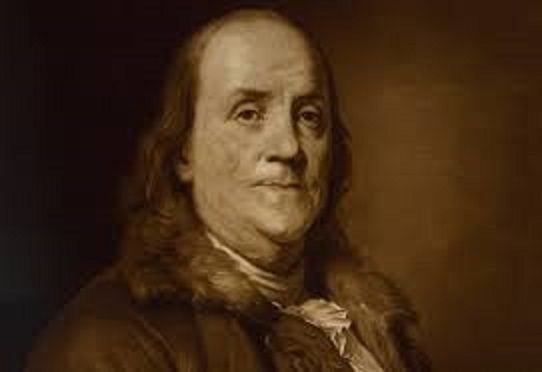
Franklin describes himself as a “thorough Deist” just as Thomas Jefferson, George Washington, and many more of our nation’s founders were, believing in a creating God who has little to no direct engagement in the world, who is best worshipped by “doing good to man,” and who will in some manner “certainly reward virtue and punish vice, either here or hereafter.” No miracles, no incarnation, resurrection or revelation. And no organized worship.
Ben was surrounded by religion in eighteenth century colonial America but remained as secular as they come throughout his life. Concerning a saintly Catholic woman who had spent her life in service to others while living in a one-room garret with only a table, bed, crucifix and picture of Saint Veronica, Frankline wrote that he was amazed “on how small an income life and health may be supported.” He was most impressed with the ability of George Whitfield—one of the primary preachers during “The Great Awakening,” a remarkable religious revival in 1700s New England—to project his voice across a large open field.
Franklin was particularly intrigued by the Dunkers, a small Baptist sect (who “dunked” the newly baptized) that would become the Church of the Brethren a couple of centuries later. With a name like that, they could have given our favorite New England donut and coffee establishment a run for its money. One of the Dunker leaders complained to Franklin that, as often happens when religion is concerned, other religious groups frequently accused the Dunkers of “abominable practices and principles, to which they were utter strangers.”
Ben sensibly suggested that the Dunkers should publish “the articles of their belief, and the rules of their discipline,” thus reducing the opportunity for misunderstanding and slander. To which suggestion the Dunker leader made a remarkable reply.
When we were first drawn together as a society, it had pleased God to enlighten our minds so far as to see that some doctrines, which we once esteemed truths, were errors; and that others, which we had esteemed errors, were real truths. From time to time He has been pleased to afford us farther light, and our principles have been improving, and our errors diminishing. Now we are not sure that we have arrived at the end of this progression . . . we fear that, if we should once print our confession of faith, we should feel ourselves as if bound and confin’d by it, and perhaps be unwilling to receive farther improvement, and our successors still more so, as conceiving what we their elders and founders had done, to be something sacred, never to be departed from.
I like the Dunkers’ attitude. Doctrine bothers me because it so easily turns into its evil and rigid twin, dogma. As I recited the Nicene Creed with other Sunday morning parisioners some time ago, I made more effort than usual to pay attention to what this close-to-two-thousand-years-old affirmation of faith is actually committing me to. There’s some pretty weird stuff there–I’m not sure that I believe all of it. Not long ago I heard someone mention that she is comforted by the fact that the words she is saying when reciting the creed are the very same words Christian believers have recited for close to two millennia. I’m not sure why that is something to be comforted by.
On the Sunday in question, I rather was wondering what makes any of us think that what fit the bill two millennia ago is still a perfect fit. I was reminded of something Christian Wiman writes in My Bright Abyss:
Only when doctrine itself is understood to be provisional does doctrine begin to take on a more than provisional significance.
I understand the immediate and obvious pushback from many circles, of course. I grew up in a religious world in which all of the images of belief involved stability, immutability, inflexibility and certainty. Truth does not change. If you are not stable and secure in what you believe, how are you going to be able to defend it against the inevitable onslaught of change, unbelief, secularism and relativism? We sang “On Christ the solid rock I stand, all other ground is sinking sand” and that we were “Standing on the promises of Christ my king.” We would not have recognized ourselves in Wiman’s unflinching description:
Dogma needs regular infusions of unknowingness to keep from calcifying into the predictable, pontificating, and anti-intellectual services so common in mainstream American churches.
But that was us. Wiman continues:
The minute any human or human institution arrogates to itself a singular knowledge of God, there comes into that knowledge a kind of strychnine pride, and it is as if the most animated and vital creature were instantaneously transformed into a corpse . . . The minute you begin to speak with certitude about God, he is gone.
Those who follow the great Western monotheistic religions are often referred to as “People of the Book.” What the Dunkers realized is that writing something down, “setting it in stone,” so to speak, creates the very real possibility that worship will turn idolatrously toward the book rather than focusing on what inspired it in the first place. Doctrine and dogma are just two of many ways in which human beings try to make encounters with the divine safe and predictable. And of course, the more I turn my attention toward expressions of what I believe rather than to the open spaces where the object of that belief resides, the more defensive I get. As Barbara Brown Taylor writes,
Human beings never behave so badly as when they believe they are protecting God. . . . If I am not careful, I can decide that I am really much happier reading my Bible than I am entering into what God is doing in my own time and place, since shutting the book to go outside will involve the very great risk of taking part in stories that are still taking shape.
Be like the Dunkers. It’s no way to run a successful religion—but then, Jesus wasn’t interested in doing that.
Previous Post
February 22, 2026
The Full Garden Story
Next Post
March 1, 2026 God So Loved The World
Recent Comments
"Mary did have a choice. And she was able to make it before the Holy ..."
"i cannot read beyond your recommendations for the books since i like to have a ..."
"AI will never be able to utter with honesty, feeling, or humility, the greeting: "Namaste".It ..."
"They do. I'm sure you could find discussions of the same topic from any of ..."
Browse Our Archives
Select a Category abortion Advent AI Angels Artificial intelligence atheism attention baptism Baptists beauty belief Benedictines Bible bicycling Big Bird books Bovina Camaldoli hermitage Canada Catholicism cats certainty change Christianity Christmas Collegeville Covid-19 creativity Development of Western Civilization dogs doubt Easter Enneagram Epiphany Episcopal ethics Eucharist evil extroverts Facebook faith family fear flowers forgiveness freedom friends God goodness grace happiness heaven hell history Holy Spirit Holy Week hope human nature humility humor idolatry incarnation introverts irreverence Islam Jeanne Jesus Joe Biden joy Judaism justice Kamala Harris knowledge Lent listen literature liturgy love Marsue Memorial Day miracles movies music mystery mythology NPR Old Testament optimism paradox peace Penguins philosophy piano podcast politics power prayer Protestantism Providence College Religion Rhode Island sabbatical sacrament science seeing silence Simone Weil Socrates soul sports St. John's College stories suffering tattoo teaching technology television theology thinking time tolerance transcendence travel trees trust truth Uncategorized Vermont wisdom wonder writing
Select a Month May 2026 April 2026 March 2026 February 2026 January 2026 December 2025 November 2025 October 2025 September 2025 August 2025 July 2025 June 2025 May 2025 April 2025 March 2025 February 2025 January 2025 December 2024 November 2024 October 2024 September 2024 August 2024 July 2024 June 2024 May 2024 April 2024 March 2024 February 2024 January 2024 December 2023 November 2023 October 2023 September 2023 August 2023 July 2023 June 2023 May 2023 April 2023 March 2023 February 2023 January 2023 December 2022 November 2022 October 2022 September 2022 August 2022 July 2022 June 2022 May 2022 April 2022 March 2022 February 2022 January 2022 December 2021 November 2021 October 2021 September 2021 August 2021 July 2021 June 2021 May 2021 April 2021 March 2021 February 2021 January 2021 December 2020 November 2020 October 2020 September 2020 August 2020 July 2020 June 2020 May 2020 April 2020 March 2020 February 2020 January 2020 December 2019 November 2019 October 2019 September 2019 August 2019 July 2019 June 2019 May 2019 April 2019 March 2019 February 2019 January 2019 December 2018 November 2018 October 2018 September 2018 August 2018 July 2018 June 2018 May 2018 April 2018 March 2018 February 2018 January 2018 December 2017 November 2017 October 2017 September 2017 August 2017 July 2017 June 2017 May 2017 April 2017 March 2017 February 2017 January 2017 December 2016 November 2016 October 2016 September 2016 August 2016 July 2016 June 2016 May 2016 April 2016 March 2016 February 2016 January 2016 December 2015 November 2015 October 2015 September 2015 August 2015 July 2015 June 2015 May 2015 April 2015 March 2015 February 2015 January 2015 December 2014 November 2014 October 2014 September 2014 August 2014 July 2014 June 2014 May 2014 April 2014 March 2014 February 2014 January 2014 December 2013 November 2013 October 2013 September 2013 August 2013 July 2013 June 2013 May 2013 April 2013 March 2013 February 2013 January 2013 December 2012 November 2012 October 2012 September 2012
Follow Us!
TAKE THE
Religious Wisdom Quiz
Who said, “Let there be light”?
Select your answer to see how you score.
God Moses Paul Noah
Books by This Author Books by Vance G. Morgan
Related posts from Freelance Christianity

The Lonely Pawn: On Faith, Doubt, and Meaning



AI and Love: When a Chatbot Becomes a...
TRENDING AT PATHEOS Progressive Christian

What Being a Modern-Day Apostle Means to Me
In my last column, I discussed the ins and outs of modern-day...

Did Ancient China Once Worship the God of...
Across human history, a common thread weaves through the origins of the...

Love Your Neighbor – Including Earth-Kin: Lev. 19,...
God’s command to love your neighbor means acting in an ethical and...

Lead a Church Study of “Jesus and Lao...
Guest writer Jack Thomas (The Irreverent Reverend) reflects on leading his church...

Pastoral Wisdom for Responding to Sermon Pushback
Getting sermon pushback on your social justice sermon? Learn practical, Proverbs-based strategies...

Principles for Understanding the Apostolic Ministry Today
Whenever people discover that my formal ministry title is "apostle," as in...
view all Progressive Christian blogs
What Are Your Thoughts?leave a comment
Ad-Free & Subscriber Log-In Subscription Support
- About Us
- 2026 Calendar
- Videos
- Podcasts
- Library of World Religions
- Faith In Media Tracker
- Advertise With Us
- Write for Us
- Privacy Policy
- Terms of Service
- Do Not Sell My Data
- Contact Us
- Radiant Digital
- Manage Newsletter Subscriptions
- Unsubscribe From Notifications
- Sitemap
Copyright 2008-2026, Patheos. All rights reserved.
Subscription Support Ad-Free & Subscriber Log-In
Follow Patheos