
BuddhistCatholicContemplativeEvangelicalGeneral ChristianHinduJewishLatter-day SaintMuslimNew VisionsProgressive Christian
Beliefs
- Buddhist
- Catholic
- Contemplative
- Evangelical
- General Christian
- Hindu
- Jewish
- Latter-day Saint
- More Voices
- Muslim
- New Visions
- Pagan
- Progressive Christian
Topics
- Religion News
- Food and Religion
- Sports and Religion
- Religious Art
- Religious Music and Entertainment
- Religious Events
- History and Religion
- Style and Religion
- Politics and Religion
- Women in Religion
- Recreation Outdoors and Religion
- Business Finance and Religion
- Careers Workplace and Religion
- Education and Religion
- Family Parenting and Religion
- Health Fitness and Religion
- Home and Religion
- Relationships and Religion
- Technology and Religion
- Travel and Religion
Columnists
- Buddhist Columnists
- Business Finance and Religion Columnists
- Careers Workplace and Religion Columnists
- Catholic Columnists
- Contemplative Columnists
- Education and Religion Columnists
- Evangelists Columnists
- Family Parenting and Religion Columnists
- General Christian Columnists
- Health Fitness and Religion Columnists
- Hindu Columnists
- History and Religion Columnists
- Home and Religion Columnists
- Jewish Columnists
- More Voices Columnists
- Latter Day Columnists
- Muslim Columnists
- New Visions Columnists
- Nonreligious Columnists
- Pagan Columnists
- Politics and Religion Columnists
- Progressive Columnists
- Recreation Outdoors and Religion Columnists
- Relationships and Religion Columnists
- Religion News Columnists
- Religious Art Columnists
- Religious Events Columnists
- Religious Music and Entertainment Columnists
- Sports and Religion Columnists
- Style and Religion Columnists
- Technology and Religion Columnists
- Travel and Religion Columnists
- Women in Religion Columnists
Resource Library
- 2026 Calendar
- Library of World Religions
- The 100 Most Holy Places on Earth
- Patheos Answers
- Podcasts
- Videos
- Faith Leaders Database
- Anglican Episcopalian
- Bahai
- Baptist
- Buddhism
- Christianity
- Confucianism
- Eastern Orthodoxy
- Hinduism
- Holiness and Pentecostal
- ISKCON
- Islam
- Judaism
- Lutheran
- Methodist
- The Church of Jesus Christ of Latter-day Saints
- New Age
- Paganism
- Presbytarian and Reformed
- Protestantism
- Religion Behind the Scenes
- Roman Catholic
- Scientology
- Shia Islam
- Sikhism
- Sufism
- Sunni Islam
- Taoism
- Zen
- See all religions
Research Tools
 Ad-Free & Subscriber Log-In Subscription Support
Ad-Free & Subscriber Log-In Subscription Support
Follow Patheos 

- Trending:
- Forgiveness
- |
- Marriage
- |
- Consciousness
- |
- Death Penalty
- |
- Election
- |
- Halloween

- Home
- Progressive Christian
- Angels of Change
Angels of Change
Last updated on: March 3, 2026 at 1:05 pm by Vance Morgan
Angels of Change 2026-03-03T13:05:33-04:00 Vance Morgan
Patheos Explore the world's faith through different perspectives on religion and spirituality! Patheos has the views of the prevalent religions and spiritualities of the world.
All that you touch, you Change.
All that you Change, Changes you.
The only lasting truth Is Change.
God Is Change
These are the opening lines in “Earthseed: The Books of the Living,” a collection of notebooks compiled by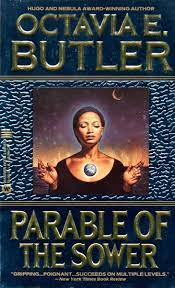 Lauren Olamina, the main character in Octavia Butler’s dystopian, frighteningly believable vision of the near future, Parable of the Sower. Lauren is a late teen who lives inside a gated community with her Baptist preacher father, family, and neighbors, sheltered from the increasing social chaos and anarchy caused by global climate change and economic crises that surrounds them. Precocious and hyperempathic, Lauren seeks throughout the novel to create a vision of human reality, as well as that which is greater than us, that encompasses the terrors that surround her. She calls this developing vision “Earthseed”—the fundamental truth of Earthseed is that the most basic truth of reality is change.
When asked in an interview about the sources of and influences on Lauren’s creation of Earthseed, Octavia Butler said the following:
I asked what was the most powerful force I could think of? What one thing could we not stop no matter how hard we tried? The answer I came up with after some thought was “change.” We can do a lot of things to influence the ongoing processes of change. We can focus them, alter their speed or impact, in general we can shape change, but we can’t stop it no matter how hard we try. Throughout the universe, the ongoing reality is change . . . Since change is the one inescapable truth, change is the basic clay of our lives. In order to live constructive lives, we must learn to shape change when we can and yield to it when we must. Either way, we must learn and teach, adapt and grow.
In her Earthseed notebook, Lauren writes that “As wind, as water, as fire, as life, God is both creative and destructive, demanding and yielding, sculptor and clay. God is Infinite Potential. God is Change.” This is not a personal God who responds to prayer or seeks relationship with human beings. But this is a God that can be shaped, although never controlled, by those who recognize that the only truth that we can depend on is that everything changes.
The Earthseed God is about as far from the traditional Christian notion of God which I grew up with as one can get. The Bible is full of reminders that God is dependable, that God never changes, that change is human—and therefore suspect and perhaps a result of human sin—but God is a solid rock to hang on to when things are unmanageable, an anchor in the stormy seas of life. The prophet Malachi puts it succinctly: I am the Lord, I change not. As is always the case, however, even with sacred texts, there is more to the story.
Lauren Olamina writes that we should “create no images of God. Accept the images that God has provided. The are everywhere, in everything . . . The universe is God’s self-portrait.” If we take that suggestion seriously, what might we conclude from careful observation of the world that God created? If the universe is God’s self-portrait, it is clear that God prefers change to stability, loves freedom and creativity, and favors novelty over the familiar. The very process of life guarantees continuing diversification and change. God also favors process over finality, risk over safety, and imperfection over perfection.
If one focuses on the stories provided in the Gospels rather than on the doctrines and dogmas that have been fashioned over the succeeding centuries, it is also clear that Jesus understood himself as an agent of radical change. The creators of “The Chosen,” a multi-year cinematic treatment of the life of Jesus that is five seasons in, have found interesting ways to embed this aspect of Jesus and his message in their various episodes. In the final episode of Season One, Jesus and his entourage (there are only seven or eight of them at this point) are off on their first road trip.
To the dismay of the disciples, Jesus chooses to go straight through Samaria. Samaritans and Jews hate each other for all sorts of reasons; accordingly, the disciples assume that they should walk a few extra miles and do an end run on Samaritan territory. But Jesus is insistent that, against all norms, they are going straight through Samaria (as it turns out, he wants to meet his appointment with the Samaritan woman at the well–which just happens to be the lectionary gospel for this coming Sunday). With slight annoyance, Jesus says that “If we’re going to have a question-and-answer session every time we do something you’re not used to, it’s going to be a very annoying time together for all of us.” On an almost daily basis, Jesus chooses to do and say things that stir up the waters, simply because “we’ve always done it this way” is the greatest obstacle to needed change.
In the same episode, Peter—who is already working hard to become Jesus’ favorite–complains about Jesus’ calling Matthew the tax collector to become part of His band of disciples. As Peter is protesting, Jesus reminds Peter that he wasn’t an obvious choice to be a disciple either. Peter responds, “But that’s different. Matthew is a tax collector.” Jesus turns to Peter and says, “Get used to different.”
Get used to different. That could have been the bumper sticker for the pandemic years, as each of us was forced out of our comfort zones and expectations in order to grapple on the fly with circumstances that no one was prepared for. I learned two things about change during the pandemic. First, I’m not as welcoming of change as I thought I was, and second, I’m more capable of change than I thought I was. I regularly urge my students to challenge old and comfortable assumptions, but this is more difficult in practice than in theory. As William James writes, “in the matter of belief, we are all extreme conservatives.”
Living Stones is the monthly seminar group I have led after the 10:00 service at Trinity for the past thirteen years. The group met on a biweekly basis on Zoom through the height of the pandemic, but a few of the regulars who are not tech-comfortable did not join in the remote sessions. As we compared notes during our first in-person seminar after eighteen months of doing it on Zoom, a woman to my right—a liberal and progressive person if I’ve ever met one—said bluntly “I hate change.” Most everyone in the room nodded in agreement. Change sucks, but is as inexorable as death and taxes. As Lauren Olamina writes in her Earthseed notebook, “All that you touch, you change. All that you change, changes you. The only lasting truth is change. God is change.”
Angels are iconic inhabitants of the spiritual realm, pervasive throughout sacred texts. If we take artistic renditions of angels seriously, they seem sweet, soft, cuddly, and pretty. But those are sanitized versions of the real angel stories. An angelic visitation in scripture is always a harbinger of change, an indication that your world is never going to be the same again. Angels never show up simply to announce that “everything’s fine and you’re on the right track—keep doing what you’re doing.” Angels are always the heralds of new beginnings, inviting us to adventure. Angels announce new departures and the beginning of something whose end is not in view. And the first thing the angel always says is that we don’t need to be afraid of change and disruption. “Don’t be afraid,” the angel says. “Get used to different,” Jesus says in “The Chosen.” As Jesus says in the final pages of Revelation, “Behold, I am doing a new thing.” For those wanting to have a relationship with what is greater than us, these are good things to remember.
Previous Post
March 1, 2026
God So Loved The World
Next Post

March 6, 2026 I'm turning the big 7-0! Here are some thoughts . . .
Recent Comments
"Mary did have a choice. And she was able to make it before the Holy ..."
"i cannot read beyond your recommendations for the books since i like to have a ..."
"AI will never be able to utter with honesty, feeling, or humility, the greeting: "Namaste".It ..."
"They do. I'm sure you could find discussions of the same topic from any of ..."
Browse Our Archives
Select a Category abortion Advent AI Angels Artificial intelligence atheism attention baptism Baptists beauty belief Benedictines Bible bicycling Big Bird books Bovina Camaldoli hermitage Canada Catholicism cats certainty change Christianity Christmas Collegeville Covid-19 creativity Development of Western Civilization dogs doubt Easter Enneagram Epiphany Episcopal ethics Eucharist evil extroverts Facebook faith family fear flowers forgiveness freedom friends God goodness grace happiness heaven hell history Holy Spirit Holy Week hope human nature humility humor idolatry incarnation introverts irreverence Islam Jeanne Jesus Joe Biden joy Judaism justice Kamala Harris knowledge Lent listen literature liturgy love Marsue Memorial Day miracles movies music mystery mythology NPR Old Testament optimism paradox peace Penguins philosophy piano podcast politics power prayer Protestantism Providence College Religion Rhode Island sabbatical sacrament science seeing silence Simone Weil Socrates soul sports St. John's College stories suffering tattoo teaching technology television theology thinking time tolerance transcendence travel trees trust truth Uncategorized Vermont wisdom wonder writing
Select a Month May 2026 April 2026 March 2026 February 2026 January 2026 December 2025 November 2025 October 2025 September 2025 August 2025 July 2025 June 2025 May 2025 April 2025 March 2025 February 2025 January 2025 December 2024 November 2024 October 2024 September 2024 August 2024 July 2024 June 2024 May 2024 April 2024 March 2024 February 2024 January 2024 December 2023 November 2023 October 2023 September 2023 August 2023 July 2023 June 2023 May 2023 April 2023 March 2023 February 2023 January 2023 December 2022 November 2022 October 2022 September 2022 August 2022 July 2022 June 2022 May 2022 April 2022 March 2022 February 2022 January 2022 December 2021 November 2021 October 2021 September 2021 August 2021 July 2021 June 2021 May 2021 April 2021 March 2021 February 2021 January 2021 December 2020 November 2020 October 2020 September 2020 August 2020 July 2020 June 2020 May 2020 April 2020 March 2020 February 2020 January 2020 December 2019 November 2019 October 2019 September 2019 August 2019 July 2019 June 2019 May 2019 April 2019 March 2019 February 2019 January 2019 December 2018 November 2018 October 2018 September 2018 August 2018 July 2018 June 2018 May 2018 April 2018 March 2018 February 2018 January 2018 December 2017 November 2017 October 2017 September 2017 August 2017 July 2017 June 2017 May 2017 April 2017 March 2017 February 2017 January 2017 December 2016 November 2016 October 2016 September 2016 August 2016 July 2016 June 2016 May 2016 April 2016 March 2016 February 2016 January 2016 December 2015 November 2015 October 2015 September 2015 August 2015 July 2015 June 2015 May 2015 April 2015 March 2015 February 2015 January 2015 December 2014 November 2014 October 2014 September 2014 August 2014 July 2014 June 2014 May 2014 April 2014 March 2014 February 2014 January 2014 December 2013 November 2013 October 2013 September 2013 August 2013 July 2013 June 2013 May 2013 April 2013 March 2013 February 2013 January 2013 December 2012 November 2012 October 2012 September 2012
Follow Us!
TAKE THE
Religious Wisdom Quiz
Which of their sons did Adam and Eve lose first?
Select your answer to see how you score.
Japheth Seth Cain Abel
Books by This Author Books by Vance G. Morgan
Related posts from Freelance Christianity

The Lonely Pawn: On Faith, Doubt, and Meaning


AI and Love: When a Chatbot Becomes a...

TRENDING AT PATHEOS Progressive Christian

What Being a Modern-Day Apostle Means to Me
In my last column, I discussed the ins and outs of modern-day...

Did Ancient China Once Worship the God of...
Across human history, a common thread weaves through the origins of the...

Love Your Neighbor – Including Earth-Kin: Lev. 19,...
God’s command to love your neighbor means acting in an ethical and...

Lead a Church Study of “Jesus and Lao...
Guest writer Jack Thomas (The Irreverent Reverend) reflects on leading his church...

Pastoral Wisdom for Responding to Sermon Pushback
Getting sermon pushback on your social justice sermon? Learn practical, Proverbs-based strategies...

Principles for Understanding the Apostolic Ministry Today
Whenever people discover that my formal ministry title is "apostle," as in...
view all Progressive Christian blogs
What Are Your Thoughts?leave a comment
Ad-Free & Subscriber Log-In Subscription Support
- About Us
- 2026 Calendar
- Videos
- Podcasts
- Library of World Religions
- Faith In Media Tracker
- Advertise With Us
- Write for Us
- Privacy Policy
- Terms of Service
- Do Not Sell My Data
- Contact Us
- Radiant Digital
- Manage Newsletter Subscriptions
- Unsubscribe From Notifications
- Sitemap
Copyright 2008-2026, Patheos. All rights reserved.
Subscription Support Ad-Free & Subscriber Log-In
Follow Patheos