
BuddhistCatholicContemplativeEvangelicalGeneral ChristianHinduJewishLatter-day SaintMuslimNew VisionsProgressive Christian
Beliefs
- Buddhist
- Catholic
- Contemplative
- Evangelical
- General Christian
- Hindu
- Jewish
- Latter-day Saint
- More Voices
- Muslim
- New Visions
- Pagan
- Progressive Christian
Topics
- Religion News
- Food and Religion
- Sports and Religion
- Religious Art
- Religious Music and Entertainment
- Religious Events
- History and Religion
- Style and Religion
- Politics and Religion
- Women in Religion
- Recreation Outdoors and Religion
- Business Finance and Religion
- Careers Workplace and Religion
- Education and Religion
- Family Parenting and Religion
- Health Fitness and Religion
- Home and Religion
- Relationships and Religion
- Technology and Religion
- Travel and Religion
Columnists
- Buddhist Columnists
- Business Finance and Religion Columnists
- Careers Workplace and Religion Columnists
- Catholic Columnists
- Contemplative Columnists
- Education and Religion Columnists
- Evangelists Columnists
- Family Parenting and Religion Columnists
- General Christian Columnists
- Health Fitness and Religion Columnists
- Hindu Columnists
- History and Religion Columnists
- Home and Religion Columnists
- Jewish Columnists
- More Voices Columnists
- Latter Day Columnists
- Muslim Columnists
- New Visions Columnists
- Nonreligious Columnists
- Pagan Columnists
- Politics and Religion Columnists
- Progressive Columnists
- Recreation Outdoors and Religion Columnists
- Relationships and Religion Columnists
- Religion News Columnists
- Religious Art Columnists
- Religious Events Columnists
- Religious Music and Entertainment Columnists
- Sports and Religion Columnists
- Style and Religion Columnists
- Technology and Religion Columnists
- Travel and Religion Columnists
- Women in Religion Columnists
Resource Library
- 2026 Calendar
- Library of World Religions
- The 100 Most Holy Places on Earth
- Patheos Answers
- Podcasts
- Videos
- Faith Leaders Database
- Anglican Episcopalian
- Bahai
- Baptist
- Buddhism
- Christianity
- Confucianism
- Eastern Orthodoxy
- Hinduism
- Holiness and Pentecostal
- ISKCON
- Islam
- Judaism
- Lutheran
- Methodist
- The Church of Jesus Christ of Latter-day Saints
- New Age
- Paganism
- Presbytarian and Reformed
- Protestantism
- Religion Behind the Scenes
- Roman Catholic
- Scientology
- Shia Islam
- Sikhism
- Sufism
- Sunni Islam
- Taoism
- Zen
- See all religions
Research Tools
 Ad-Free & Subscriber Log-In Subscription Support
Ad-Free & Subscriber Log-In Subscription Support
Follow Patheos 

- Trending:
- Forgiveness
- |
- Marriage
- |
- Consciousness
- |
- Death Penalty
- |
- Election
- |
- Halloween

- Home
- Progressive Christian
- An Evolving Faith: It’s About Survival, not Progress
An Evolving Faith: It’s About Survival, not Progress
Last updated on: May 17, 2022 at 6:00 am by Vance Morgan
An Evolving Faith: It’s About Survival, not Progress 2022-05-12T14:27:41-04:00 Vance Morgan
Patheos Explore the world's faith through different perspectives on religion and spirituality! Patheos has the views of the prevalent religions and spiritualities of the world.
To everything there is a season, and a time for every purpose under heaven. Ecclesiastes and The Byrds
Now that the Spring 2022 semester is in the books, in keeping with President Josiah Bartlett’s example from “The West Wing,” I immediately find myself asking “What’s next?” At my college, courses and teaching assignments are planned at least a year in advance, so “what’s next?” requires remembering what I have committed myself to (and forgotten about) over the past weeks and months. One good piece of news is that I’ll be teaching one of my favorite courses next spring, a course that if forced to choose from among many favorites, is the one that I would identify as my “signature course.”
I will be teaching “Beauty and Violence: The Problem of Natural Evil” for the fourth or fifth time, the first time in three years. It is an Honors colloquium, an exploration of what we might be able to say about what is greater than us through close observation and study of the natural world. My students, the majority of whom are products of parochial school education, and most of whom are likely to be non-humanities majors, found on a weekly basis that the God they were taught to believe in simply does not square very well with what we find in front of our faces.
The last time around, my students and I considered texts by theologians, biologists, philosophers, novelists, and a couple of people who cannot be categorized, with a Jesuit paleontologist, a Benedictine nun, and an Anglican physicist thrown in for good measure. My kind of course, in other words—I had a ball, and the students (per their comments in class and on discussion forums) had their minds blown. Our connecting theme was the following question: From careful observation of the natural world, what might we intelligently speculate concerning what or who put it in place?
About halfway through the course, we will spend two weeks or so with one of my favorite guys—Charles Darwin. An octogenarian Benedictine monk who spent his professional career as a high school physics teacher once told me that “Darwin has taught us more about God than all of the theologians put together.” With that in mind, a few years ago I imagined what a conversation between Darwin and God might be like—it is one of the ten most popular essays in the history of this blog.
How might the notion of evolution inform the person of faith? The final author in my recently concluded “Faith and Doubt” colloquium was Rachel Held Evans. Along with a few close friends and colleagues, she was a co-founder of “Evolving Faith,” an organization whose website says it “exists to cultivate love and hope in the wilderness, pointing fellow wanderers and misfits to God as we embody resurrection fo/r the sake of the world.” Rachel Held Evans gave the opening talk at the inaugural Evolving Faith conference in the fall of 2018, just a few short months before her untimely and tragic death in the spring of 2019.
Evans’ talk was titled “Evolution and Apocalypse.” She spends some time early on talking about her obsession with the BBC series “Planet Earth,” narrated by David Attenborough, whose story-telling gifts she likens to being “curled up in the lap of Bilbo Baggins, as he tells you all these wonderful stories about, like, the mating habits of tree frogs and bat poop and all kinds of stuff.”
One of the “Planet Earth” episodes focuses on the cave angelfish, a very rare creature found primarily in remote caves in Thailand. Cave angelfish are highly specialized creatures who have adapted to life in cave waterfalls. Evans describes them as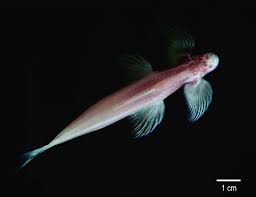
[U]gly as sin. They are slimy and pale and kind of worm-like. They don’t have any eyes. And they spend their days clinging to the walls of these caves; they can kind of feed on the bacteria that’s just rushing down into their face, which sounds cool, actually.
Whatever caused the ancestors of the cave angelfish to migrate to caves millions of years ago, they have adapted to a very harsh environment. While losing their skin pigment and their sense of sight, other sensory functions have improved. They even developed little microscopic hooks in their fins that allow them to cling to the walls of these caves like little bats.
And what on earth do these “ugly as sin” marvels of the evolutionary process have to do with faith? Rachel Held Evans continues.
When we first announced the Evolving Faith conference,, a lot of people asked me, What do you mean by evolving? You know, are you saying that your faith is more evolved or more mature, more enlightened, than others? And it’s funny because when I think about evolving faith, I don’t think about enlightenment or maturity or some kind of spiritual superiority. I think about survival. I think about those god-ugly angelfish clinging to the walls of that cave.
A living faith, like any living creature, must be—first and foremost—adaptable to often radically changing conditions. The strongest, fastest, or smartest are not guaranteed to survive; rather, those organisms that are capable of change are most likely to make it to the next day, century, millennium, or eon.
An evolving faith is one that survives by adapting to change: change in circumstances, change in the culture, change in one’s own heart and mind, change in relationships . . . An evolving faith can survive those things precisely because it can adapt to change, because it embraces those seasons of tearing down and building up, of planting and uprooting, of death and resurrection.
At some point during my upcoming “Beauty and Violence” semester I will ask my students a question that God asks Darwin in my imaginary conversation fueled by adult beverages:
God: Forget for a minute everything you’ve ever been told about what I’m like and start over. Let’s suppose that your theory of evolution by natural selection is largely correct (it is, by the way). On the basis of what that theory tells you about the world, what might you speculate about me?
Darwin: My first guess is that you like change more than stability, and novelty more than the familiar . . . I’d guess you also favor process over finality and imperfection over perfection . . . Most importantly, you apparently are committed to freedom and creativity above everything else—not just in human beings, but in everything. Within very broad parameters, life never stops recreating itself in new forms.
If the evolution/faith metaphor works, persons of faith should expect that similar characteristics will mark a vibrant and evolving faith. Change, novelty, process, freedom, and creativity are all in play. To be honest, that’s about as far from the faith I was handed in my youth as one could possibly get. And that’s a very good thing. I conclude with Rachel Held Evans’ closing prayer at her talk:
As we tend to the vulnerable things together, may the God of every season, the God of cave angelfish and autumn leaves, the God of survival and if not survival then death and resurrection, bless, preserve, and keep you, now and forever. Amen.
Previous Post
May 14, 2022
A Story About Learning to See Things Differently
Next Post

May 19, 2022 Making Darkness and Silence your Friends
Browse Our Archives
Select a Category abortion Advent AI Angels Artificial intelligence atheism attention baptism Baptists beauty belief Benedictines Bible bicycling Big Bird books Bovina Camaldoli hermitage Canada Catholicism cats certainty change Christianity Christmas Collegeville Covid-19 creativity Development of Western Civilization dogs doubt Easter Enneagram Epiphany Episcopal ethics Eucharist evil extroverts Facebook faith family fear flowers forgiveness freedom friends God goodness grace happiness heaven hell history Holy Spirit Holy Week hope human nature humility humor idolatry incarnation introverts irreverence Islam Jeanne Jesus Joe Biden joy Judaism justice Kamala Harris knowledge Lent listen literature liturgy love Marsue Memorial Day miracles movies music mystery mythology NPR Old Testament optimism paradox peace Penguins philosophy piano podcast politics power prayer Protestantism Providence College Religion Rhode Island sabbatical sacrament science seeing silence Simone Weil Socrates soul sports St. John's College stories suffering tattoo teaching technology television theology thinking time tolerance transcendence travel trees trust truth Uncategorized Vermont wisdom wonder writing
Select a Month May 2026 April 2026 March 2026 February 2026 January 2026 December 2025 November 2025 October 2025 September 2025 August 2025 July 2025 June 2025 May 2025 April 2025 March 2025 February 2025 January 2025 December 2024 November 2024 October 2024 September 2024 August 2024 July 2024 June 2024 May 2024 April 2024 March 2024 February 2024 January 2024 December 2023 November 2023 October 2023 September 2023 August 2023 July 2023 June 2023 May 2023 April 2023 March 2023 February 2023 January 2023 December 2022 November 2022 October 2022 September 2022 August 2022 July 2022 June 2022 May 2022 April 2022 March 2022 February 2022 January 2022 December 2021 November 2021 October 2021 September 2021 August 2021 July 2021 June 2021 May 2021 April 2021 March 2021 February 2021 January 2021 December 2020 November 2020 October 2020 September 2020 August 2020 July 2020 June 2020 May 2020 April 2020 March 2020 February 2020 January 2020 December 2019 November 2019 October 2019 September 2019 August 2019 July 2019 June 2019 May 2019 April 2019 March 2019 February 2019 January 2019 December 2018 November 2018 October 2018 September 2018 August 2018 July 2018 June 2018 May 2018 April 2018 March 2018 February 2018 January 2018 December 2017 November 2017 October 2017 September 2017 August 2017 July 2017 June 2017 May 2017 April 2017 March 2017 February 2017 January 2017 December 2016 November 2016 October 2016 September 2016 August 2016 July 2016 June 2016 May 2016 April 2016 March 2016 February 2016 January 2016 December 2015 November 2015 October 2015 September 2015 August 2015 July 2015 June 2015 May 2015 April 2015 March 2015 February 2015 January 2015 December 2014 November 2014 October 2014 September 2014 August 2014 July 2014 June 2014 May 2014 April 2014 March 2014 February 2014 January 2014 December 2013 November 2013 October 2013 September 2013 August 2013 July 2013 June 2013 May 2013 April 2013 March 2013 February 2013 January 2013 December 2012 November 2012 October 2012 September 2012
Follow Us!
TAKE THE
Religious Wisdom Quiz
I made a rash vow that cost me my only child after a military victory. Who am I?
Select your answer to see how you score.
Gideon Barak Samson Jephthah
Books by This Author Books by Vance G. Morgan
Related posts from Freelance Christianity

The Lonely Pawn: On Faith, Doubt, and Meaning


AI and Love: When a Chatbot Becomes a...

TRENDING AT PATHEOS Progressive Christian

Why Christians Have a Sacred Duty to Vote:...
The Bible offers strong support for the sacred duty to vote. Here...

What Being a Modern-Day Apostle Means to Me
In my last column, I discussed the ins and outs of modern-day...

Did Ancient China Once Worship the God of...
Across human history, a common thread weaves through the origins of the...

Love Your Neighbor – Including Earth-Kin: Lev. 19,...
God’s command to love your neighbor means acting in an ethical and...

Lead a Church Study of “Jesus and Lao...
Guest writer Jack Thomas (The Irreverent Reverend) reflects on leading his church...

Principles for Understanding the Apostolic Ministry Today
Whenever people discover that my formal ministry title is "apostle," as in...
view all Progressive Christian blogs
Ad-Free & Subscriber Log-In Subscription Support
- About Us
- 2026 Calendar
- Videos
- Podcasts
- Library of World Religions
- Faith In Media Tracker
- Advertise With Us
- Write for Us
- Privacy Policy
- Terms of Service
- Do Not Sell My Data
- Contact Us
- Radiant Digital
- Manage Newsletter Subscriptions
- Unsubscribe From Notifications
- Sitemap
Copyright 2008-2026, Patheos. All rights reserved.
Subscription Support Ad-Free & Subscriber Log-In
Follow Patheos