
BuddhistCatholicContemplativeEvangelicalGeneral ChristianHinduJewishLatter-day SaintMuslimNew VisionsProgressive Christian
Beliefs
- Buddhist
- Catholic
- Contemplative
- Evangelical
- General Christian
- Hindu
- Jewish
- Latter-day Saint
- More Voices
- Muslim
- New Visions
- Pagan
- Progressive Christian
Topics
- Religion News
- Food and Religion
- Sports and Religion
- Religious Art
- Religious Music and Entertainment
- Religious Events
- History and Religion
- Style and Religion
- Politics and Religion
- Women in Religion
- Recreation Outdoors and Religion
- Business Finance and Religion
- Careers Workplace and Religion
- Education and Religion
- Family Parenting and Religion
- Health Fitness and Religion
- Home and Religion
- Relationships and Religion
- Technology and Religion
- Travel and Religion
Columnists
- Buddhist Columnists
- Business Finance and Religion Columnists
- Careers Workplace and Religion Columnists
- Catholic Columnists
- Contemplative Columnists
- Education and Religion Columnists
- Evangelists Columnists
- Family Parenting and Religion Columnists
- General Christian Columnists
- Health Fitness and Religion Columnists
- Hindu Columnists
- History and Religion Columnists
- Home and Religion Columnists
- Jewish Columnists
- More Voices Columnists
- Latter Day Columnists
- Muslim Columnists
- New Visions Columnists
- Nonreligious Columnists
- Pagan Columnists
- Politics and Religion Columnists
- Progressive Columnists
- Recreation Outdoors and Religion Columnists
- Relationships and Religion Columnists
- Religion News Columnists
- Religious Art Columnists
- Religious Events Columnists
- Religious Music and Entertainment Columnists
- Sports and Religion Columnists
- Style and Religion Columnists
- Technology and Religion Columnists
- Travel and Religion Columnists
- Women in Religion Columnists
Resource Library
- 2026 Calendar
- Library of World Religions
- The 100 Most Holy Places on Earth
- Patheos Answers
- Podcasts
- Videos
- Faith Leaders Database
- Anglican Episcopalian
- Bahai
- Baptist
- Buddhism
- Christianity
- Confucianism
- Eastern Orthodoxy
- Hinduism
- Holiness and Pentecostal
- ISKCON
- Islam
- Judaism
- Lutheran
- Methodist
- The Church of Jesus Christ of Latter-day Saints
- New Age
- Paganism
- Presbytarian and Reformed
- Protestantism
- Religion Behind the Scenes
- Roman Catholic
- Scientology
- Shia Islam
- Sikhism
- Sufism
- Sunni Islam
- Taoism
- Zen
- See all religions
Research Tools
 Ad-Free & Subscriber Log-In Subscription Support
Ad-Free & Subscriber Log-In Subscription Support
Follow Patheos 

- Trending:
- Forgiveness
- |
- Marriage
- |
- Consciousness
- |
- Death Penalty
- |
- Election
- |
- Halloween

- Home
- Progressive Christian
- American Airlines 4395, Bombing Raids Over Germany, and a Spark of the Divine
American Airlines 4395, Bombing Raids Over Germany, and a Spark of the Divine
Last updated on: January 19, 2020 at 7:00 am by Vance Morgan
American Airlines 4395, Bombing Raids Over Germany, and a Spark of the Divine 2020-01-17T15:51:20-04:00 Vance Morgan
Patheos Explore the world's faith through different perspectives on religion and spirituality! Patheos has the views of the prevalent religions and spiritualities of the world.
Perhaps a novel whose main character is the squadron leader for World War II bombing raids over Germany was not the best reading material while flying from Charleston, SC to Philadelphia on the way back home to Providence a few days ago. But that’s what I found myself doing sitting in first class (the $70 for the upgrade was more than worth it). It got me to thinking about war, fate, and both the worst and best that human beings can be.
The novel is A God in Ruins by Kate Atkinson, the sequel of sorts to her best-selling Life After Life (but A God in Ruins could be read on its own). Although as different as they could possibly be, the two novels are a compelling account of several generations of the Todd family in England through the twists and turns of the twentieth and early twenty-first centuries; Life after Life following the multiple-lived (you need to read it!) Ursula, and A God in Ruins tracking the single life of her younger brother, Teddy. I will provide as few spoilers as possible below—Kate Atkinson is one of the most creative and compelling novelists of our time; if you haven’t encountered her, start now!
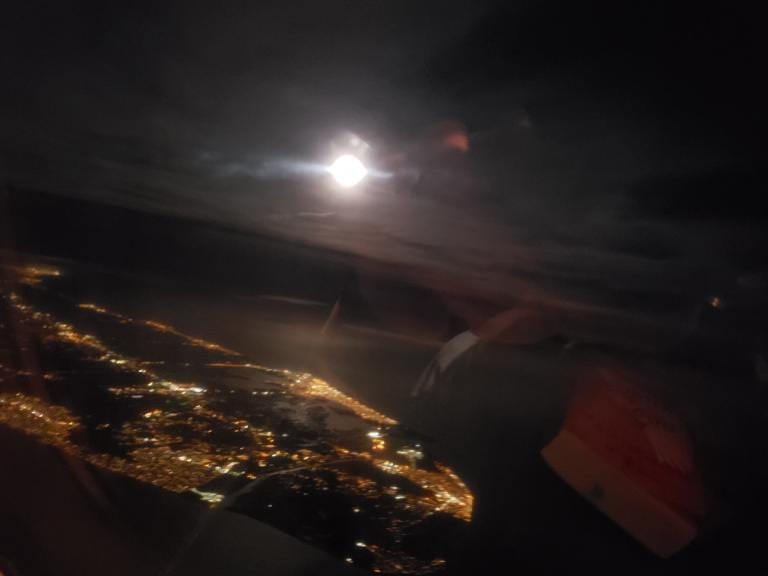
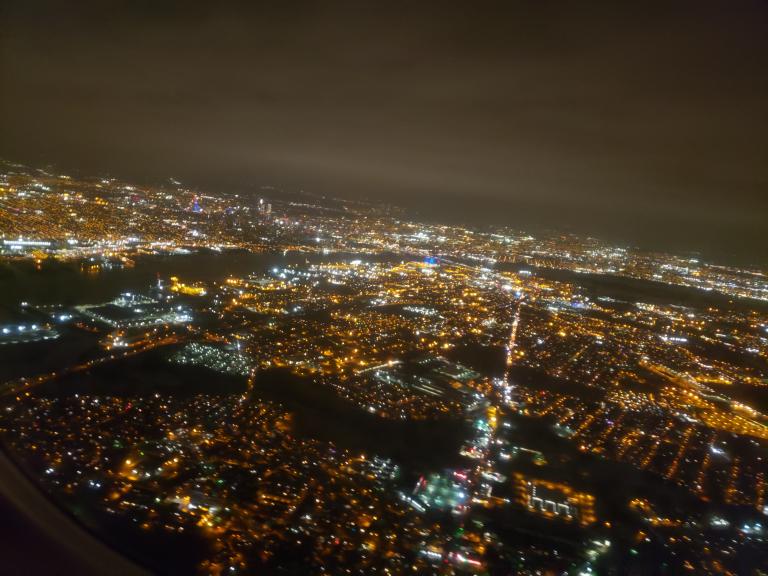
World War II as experienced and fought by the British is central to both novels. Much of A God in Ruins is dedicated to Teddy’s experiences as a RAF Squadron Leader, flying dozens of bombing raids against Germany. In the middle of reading a harrowing account of one of these raids on Berlin amidst enemy fire, I looked out the window of my own airplane, first struck by the calm of a nocturnal landscape below illuminated by an almost-full moon and then, ten minutes or so later, the slowly emerging lights of Philadelphia, I imagined that this must be something like what the cities of Germany looked like from above.
Although Teddy’s planes are shot at on more than one occasion, killing some of his crew members and causing him to have to crash land his bomber twice, once in the English Channel and once at his base in Yorkshire, he recognizes that raining death down from several thousand feet altitude is a particularly morally ambiguous form of warfare. During the early years of the war, he believed the propaganda that he was fed from his superiors: Germany started it, and we have to finish it; your bombs are being dropped on exclusively military targets; great care is being taken to avoid “collateral damage;” you are fighting for the freedom of future generations and the preservation of civilization, and so on. He incrementally, and after the war fully, learns that the bombing raids he participated in had created firestorms and that the raids had been sent directly to residential districts.
People were boiled in fountains and baked in cellars. They were burnt alive or suffocated, they were reduced to ash or melted fat. They were trapped like flies on flypaper as they tried to cross the molten tarmac of the streets where they lived . . . Gomorrah. Armageddon. An Old Testament God of spite and vengeance . . . Hamburg wasn’t a turning point, it was a staging post. In the end it led to Tokyo, it led to Hiroshima. At least Cain had to look at Abel’s face.
Next Tuesday in my “Apocalypse” colloquium, we will be discussing John Hersey’s classic Hiroshima, a “you are there” account of similar indiscriminate destruction, similarly justified because those who dropped the bomb believed themselves to be on the side of the angels.
During a short leave, Teddy spends an evening with his big sister Ursula in London; Ursula spends the war in London as a cog in the bureaucratic machine during the day and as a member of a rescue squad putting out fires and helping victims of German bombing raids by night. In the evening they attend a concert, a performance of Beethoven’s Ninth Symphony (no irony there!). As they wait for the music to begin, Ursula reflects on the Friedrich Schiller text that they will soon hear, set to immortal music by Beethoven.
Alle Menschen werden Brüder. Do you think it’s possible? One day? That all men could be brothers one day? People—by which I largely mean men—have been killing each other since time began . . . We’re all primitives underneath, that’s why we had to invent God, to be the voice of our conscience, or we would be killing each other left, right and centre.
To which Teddy replies, “I think that’s what we are doing.”
After the performance, one so transcendent that, toward the end of the final choral movement, Teddy “had the odd sensation that he might actually hold on to his sister to prevent her rising into the air and taking flight,” Ursula and her brother leave the concert hall silently.
“Numinous,” Ursula said, breaking the silence eventually. “There’s a spark of the divine in the world—not God, we’re done with God, but something. Is it love? Not silly romantic love, but something more profound . . . ?’
“I think it’s perhaps something we don’t have a name for,” Teddy said. “We want to name everything. Perhaps that’s where we’ve gone wrong.”
“’And whatsoever Adam called every living creature, that was the name thereof.’ Having dominion over everything has been a terrible curse.”
I like the suggestion that the obsession with naming things, with nailing them down and building boundaries around them, is far more likely to be damaging than to be helpful. Perhaps it is best to recognize the existence of “a spark of the divine” all around and in us without systematizing it further.
Ursula’s reflection reminds me of something I read many years ago from novelist Dorothy Allison, something that has stuck with me ever since.
There is a place where we are always alone with our own mortality, where we must simply have something greater than ourselves to hold onto—God or history or politics or literature or a belief in the healing power of love, or even righteous anger. Sometimes I think they are all the same. A reason to believe, a way to take the world by the throat and insist that there is more to this life than we have ever imagined.
I agree. Although I believe that our desire for the transcendent, for something greater than us that has redemptive value, is itself partial proof of the existence of that very something greater than us—I call it the divine—I am convinced that this desire for the divine can be addressed in many ways–there is no “one size fits all.” During his next bombing raid, Teddy remembers his conversation with Ursula.
Afterwards . . . he resolved that he would try always to be kind. It was the best he could do. It was all that he could do. And it might be love, after all.
If God is love, then being kind in the face of daily temptations to be otherwise is to bring the divine into the world.
Previous Post

January 16, 2020
Best of 2019 #3: When Christianity Becomes an Angry and Fearful Faith
Next Post

January 20, 2020 Some thoughts on Martin Luther King, Jr. Day: Are we better than this?
Browse Our Archives
Select a Category abortion Advent AI Angels Artificial intelligence atheism attention baptism Baptists beauty belief Benedictines Bible bicycling Big Bird books Bovina Camaldoli hermitage Canada Catholicism cats certainty change Christianity Christmas Collegeville Covid-19 creativity Development of Western Civilization dogs doubt Easter Enneagram Epiphany Episcopal ethics Eucharist evil extroverts Facebook faith family fear flowers forgiveness freedom friends God goodness grace happiness heaven hell history Holy Spirit Holy Week hope human nature humility humor idolatry incarnation introverts irreverence Islam Jeanne Jesus Joe Biden joy Judaism justice Kamala Harris knowledge Lent listen literature liturgy love Marsue Memorial Day miracles movies music mystery mythology NPR Old Testament optimism paradox peace Penguins philosophy piano podcast politics power prayer Protestantism Providence College Religion Rhode Island sabbatical sacrament science seeing silence Simone Weil Socrates soul sports St. John's College stories suffering tattoo teaching technology television theology thinking time tolerance transcendence travel trees trust truth Uncategorized Vermont wisdom wonder writing
Select a Month May 2026 April 2026 March 2026 February 2026 January 2026 December 2025 November 2025 October 2025 September 2025 August 2025 July 2025 June 2025 May 2025 April 2025 March 2025 February 2025 January 2025 December 2024 November 2024 October 2024 September 2024 August 2024 July 2024 June 2024 May 2024 April 2024 March 2024 February 2024 January 2024 December 2023 November 2023 October 2023 September 2023 August 2023 July 2023 June 2023 May 2023 April 2023 March 2023 February 2023 January 2023 December 2022 November 2022 October 2022 September 2022 August 2022 July 2022 June 2022 May 2022 April 2022 March 2022 February 2022 January 2022 December 2021 November 2021 October 2021 September 2021 August 2021 July 2021 June 2021 May 2021 April 2021 March 2021 February 2021 January 2021 December 2020 November 2020 October 2020 September 2020 August 2020 July 2020 June 2020 May 2020 April 2020 March 2020 February 2020 January 2020 December 2019 November 2019 October 2019 September 2019 August 2019 July 2019 June 2019 May 2019 April 2019 March 2019 February 2019 January 2019 December 2018 November 2018 October 2018 September 2018 August 2018 July 2018 June 2018 May 2018 April 2018 March 2018 February 2018 January 2018 December 2017 November 2017 October 2017 September 2017 August 2017 July 2017 June 2017 May 2017 April 2017 March 2017 February 2017 January 2017 December 2016 November 2016 October 2016 September 2016 August 2016 July 2016 June 2016 May 2016 April 2016 March 2016 February 2016 January 2016 December 2015 November 2015 October 2015 September 2015 August 2015 July 2015 June 2015 May 2015 April 2015 March 2015 February 2015 January 2015 December 2014 November 2014 October 2014 September 2014 August 2014 July 2014 June 2014 May 2014 April 2014 March 2014 February 2014 January 2014 December 2013 November 2013 October 2013 September 2013 August 2013 July 2013 June 2013 May 2013 April 2013 March 2013 February 2013 January 2013 December 2012 November 2012 October 2012 September 2012
Follow Us!
TAKE THE
Religious Wisdom Quiz
What did the Israelites eat in the wilderness?
Select your answer to see how you score.
Manna Bread and fish Grapes and figs Honey and milk
Books by This Author Books by Vance G. Morgan
Related posts from Freelance Christianity

The Lonely Pawn: On Faith, Doubt, and Meaning


AI and Love: When a Chatbot Becomes a...

TRENDING AT PATHEOS Progressive Christian

Why Christians Have a Sacred Duty to Vote:...
The Bible offers strong support for the sacred duty to vote. Here...

What Being a Modern-Day Apostle Means to Me
In my last column, I discussed the ins and outs of modern-day...

Did Ancient China Once Worship the God of...
Across human history, a common thread weaves through the origins of the...

Love Your Neighbor – Including Earth-Kin: Lev. 19,...
God’s command to love your neighbor means acting in an ethical and...

Lead a Church Study of “Jesus and Lao...
Guest writer Jack Thomas (The Irreverent Reverend) reflects on leading his church...

Principles for Understanding the Apostolic Ministry Today
Whenever people discover that my formal ministry title is "apostle," as in...
view all Progressive Christian blogs
Ad-Free & Subscriber Log-In Subscription Support
- About Us
- 2026 Calendar
- Videos
- Podcasts
- Library of World Religions
- Faith In Media Tracker
- Advertise With Us
- Write for Us
- Privacy Policy
- Terms of Service
- Do Not Sell My Data
- Contact Us
- Radiant Digital
- Manage Newsletter Subscriptions
- Unsubscribe From Notifications
- Sitemap
Copyright 2008-2026, Patheos. All rights reserved.
Subscription Support Ad-Free & Subscriber Log-In
Follow Patheos