
BuddhistCatholicContemplativeEvangelicalGeneral ChristianHinduJewishLatter-day SaintMuslimNew VisionsProgressive Christian
Beliefs
- Buddhist
- Catholic
- Contemplative
- Evangelical
- General Christian
- Hindu
- Jewish
- Latter-day Saint
- More Voices
- Muslim
- New Visions
- Pagan
- Progressive Christian
Topics
- Religion News
- Food and Religion
- Sports and Religion
- Religious Art
- Religious Music and Entertainment
- Religious Events
- History and Religion
- Style and Religion
- Politics and Religion
- Women in Religion
- Recreation Outdoors and Religion
- Business Finance and Religion
- Careers Workplace and Religion
- Education and Religion
- Family Parenting and Religion
- Health Fitness and Religion
- Home and Religion
- Relationships and Religion
- Technology and Religion
- Travel and Religion
Columnists
- Buddhist Columnists
- Business Finance and Religion Columnists
- Careers Workplace and Religion Columnists
- Catholic Columnists
- Contemplative Columnists
- Education and Religion Columnists
- Evangelists Columnists
- Family Parenting and Religion Columnists
- General Christian Columnists
- Health Fitness and Religion Columnists
- Hindu Columnists
- History and Religion Columnists
- Home and Religion Columnists
- Jewish Columnists
- More Voices Columnists
- Latter Day Columnists
- Muslim Columnists
- New Visions Columnists
- Nonreligious Columnists
- Pagan Columnists
- Politics and Religion Columnists
- Progressive Columnists
- Recreation Outdoors and Religion Columnists
- Relationships and Religion Columnists
- Religion News Columnists
- Religious Art Columnists
- Religious Events Columnists
- Religious Music and Entertainment Columnists
- Sports and Religion Columnists
- Style and Religion Columnists
- Technology and Religion Columnists
- Travel and Religion Columnists
- Women in Religion Columnists
Resource Library
- 2026 Calendar
- Library of World Religions
- The 100 Most Holy Places on Earth
- Patheos Answers
- Podcasts
- Videos
- Faith Leaders Database
- Anglican Episcopalian
- Bahai
- Baptist
- Buddhism
- Christianity
- Confucianism
- Eastern Orthodoxy
- Hinduism
- Holiness and Pentecostal
- ISKCON
- Islam
- Judaism
- Lutheran
- Methodist
- The Church of Jesus Christ of Latter-day Saints
- New Age
- Paganism
- Presbytarian and Reformed
- Protestantism
- Religion Behind the Scenes
- Roman Catholic
- Scientology
- Shia Islam
- Sikhism
- Sufism
- Sunni Islam
- Taoism
- Zen
- See all religions
Research Tools
 Ad-Free & Subscriber Log-In Subscription Support
Ad-Free & Subscriber Log-In Subscription Support
Follow Patheos 

- Trending:
- Forgiveness
- |
- Marriage
- |
- Consciousness
- |
- Death Penalty
- |
- Election
- |
- Halloween

- Home
- Progressive Christian
- Am I My Neighbor’s Keeper?
Am I My Neighbor’s Keeper?
Last updated on: November 9, 2018 at 7:00 am by Vance Morgan
Am I My Neighbor’s Keeper? 2018-11-07T21:05:08-04:00 Vance Morgan
Patheos Explore the world's faith through different perspectives on religion and spirituality! Patheos has the views of the prevalent religions and spiritualities of the world.
Thanks to the caravan of refugees moving north, President Trump’s choice to stoke up fears about their impending “invasion” in the days before Tuesday’s midterm elections, and the results of those elections, “Who is my neighbor?” continues to be on my mind as it has been for my last two posts. Just to be clear–any apparent political agenda accompanying what I say below is simply an unintended (but real) result of my understanding of my commitment to my Christian faith. As I often say, I am a liberal because I am a Christian (not the other way around).
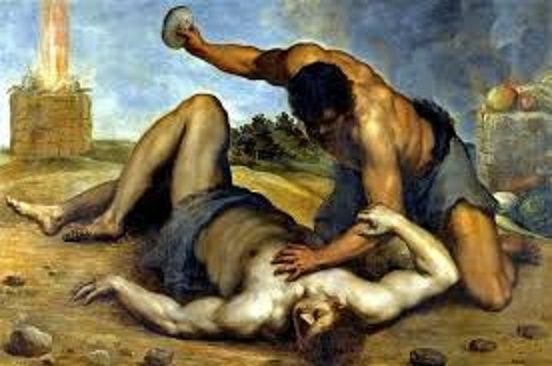
During his very brief stint working in the White House last year, Anthony Scaramucci described his relationship with Reince Priebus by saying that “We are a little bit like brothers where we rough each other up once in a while, which is totally normal for brothers. Some brothers are like Cain and Abel.” In the book of Genesis, when asked by God about the whereabouts of Abel, Cain responded by asking a classic question: “Am I my brother’s keeper?” It would have been very helpful if God had answered Cain’s question: “Yes, as a matter of fact, you are.” Because a lot of people, especially in this country, seem to be confused about this.
Voters last Tuesday indicated that health care is the most important issue on their agenda, an issue that provides, along with immigration, a clear opportunity to grapple with what each of us owes to our fellow human beings. I remember watching the Senate’s attempts to replace, replace and repeal, or maybe just tinker a bit with the Affordable Care Act just a few months after the Trump inauguration last year. It was great theater, especially for liberally minded folks such as I. Making promises is easy when you don’t expect to ever have to carry through on the promises—surprise! As the President asked when he found out that he couldn’t just say “Let Obamacare be repealed and replaced” and have it happen, “Who knew that health care was so complicated?” Just about everyone but you, Mr. President.
No single part of Obamacare has been more annoying to its critics than the “individual mandate”—the provision that requires everyone to have health insurance, whether they think they need it or not, and pay a penalty if they don’t get insured. The reason for the provision is simply that the cost of health care is controlled better if everyone is paying premiums, instead of them being paid just by those who need or think they might at some point need health care. If people who perceive themselves to be healthy are not required to have health insurance, the premiums for those who do have it and need it will go much higher, and the price of emergency room care for those who are uninsured when they, as they invariably will, need medical attention will be astronomical, a cost that everyone eventually pays for.
The pushback against the individual mandate is most often stated in terms of individual freedom—the choice of whether I purchase health care or choose to live dangerously without it is up to me, not someone else. Any attempt by the government to force me to purchase something I don’t want is a violation of my freedom and rights. Briefly put, why should I have to pay for something I don’t want? Even more succinctly, why should I ever have to do anything that I don’t want to do? In the case of health care, as someone on Fox News said in the aftermath of the failure to repeal the ACA, “Congratulations. The healthy people are paying for the sick people.” Well, at least someone on Fox understands what health insurance is.
I spend lot of time in the classroom with my students exploring the tension between individual freedom and the obligation we have as human beings to care about and for each other. Last spring, for instance, I began the first meeting of my “American Philosophy” class by asking the students to quickly list what popped into their heads when I said the word “American.” The first words called out were “freedom,” “independent,” “self-reliant,” “autonomous,” and “individual.” Stereotypically, that’s what it means to be American. The quintessential American is, interestingly enough, captured succinctly in a very different context by the English Victorian poet William Ernest Henley in his poem “Invictus”: “I am the master of my fate, I am the captain of my soul.” Sounds good, but when considering the demands and duties of living in a society, it just ain’t true.
Moral philosophies and political parties can often be distinguished from each other quickly by asking “What do human beings owe to each other?” The spectrum of possible answers ranges from “Absolutely nothing” to “Absolutely everything”—the fact that I naturally lean strongly in the “everything” direction explains my own moral and political inclinations as clearly as any other single fact. I recently read an editorial that expressed the author’s exhaustion with having to explain why people should care about the welfare and health of people other than themselves and their family.
I don’t know how to explain to you that you should care about others
I agree with the author’s exasperation—“you are your neighbor’s keeper” is such a baseline no-brainer, in my estimation, that I wonder about the full humanity of anyone who is confused as to why she or he should have to do that. Why should I care about people other than myself? Because I am a human being and so are they. Full stop.
That means, of course, that I will often be doing things in the interest of others that have no measurable benefit to me personally. This is the price of living in a functioning society with other human beings. Another English poet, John Donne, expressed this memorably.
No man is an island,
Entire of itself,
Every man is a piece of the continent,
A part of the main.
If a clod be washed away by the sea,
Europe is the less.
As well as if a promontory were.
As well as if a manor of thy friend’s
Or of thine own were:
Any man’s death diminishes me,
Because I am involved in mankind,
And therefore never send to know for whom the bell tolls;
It tolls for thee.
It is easy for people who profess the Christian faith to resonate with Donne’s sentiments; Jesus consistently tells us in the Gospels that our greatest concern should be not only for others, but specifically for those who are disenfranchised, not making it on their own, or in distress. In addressing the concerns of those in need, we are literally doing divine work and advancing the Kingdom of God. One has to do a lot of mental gymnastics to interpret the Gospels in any other way.
But one need not be a person of religious faith to find reasons to consider the needs of others to be at least as important as one’s own desires and needs. Our real individual mandate to care for each other was not created by the Affordable Care Act, nor would it have disappeared if Obamacare had been repealed. Each individual’s mandate to be concerned about the needs of others is rooted in our shared humanity. To be human is to be concerned about human beings, not just oneself. Because, as Donne writes, each of us is “involved in mankind,” each of us must recognize that the autonomous, individual, self-reliant, isolated American icon is a myth—and a dangerous one at that. We are each other’s keepers.
Previous Post

November 6, 2018
Are the People in the Caravan My Neighbors?
Next Post

November 11, 2018 Teach Us to Care and Not to Care
Browse Our Archives
Select a Category abortion Advent AI Angels Artificial intelligence atheism attention baptism Baptists beauty belief Benedictines Bible bicycling Big Bird books Bovina Camaldoli hermitage Canada Catholicism cats certainty change Christianity Christmas Collegeville Covid-19 creativity Development of Western Civilization dogs doubt Easter Enneagram Epiphany Episcopal ethics Eucharist evil extroverts Facebook faith family fear flowers forgiveness freedom friends God goodness grace happiness heaven hell history Holy Spirit Holy Week hope human nature humility humor idolatry incarnation introverts irreverence Islam Jeanne Jesus Joe Biden joy Judaism justice Kamala Harris knowledge Lent listen literature liturgy love Marsue Memorial Day miracles movies music mystery mythology NPR Old Testament optimism paradox peace Penguins philosophy piano podcast politics power prayer Protestantism Providence College Religion Rhode Island sabbatical sacrament science seeing silence Simone Weil Socrates soul sports St. John's College stories suffering tattoo teaching technology television theology thinking time tolerance transcendence travel trees trust truth Uncategorized Vermont wisdom wonder writing
Select a Month May 2026 April 2026 March 2026 February 2026 January 2026 December 2025 November 2025 October 2025 September 2025 August 2025 July 2025 June 2025 May 2025 April 2025 March 2025 February 2025 January 2025 December 2024 November 2024 October 2024 September 2024 August 2024 July 2024 June 2024 May 2024 April 2024 March 2024 February 2024 January 2024 December 2023 November 2023 October 2023 September 2023 August 2023 July 2023 June 2023 May 2023 April 2023 March 2023 February 2023 January 2023 December 2022 November 2022 October 2022 September 2022 August 2022 July 2022 June 2022 May 2022 April 2022 March 2022 February 2022 January 2022 December 2021 November 2021 October 2021 September 2021 August 2021 July 2021 June 2021 May 2021 April 2021 March 2021 February 2021 January 2021 December 2020 November 2020 October 2020 September 2020 August 2020 July 2020 June 2020 May 2020 April 2020 March 2020 February 2020 January 2020 December 2019 November 2019 October 2019 September 2019 August 2019 July 2019 June 2019 May 2019 April 2019 March 2019 February 2019 January 2019 December 2018 November 2018 October 2018 September 2018 August 2018 July 2018 June 2018 May 2018 April 2018 March 2018 February 2018 January 2018 December 2017 November 2017 October 2017 September 2017 August 2017 July 2017 June 2017 May 2017 April 2017 March 2017 February 2017 January 2017 December 2016 November 2016 October 2016 September 2016 August 2016 July 2016 June 2016 May 2016 April 2016 March 2016 February 2016 January 2016 December 2015 November 2015 October 2015 September 2015 August 2015 July 2015 June 2015 May 2015 April 2015 March 2015 February 2015 January 2015 December 2014 November 2014 October 2014 September 2014 August 2014 July 2014 June 2014 May 2014 April 2014 March 2014 February 2014 January 2014 December 2013 November 2013 October 2013 September 2013 August 2013 July 2013 June 2013 May 2013 April 2013 March 2013 February 2013 January 2013 December 2012 November 2012 October 2012 September 2012
Follow Us!
TAKE THE
Religious Wisdom Quiz
According to 2 Peter, what is the Lord not slow in keeping?
Select your answer to see how you score.
His mercy His commandments His judgment His promise
Books by This Author Books by Vance G. Morgan
Related posts from Freelance Christianity

The Lonely Pawn: On Faith, Doubt, and Meaning


AI and Love: When a Chatbot Becomes a...

TRENDING AT PATHEOS Progressive Christian

What Being a Modern-Day Apostle Means to Me
In my last column, I discussed the ins and outs of modern-day...

Did Ancient China Once Worship the God of...
Across human history, a common thread weaves through the origins of the...

Love Your Neighbor – Including Earth-Kin: Lev. 19,...
God’s command to love your neighbor means acting in an ethical and...

Lead a Church Study of “Jesus and Lao...
Guest writer Jack Thomas (The Irreverent Reverend) reflects on leading his church...

Pastoral Wisdom for Responding to Sermon Pushback
Getting sermon pushback on your social justice sermon? Learn practical, Proverbs-based strategies...

Principles for Understanding the Apostolic Ministry Today
Whenever people discover that my formal ministry title is "apostle," as in...
view all Progressive Christian blogs
Ad-Free & Subscriber Log-In Subscription Support
- About Us
- 2026 Calendar
- Videos
- Podcasts
- Library of World Religions
- Faith In Media Tracker
- Advertise With Us
- Write for Us
- Privacy Policy
- Terms of Service
- Do Not Sell My Data
- Contact Us
- Radiant Digital
- Manage Newsletter Subscriptions
- Unsubscribe From Notifications
- Sitemap
Copyright 2008-2026, Patheos. All rights reserved.
Subscription Support Ad-Free & Subscriber Log-In
Follow Patheos