
BuddhistCatholicContemplativeEvangelicalGeneral ChristianHinduJewishLatter-day SaintMuslimNew VisionsProgressive Christian
Beliefs
- Buddhist
- Catholic
- Contemplative
- Evangelical
- General Christian
- Hindu
- Jewish
- Latter-day Saint
- More Voices
- Muslim
- New Visions
- Pagan
- Progressive Christian
Topics
- Religion News
- Food and Religion
- Sports and Religion
- Religious Art
- Religious Music and Entertainment
- Religious Events
- History and Religion
- Style and Religion
- Politics and Religion
- Women in Religion
- Recreation Outdoors and Religion
- Business Finance and Religion
- Careers Workplace and Religion
- Education and Religion
- Family Parenting and Religion
- Health Fitness and Religion
- Home and Religion
- Relationships and Religion
- Technology and Religion
- Travel and Religion
Columnists
- Buddhist Columnists
- Business Finance and Religion Columnists
- Careers Workplace and Religion Columnists
- Catholic Columnists
- Contemplative Columnists
- Education and Religion Columnists
- Evangelists Columnists
- Family Parenting and Religion Columnists
- General Christian Columnists
- Health Fitness and Religion Columnists
- Hindu Columnists
- History and Religion Columnists
- Home and Religion Columnists
- Jewish Columnists
- More Voices Columnists
- Latter Day Columnists
- Muslim Columnists
- New Visions Columnists
- Nonreligious Columnists
- Pagan Columnists
- Politics and Religion Columnists
- Progressive Columnists
- Recreation Outdoors and Religion Columnists
- Relationships and Religion Columnists
- Religion News Columnists
- Religious Art Columnists
- Religious Events Columnists
- Religious Music and Entertainment Columnists
- Sports and Religion Columnists
- Style and Religion Columnists
- Technology and Religion Columnists
- Travel and Religion Columnists
- Women in Religion Columnists
Resource Library
- 2026 Calendar
- Library of World Religions
- The 100 Most Holy Places on Earth
- Patheos Answers
- Podcasts
- Videos
- Faith Leaders Database
- Anglican Episcopalian
- Bahai
- Baptist
- Buddhism
- Christianity
- Confucianism
- Eastern Orthodoxy
- Hinduism
- Holiness and Pentecostal
- ISKCON
- Islam
- Judaism
- Lutheran
- Methodist
- The Church of Jesus Christ of Latter-day Saints
- New Age
- Paganism
- Presbytarian and Reformed
- Protestantism
- Religion Behind the Scenes
- Roman Catholic
- Scientology
- Shia Islam
- Sikhism
- Sufism
- Sunni Islam
- Taoism
- Zen
- See all religions
Research Tools
 Ad-Free & Subscriber Log-In Subscription Support
Ad-Free & Subscriber Log-In Subscription Support
Follow Patheos 

- Trending:
- Forgiveness
- |
- Marriage
- |
- Consciousness
- |
- Death Penalty
- |
- Election
- |
- Halloween

- Home
- Progressive Christian
- Ah Yes, I Remember It Well . . . or do I?
Ah Yes, I Remember It Well . . . or do I?
Last updated on: March 7, 2021 at 7:00 am by Vance Morgan
Ah Yes, I Remember It Well . . . or do I? 2021-03-06T18:24:53-04:00 Vance Morgan
Patheos Explore the world's faith through different perspectives on religion and spirituality! Patheos has the views of the prevalent religions and spiritualities of the world.
My youngest son, Justin, has a remarkable memory–for, as he puts it, “totally useless facts.” By the time he was ten or eleven, I had learned never to challenge his memory of a basketball game we attended, of a conversation from months or years earlier, or a movie. Thanks to me and my forcing Justin and his brother Caleb to watch my favorite movies from the time they were very young, Justin knows every line of dialogue from “Dead Poets Society” and ‘The Blues Brothers,” along with appropriate inflections and accents (he’s an excellent mimic). I fancy that I know all the dialogue from those movies as well, but when we laugh our way through a favorite scene, Justin regularly corrects something that I inaccurately quote. I never challenge him on this–I’ve been proven wrong too many times.
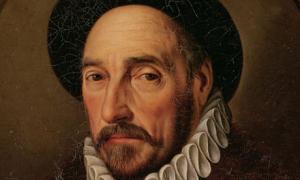 Michel de Montaigne, whose brilliant essays are the focus of an honors colloquium I am teaching this semester, regularly complains about what a weak and unreliable memory he has. By his own account, he forgets the books he has read, has no memory for dates, and misplaces the momentous events in his life. At times he seems almost proud of his poor memory, and with good reason. Fueled by an insatiable curiosity and with little interest in building a solid philosophical foundation upon which his beliefs can be permanently settled, Montaigne always resisted fixed points, choosing rather to “essay” further and wander more extensively within a world that he found boundlessly fascinating. A stronger memory might have tempted him to rely on past experiences and knowledge; the weakness of his memory removed that temptation.
Memory is tricky, an often unreliable something out of which, for better or for worse, we construct our past, interpret our present, and envision our future. I’ve observed my own memory erode over the years simply because of new technology that made memorization unnecessary. I used to easily hold several dozen ten-digit telephone numbers in my memory, even remembering my childhood home phone numbers and those of my girlfriend when I was in high school. Now, I know my cell number and two office numbers, can remember Jeanne’s cell number if I think for a second, but have no other phone numbers available in my memory files. Why? Because all I need to do is tap my cell phone two or three times and I can find any one of the hundreds of numbers stored in it. The part of my brain that used to do that can now do something else (or atrophy).
But some things are unforgettable. My memory in my youth was developed both by my piano training and by forced Bible memorization. Although I’ve not made a study of it, I’ll bet that memorizing music and memorizing the written word involve two different parts of the brain, because I was always much better at memorizing Bible verses than passages from Mozart, Bach, or Debussy. Of the Old Testament verses I was required to memorize, the majority of them were from the Psalms, passages that remain some of my favorites from Scripture. Psalm 23, of course, but also Psalm 91 (“He who dwells in the secret place of the most High”), Psalm 103 (“Bless the Lord, O my soul”—a text that is forever set in my memory to the music from Godspell), Psalm 121 (“ I will lift up mine eyes unto the hills”) and many others stayed with me as welcome companions even after I sought to walk away from my heritage in my young adulthood. In class the other day, I enjoyed reciting two or three Psalms to freshmen (it was Old Testament week) as some of them followed along in their texts to track the difference between the NRSV and King James translations. Those who were not following along stared at me as if I were some sort of pony-tail-wearing mutant or trained monkey.
Of all the Psalms from my youth, Psalm 19 was and still remains my favorite.
The heavens declare the glory of God;
And the firmament showeth His handiwork.
Day unto day uttereth speech,
And night unto night showeth knowledge.
There is no speech nor language
Where their voice is not heard.
Their sound is gone out into all lands,
And their words unto the end of the world.
Even in the stilted and outdated language of the King James Version (I wasn’t sure what a “firmament” was, nor were “showeth” or “uttereth” verbs my people used often), I recognized it as beautiful poetry as a mere child. And it was one of the pillars (along with passages from Romans 1 and 10) of my church’s answer to the question “Are those who haven’t heard about Jesus going to hell?” The thought that they would seemed unfair to me, but in Romans Paul insists, as does the writer of Psalm 19, that God’s presence and truth is there for the observing for those who care to pay attention; Paul says that those who do not “are without excuse.”
So, it was disconcerting to find out while on sabbatical some time ago that I had “misremembered” Psalm 19. My first clue was when Psalm 19 was up to the plate one day during noon prayer (all of the Psalms get a turn at bat during the four-week cycle of the hourly office the Benedictines use). We read, in the Grail translation,
The heavens declare the glory of God
and the firmament shows forth the work of God’s hands.
Day unto day takes up the story
and night unto night makes known the message.
No speech, no word, no voice is heard
yet their span extends through all the earth,
their words to the utmost bounds of the world.
As usual, reading a Psalm that I memorized in the King James Version in another translation was weird, as if someone had messed with the text of a Christmas carol or something. My curiosity was piqued as I compared “No speech, no word, no voice is heard” with the “There is no speech or language where their voice is not heard” of my memory.
I try not to be a philosopher at noon prayer, but I didn’t have to be a philosopher to realize that these comparative lines had exactly opposite meanings. Either what the heavens and the firmament have to say is heard in all languages or it is not heard in any voice or language at all. Later, I checked my KJV and read “there is no speech or language; their voice is not heard.” I had misremembered—I had replaced a semicolon with a “where.” My memorized “there is no speech or language where their voice is not heard” had exactly reversed what Psalm 19:3 is saying. And another small piece of my past—this time my favorite Psalm—bites the dust.
Our core selves are essentially created out of our memories—the philosopher John Locke, one of the pioneers of investigation into personal identity, once wrote that “one’s personal identity extends only so far as one’s memories.” But what happens when my memories are faulty? I recall how jarring it was when I was a teenager to learn that a picture in my baby book (Facebook was not even a glimmer in anyone’s imagination in those days) of me looking angelically at a candle flame taken when I was a year or two old was actually a picture of my brother (my grandmother spilled the beans). That picture had become a part of my identity, and grandmaw ripped it away.
How many other cornerstones of my identity, constructed out of my memories, are inaccurate or figments of my imagination? I feel an existential crisis coming on. But perhaps the accuracy of my remembered history is far less important than the need for me to embrace it as mine. I’ve spent a long time over the years trying to delete corrupted files; now I want to spend just as much time inserting them into my present as core parts of my past projected into my future. Because “day unto day takes up the story” doesn’t just apply to the heavens and the firmament—it applies to me.
Previous Post

March 6, 2021
Today's my Birthday--and it's a big one!
Next Post
March 9, 2021 #SayThisNotThat
Browse Our Archives
Select a Category abortion Advent AI Angels Artificial intelligence atheism attention baptism Baptists beauty belief Benedictines Bible bicycling Big Bird books Bovina Camaldoli hermitage Canada Catholicism cats certainty change Christianity Christmas Collegeville Covid-19 creativity Development of Western Civilization dogs doubt Easter Enneagram Epiphany Episcopal ethics Eucharist evil extroverts Facebook faith family fear flowers forgiveness freedom friends God goodness grace happiness heaven hell history Holy Spirit Holy Week hope human nature humility humor idolatry incarnation introverts irreverence Islam Jeanne Jesus Joe Biden joy Judaism justice Kamala Harris knowledge Lent listen literature liturgy love Marsue Memorial Day miracles movies music mystery mythology NPR Old Testament optimism paradox peace Penguins philosophy piano podcast politics power prayer Protestantism Providence College Religion Rhode Island sabbatical sacrament science seeing silence Simone Weil Socrates soul sports St. John's College stories suffering tattoo teaching technology television theology thinking time tolerance transcendence travel trees trust truth Uncategorized Vermont wisdom wonder writing
Select a Month May 2026 April 2026 March 2026 February 2026 January 2026 December 2025 November 2025 October 2025 September 2025 August 2025 July 2025 June 2025 May 2025 April 2025 March 2025 February 2025 January 2025 December 2024 November 2024 October 2024 September 2024 August 2024 July 2024 June 2024 May 2024 April 2024 March 2024 February 2024 January 2024 December 2023 November 2023 October 2023 September 2023 August 2023 July 2023 June 2023 May 2023 April 2023 March 2023 February 2023 January 2023 December 2022 November 2022 October 2022 September 2022 August 2022 July 2022 June 2022 May 2022 April 2022 March 2022 February 2022 January 2022 December 2021 November 2021 October 2021 September 2021 August 2021 July 2021 June 2021 May 2021 April 2021 March 2021 February 2021 January 2021 December 2020 November 2020 October 2020 September 2020 August 2020 July 2020 June 2020 May 2020 April 2020 March 2020 February 2020 January 2020 December 2019 November 2019 October 2019 September 2019 August 2019 July 2019 June 2019 May 2019 April 2019 March 2019 February 2019 January 2019 December 2018 November 2018 October 2018 September 2018 August 2018 July 2018 June 2018 May 2018 April 2018 March 2018 February 2018 January 2018 December 2017 November 2017 October 2017 September 2017 August 2017 July 2017 June 2017 May 2017 April 2017 March 2017 February 2017 January 2017 December 2016 November 2016 October 2016 September 2016 August 2016 July 2016 June 2016 May 2016 April 2016 March 2016 February 2016 January 2016 December 2015 November 2015 October 2015 September 2015 August 2015 July 2015 June 2015 May 2015 April 2015 March 2015 February 2015 January 2015 December 2014 November 2014 October 2014 September 2014 August 2014 July 2014 June 2014 May 2014 April 2014 March 2014 February 2014 January 2014 December 2013 November 2013 October 2013 September 2013 August 2013 July 2013 June 2013 May 2013 April 2013 March 2013 February 2013 January 2013 December 2012 November 2012 October 2012 September 2012
Follow Us!
TAKE THE
Religious Wisdom Quiz
Which prophet said, "I desire mercy, not sacrifice"?
Select your answer to see how you score.
Daniel Joel Hosea Amos
Books by This Author Books by Vance G. Morgan
Related posts from Freelance Christianity

The Lonely Pawn: On Faith, Doubt, and Meaning


AI and Love: When a Chatbot Becomes a...

TRENDING AT PATHEOS Progressive Christian

Why Christians Have a Sacred Duty to Vote:...
The Bible offers strong support for the sacred duty to vote. Here...

What Being a Modern-Day Apostle Means to Me
In my last column, I discussed the ins and outs of modern-day...

Did Ancient China Once Worship the God of...
Across human history, a common thread weaves through the origins of the...

Love Your Neighbor – Including Earth-Kin: Lev. 19,...
God’s command to love your neighbor means acting in an ethical and...

Lead a Church Study of “Jesus and Lao...
Guest writer Jack Thomas (The Irreverent Reverend) reflects on leading his church...

Principles for Understanding the Apostolic Ministry Today
Whenever people discover that my formal ministry title is "apostle," as in...
view all Progressive Christian blogs
Ad-Free & Subscriber Log-In Subscription Support
- About Us
- 2026 Calendar
- Videos
- Podcasts
- Library of World Religions
- Faith In Media Tracker
- Advertise With Us
- Write for Us
- Privacy Policy
- Terms of Service
- Do Not Sell My Data
- Contact Us
- Radiant Digital
- Manage Newsletter Subscriptions
- Unsubscribe From Notifications
- Sitemap
Copyright 2008-2026, Patheos. All rights reserved.
Subscription Support Ad-Free & Subscriber Log-In
Follow Patheos