
BuddhistCatholicContemplativeEvangelicalGeneral ChristianHinduJewishLatter-day SaintMuslimNew VisionsProgressive Christian
Beliefs
- Buddhist
- Catholic
- Contemplative
- Evangelical
- General Christian
- Hindu
- Jewish
- Latter-day Saint
- More Voices
- Muslim
- New Visions
- Pagan
- Progressive Christian
Topics
- Religion News
- Food and Religion
- Sports and Religion
- Religious Art
- Religious Music and Entertainment
- Religious Events
- History and Religion
- Style and Religion
- Politics and Religion
- Women in Religion
- Recreation Outdoors and Religion
- Business Finance and Religion
- Careers Workplace and Religion
- Education and Religion
- Family Parenting and Religion
- Health Fitness and Religion
- Home and Religion
- Relationships and Religion
- Technology and Religion
- Travel and Religion
Columnists
- Buddhist Columnists
- Business Finance and Religion Columnists
- Careers Workplace and Religion Columnists
- Catholic Columnists
- Contemplative Columnists
- Education and Religion Columnists
- Evangelists Columnists
- Family Parenting and Religion Columnists
- General Christian Columnists
- Health Fitness and Religion Columnists
- Hindu Columnists
- History and Religion Columnists
- Home and Religion Columnists
- Jewish Columnists
- More Voices Columnists
- Latter Day Columnists
- Muslim Columnists
- New Visions Columnists
- Nonreligious Columnists
- Pagan Columnists
- Politics and Religion Columnists
- Progressive Columnists
- Recreation Outdoors and Religion Columnists
- Relationships and Religion Columnists
- Religion News Columnists
- Religious Art Columnists
- Religious Events Columnists
- Religious Music and Entertainment Columnists
- Sports and Religion Columnists
- Style and Religion Columnists
- Technology and Religion Columnists
- Travel and Religion Columnists
- Women in Religion Columnists
Resource Library
- 2026 Calendar
- Library of World Religions
- The 100 Most Holy Places on Earth
- Patheos Answers
- Podcasts
- Videos
- Faith Leaders Database
- Anglican Episcopalian
- Bahai
- Baptist
- Buddhism
- Christianity
- Confucianism
- Eastern Orthodoxy
- Hinduism
- Holiness and Pentecostal
- ISKCON
- Islam
- Judaism
- Lutheran
- Methodist
- The Church of Jesus Christ of Latter-day Saints
- New Age
- Paganism
- Presbytarian and Reformed
- Protestantism
- Religion Behind the Scenes
- Roman Catholic
- Scientology
- Shia Islam
- Sikhism
- Sufism
- Sunni Islam
- Taoism
- Zen
- See all religions
Research Tools
 Ad-Free & Subscriber Log-In Subscription Support
Ad-Free & Subscriber Log-In Subscription Support
Follow Patheos 

- Trending:
- Forgiveness
- |
- Marriage
- |
- Consciousness
- |
- Death Penalty
- |
- Election
- |
- Halloween

- Home
- Progressive Christian
- Academics in No-Man’s Land
Academics in No-Man’s Land
Last updated on: February 24, 2016 at 7:30 am by Vance Morgan
Academics in No-Man’s Land 2016-02-24T07:30:49-04:00 Vance Morgan
Patheos Explore the world's faith through different perspectives on religion and spirituality! Patheos has the views of the prevalent religions and spiritualities of the world.
Last week my academic department had an important and contentious meeting, the latest skirmish in a nasty internal struggle that has been going on for months. It reminded me of something I wrote a bit over a year ago about just how heated and overwrought academic politics can get, even when the topic seems innocuous and benign.
I have had the opportunity over the past four years to spend time occasionally in the no-man’s land between faculty and administration—simply writing about it from a faculty perspective with a few positive things to say about the other side a couple of weeks ago drew several pointed and critical comments from fellow faculty members.
Faculty-Administration War Games
Spending too much time in academic no-man’s land is similar to Pickett’s charge across no-man’s land on the final day of the Battle of Gettysburg in 1863—a spectacular failure that arguably turned the tide inevitably against the Confederacy in the Civil War. 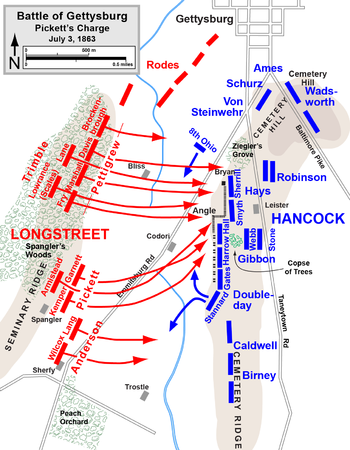 After two days of bloody stalemate, Confederate General Robert E. Lee ordered an intense bombardment of Union forces, under the command of General George G. Meade, aligned on Cemetery Ridge from Confederate artillery positions on Seminary Ridge. This bombardment was intended to soften up Union positions sufficiently to ensure a successful infantry charge across the “no man’s land” plain between the ridges by Confederate troops led by General George Pickett and two other generals.
Bad idea. The bombardment was ineffective and the charging Confederate soldiers were sitting ducks, mowed down long before reaching Cemetery Ridge as they charged unprotected across the field.  The Confederate troops suffered casualties of more than 50%, marking the end of the Battle of Gettysburg, the northernmost thrust of the Confederate Army into Union territory, and arguably the beginning of the end for the Confederacy. When asked years later why his charge had failed, General Pickett replied “I’ve always thought the Yankees had something to do with it.”
Warfare is a favored metaphor when discussing the interactions between faculty and administration on a college campus. Both sides consider everything to be a “zero sum” game—whatever is gained on one side is automatically assumed to have been taken from the other. Each assumes the worst both in motive and will on the other side. Yet the two sides are required, at least on occasion, to interact with each other. When the need arises, the tactics and procedures are reminiscent of the Battle of Gettysburg. One side tries to soften up the other side with distractions, deflections, apparent “peace offerings,” or simply preliminary committee work—all in the hope of setting the stage for a successful frontal attack when the time is right.

Administration Ridge
Case in point: a seemingly innocuous foray by the administration into perceived faculty territory that I was in the middle of over the past few weeks.
I direct a large interdisciplinary program required of all freshmen and sophomores on my campus, a program so central to what we do that the classroom portion of the beautiful, brand new humanities building we moved into just over a year ago was designed, then built with the classroom specifications and needs of this program as the driving force. 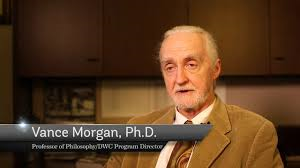 The program is in its fourth decade of existence, but in only the second year of a re-energized and reconceived version that was the first ever serious revision of the program’s aims and pedagogy. I was approached early in the summer by some important administrators with a proposal for a “Wall of Honor” to be placed in a large, prominent location on the main floor of the building. The purpose of the Wall of Honor would be to celebrate in portrait and plaque the contributions of retired faculty (some deceased) whose contributions to the program over the years were especially noteworthy. The proposal contained a detailed description of nomination and selection processes; I was asked to first gather input from my advisory group, a small hand-picked committee of persons from the academic departments that largely staff the program,
  then to run the proposal past the faculty in attendance at the first full faculty meeting of the fall semester.
The proposal seemed both benign and well-intentioned—who could possibly be opposed to honoring both excellence in teaching and former colleagues? Doesn’t the faculty often complain that the administration does not sufficiently recognize faculty achievement? The six members of my advisory group agreed that in general it was a good idea and helpfully identified some easily fixable problems in the proposal, adjustments made by the proposers as soon as I identified them in an email following the advisory group meeting. As is my custom, I sent the program faculty at large the amended proposal by email attachment a week before the first scheduled full faculty meeting of the semester,asking them to be prepared to talk quickly about the proposal before we moved on to the more important business of the day. What could go wrong?

Faculty Ridge
You would think that after several years of being first a department chair, then a program director that I would realize how stupid the question What could go wrong? is when anticipating a faculty meeting. In military terms, the preliminary bombardment of the faculty through contact with me, then indirectly through the advisory group, meant nothing to those present and lined up on Faculty Ridge at the department meeting. As if organized by an invisible hand, several faculty members spoke clearly and directly in quick succession about how much they hated the proposal; furthermore, they backed up their opposition with good arguments.
- The idea of singling out individuals for recognition is contrary to the spirit of interdisciplinary and collaborative teaching that we are seeking to establish and strengthen in this program.
 The first dozen or so retired faculty, perhaps more, to be honored on the wall will be old white guys, hardly a helpful image on an already too-white campus seeking to diversify both its student body and faculty. In such a highly visible place, we need to show that we are moving forward, away from an older, more patriarchal version of ourselves and towards a more inclusive, and a more welcoming, college.
- The excellence that will be honored is primarily teaching excellence, while many good but less-than-excellent faculty whose contributions behind the scenes have been immense will never be nominated or honored.
- This proposal does not facilitate the new program’s goal of reaching out to faculty across campus and incorporating them into what has, until now, been largely the domain of four large departments in the humanities.
And so on. Some of the arguments were so clearly presented that they convinced me and a couple of members of the advisory group who had entered the meeting as supporters of the proposal.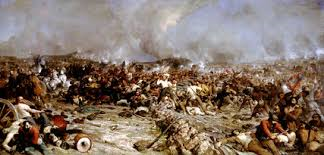 If the analogy of Pickett’s charge is appropriate, the Wall of Honor proposal never made it out of no-man’s land before it was ripped to shreds by the artillery on Faculty Ridge.
With faculty and administrators continually suspicious of and at war with each other, it’s amazing anything ever gets done on campus. The administration proposes that we all agree that the Pope is Catholic (even the current one); the faculty wonders what the real motive behind this proposal is.  The faculty senate resolves that the sky is blue; the administration wonders what they really want. In a world in which the faculty and administration by definition have radically different agendas but also arguably share many important goals, concerns and dreams in common, can we do better?
In the aftermath of his proposal’s evisceration by the faculty, one of the administrator proposers and I had an interesting conversation in my office a week after the faculty meeting. We have gotten to know each other well over my three years of being program director—from our shared work on an important committee I have learned that he (as well as the other administrators on the committee) are remarkably human, while I believe that he (and they) have learned something similar about me. In the same room we can get many things done, even though they still roll their eyes at the faculty’s resistance to what appears to the administration to be “no brainer” common sense, while I continue to explain that the world viewed through faculty eyes is a very different world than the one perceived in the offices of Harkins Hall.
 My administration colleague and I agreed that a different strategy is called for, starting with a beginning faculty discussion and vote on whether any sort of process to honor faculty is desired. If not, then we’ll move on to other more important things. If so, then I’ll try what I did last year—putting some faculty and administrators in the same room to create a joint proposal. A handful of folks from Faculty Ridge will meet halfway across no-man’s land with a handful of folks from Administration Ridge, and we’ll see what happens. Collaboration instead of suspicion? Conversation instead of bombardment? Cooperation instead of cold (or hot) war? Impossible. Ludicrous. Or is it?
Development of Western Civilization
Development of Western Civilization
Previous Post

February 22, 2016
Bored with Thinking
Next Post
February 26, 2016 Inquiring Minds
Browse Our Archives
Select a Category abortion Advent AI Angels Artificial intelligence atheism attention baptism Baptists beauty belief Benedictines Bible bicycling Big Bird books Bovina Camaldoli hermitage Canada Catholicism cats certainty change Christianity Christmas Collegeville Covid-19 creativity Development of Western Civilization dogs doubt Easter Enneagram Epiphany Episcopal ethics Eucharist evil extroverts Facebook faith family fear flowers forgiveness freedom friends God goodness grace happiness heaven hell history Holy Spirit Holy Week hope human nature humility humor idolatry incarnation introverts irreverence Islam Jeanne Jesus Joe Biden joy Judaism justice Kamala Harris knowledge Lent listen literature liturgy love Marsue Memorial Day miracles movies music mystery mythology NPR Old Testament optimism paradox peace Penguins philosophy piano podcast politics power prayer Protestantism Providence College Religion Rhode Island sabbatical sacrament science seeing silence Simone Weil Socrates soul sports St. John's College stories suffering tattoo teaching technology television theology thinking time tolerance transcendence travel trees trust truth Uncategorized Vermont wisdom wonder writing
Select a Month May 2026 April 2026 March 2026 February 2026 January 2026 December 2025 November 2025 October 2025 September 2025 August 2025 July 2025 June 2025 May 2025 April 2025 March 2025 February 2025 January 2025 December 2024 November 2024 October 2024 September 2024 August 2024 July 2024 June 2024 May 2024 April 2024 March 2024 February 2024 January 2024 December 2023 November 2023 October 2023 September 2023 August 2023 July 2023 June 2023 May 2023 April 2023 March 2023 February 2023 January 2023 December 2022 November 2022 October 2022 September 2022 August 2022 July 2022 June 2022 May 2022 April 2022 March 2022 February 2022 January 2022 December 2021 November 2021 October 2021 September 2021 August 2021 July 2021 June 2021 May 2021 April 2021 March 2021 February 2021 January 2021 December 2020 November 2020 October 2020 September 2020 August 2020 July 2020 June 2020 May 2020 April 2020 March 2020 February 2020 January 2020 December 2019 November 2019 October 2019 September 2019 August 2019 July 2019 June 2019 May 2019 April 2019 March 2019 February 2019 January 2019 December 2018 November 2018 October 2018 September 2018 August 2018 July 2018 June 2018 May 2018 April 2018 March 2018 February 2018 January 2018 December 2017 November 2017 October 2017 September 2017 August 2017 July 2017 June 2017 May 2017 April 2017 March 2017 February 2017 January 2017 December 2016 November 2016 October 2016 September 2016 August 2016 July 2016 June 2016 May 2016 April 2016 March 2016 February 2016 January 2016 December 2015 November 2015 October 2015 September 2015 August 2015 July 2015 June 2015 May 2015 April 2015 March 2015 February 2015 January 2015 December 2014 November 2014 October 2014 September 2014 August 2014 July 2014 June 2014 May 2014 April 2014 March 2014 February 2014 January 2014 December 2013 November 2013 October 2013 September 2013 August 2013 July 2013 June 2013 May 2013 April 2013 March 2013 February 2013 January 2013 December 2012 November 2012 October 2012 September 2012
Follow Us!
TAKE THE
Religious Wisdom Quiz
This Gospel alone records seven 'I am' statements from Jesus. Which of these is NOT one of them: the bread of life, the good shepherd, the way and the truth and the life, or the Alpha and Omega?
Select your answer to see how you score.
The way and the truth and the life The Alpha and Omega The bread of life The good shepherd
Books by This Author Books by Vance G. Morgan
Related posts from Freelance Christianity

The Lonely Pawn: On Faith, Doubt, and Meaning


AI and Love: When a Chatbot Becomes a...

TRENDING AT PATHEOS Progressive Christian

What Being a Modern-Day Apostle Means to Me
In my last column, I discussed the ins and outs of modern-day...

Did Ancient China Once Worship the God of...
Across human history, a common thread weaves through the origins of the...

Love Your Neighbor – Including Earth-Kin: Lev. 19,...
God’s command to love your neighbor means acting in an ethical and...

Lead a Church Study of “Jesus and Lao...
Guest writer Jack Thomas (The Irreverent Reverend) reflects on leading his church...

Pastoral Wisdom for Responding to Sermon Pushback
Getting sermon pushback on your social justice sermon? Learn practical, Proverbs-based strategies...

Principles for Understanding the Apostolic Ministry Today
Whenever people discover that my formal ministry title is "apostle," as in...
view all Progressive Christian blogs
Ad-Free & Subscriber Log-In Subscription Support
- About Us
- 2026 Calendar
- Videos
- Podcasts
- Library of World Religions
- Faith In Media Tracker
- Advertise With Us
- Write for Us
- Privacy Policy
- Terms of Service
- Do Not Sell My Data
- Contact Us
- Radiant Digital
- Manage Newsletter Subscriptions
- Unsubscribe From Notifications
- Sitemap
Copyright 2008-2026, Patheos. All rights reserved.
Subscription Support Ad-Free & Subscriber Log-In
Follow Patheos