
BuddhistCatholicContemplativeEvangelicalGeneral ChristianHinduJewishLatter-day SaintMuslimNew VisionsProgressive Christian
Beliefs
- Buddhist
- Catholic
- Contemplative
- Evangelical
- General Christian
- Hindu
- Jewish
- Latter-day Saint
- More Voices
- Muslim
- New Visions
- Pagan
- Progressive Christian
Topics
- Religion News
- Food and Religion
- Sports and Religion
- Religious Art
- Religious Music and Entertainment
- Religious Events
- History and Religion
- Style and Religion
- Politics and Religion
- Women in Religion
- Recreation Outdoors and Religion
- Business Finance and Religion
- Careers Workplace and Religion
- Education and Religion
- Family Parenting and Religion
- Health Fitness and Religion
- Home and Religion
- Relationships and Religion
- Technology and Religion
- Travel and Religion
Columnists
- Buddhist Columnists
- Business Finance and Religion Columnists
- Careers Workplace and Religion Columnists
- Catholic Columnists
- Contemplative Columnists
- Education and Religion Columnists
- Evangelists Columnists
- Family Parenting and Religion Columnists
- General Christian Columnists
- Health Fitness and Religion Columnists
- Hindu Columnists
- History and Religion Columnists
- Home and Religion Columnists
- Jewish Columnists
- More Voices Columnists
- Latter Day Columnists
- Muslim Columnists
- New Visions Columnists
- Nonreligious Columnists
- Pagan Columnists
- Politics and Religion Columnists
- Progressive Columnists
- Recreation Outdoors and Religion Columnists
- Relationships and Religion Columnists
- Religion News Columnists
- Religious Art Columnists
- Religious Events Columnists
- Religious Music and Entertainment Columnists
- Sports and Religion Columnists
- Style and Religion Columnists
- Technology and Religion Columnists
- Travel and Religion Columnists
- Women in Religion Columnists
Resource Library
- 2026 Calendar
- Library of World Religions
- The 100 Most Holy Places on Earth
- Patheos Answers
- Podcasts
- Videos
- Faith Leaders Database
- Anglican Episcopalian
- Bahai
- Baptist
- Buddhism
- Christianity
- Confucianism
- Eastern Orthodoxy
- Hinduism
- Holiness and Pentecostal
- ISKCON
- Islam
- Judaism
- Lutheran
- Methodist
- The Church of Jesus Christ of Latter-day Saints
- New Age
- Paganism
- Presbytarian and Reformed
- Protestantism
- Religion Behind the Scenes
- Roman Catholic
- Scientology
- Shia Islam
- Sikhism
- Sufism
- Sunni Islam
- Taoism
- Zen
- See all religions
Research Tools
 Ad-Free & Subscriber Log-In Subscription Support
Ad-Free & Subscriber Log-In Subscription Support
Follow Patheos 

- Trending:
- Forgiveness
- |
- Marriage
- |
- Consciousness
- |
- Death Penalty
- |
- Election
- |
- Halloween

- Home
- Progressive Christian
- Have Yourself a Rashomon Christmas
Have Yourself a Rashomon Christmas
Last updated on: December 23, 2022 at 2:00 pm by Vance Morgan
Have Yourself a Rashomon Christmas 2022-12-23T11:50:51-04:00 Vance Morgan
Patheos Explore the world's faith through different perspectives on religion and spirituality! Patheos has the views of the prevalent religions and spiritualities of the world.
A few years ago, I was asked to take on a temporary administrative position for the following semester in addition to my teaching duties. After agreeing to do so, my first step was to go on a fact-finding and listening tour, talking individually with the dozen or so people most knowledgeable concerning the issues I knew I would be grappling with. As I spent an hour or more with each of these colleagues, I found that it was often difficult to find a common thread in their accounts of events and circumstances that all of them had experienced first-hand. One day in the usual late afternoon debriefing that I have with Jeanne shortly after I return home from campus each day, I said “I feel like I’m living in the middle of ‘Rashomon.’”
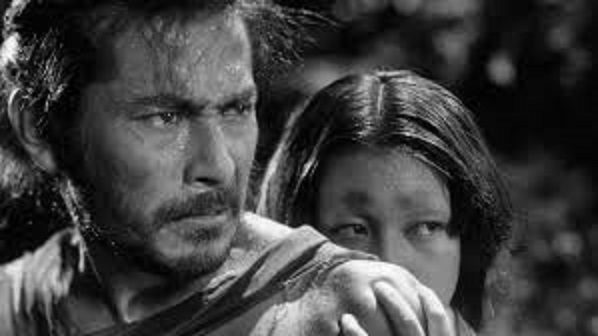
“Rashomon,” Akira Kurosawa’s 1950 film masterpiece that is often mentioned on short lists of “the greatest movies ever,” is fascinating for many reasons. But to a philosophy professor who frequently teaches philosophy of knowledge courses, its main appeal is that it is an early cinematic exploration of the importance of subjective perspective to our understanding of the world around us. Through ingenious use of camera and flashbacks, Kurosawa reveals the complexities of human nature as four people recount different versions of the story of a man’s murder and the rape of his wife. The viewer is left wondering “what really happened?” and “whose perspective is closest to the truth?” The answer provided is that we have no idea. Which version of events is most convincing will vary from person to person, depending on many factors; by not providing us with an objective, “God’s eye” view of the events in question, Kurosawa immerses the viewer in ambiguity both fascinating and frustrating.
What makes “Rashomon” disturbing is that its portrayal of the central roles played by subjectivity and ambiguity in the shaping of belief and truth is not just sophisticated entertainment—it is precisely how the “truth” is actually constructed, both individually and collectively, in the “real world.” We often claim to be interested in objectivity and facts, but what even counts as a fact is from the beginning shot through with the experiences and lived contributions of each person seeking to know “what really happened.” This leads to radically different interpretations of shared facts; as William James remind us in his essay “Pragmatism and Humanism”:
We read the same facts differently. “Waterloo,” with the same fixed details, spells a victory for an Englishman; for a Frenchman it spells a defeat.
Whose interpretation of the battle’s events is correct—the Englishman’s or the Frenchman’s? That question has no “correct” answer, which is problematic, because the Battle of Waterloo is close enough to us historically for us to be able to perhaps agree on some of the details of “what happened.” The problems of perspective, interpretation, context, and subjectivity increase exponentially the more distant the events in question become.
Which brings us to the event that Christians will celebrate tomorrow—the birth of Jesus. What really happened in Bethlehem? We have no eyewitness accounts; what we do have in the Gospels, written decades after the event, is remarkably different from gospel to gospel. The standard pieces of the nativity narrative are a conflation of various elements. The authors of Mark and John apparently didn’t think the circumstances of Jesus’ birth important enough to even report on, while the authors of Matthew and Luke construct their stories from “cherry-picked” details. Luke does not mention the magi from the east or the star, but has angels singing to shepherds, who then visit Jesus in a manger in Bethlehem. Matthew has no worshiping shepherds or even a manger, but wise men following a star visit the holy family in a house, probably in Nazareth, sometime after Jesus’ birth. Throw in Santa and some reindeer, and you’d get the usual front lawn decorations for the holiday season.
So where lies the truth? A close friend who passed away a few years ago, a guy who tended to be rather definitive in his pronouncements, once said at lunch that “The heart of Christianity is what you believe about the stories. Do you believe the stories are true or don’t you? Yes or No? And if you say ‘let me think about it,’ that’s the same as saying No!” This was not directed at me specifically—he was just drawing a line in the sand, as those of us who knew and loved him expected him to do. But I think I’m in trouble. Because not only am I not sure about whether my answer to his question is “yes,” “no,” “let me think about it,” or even “which stories are you referring to?”—I’m inclined to say that “it doesn’t matter.”
We cannot know the exact details of Jesus’ birth beyond tentatively agreeing that apparently something happened, but this is no different than the vast majority of human events. Ultimately what matters far more than getting the details right and arguing with those who insist on different details is to ask What does matter? Meister Eckhart, a medieval Dominican philosopher, theologian, and mystic once asked this very question most provocatively:
What good is it for me that Christ was born a thousand years ago in Bethlehem, if he is not born today in our own time?
I was reminded of Eckhart’s question the other day toward the end of an oral exam with a particularly interesting and memorable student. This student, who professes to be an atheist, was surprised—“shocked” might be the better word—when I described myself as a “person of faith” in class one day.
I do believe that Jesus was both human and divine, as a matter of fact, for reasons that I regularly explore and challenge in this blog. On this particular occasion, however, I thought that a different sort of answer was in order. “Let me put it this way,” I said to my inquiring student. “The story of Jesus’ birth and life has been a central narrative, perhaps the central narrative, of my life from the time I was a little kid. It, and accompanying stories, are my tradition, my heritage, my birthright. It has come to have a very different meaning for me over the years, particularly in the last seven or eight years. The story of the Incarnation, of God out of love becoming human, is not about facts. It is a framework for believing that we matter enough to be loved by what is greater than us, and that the divine has chosen to get into the world through human beings. As a mentor of mine once said, this is the sort of story that should be true.”
At the climatic manger scene in my favorite Christmas movie, “The Nativity Story,” the gold-bearing wise man Melchior, who looks amazingly like a colleague and friend of mine in the history department, gazes at the baby and says “God made into flesh.” The message of Christmas cuts across every one of the boundaries that we spend so much time drawing and protecting, for it tells us that the human and the divine belong together and that the only way that God gets into the world is in human form. That’s you. That’s me. That’s us.
The heart and soul of Christianity is remarkable both in its simplicity and its iconoclasm. God made into flesh. Remarkably small. Disturbingly fragile. Completely mysterious. And utterly true.
Previous Post

December 22, 2022
Returning Straight to Jesus at Christmas
Next Post

December 25, 2022 Good People All: Have a Blessed Christmas Day
Browse Our Archives
Select a Category abortion Advent AI Angels Artificial intelligence atheism attention baptism Baptists beauty belief Benedictines Bible bicycling Big Bird books Bovina Camaldoli hermitage Canada Catholicism cats certainty change Christianity Christmas Collegeville Covid-19 creativity Development of Western Civilization dogs doubt Easter Enneagram Epiphany Episcopal ethics Eucharist evil extroverts Facebook faith family fear flowers forgiveness freedom friends God goodness grace happiness heaven hell history Holy Spirit Holy Week hope human nature humility humor idolatry incarnation introverts irreverence Islam Jeanne Jesus Joe Biden joy Judaism justice Kamala Harris knowledge Lent listen literature liturgy love Marsue Memorial Day miracles movies music mystery mythology NPR Old Testament optimism paradox peace Penguins philosophy piano podcast politics power prayer Protestantism Providence College Religion Rhode Island sabbatical sacrament science seeing silence Simone Weil Socrates soul sports St. John's College stories suffering tattoo teaching technology television theology thinking time tolerance transcendence travel trees trust truth Uncategorized Vermont wisdom wonder writing
Select a Month May 2026 April 2026 March 2026 February 2026 January 2026 December 2025 November 2025 October 2025 September 2025 August 2025 July 2025 June 2025 May 2025 April 2025 March 2025 February 2025 January 2025 December 2024 November 2024 October 2024 September 2024 August 2024 July 2024 June 2024 May 2024 April 2024 March 2024 February 2024 January 2024 December 2023 November 2023 October 2023 September 2023 August 2023 July 2023 June 2023 May 2023 April 2023 March 2023 February 2023 January 2023 December 2022 November 2022 October 2022 September 2022 August 2022 July 2022 June 2022 May 2022 April 2022 March 2022 February 2022 January 2022 December 2021 November 2021 October 2021 September 2021 August 2021 July 2021 June 2021 May 2021 April 2021 March 2021 February 2021 January 2021 December 2020 November 2020 October 2020 September 2020 August 2020 July 2020 June 2020 May 2020 April 2020 March 2020 February 2020 January 2020 December 2019 November 2019 October 2019 September 2019 August 2019 July 2019 June 2019 May 2019 April 2019 March 2019 February 2019 January 2019 December 2018 November 2018 October 2018 September 2018 August 2018 July 2018 June 2018 May 2018 April 2018 March 2018 February 2018 January 2018 December 2017 November 2017 October 2017 September 2017 August 2017 July 2017 June 2017 May 2017 April 2017 March 2017 February 2017 January 2017 December 2016 November 2016 October 2016 September 2016 August 2016 July 2016 June 2016 May 2016 April 2016 March 2016 February 2016 January 2016 December 2015 November 2015 October 2015 September 2015 August 2015 July 2015 June 2015 May 2015 April 2015 March 2015 February 2015 January 2015 December 2014 November 2014 October 2014 September 2014 August 2014 July 2014 June 2014 May 2014 April 2014 March 2014 February 2014 January 2014 December 2013 November 2013 October 2013 September 2013 August 2013 July 2013 June 2013 May 2013 April 2013 March 2013 February 2013 January 2013 December 2012 November 2012 October 2012 September 2012
Follow Us!
TAKE THE
Religious Wisdom Quiz
Who was Abraham's firstborn son?
Select your answer to see how you score.
Isaac Jacob Ishmael Esau
Books by This Author Books by Vance G. Morgan
Related posts from Freelance Christianity

The Lonely Pawn: On Faith, Doubt, and Meaning


AI and Love: When a Chatbot Becomes a...

TRENDING AT PATHEOS Progressive Christian

What Being a Modern-Day Apostle Means to Me
In my last column, I discussed the ins and outs of modern-day...

Did Ancient China Once Worship the God of...
Across human history, a common thread weaves through the origins of the...

Love Your Neighbor – Including Earth-Kin: Lev. 19,...
God’s command to love your neighbor means acting in an ethical and...

Lead a Church Study of “Jesus and Lao...
Guest writer Jack Thomas (The Irreverent Reverend) reflects on leading his church...

Pastoral Wisdom for Responding to Sermon Pushback
Getting sermon pushback on your social justice sermon? Learn practical, Proverbs-based strategies...

Principles for Understanding the Apostolic Ministry Today
Whenever people discover that my formal ministry title is "apostle," as in...
view all Progressive Christian blogs
Ad-Free & Subscriber Log-In Subscription Support
- About Us
- 2026 Calendar
- Videos
- Podcasts
- Library of World Religions
- Faith In Media Tracker
- Advertise With Us
- Write for Us
- Privacy Policy
- Terms of Service
- Do Not Sell My Data
- Contact Us
- Radiant Digital
- Manage Newsletter Subscriptions
- Unsubscribe From Notifications
- Sitemap
Copyright 2008-2026, Patheos. All rights reserved.
Subscription Support Ad-Free & Subscriber Log-In
Follow Patheos