
BuddhistCatholicContemplativeEvangelicalGeneral ChristianHinduJewishLatter-day SaintMuslimNew VisionsProgressive Christian
Beliefs
- Buddhist
- Catholic
- Contemplative
- Evangelical
- General Christian
- Hindu
- Jewish
- Latter-day Saint
- More Voices
- Muslim
- New Visions
- Pagan
- Progressive Christian
Topics
- Religion News
- Food and Religion
- Sports and Religion
- Religious Art
- Religious Music and Entertainment
- Religious Events
- History and Religion
- Style and Religion
- Politics and Religion
- Women in Religion
- Recreation Outdoors and Religion
- Business Finance and Religion
- Careers Workplace and Religion
- Education and Religion
- Family Parenting and Religion
- Health Fitness and Religion
- Home and Religion
- Relationships and Religion
- Technology and Religion
- Travel and Religion
Columnists
- Buddhist Columnists
- Business Finance and Religion Columnists
- Careers Workplace and Religion Columnists
- Catholic Columnists
- Contemplative Columnists
- Education and Religion Columnists
- Evangelists Columnists
- Family Parenting and Religion Columnists
- General Christian Columnists
- Health Fitness and Religion Columnists
- Hindu Columnists
- History and Religion Columnists
- Home and Religion Columnists
- Jewish Columnists
- More Voices Columnists
- Latter Day Columnists
- Muslim Columnists
- New Visions Columnists
- Nonreligious Columnists
- Pagan Columnists
- Politics and Religion Columnists
- Progressive Columnists
- Recreation Outdoors and Religion Columnists
- Relationships and Religion Columnists
- Religion News Columnists
- Religious Art Columnists
- Religious Events Columnists
- Religious Music and Entertainment Columnists
- Sports and Religion Columnists
- Style and Religion Columnists
- Technology and Religion Columnists
- Travel and Religion Columnists
- Women in Religion Columnists
Resource Library
- 2026 Calendar
- Library of World Religions
- The 100 Most Holy Places on Earth
- Patheos Answers
- Podcasts
- Videos
- Faith Leaders Database
- Anglican Episcopalian
- Bahai
- Baptist
- Buddhism
- Christianity
- Confucianism
- Eastern Orthodoxy
- Hinduism
- Holiness and Pentecostal
- ISKCON
- Islam
- Judaism
- Lutheran
- Methodist
- The Church of Jesus Christ of Latter-day Saints
- New Age
- Paganism
- Presbytarian and Reformed
- Protestantism
- Religion Behind the Scenes
- Roman Catholic
- Scientology
- Shia Islam
- Sikhism
- Sufism
- Sunni Islam
- Taoism
- Zen
- See all religions
Research Tools
 Ad-Free & Subscriber Log-In Subscription Support
Ad-Free & Subscriber Log-In Subscription Support
Follow Patheos 

- Trending:
- Forgiveness
- |
- Marriage
- |
- Consciousness
- |
- Death Penalty
- |
- Election
- |
- Halloween

- Home
- Progressive Christian
- A Mystery Wrapped in an Enigma
A Mystery Wrapped in an Enigma
Last updated on: November 4, 2021 at 6:00 am by Vance Morgan
A Mystery Wrapped in an Enigma 2021-11-03T16:52:39-04:00 Vance Morgan
Patheos Explore the world's faith through different perspectives on religion and spirituality! Patheos has the views of the prevalent religions and spiritualities of the world.
 November is a month of transitions. Here in New England, we are squarely in the middle of autumn. To the north where I grew up, the leaves have turned and are already falling; in southern New England where I now live, the leaves are at their most colorful; some of them are already dropping. The predicted high for each of the next ten days is in the fifties, and we will be getting our first freeze of the season soon. Winter is on the horizon.
November is also the month that for most people marks the transition to the “holiday season” (unless you consider that to have started with Halloween, which I don’t). Thanksgiving is coming soon. A new liturgical year will begin with the first Sunday of Advent on the last Sunday of the month, followed shortly by the Christmas season.
In the academic world, November is the month in which you get serious about planning courses for the upcoming spring semester. In the interdisciplinary humanities course that I am currently teaching with colleagues from the history/classics and the English department, I am responsible for the philosophy component, some of the theology and, given my classical training on the piano, the music lectures. Our focus next semester will be the 20th century and the first two decades of the 21st through interdisciplinary lenses. While I am still considering what to focus my music lectures on, I’m sure that one of the lectures will be a consideration of Benjamin Britten’s War Requiem.

Completed in 1961, War Requiem was first performed on May 30, 1962 at the dedication of the new Coventry Cathedral, built next to the ruins of the old cathedral destroyed by the Luftwaffe in 1940. The score makes a profound statement about the value of human life; its text is a conflation of the Latin Requiem (Mass for the Dead) and the antiwar verse of the English poet Wilfred Owen, who died at the front during the final week of World War I. At the end of the premiere performance, there was a profound silence between the final notes and the applause. It was a triumph, achieving an impact matched by few works in the twentieth century. Writing to his sister after the premiere, Britten said of his music, “I hope it’ll make people think a bit.” I hope it will make my students think a bit as well.
An industrial city in the West Midlands of England, Coventry was the target of numerous Luftwaffe bombing raids. The worst of these occurred on November 14, 1940; the devastation included the almost total destruction of Coventry’s gothic Saint Michael’s Cathedral that was built during the late 14th and early 15th centuries.
Various researchers revealed some decades later the likelihood that because the German secret “Enigma” code had just been broken by cryptographers at Bletchley Circle, British war authorities knew that Coventry had been targeted for a Luftwaffe fire-bombing raid some days before the raid occurred. These authorities chose not to alert the citizens of Coventry ahead of time because doing so would have revealed to the Germans that their supposedly unbreakable code had been cracked. Sir William Stephenson, the chief of all Allied intelligence during WWII, wrote that both Franklin Roosevelt and Winston Churchill were aware that Coventry was going to be bombed; Churchill reportedly told Stephenson after the war that letting Coventry burn aged him twenty years.
Others have challenged Stephenson’s story, but situations in which seeking to achieve the good is entangled with destruction and death are disturbingly commonplace. A new Coventry Cathedral was built next to the ruins of the one destroyed in 1940, incorporating into its modern architecture the remains of the previous edifice as a testament to both hope and despair, triumph and sacrifice.

The theme of the 1962 dedication, of Britten’s War Requiem that premiered at the dedication, and the continuing ministry of St. Michael’s Cathedral to this day is reconciliation. The cathedral’s artwork, commissioned from all over the world, makes use of remnants of the old cathedral as well as materials not usually incorporated in religious art—the wreckage of automobiles, refuse from landfills—the last places we normally look for intimations of the sacred.
Paying attention to the Christian narrative reveals that the planners and parishioners of the cathedral in Coventry are on to something. When the divine enters the world, we may often look in vain for immediate evidence. Violence and suffering still occur, human beings continue to perpetuate atrocities on each other and on the world in which we live. The difference before God enters human reality and after is so subtle as to often be unnoticeable. But as a wise person once told me, this is not a God who intervenes. This is a God who indwells.
In his lengthy Christmas poem “For the Time Being: A Christmas Oratorio,” W. H. Auden expresses this sentiment through Simeon, the old man who gets to see the infant Jesus just before he dies.
And because of His visitation, we may no longer desire God as if He were lacking: our redemption is no longer a question of pursuit but of surrender to Him who is always and everywhere present. Therefore, at every moment we pray that, following Him, we may depart from our anxiety into His peace.
Anxiety and fear are natural human responses to evil and suffering. But as we move toward the Advent and Christmas seasons, we would do well to remember one of the names of the promised Messiah—Immanuel—means “God is with us.” With us not only in joy but also in sorrow, not only in new birth but also in death and destruction.
In the darkest depths of despair, the promise is that God is with us, choosing to become part of the mess and transform it from within rather than impose solutions from the outside. As I heard someone say not long ago, “we need to stop listening to fear and calling it wisdom.” At the heart of the beautiful and transformative story is, as Winston Churchill might have described it, “a mystery wrapped in an enigma.” We are called to embrace hope when things are darkest. We are not alone.
Previous Post
November 2, 2021
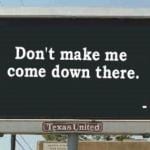
The Tweet of God
Next Post

November 7, 2021 How to Survive the Time Change (and other first world problems)
Browse Our Archives
Select a Category abortion Advent AI Angels Artificial intelligence atheism attention baptism Baptists beauty belief Benedictines Bible bicycling Big Bird books Bovina Camaldoli hermitage Canada Catholicism cats certainty change Christianity Christmas Collegeville Covid-19 creativity Development of Western Civilization dogs doubt Easter Enneagram Epiphany Episcopal ethics Eucharist evil extroverts Facebook faith family fear flowers forgiveness freedom friends God goodness grace happiness heaven hell history Holy Spirit Holy Week hope human nature humility humor idolatry incarnation introverts irreverence Islam Jeanne Jesus Joe Biden joy Judaism justice Kamala Harris knowledge Lent listen literature liturgy love Marsue Memorial Day miracles movies music mystery mythology NPR Old Testament optimism paradox peace Penguins philosophy piano podcast politics power prayer Protestantism Providence College Religion Rhode Island sabbatical sacrament science seeing silence Simone Weil Socrates soul sports St. John's College stories suffering tattoo teaching technology television theology thinking time tolerance transcendence travel trees trust truth Uncategorized Vermont wisdom wonder writing
Select a Month May 2026 April 2026 March 2026 February 2026 January 2026 December 2025 November 2025 October 2025 September 2025 August 2025 July 2025 June 2025 May 2025 April 2025 March 2025 February 2025 January 2025 December 2024 November 2024 October 2024 September 2024 August 2024 July 2024 June 2024 May 2024 April 2024 March 2024 February 2024 January 2024 December 2023 November 2023 October 2023 September 2023 August 2023 July 2023 June 2023 May 2023 April 2023 March 2023 February 2023 January 2023 December 2022 November 2022 October 2022 September 2022 August 2022 July 2022 June 2022 May 2022 April 2022 March 2022 February 2022 January 2022 December 2021 November 2021 October 2021 September 2021 August 2021 July 2021 June 2021 May 2021 April 2021 March 2021 February 2021 January 2021 December 2020 November 2020 October 2020 September 2020 August 2020 July 2020 June 2020 May 2020 April 2020 March 2020 February 2020 January 2020 December 2019 November 2019 October 2019 September 2019 August 2019 July 2019 June 2019 May 2019 April 2019 March 2019 February 2019 January 2019 December 2018 November 2018 October 2018 September 2018 August 2018 July 2018 June 2018 May 2018 April 2018 March 2018 February 2018 January 2018 December 2017 November 2017 October 2017 September 2017 August 2017 July 2017 June 2017 May 2017 April 2017 March 2017 February 2017 January 2017 December 2016 November 2016 October 2016 September 2016 August 2016 July 2016 June 2016 May 2016 April 2016 March 2016 February 2016 January 2016 December 2015 November 2015 October 2015 September 2015 August 2015 July 2015 June 2015 May 2015 April 2015 March 2015 February 2015 January 2015 December 2014 November 2014 October 2014 September 2014 August 2014 July 2014 June 2014 May 2014 April 2014 March 2014 February 2014 January 2014 December 2013 November 2013 October 2013 September 2013 August 2013 July 2013 June 2013 May 2013 April 2013 March 2013 February 2013 January 2013 December 2012 November 2012 October 2012 September 2012
Follow Us!
TAKE THE
Religious Wisdom Quiz
I am a seller of purple cloth from Thyatira. My heart was opened to respond to Paul's message, and I became the first European convert. Who am I?
Select your answer to see how you score.
Priscilla Lydia Phoebe Mary
Books by This Author Books by Vance G. Morgan
Related posts from Freelance Christianity

The Lonely Pawn: On Faith, Doubt, and Meaning


AI and Love: When a Chatbot Becomes a...

TRENDING AT PATHEOS Progressive Christian

What Being a Modern-Day Apostle Means to Me
In my last column, I discussed the ins and outs of modern-day...

Did Ancient China Once Worship the God of...
Across human history, a common thread weaves through the origins of the...

Love Your Neighbor – Including Earth-Kin: Lev. 19,...
God’s command to love your neighbor means acting in an ethical and...

Lead a Church Study of “Jesus and Lao...
Guest writer Jack Thomas (The Irreverent Reverend) reflects on leading his church...

Pastoral Wisdom for Responding to Sermon Pushback
Getting sermon pushback on your social justice sermon? Learn practical, Proverbs-based strategies...

Principles for Understanding the Apostolic Ministry Today
Whenever people discover that my formal ministry title is "apostle," as in...
view all Progressive Christian blogs
Ad-Free & Subscriber Log-In Subscription Support
- About Us
- 2026 Calendar
- Videos
- Podcasts
- Library of World Religions
- Faith In Media Tracker
- Advertise With Us
- Write for Us
- Privacy Policy
- Terms of Service
- Do Not Sell My Data
- Contact Us
- Radiant Digital
- Manage Newsletter Subscriptions
- Unsubscribe From Notifications
- Sitemap
Copyright 2008-2026, Patheos. All rights reserved.
Subscription Support Ad-Free & Subscriber Log-In
Follow Patheos