
BuddhistCatholicContemplativeEvangelicalGeneral ChristianHinduJewishLatter-day SaintMuslimNew VisionsProgressive Christian
Beliefs
- Buddhist
- Catholic
- Contemplative
- Evangelical
- General Christian
- Hindu
- Jewish
- Latter-day Saint
- More Voices
- Muslim
- New Visions
- Pagan
- Progressive Christian
Topics
- Religion News
- Food and Religion
- Sports and Religion
- Religious Art
- Religious Music and Entertainment
- Religious Events
- History and Religion
- Style and Religion
- Politics and Religion
- Women in Religion
- Recreation Outdoors and Religion
- Business Finance and Religion
- Careers Workplace and Religion
- Education and Religion
- Family Parenting and Religion
- Health Fitness and Religion
- Home and Religion
- Relationships and Religion
- Technology and Religion
- Travel and Religion
Columnists
- Buddhist Columnists
- Business Finance and Religion Columnists
- Careers Workplace and Religion Columnists
- Catholic Columnists
- Contemplative Columnists
- Education and Religion Columnists
- Evangelists Columnists
- Family Parenting and Religion Columnists
- General Christian Columnists
- Health Fitness and Religion Columnists
- Hindu Columnists
- History and Religion Columnists
- Home and Religion Columnists
- Jewish Columnists
- More Voices Columnists
- Latter Day Columnists
- Muslim Columnists
- New Visions Columnists
- Nonreligious Columnists
- Pagan Columnists
- Politics and Religion Columnists
- Progressive Columnists
- Recreation Outdoors and Religion Columnists
- Relationships and Religion Columnists
- Religion News Columnists
- Religious Art Columnists
- Religious Events Columnists
- Religious Music and Entertainment Columnists
- Sports and Religion Columnists
- Style and Religion Columnists
- Technology and Religion Columnists
- Travel and Religion Columnists
- Women in Religion Columnists
Resource Library
- 2026 Calendar
- Library of World Religions
- The 100 Most Holy Places on Earth
- Patheos Answers
- Podcasts
- Videos
- Faith Leaders Database
- Anglican Episcopalian
- Bahai
- Baptist
- Buddhism
- Christianity
- Confucianism
- Eastern Orthodoxy
- Hinduism
- Holiness and Pentecostal
- ISKCON
- Islam
- Judaism
- Lutheran
- Methodist
- The Church of Jesus Christ of Latter-day Saints
- New Age
- Paganism
- Presbytarian and Reformed
- Protestantism
- Religion Behind the Scenes
- Roman Catholic
- Scientology
- Shia Islam
- Sikhism
- Sufism
- Sunni Islam
- Taoism
- Zen
- See all religions
Research Tools
 Ad-Free & Subscriber Log-In Subscription Support
Ad-Free & Subscriber Log-In Subscription Support
Follow Patheos 

- Trending:
- Forgiveness
- |
- Marriage
- |
- Consciousness
- |
- Death Penalty
- |
- Election
- |
- Halloween

- Home
- Progressive Christian
- A More Plausible God
A More Plausible God
Last updated on: March 1, 2018 at 7:00 am by Vance Morgan
A More Plausible God 2018-02-24T18:43:51-04:00 Vance Morgan
Patheos Explore the world's faith through different perspectives on religion and spirituality! Patheos has the views of the prevalent religions and spiritualities of the world.
In a couple of weeks, we will be starting a unit in my General Ethics class called “Does ethics have anything do to with God?’. Although the question of how a good and powerful God—a “perfect” God, in other words—can allow the suffering, violence, and pain that human beings and other living things are subject to in our world is not a question that fits seamlessly on the syllabus of an ethics class, I know that the question will come up. It’s difficult to avoid the problem of evil in a classroom filled with students who have, or at least the majority have, been taught in church and parochial education that God is perfect.
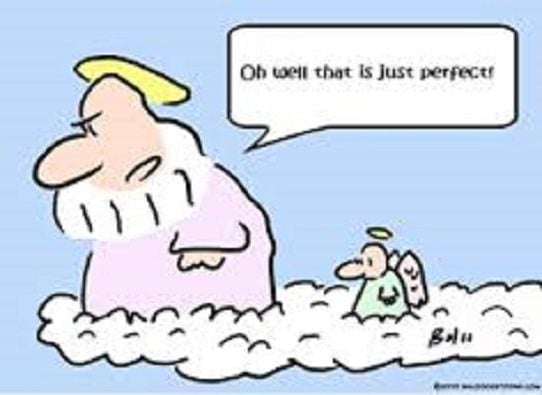
I’ve included the problem of evil in dozens of courses over the past twenty-five years and have come to the conclusion that it can’t be solved—as long as we insist that we know the characteristics of the divine. But what if our insistence on God’s perfection is misguided? What if, in other words, we need to consider a different personality description than the one we have traditionally been saddled with? Are there more plausible ways to think about God?
In a November 2012 contribution to “The Stone,” a recurring New York Times column focusing on philosophy, Israeli philosopher Yoram Hazony argues that there is a simple adjustment to the traditional, theistic conception of God as perfect that will solve the problem of evil. Stop thinking of God as perfect. Hazony cuts to the chase quickly in his brief column:
Philosophers have spent many centuries trying to get God’s supposed perfections to fit together in a coherent conception, and then trying to get that to fit with the Bible. By now it’s reasonably clear that this can’t be done . . . I’d start with this: Is it really necessary to say that God is a “perfect being,” or perfect at all, for that matter? As far as I can tell, the biblical authors avoid asserting any such thing. And with good reason.
Hazony goes on to argue that the whole idea of God as a Perfect Being comes much later to theism, when Christian thinkers tried to bring the biblical text in line with the Greek philosophical tradition, in which folks like Parmenides and Plato conceive of the divine as perfect. But this was a misguided project, since “you can’t perfect something by maximizing all its constituent principles simultaneously.” In other words, and as usual, it’s the philosophers’ fault.
I often frame the problem of evil as a series of claims that are logically incompatible:
- God is all good (omnibenevolent)
- God is all-knowing (omniscient)
- God is all-powerful (omnipotent)
- Evil exists
The first three claims are fundamental to traditional theistic belief, while the truth of the fourth claim is self-evident to anyone who is the least bit observant of our surrounding world. Logically, all four claims cannot be true simultaneously. Pick your favorite three to double down on, and the fourth has to be false. Which sucks, because any committed theist who is also an observant human being wants to affirm all four claims.
Heroic philosophical and theological efforts have been made to solve the problem of evil; the most obvious (but for many, the most disturbing) tactic is to stop thinking of God as a bundle of perfections. What if God is not all-knowing, all-powerful, all good, or any of the above? Hazony suggests that we ask a prior question: Where did theists ever get the idea that God is perfect in the first place? A careful look at seminal biblical texts indicates that such a conception is not to be found there.
Consider, for instance, God’s revelation of the divine name to Moses from the burning bush in the book of Exodus. God says I am that I am, at least according to most English translations. That’s a name consistent with an immutable and perfect nature. But, Hazony points out, that translation comes from the Septuagint, a translation of the Hebrew text into Greek already showing the influence of Greek philosophy on translators and interpreters. The better translation from the Hebrew of the divine answer to “What is your name?” is I will be what I will be, an imperfect verb tense that indicates incompleteness, process, and change. Which would explain why the God of the Jewish scriptures seems so imperfect, human, arbitrary, and so unlike the perfect deity many of us were taught to believe in. The ancient Israelites did not believe in such a God.
So if the God of Exodus and the Hebrew scriptures is not a bundle of perfections, then what is he/she/it? Hazony suggests that this God is exactly what the various ancient texts, particularly the Psalms, point toward:
The God of Hebrew scripture is meant to be an embodiment of what is, of reality as we experience it . . . It is the hope that God is faithful and just that is the subject of ancient Israel’s faith: we hope that despite the frequently harsh reality of our daily experience, there is nonetheless a faithfulness and justice that rules in our world in the end.
God as a promise and a hope, rather than a perfect Being—that, obviously, would be a game changer. Hazony suggests that early Christian philosophers and theologians imposed Greek philosophical categories on theistic belief because they feared that an imperfect God would not attract many followers. Instead, theists have inherited a God spoken of in sweeping idealizations of perfection, a conception whose relationship to the world in which we actually live is impossible to imagine. Traditional theism is losing ground in many parts of our country and the world; as Hazony advises at the end of his column, “surely a more plausible conception of God couldn’t hurt.”
Previous Post

February 27, 2018
Why Teachers Should Not Be Armed
Next Post

March 4, 2018 On Being Made of Meat
Browse Our Archives
Select a Category abortion Advent AI Angels Artificial intelligence atheism attention baptism Baptists beauty belief Benedictines Bible bicycling Big Bird books Bovina Camaldoli hermitage Canada Catholicism cats certainty change Christianity Christmas Collegeville Covid-19 creativity Development of Western Civilization dogs doubt Easter Enneagram Epiphany Episcopal ethics Eucharist evil extroverts Facebook faith family fear flowers forgiveness freedom friends God goodness grace happiness heaven hell history Holy Spirit Holy Week hope human nature humility humor idolatry incarnation introverts irreverence Islam Jeanne Jesus Joe Biden joy Judaism justice Kamala Harris knowledge Lent listen literature liturgy love Marsue Memorial Day miracles movies music mystery mythology NPR Old Testament optimism paradox peace Penguins philosophy piano podcast politics power prayer Protestantism Providence College Religion Rhode Island sabbatical sacrament science seeing silence Simone Weil Socrates soul sports St. John's College stories suffering tattoo teaching technology television theology thinking time tolerance transcendence travel trees trust truth Uncategorized Vermont wisdom wonder writing
Select a Month May 2026 April 2026 March 2026 February 2026 January 2026 December 2025 November 2025 October 2025 September 2025 August 2025 July 2025 June 2025 May 2025 April 2025 March 2025 February 2025 January 2025 December 2024 November 2024 October 2024 September 2024 August 2024 July 2024 June 2024 May 2024 April 2024 March 2024 February 2024 January 2024 December 2023 November 2023 October 2023 September 2023 August 2023 July 2023 June 2023 May 2023 April 2023 March 2023 February 2023 January 2023 December 2022 November 2022 October 2022 September 2022 August 2022 July 2022 June 2022 May 2022 April 2022 March 2022 February 2022 January 2022 December 2021 November 2021 October 2021 September 2021 August 2021 July 2021 June 2021 May 2021 April 2021 March 2021 February 2021 January 2021 December 2020 November 2020 October 2020 September 2020 August 2020 July 2020 June 2020 May 2020 April 2020 March 2020 February 2020 January 2020 December 2019 November 2019 October 2019 September 2019 August 2019 July 2019 June 2019 May 2019 April 2019 March 2019 February 2019 January 2019 December 2018 November 2018 October 2018 September 2018 August 2018 July 2018 June 2018 May 2018 April 2018 March 2018 February 2018 January 2018 December 2017 November 2017 October 2017 September 2017 August 2017 July 2017 June 2017 May 2017 April 2017 March 2017 February 2017 January 2017 December 2016 November 2016 October 2016 September 2016 August 2016 July 2016 June 2016 May 2016 April 2016 March 2016 February 2016 January 2016 December 2015 November 2015 October 2015 September 2015 August 2015 July 2015 June 2015 May 2015 April 2015 March 2015 February 2015 January 2015 December 2014 November 2014 October 2014 September 2014 August 2014 July 2014 June 2014 May 2014 April 2014 March 2014 February 2014 January 2014 December 2013 November 2013 October 2013 September 2013 August 2013 July 2013 June 2013 May 2013 April 2013 March 2013 February 2013 January 2013 December 2012 November 2012 October 2012 September 2012
Follow Us!
TAKE THE
Religious Wisdom Quiz
Who was Deborah's military commander?
Select your answer to see how you score.
Samson Jephthah Barak Gideon
Books by This Author Books by Vance G. Morgan
Related posts from Freelance Christianity

The Lonely Pawn: On Faith, Doubt, and Meaning


AI and Love: When a Chatbot Becomes a...

TRENDING AT PATHEOS Progressive Christian

What Being a Modern-Day Apostle Means to Me
In my last column, I discussed the ins and outs of modern-day...

Did Ancient China Once Worship the God of...
Across human history, a common thread weaves through the origins of the...

Love Your Neighbor – Including Earth-Kin: Lev. 19,...
God’s command to love your neighbor means acting in an ethical and...

Lead a Church Study of “Jesus and Lao...
Guest writer Jack Thomas (The Irreverent Reverend) reflects on leading his church...

Pastoral Wisdom for Responding to Sermon Pushback
Getting sermon pushback on your social justice sermon? Learn practical, Proverbs-based strategies...

Principles for Understanding the Apostolic Ministry Today
Whenever people discover that my formal ministry title is "apostle," as in...
view all Progressive Christian blogs
Ad-Free & Subscriber Log-In Subscription Support
- About Us
- 2026 Calendar
- Videos
- Podcasts
- Library of World Religions
- Faith In Media Tracker
- Advertise With Us
- Write for Us
- Privacy Policy
- Terms of Service
- Do Not Sell My Data
- Contact Us
- Radiant Digital
- Manage Newsletter Subscriptions
- Unsubscribe From Notifications
- Sitemap
Copyright 2008-2026, Patheos. All rights reserved.
Subscription Support Ad-Free & Subscriber Log-In
Follow Patheos