
BuddhistCatholicContemplativeEvangelicalGeneral ChristianHinduJewishLatter-day SaintMuslimNew VisionsProgressive Christian
Beliefs
- Buddhist
- Catholic
- Contemplative
- Evangelical
- General Christian
- Hindu
- Jewish
- Latter-day Saint
- More Voices
- Muslim
- New Visions
- Pagan
- Progressive Christian
Topics
- Religion News
- Food and Religion
- Sports and Religion
- Religious Art
- Religious Music and Entertainment
- Religious Events
- History and Religion
- Style and Religion
- Politics and Religion
- Women in Religion
- Recreation Outdoors and Religion
- Business Finance and Religion
- Careers Workplace and Religion
- Education and Religion
- Family Parenting and Religion
- Health Fitness and Religion
- Home and Religion
- Relationships and Religion
- Technology and Religion
- Travel and Religion
Columnists
- Buddhist Columnists
- Business Finance and Religion Columnists
- Careers Workplace and Religion Columnists
- Catholic Columnists
- Contemplative Columnists
- Education and Religion Columnists
- Evangelists Columnists
- Family Parenting and Religion Columnists
- General Christian Columnists
- Health Fitness and Religion Columnists
- Hindu Columnists
- History and Religion Columnists
- Home and Religion Columnists
- Jewish Columnists
- More Voices Columnists
- Latter Day Columnists
- Muslim Columnists
- New Visions Columnists
- Nonreligious Columnists
- Pagan Columnists
- Politics and Religion Columnists
- Progressive Columnists
- Recreation Outdoors and Religion Columnists
- Relationships and Religion Columnists
- Religion News Columnists
- Religious Art Columnists
- Religious Events Columnists
- Religious Music and Entertainment Columnists
- Sports and Religion Columnists
- Style and Religion Columnists
- Technology and Religion Columnists
- Travel and Religion Columnists
- Women in Religion Columnists
Resource Library
- 2026 Calendar
- Library of World Religions
- The 100 Most Holy Places on Earth
- Patheos Answers
- Podcasts
- Videos
- Faith Leaders Database
- Anglican Episcopalian
- Bahai
- Baptist
- Buddhism
- Christianity
- Confucianism
- Eastern Orthodoxy
- Hinduism
- Holiness and Pentecostal
- ISKCON
- Islam
- Judaism
- Lutheran
- Methodist
- The Church of Jesus Christ of Latter-day Saints
- New Age
- Paganism
- Presbytarian and Reformed
- Protestantism
- Religion Behind the Scenes
- Roman Catholic
- Scientology
- Shia Islam
- Sikhism
- Sufism
- Sunni Islam
- Taoism
- Zen
- See all religions
Research Tools
 Ad-Free & Subscriber Log-In Subscription Support
Ad-Free & Subscriber Log-In Subscription Support
Follow Patheos 

- Trending:
- Forgiveness
- |
- Marriage
- |
- Consciousness
- |
- Death Penalty
- |
- Election
- |
- Halloween

- Home
- Progressive Christian
- A Modest Proposal Part Two–or why my time should not be for sale
A Modest Proposal Part Two–or why my time should not be for sale
Last updated on: August 10, 2016 at 7:30 am by Vance Morgan
A Modest Proposal Part Two–or why my time should not be for sale 2016-08-10T07:30:53-04:00 Vance Morgan
Patheos Explore the world's faith through different perspectives on religion and spirituality! Patheos has the views of the prevalent religions and spiritualities of the world.
A week ago I wrote about the most effective and illuminating hoax I ever pulled on my students. Here’s what we learned from it . . .
In a recent post I described a proposal concerning access to my services that I proposed to my students during a recent course.
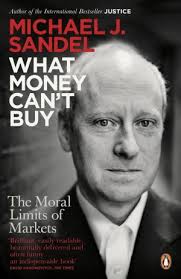 We were studying Michael Sandel’s What Money Can’t Buy, an exploration of how in our contemporary world market economies are generating market societies, societies in which ideas and values that have traditionally been considered as outside or above being reduced to numbers and dollar signs are gradually being sucked into the vortex of market activity. Everything, even the most revered and sacred activities, is up for sale. For general class discussion, I created a hypothetical scenario that I hoped would resonate with the group—student access to faculty time.
To set my proposal up, I described for my students how at various times during the semester student demand on my expertise and time often becomes very heavy. Specifically, my long-standing offer to read a couple of pages of students’ rough draft material up to a week before a major paper is due, drafts that I read on a first-come, first-served basis, creates a log-jam rivaled only by the queue outside my door during office hours in the days before a major assignment is due or an exam takes place. In the interest of streamlining the process and making my time most directly available to those who want it the most, I made the following proposal:
 At the beginning of each semester, my students will have the opportunity to purchase a Morgan Preferred-Access Pass for $250, a purchase that will provide a student with the following semester-long benefits:
- Your rough-draft material will be read, commented on, and returned within six hours of receipt (unless it was submitted between midnight and 6:00 AM), even when there are several rough draft submissions ahead of yours that have not yet been read. Your Preferred-Access Pass, in other words, entitles you to the privilege of jumping to the front of the e-line.
- Your Preferred-Access Pass also entitles you to jump to the head of the line outside my door during office hours for one-on-one conversation with me.
- Your Preferred-Access Pass is transferable. For instance, if you believe that you are in good shape on a particular assignment and do not need my help or expertise, you may rent your Preferred-Access Pass to a fellow student lacking such a pass to use for that assignment only.
- Please Note: Your Pass gains you preferred access to me by jumping the queue—it does not guarantee any particular grade on any given assignment.
After walking the students through the details of my proposal, I put them in small groups to discuss the ideas involved, reminding them to apply two tools Sandel identified as useful when testing such proposals with market creep in mind. Is there a problem of fairness involved? Is there a problem of corruption involved?
When we reconvened after ten minutes or so of group activity, it was clear that the students had taken my proposal very seriously, and they were not pleased with it. At all. It was a matter of figuring out what was at the core of their intuition that something was seriously wrong with this proposal.  Soon various challenges were raised.
What about students who can’t afford the $250?
To which “Market Me” responded “What about them?” This is the way the market works—those who want what’s for sale badly enough will find a way to come up with the asking price. After all, if I tell a car salesperson that I really, really want the $50,000 car on the lot but only have $5,000 to spend, I will be told “too bad!” But someone pointed a possible difference—what I have for sale in my proposal is different from a car. What I have put up for sale is something that arguably should be equally available to everyone, regardless of ability to pay. There’s a problem of fairness, in other words.
Aren’t you already getting paid to provide access to students? We’ve already paid for access to you with our tuition money.
This prompted my providing my students with a peek into the world of a faculty member. Yes I am getting paid to provide access to students, to the tune of a required three or four announced office hours per week.  And that’s what your tuition is paying for. But my practice of reading rough draft material is above and beyond the call of contract and duty. Indeed, many of my faculty colleagues have pointed out the insanity of voluntarily taking on such a time consuming task, given the already enormous time challenges of college teaching. So I’m willing to amend my proposal—office hours will remain first-come, first-served, but preferred rough draft access will be for sale. And by the way, I am still committed to providing access to all of my students, even those who do not purchase the all-access pass. My proposal just adjusts the dynamic of that access.
Making extra money for yourself in this way makes you look sort of like a jerk.
Really? I’m just trying to make a buck here! But to keep the discussion moving, I asked whether they would feel better if I set up a  PayPal account and the $250 went directly to the Providence College General Scholarship Fund. Everyone agreed that this would solve this particular problem; I even got the impression that with this adjustment several students would give a thumbs-up to the amended proposal.
But they shouldn’t, because even if the money is shifted away from me toward a “good cause,” access to me has still been commodified. The fact that the $250 is going to the scholarship fund rather than my checking account does not remove the fact that my time is for sale.  And if I’m still a “jerk” for even coming up with this idea, we need to figure out why. What exactly is at risk here? What important value would be demeaned and corroded if this policy were put in place?
I’m concerned that even though you say you will still give access to everyone, you will unintentionally stop paying as much attention to those without a pass, even when you aren’t backlogged.
A corruption problem in other words—a value is being damaged by its being placed on the market. This gave me the opportunity to introduce a way of thinking about education that many professed to be unaware of—the business model. What if we think of higher education institutions as putting a product up for sale, a product that students are purchasing with their tuition? What is the product?  How would the buyer be able to tell if their purchase was a good one?
As we talked about the business model of education, many students admitted that they do think of their four years at Providence College as something they have purchased with another end in mind, most likely a good job, a comfortable lifestyle, and the very happiness that we all claim that money can’t buy. “How are you able to tell if your purchase has been worth it?” I asked. With a bit of prodding, some admitted that their parents at least consider a low grade at the end of the semester to be evidence of a bad investment. Not only education but family relationships themselves start being judged with market categories. Finally, someone said what had been lurking beneath the surface throughout the discussion.
Students are supposed to love learning for the sake of learning, not for the sake of what they can get with it.
That such a statement is often immediately dismissed as idealistic and naïve is an indication of just how far down the market road of no return we have already travelled in our culture. But my students, although they admitted that they often ignore this conviction about education when buried under papers, exams, and stress about the future, all agreed that whatever the value is that is at risk of being corrupted in my modest proposal, “the love of learning” captures at least a portion of it.
Almost two years ago, in one of my many reflections on teaching in this blog, I wrote the following:
The whole process of teaching and learning, when liberated from my frequent well-meaning but misguided attempts to shape and control it, has transcendent energy behind it. This all sounds idealistic and impractical in a world where the value of higher education is often exclusively identified as and judged according to the standard of focused (and very expensive) job preparation. Maybe so—practicality has never been my strong suit. But identifying the tools of lifetime learning and honing skilled use of these tools through engagement with the greatest texts that human beings have produced is an activity whose importance transcends the size of one’s future paycheck.
Thanks to my students’ discussion of my modest proposal, I am once again reminded that at its heart, education should not be for sale. It’s too valuable for that.
Development of Western Civilization
Previous Post

August 5, 2016
What is a Podcast?
Next Post
August 14, 2016 Hail Frieda, Full of Grace
Browse Our Archives
Select a Category abortion Advent AI Angels Artificial intelligence atheism attention baptism Baptists beauty belief Benedictines Bible bicycling Big Bird books Bovina Camaldoli hermitage Canada Catholicism cats certainty change Christianity Christmas Collegeville Covid-19 creativity Development of Western Civilization dogs doubt Easter Enneagram Epiphany Episcopal ethics Eucharist evil extroverts Facebook faith family fear flowers forgiveness freedom friends God goodness grace happiness heaven hell history Holy Spirit Holy Week hope human nature humility humor idolatry incarnation introverts irreverence Islam Jeanne Jesus Joe Biden joy Judaism justice Kamala Harris knowledge Lent listen literature liturgy love Marsue Memorial Day miracles movies music mystery mythology NPR Old Testament optimism paradox peace Penguins philosophy piano podcast politics power prayer Protestantism Providence College Religion Rhode Island sabbatical sacrament science seeing silence Simone Weil Socrates soul sports St. John's College stories suffering tattoo teaching technology television theology thinking time tolerance transcendence travel trees trust truth Uncategorized Vermont wisdom wonder writing
Select a Month May 2026 April 2026 March 2026 February 2026 January 2026 December 2025 November 2025 October 2025 September 2025 August 2025 July 2025 June 2025 May 2025 April 2025 March 2025 February 2025 January 2025 December 2024 November 2024 October 2024 September 2024 August 2024 July 2024 June 2024 May 2024 April 2024 March 2024 February 2024 January 2024 December 2023 November 2023 October 2023 September 2023 August 2023 July 2023 June 2023 May 2023 April 2023 March 2023 February 2023 January 2023 December 2022 November 2022 October 2022 September 2022 August 2022 July 2022 June 2022 May 2022 April 2022 March 2022 February 2022 January 2022 December 2021 November 2021 October 2021 September 2021 August 2021 July 2021 June 2021 May 2021 April 2021 March 2021 February 2021 January 2021 December 2020 November 2020 October 2020 September 2020 August 2020 July 2020 June 2020 May 2020 April 2020 March 2020 February 2020 January 2020 December 2019 November 2019 October 2019 September 2019 August 2019 July 2019 June 2019 May 2019 April 2019 March 2019 February 2019 January 2019 December 2018 November 2018 October 2018 September 2018 August 2018 July 2018 June 2018 May 2018 April 2018 March 2018 February 2018 January 2018 December 2017 November 2017 October 2017 September 2017 August 2017 July 2017 June 2017 May 2017 April 2017 March 2017 February 2017 January 2017 December 2016 November 2016 October 2016 September 2016 August 2016 July 2016 June 2016 May 2016 April 2016 March 2016 February 2016 January 2016 December 2015 November 2015 October 2015 September 2015 August 2015 July 2015 June 2015 May 2015 April 2015 March 2015 February 2015 January 2015 December 2014 November 2014 October 2014 September 2014 August 2014 July 2014 June 2014 May 2014 April 2014 March 2014 February 2014 January 2014 December 2013 November 2013 October 2013 September 2013 August 2013 July 2013 June 2013 May 2013 April 2013 March 2013 February 2013 January 2013 December 2012 November 2012 October 2012 September 2012
Follow Us!
TAKE THE
Religious Wisdom Quiz
I prayed while serving wine to the king, and my sad face led to permission for my mission. Who am I?
Select your answer to see how you score.
Nehemiah Daniel Mordecai Ezra
Books by This Author Books by Vance G. Morgan
Related posts from Freelance Christianity

The Lonely Pawn: On Faith, Doubt, and Meaning


AI and Love: When a Chatbot Becomes a...

TRENDING AT PATHEOS Progressive Christian

Why Christians Have a Sacred Duty to Vote:...
The Bible offers strong support for the sacred duty to vote. Here...

What Being a Modern-Day Apostle Means to Me
In my last column, I discussed the ins and outs of modern-day...

Did Ancient China Once Worship the God of...
Across human history, a common thread weaves through the origins of the...

Love Your Neighbor – Including Earth-Kin: Lev. 19,...
God’s command to love your neighbor means acting in an ethical and...

Lead a Church Study of “Jesus and Lao...
Guest writer Jack Thomas (The Irreverent Reverend) reflects on leading his church...

Principles for Understanding the Apostolic Ministry Today
Whenever people discover that my formal ministry title is "apostle," as in...
view all Progressive Christian blogs
Ad-Free & Subscriber Log-In Subscription Support
- About Us
- 2026 Calendar
- Videos
- Podcasts
- Library of World Religions
- Faith In Media Tracker
- Advertise With Us
- Write for Us
- Privacy Policy
- Terms of Service
- Do Not Sell My Data
- Contact Us
- Radiant Digital
- Manage Newsletter Subscriptions
- Unsubscribe From Notifications
- Sitemap
Copyright 2008-2026, Patheos. All rights reserved.
Subscription Support Ad-Free & Subscriber Log-In
Follow Patheos