
BuddhistCatholicContemplativeEvangelicalGeneral ChristianHinduJewishLatter-day SaintMuslimNew VisionsProgressive Christian
Beliefs
- Buddhist
- Catholic
- Contemplative
- Evangelical
- General Christian
- Hindu
- Jewish
- Latter-day Saint
- More Voices
- Muslim
- New Visions
- Pagan
- Progressive Christian
Topics
- Religion News
- Food and Religion
- Sports and Religion
- Religious Art
- Religious Music and Entertainment
- Religious Events
- History and Religion
- Style and Religion
- Politics and Religion
- Women in Religion
- Recreation Outdoors and Religion
- Business Finance and Religion
- Careers Workplace and Religion
- Education and Religion
- Family Parenting and Religion
- Health Fitness and Religion
- Home and Religion
- Relationships and Religion
- Technology and Religion
- Travel and Religion
Columnists
- Buddhist Columnists
- Business Finance and Religion Columnists
- Careers Workplace and Religion Columnists
- Catholic Columnists
- Contemplative Columnists
- Education and Religion Columnists
- Evangelists Columnists
- Family Parenting and Religion Columnists
- General Christian Columnists
- Health Fitness and Religion Columnists
- Hindu Columnists
- History and Religion Columnists
- Home and Religion Columnists
- Jewish Columnists
- More Voices Columnists
- Latter Day Columnists
- Muslim Columnists
- New Visions Columnists
- Nonreligious Columnists
- Pagan Columnists
- Politics and Religion Columnists
- Progressive Columnists
- Recreation Outdoors and Religion Columnists
- Relationships and Religion Columnists
- Religion News Columnists
- Religious Art Columnists
- Religious Events Columnists
- Religious Music and Entertainment Columnists
- Sports and Religion Columnists
- Style and Religion Columnists
- Technology and Religion Columnists
- Travel and Religion Columnists
- Women in Religion Columnists
Resource Library
- 2026 Calendar
- Library of World Religions
- The 100 Most Holy Places on Earth
- Patheos Answers
- Podcasts
- Videos
- Faith Leaders Database
- Anglican Episcopalian
- Bahai
- Baptist
- Buddhism
- Christianity
- Confucianism
- Eastern Orthodoxy
- Hinduism
- Holiness and Pentecostal
- ISKCON
- Islam
- Judaism
- Lutheran
- Methodist
- The Church of Jesus Christ of Latter-day Saints
- New Age
- Paganism
- Presbytarian and Reformed
- Protestantism
- Religion Behind the Scenes
- Roman Catholic
- Scientology
- Shia Islam
- Sikhism
- Sufism
- Sunni Islam
- Taoism
- Zen
- See all religions
Research Tools
 Ad-Free & Subscriber Log-In Subscription Support
Ad-Free & Subscriber Log-In Subscription Support
Follow Patheos 

- Trending:
- Forgiveness
- |
- Marriage
- |
- Consciousness
- |
- Death Penalty
- |
- Election
- |
- Halloween

- Home
- Progressive Christian
- A Lenten Valentine
A Lenten Valentine
Last updated on: February 12, 2018 at 12:33 pm by Vance Morgan
A Lenten Valentine 2018-02-12T12:33:45-04:00 Vance Morgan
Patheos Explore the world's faith through different perspectives on religion and spirituality! Patheos has the views of the prevalent religions and spiritualities of the world.
I don’t know whose idea it was for Valentine’s Day to fall on the first Sunday of Lent this year, but in a way it makes sense. I’m currently reading  Rachel Kadish’s novel Tolstoy Lied; I started reading it because the main character, Tracy Farber, is a professor in a large academic department who is close to her tenure review. Kadish is an academic herself—in my experience only those who have lived in the insanity and pettiness of the academic world are qualified to write about it. Kadish is nailing it. But thirty-something main character Tracy is also in love for the first time, with amusing implications. She thinks too much, is unable to settle into the unfamiliar emotions, and is generally overstressing about everything she and her new love say and do. I recommend that Tracy go on a Lenten retreat. And perhaps do some research on the original Saint Valentine.
So who was this Valentine guy? As is the case with many early Christian martyrs, little is known about him. It’s possible that the stories surrounding Valentine are actually an amalgamation of the experiences of several different persons—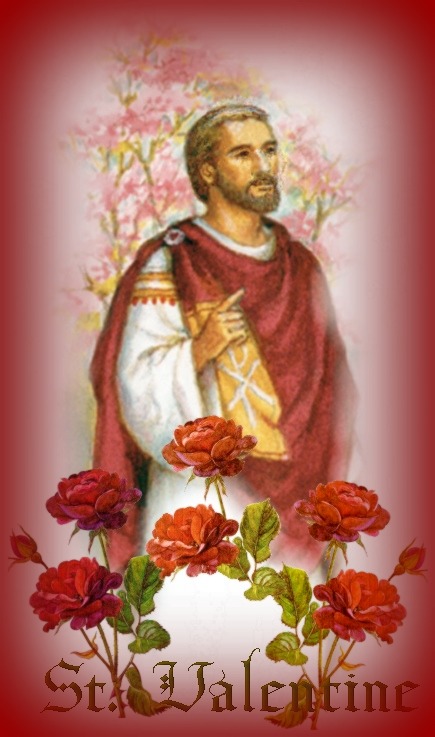 “Valentinus” was apparently a popular guy’s name in the third and fourth century Roman Empire. One persistent story is that Valentine ran afoul of an edict from Emperor Claudius II that all Romans must worship the twelve Olympian gods. This isn’t as restrictive as it sounds–I learned a few years ago from a classicist colleague and friend that the Romans were very tolerant of other religions just as long as everyone went through the motions of worshiping the state-approved gods as a statement of community and political solidarity. Eight centuries earlier Socrates got in trouble for apparently failing to obey a similar law in ancient Athens. But as one might expect from a Christian looking to be a martyr, Valentinus would not obey Claudius II’s edict and was thrown in prison. While waiting for his execution, Valentinus’ jailer—noting that the prisoner was a highly educated man—took advantage of the situation and brought his blind daughter to Valentinus’ cell for lessons. Somehow the idea of home schooling in a prison cell seems entirely appropriate.
The jailer’s daughter Julia was very bright and learned a great deal in a short time, including that Valentinus believed that the God he worshiped and who was responsible for him being in prison actually answered prayers. “Will God heal my blindness if we ask?” Julia wanted to know, and sure enough when she prayed with Valentinus, there was suddenly a brilliant light in the prison cell and for the first time in her life, Julia could see.  The evening before his execution, Valentinus sent a note to Julia urging her to stay close to God—he signed it “From your Valentine.” And the rest is history. In addition to being the patron saint of engaged couples and happy marriages, according to the History Channel website Saint Valentine is also in charge of beekeeping, epilepsy, fainting, the plague and travelling. Lots of multitasking going on in saintland, apparently. But I can see that—other than the beekeeping, all of those other things fit with love relationships.
At first look, yesterday’s scripture readings are far more appropriate for the first Sunday of Lent than for what Valentine’s Day has become in our contemporary world. But maybe not. T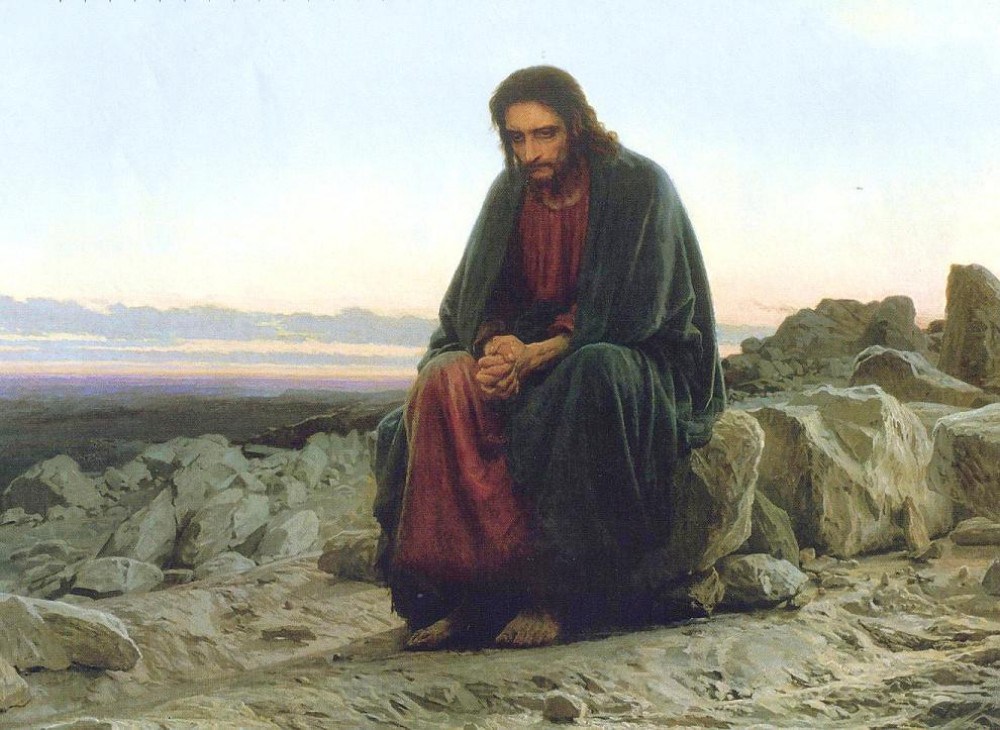 he gospel reading from Luke, for instance, describes the temptation of Jesus in the wilderness. Moral of the story—the temptations of material things, power, and fame are always seductive and present, seeking to distract each of us from where our focus should lie. Stripped of everything, including his freedom and eventually his life, but also stripped of everything that might distract him from his central focus and belief, Valentine became a channel of transcendent goodness and power. Yesterday’s Psalm 91, one of my favorites, reminds us that our strength is to be found in divine shelter, shadow, and quietness rather than in the more obvious sources of manic energy and stress. Paul reminds us in yesterday’s passage from Romans that “the word is near you, on your lips and in your heart.” The energy of Lent, as well as of yesterday’s readings and the Valentinus story, is all about renewed commitment and inward exploration—none of which guarantee outward success, but without which full humanness is impossible.
Each of the past three Ash Wednesdays I have posted an essay on this blog about why I think that Lent is a bad idea. For those who observe Lent, practices are often trivialized and simplified so that anyone can do it and feel good about themselves, just as Valentine’s Day in the twenty-first century makes a mockery of its ancient roots.
But this year I’m remembering the first time I ever did anything for Lent. Over twenty-five years ago I attended an Episcopal men’s silent retreat during Lent, an experience that I look back on now as being the first of an unexpected series of events over the years that incrementally awakened and changed me internally. 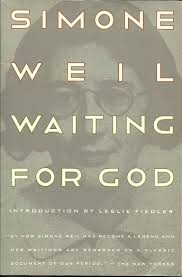 I first read Simone Weil at that retreat; studying, teaching, and writing about her thought has shaped me in more ways than I can count. I gained insights into why teaching is my vocation at that retreat. I first poked my toe into the waters of silence as spiritual practice at that retreat. Most importantly, at that retreat I for the first time began to suspect that God could be a reality in my life at a deeper level than intellectual assent. It has taken many years for this to develop—I’ve noted before that my encounters with the divine are more like a gentle drizzle than a steady rain—but I’m not the same as I was. Thanks, Lent.
One need not be Christian, or religious at all, to experience the healing value of what Lent offers. Finding a space of silence, quietness, attentiveness, and deliberation in the middle of a world that values none of the above is a challenge—but one worth taking up. This is why I recommend that Tracy go on a Lenten retreat. It beats finding all the above in a prison cell.
Previous Post

February 5, 2016
Robbed by the Kiss Cam
Next Post
February 17, 2016 Stranger in a Strange Land
Browse Our Archives
Select a Category abortion Advent AI Angels Artificial intelligence atheism attention baptism Baptists beauty belief Benedictines Bible bicycling Big Bird books Bovina Camaldoli hermitage Canada Catholicism cats certainty change Christianity Christmas Collegeville Covid-19 creativity Development of Western Civilization dogs doubt Easter Enneagram Epiphany Episcopal ethics Eucharist evil extroverts Facebook faith family fear flowers forgiveness freedom friends God goodness grace happiness heaven hell history Holy Spirit Holy Week hope human nature humility humor idolatry incarnation introverts irreverence Islam Jeanne Jesus Joe Biden joy Judaism justice Kamala Harris knowledge Lent listen literature liturgy love Marsue Memorial Day miracles movies music mystery mythology NPR Old Testament optimism paradox peace Penguins philosophy piano podcast politics power prayer Protestantism Providence College Religion Rhode Island sabbatical sacrament science seeing silence Simone Weil Socrates soul sports St. John's College stories suffering tattoo teaching technology television theology thinking time tolerance transcendence travel trees trust truth Uncategorized Vermont wisdom wonder writing
Select a Month May 2026 April 2026 March 2026 February 2026 January 2026 December 2025 November 2025 October 2025 September 2025 August 2025 July 2025 June 2025 May 2025 April 2025 March 2025 February 2025 January 2025 December 2024 November 2024 October 2024 September 2024 August 2024 July 2024 June 2024 May 2024 April 2024 March 2024 February 2024 January 2024 December 2023 November 2023 October 2023 September 2023 August 2023 July 2023 June 2023 May 2023 April 2023 March 2023 February 2023 January 2023 December 2022 November 2022 October 2022 September 2022 August 2022 July 2022 June 2022 May 2022 April 2022 March 2022 February 2022 January 2022 December 2021 November 2021 October 2021 September 2021 August 2021 July 2021 June 2021 May 2021 April 2021 March 2021 February 2021 January 2021 December 2020 November 2020 October 2020 September 2020 August 2020 July 2020 June 2020 May 2020 April 2020 March 2020 February 2020 January 2020 December 2019 November 2019 October 2019 September 2019 August 2019 July 2019 June 2019 May 2019 April 2019 March 2019 February 2019 January 2019 December 2018 November 2018 October 2018 September 2018 August 2018 July 2018 June 2018 May 2018 April 2018 March 2018 February 2018 January 2018 December 2017 November 2017 October 2017 September 2017 August 2017 July 2017 June 2017 May 2017 April 2017 March 2017 February 2017 January 2017 December 2016 November 2016 October 2016 September 2016 August 2016 July 2016 June 2016 May 2016 April 2016 March 2016 February 2016 January 2016 December 2015 November 2015 October 2015 September 2015 August 2015 July 2015 June 2015 May 2015 April 2015 March 2015 February 2015 January 2015 December 2014 November 2014 October 2014 September 2014 August 2014 July 2014 June 2014 May 2014 April 2014 March 2014 February 2014 January 2014 December 2013 November 2013 October 2013 September 2013 August 2013 July 2013 June 2013 May 2013 April 2013 March 2013 February 2013 January 2013 December 2012 November 2012 October 2012 September 2012
Follow Us!
TAKE THE
Religious Wisdom Quiz
Who was swallowed by a great fish for three days?
Select your answer to see how you score.
Jonah Daniel Noah Solomon
Books by This Author Books by Vance G. Morgan
Related posts from Freelance Christianity

The Lonely Pawn: On Faith, Doubt, and Meaning


AI and Love: When a Chatbot Becomes a...

TRENDING AT PATHEOS Progressive Christian

What Being a Modern-Day Apostle Means to Me
In my last column, I discussed the ins and outs of modern-day...

Did Ancient China Once Worship the God of...
Across human history, a common thread weaves through the origins of the...

Love Your Neighbor – Including Earth-Kin: Lev. 19,...
God’s command to love your neighbor means acting in an ethical and...

Lead a Church Study of “Jesus and Lao...
Guest writer Jack Thomas (The Irreverent Reverend) reflects on leading his church...

Pastoral Wisdom for Responding to Sermon Pushback
Getting sermon pushback on your social justice sermon? Learn practical, Proverbs-based strategies...

Principles for Understanding the Apostolic Ministry Today
Whenever people discover that my formal ministry title is "apostle," as in...
view all Progressive Christian blogs
Ad-Free & Subscriber Log-In Subscription Support
- About Us
- 2026 Calendar
- Videos
- Podcasts
- Library of World Religions
- Faith In Media Tracker
- Advertise With Us
- Write for Us
- Privacy Policy
- Terms of Service
- Do Not Sell My Data
- Contact Us
- Radiant Digital
- Manage Newsletter Subscriptions
- Unsubscribe From Notifications
- Sitemap
Copyright 2008-2026, Patheos. All rights reserved.
Subscription Support Ad-Free & Subscriber Log-In
Follow Patheos