
BuddhistCatholicContemplativeEvangelicalGeneral ChristianHinduJewishLatter-day SaintMuslimNew VisionsProgressive Christian
Beliefs
- Buddhist
- Catholic
- Contemplative
- Evangelical
- General Christian
- Hindu
- Jewish
- Latter-day Saint
- More Voices
- Muslim
- New Visions
- Pagan
- Progressive Christian
Topics
- Religion News
- Food and Religion
- Sports and Religion
- Religious Art
- Religious Music and Entertainment
- Religious Events
- History and Religion
- Style and Religion
- Politics and Religion
- Women in Religion
- Recreation Outdoors and Religion
- Business Finance and Religion
- Careers Workplace and Religion
- Education and Religion
- Family Parenting and Religion
- Health Fitness and Religion
- Home and Religion
- Relationships and Religion
- Technology and Religion
- Travel and Religion
Columnists
- Buddhist Columnists
- Business Finance and Religion Columnists
- Careers Workplace and Religion Columnists
- Catholic Columnists
- Contemplative Columnists
- Education and Religion Columnists
- Evangelists Columnists
- Family Parenting and Religion Columnists
- General Christian Columnists
- Health Fitness and Religion Columnists
- Hindu Columnists
- History and Religion Columnists
- Home and Religion Columnists
- Jewish Columnists
- More Voices Columnists
- Latter Day Columnists
- Muslim Columnists
- New Visions Columnists
- Nonreligious Columnists
- Pagan Columnists
- Politics and Religion Columnists
- Progressive Columnists
- Recreation Outdoors and Religion Columnists
- Relationships and Religion Columnists
- Religion News Columnists
- Religious Art Columnists
- Religious Events Columnists
- Religious Music and Entertainment Columnists
- Sports and Religion Columnists
- Style and Religion Columnists
- Technology and Religion Columnists
- Travel and Religion Columnists
- Women in Religion Columnists
Resource Library
- 2026 Calendar
- Library of World Religions
- The 100 Most Holy Places on Earth
- Patheos Answers
- Podcasts
- Videos
- Faith Leaders Database
- Anglican Episcopalian
- Bahai
- Baptist
- Buddhism
- Christianity
- Confucianism
- Eastern Orthodoxy
- Hinduism
- Holiness and Pentecostal
- ISKCON
- Islam
- Judaism
- Lutheran
- Methodist
- The Church of Jesus Christ of Latter-day Saints
- New Age
- Paganism
- Presbytarian and Reformed
- Protestantism
- Religion Behind the Scenes
- Roman Catholic
- Scientology
- Shia Islam
- Sikhism
- Sufism
- Sunni Islam
- Taoism
- Zen
- See all religions
Research Tools
 Ad-Free & Subscriber Log-In Subscription Support
Ad-Free & Subscriber Log-In Subscription Support
Follow Patheos 

- Trending:
- Forgiveness
- |
- Marriage
- |
- Consciousness
- |
- Death Penalty
- |
- Election
- |
- Halloween

- Home
- Progressive Christian
- History and Religion
- Remembering 9/11 and Becoming a Better Person
Remembering 9/11 and Becoming a Better Person
Last updated on: September 10, 2022 at 12:00 pm by Vance Morgan
Remembering 9/11 and Becoming a Better Person 2022-09-07T11:06:41-04:00 Vance Morgan
Patheos Explore the world's faith through different perspectives on religion and spirituality! Patheos has the views of the prevalent religions and spiritualities of the world.
Everyone beyond a certain age can remember clearly what they were doing twenty-one years ago today when they heard the news. I was in my college’s main cafeteria getting coffee and noticed something weird happening on the Today Show broadcast on a television hanging from the ceiling in the corner. At that point all they knew was that one of the Twin Towers was on fire, apparently because an airplane had crashed into it. I had scheduled office hours that morning, so I listened to live radio reports on NPR of the second tower being hit and the collapse of both towers. There was a surreal air to the broadcast—I wanted to believe that it wasn’t true, some sort of elaborate hoax along the lines of Orson Welles’ “War of the Worlds” broadcast many decades earlier. But it was true.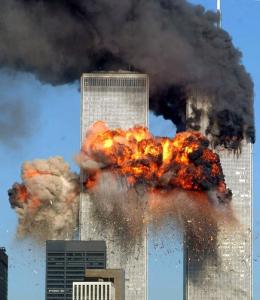
Classes were encouraged to meet and decide individually how best to deal with the day’s events. Several students in my first class of the day at 12:30 had family and friends who lived and/or worked in Manhattan—it was clear that the best thing for these students to do was to continue their frantic attempts to contact their loved ones. About half the class stayed and shared their thoughts—what they said and the nature of our conversation is difficult to recall. I know that many students (as well as many of my colleagues) were understandably angry and wanted retribution; as we gathered our things to leave about half way through the class period I said “the one thing I’m feeling is that my best response to what has happened is to become a better person. A better teacher, spouse, father, friend. That’s all I’ve got right now.”
As I was discussing a few of Michel de Montaigne’s later essays with several honors students the other day, I remembered my immediate response to the events of 9/11, especially that part about becoming a better person. At the end of his essay “Of repentance,” Montaigne writes that
I want to present and show myself uniformly throughout. If I had to live over again, I would live as I have lived. I have neither tears for the past nor fears for the future.
This indicates that, toward the end of his life, Montaigne is comfortable in his own skin in a way that is both admirable and rare.
As my students and I talked, our attention turned to the last two years or more of coronavirus disruption and how it, having thrown all of us a series of curves that none of us expected, could serve as a catalyst for developing the sort of centeredness that Montaigne describes. Might sheltering in place and physical/social distancing have been a blessing in disguise? What strategies might we practice now that will make us better people as we slowly emerge from our sheltered caves?
The theme of “what if I got to live my life over again?” raised by Montaigne is developed, three centuries later, by Friedrich Nietzsche into a disturbing and challenging thought experiment. In The Joyful Wisdom, Nietzsche asks
What, if some day or night, a demon were to steal after you into your loneliest loneliness and say to you: “This life, as you now live it and have lived it, you will have to live once more and innumerable times more; and there will be nothing new in it, but every pain and every joy and every thought and sigh… must return to you—all in the same succession and sequence” . . . Would you not throw yourself down and gnash your teeth and curse the demon who spoke thus?
I suspect—and Nietzsche expects—that most of us would have precisely that reaction. That poor choice, those intemperate remarks, these losses, griefs, and times of suffering, isolation away from those we miss and love, perhaps out of a job and worrying about the future over and over and over (and over) again and again? Nothing could be worse!
But as he continues, Nietzsche turns the tables on the reader.
Or have you once experienced a tremendous moment when you would have answered him: “You are a god, and never have I heard anything more divine!” . . . The question in each and every thing, “do you want this once more and innumerable times more?” would lie upon your actions as the greatest weight. How well disposed would you have to become to yourself and to life to crave nothing more fervently than this ultimate eternal confirmation and seal?
Whether Nietzsche believed that this thought experiment, which he called “eternal recurrence,” was something that we all would actually experience is a continuing matter for debate among Nietzsche scholars. Its value, however, as both a psychological and a moral tool is undeniable. Live your life as if you will have to repeat every bit of it over and over again. How differently would I live my life from day to day, moment to moment, if I knew that I would have to repeat every detail of it—down to the minutest choice and action—over and over again for eternity?
Because I live only a half mile from the college campus where I have taught happily and successfully for the past twenty-eight years, and because our campus is one of the most beautiful I have ever seen, I frequently find myself headed there on daily walks. Campus was virtually empty during the worst of the pandemic, and that threatened to be a serious downer. Especially during the days when all classes were remote, there were plenty of reasons to be stressed and negative.
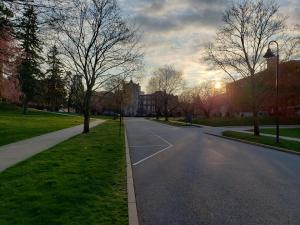
But one morning during April 2020 as the sun rose over one of our signature contemporary Gothic buildings, beauty surrounded me. Flowers and leaves were coming out, the birds were singing in every tree, and peace infused the air. The annual spring return of life overwhelmed me—as if nature didn’t care if I, or we, were living lives of serious disruption. There’s nothing better than nature doing its thing to put our human concerns into perspective. Maybe, just maybe, we actually aren’t the center of the universe after all.
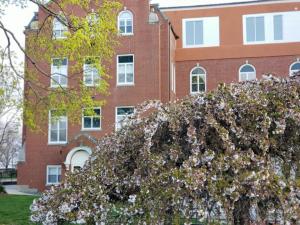
I chose to breathe that peace in rather than choose frustration at teaching opportunities lost because of circumstances beyond my control. Remembering what Jesus said about lilies dressed more beautifully than Solomon, sparrows noticed by God, and letting each day’s worries be sufficient instead of focusing on what might happen tomorrow, helps to sustain such choices. None of us can control much, but we can entirely choose how to be in the middle of even the most challenging circumstances. And maybe that’s the key, at least for me, to becoming a better person.
In his letter to the Philippians, a letter than one commentator describes as “the epistle of joy and encouragement in the midst of adverse circumstance,” Paul writes that
I have learned in whatever state I am, to be content. I know how to be abased, and I know how to abound. Everywhere, and in all things, I have learned both to be full and to be hungry, both to abound and to suffer need.
It’s worth remembering that Paul writes this from a prison cell. It is clear from his letters that Paul is fully human, through and through, with feet of clay up to his eyeballs just as we all have. But in the midst of stress, pressure, and loss of his freedom, Paul has learned “to be content.” That’s a very heavy lift, but there’s nothing particularly magical or even “holy” about it. The capacity to choose peace, centeredness, beauty, and goodness over stress, distraction, negativity, and strife is within each of us. The more we make those choices, the better we become.
General Christian
History and Religion
Previous Post
September 7, 2022
What Does the Bible Say about _____________?
Next Post

September 13, 2022 When Atheism Turns Evangelical
Browse Our Archives
Select a Category abortion Advent AI Angels Artificial intelligence atheism attention baptism Baptists beauty belief Benedictines Bible bicycling Big Bird books Bovina Camaldoli hermitage Canada Catholicism cats certainty change Christianity Christmas Collegeville Covid-19 creativity Development of Western Civilization dogs doubt Easter Enneagram Epiphany Episcopal ethics Eucharist evil extroverts Facebook faith family fear flowers forgiveness freedom friends God goodness grace happiness heaven hell history Holy Spirit Holy Week hope human nature humility humor idolatry incarnation introverts irreverence Islam Jeanne Jesus Joe Biden joy Judaism justice Kamala Harris knowledge Lent listen literature liturgy love Marsue Memorial Day miracles movies music mystery mythology NPR Old Testament optimism paradox peace Penguins philosophy piano podcast politics power prayer Protestantism Providence College Religion Rhode Island sabbatical sacrament science seeing silence Simone Weil Socrates soul sports St. John's College stories suffering tattoo teaching technology television theology thinking time tolerance transcendence travel trees trust truth Uncategorized Vermont wisdom wonder writing
Select a Month May 2026 April 2026 March 2026 February 2026 January 2026 December 2025 November 2025 October 2025 September 2025 August 2025 July 2025 June 2025 May 2025 April 2025 March 2025 February 2025 January 2025 December 2024 November 2024 October 2024 September 2024 August 2024 July 2024 June 2024 May 2024 April 2024 March 2024 February 2024 January 2024 December 2023 November 2023 October 2023 September 2023 August 2023 July 2023 June 2023 May 2023 April 2023 March 2023 February 2023 January 2023 December 2022 November 2022 October 2022 September 2022 August 2022 July 2022 June 2022 May 2022 April 2022 March 2022 February 2022 January 2022 December 2021 November 2021 October 2021 September 2021 August 2021 July 2021 June 2021 May 2021 April 2021 March 2021 February 2021 January 2021 December 2020 November 2020 October 2020 September 2020 August 2020 July 2020 June 2020 May 2020 April 2020 March 2020 February 2020 January 2020 December 2019 November 2019 October 2019 September 2019 August 2019 July 2019 June 2019 May 2019 April 2019 March 2019 February 2019 January 2019 December 2018 November 2018 October 2018 September 2018 August 2018 July 2018 June 2018 May 2018 April 2018 March 2018 February 2018 January 2018 December 2017 November 2017 October 2017 September 2017 August 2017 July 2017 June 2017 May 2017 April 2017 March 2017 February 2017 January 2017 December 2016 November 2016 October 2016 September 2016 August 2016 July 2016 June 2016 May 2016 April 2016 March 2016 February 2016 January 2016 December 2015 November 2015 October 2015 September 2015 August 2015 July 2015 June 2015 May 2015 April 2015 March 2015 February 2015 January 2015 December 2014 November 2014 October 2014 September 2014 August 2014 July 2014 June 2014 May 2014 April 2014 March 2014 February 2014 January 2014 December 2013 November 2013 October 2013 September 2013 August 2013 July 2013 June 2013 May 2013 April 2013 March 2013 February 2013 January 2013 December 2012 November 2012 October 2012 September 2012
Follow Us!
TAKE THE
Religious Wisdom Quiz
What New Testament letter addresses a runaway slave returning to his master?
Select your answer to see how you score.
Colossians Philemon 2 John Titus
Books by This Author Books by Vance G. Morgan
Related posts from Freelance Christianity

The Lonely Pawn: On Faith, Doubt, and Meaning


AI and Love: When a Chatbot Becomes a...

TRENDING AT PATHEOS Progressive Christian

Why Christians Have a Sacred Duty to Vote:...
The Bible offers strong support for the sacred duty to vote. Here...

What Being a Modern-Day Apostle Means to Me
In my last column, I discussed the ins and outs of modern-day...

Did Ancient China Once Worship the God of...
Across human history, a common thread weaves through the origins of the...

Love Your Neighbor – Including Earth-Kin: Lev. 19,...
God’s command to love your neighbor means acting in an ethical and...

Lead a Church Study of “Jesus and Lao...
Guest writer Jack Thomas (The Irreverent Reverend) reflects on leading his church...

Principles for Understanding the Apostolic Ministry Today
Whenever people discover that my formal ministry title is "apostle," as in...
view all Progressive Christian blogs
Ad-Free & Subscriber Log-In Subscription Support
- About Us
- 2026 Calendar
- Videos
- Podcasts
- Library of World Religions
- Faith In Media Tracker
- Advertise With Us
- Write for Us
- Privacy Policy
- Terms of Service
- Do Not Sell My Data
- Contact Us
- Radiant Digital
- Manage Newsletter Subscriptions
- Unsubscribe From Notifications
- Sitemap
Copyright 2008-2026, Patheos. All rights reserved.
Subscription Support Ad-Free & Subscriber Log-In
Follow Patheos