
BuddhistCatholicContemplativeEvangelicalGeneral ChristianHinduJewishLatter-day SaintMuslimNew VisionsProgressive Christian
Beliefs
- Buddhist
- Catholic
- Contemplative
- Evangelical
- General Christian
- Hindu
- Jewish
- Latter-day Saint
- More Voices
- Muslim
- New Visions
- Pagan
- Progressive Christian
Topics
- Religion News
- Food and Religion
- Sports and Religion
- Religious Art
- Religious Music and Entertainment
- Religious Events
- History and Religion
- Style and Religion
- Politics and Religion
- Women in Religion
- Recreation Outdoors and Religion
- Business Finance and Religion
- Careers Workplace and Religion
- Education and Religion
- Family Parenting and Religion
- Health Fitness and Religion
- Home and Religion
- Relationships and Religion
- Technology and Religion
- Travel and Religion
Columnists
- Buddhist Columnists
- Business Finance and Religion Columnists
- Careers Workplace and Religion Columnists
- Catholic Columnists
- Contemplative Columnists
- Education and Religion Columnists
- Evangelists Columnists
- Family Parenting and Religion Columnists
- General Christian Columnists
- Health Fitness and Religion Columnists
- Hindu Columnists
- History and Religion Columnists
- Home and Religion Columnists
- Jewish Columnists
- More Voices Columnists
- Latter Day Columnists
- Muslim Columnists
- New Visions Columnists
- Nonreligious Columnists
- Pagan Columnists
- Politics and Religion Columnists
- Progressive Columnists
- Recreation Outdoors and Religion Columnists
- Relationships and Religion Columnists
- Religion News Columnists
- Religious Art Columnists
- Religious Events Columnists
- Religious Music and Entertainment Columnists
- Sports and Religion Columnists
- Style and Religion Columnists
- Technology and Religion Columnists
- Travel and Religion Columnists
- Women in Religion Columnists
Resource Library
- 2026 Calendar
- Library of World Religions
- The 100 Most Holy Places on Earth
- Patheos Answers
- Podcasts
- Videos
- Faith Leaders Database
- Anglican Episcopalian
- Bahai
- Baptist
- Buddhism
- Christianity
- Confucianism
- Eastern Orthodoxy
- Hinduism
- Holiness and Pentecostal
- ISKCON
- Islam
- Judaism
- Lutheran
- Methodist
- The Church of Jesus Christ of Latter-day Saints
- New Age
- Paganism
- Presbytarian and Reformed
- Protestantism
- Religion Behind the Scenes
- Roman Catholic
- Scientology
- Shia Islam
- Sikhism
- Sufism
- Sunni Islam
- Taoism
- Zen
- See all religions
Research Tools
 Ad-Free & Subscriber Log-In Subscription Support
Ad-Free & Subscriber Log-In Subscription Support
Follow Patheos 

- Trending:
- Forgiveness
- |
- Marriage
- |
- Consciousness
- |
- Death Penalty
- |
- Election
- |
- Halloween

- Home
- Progressive Christian
- The Best and the Worst: A Wish for the New Year
The Best and the Worst: A Wish for the New Year
Last updated on: December 31, 2015 at 7:30 am by Vance Morgan
The Best and the Worst: A Wish for the New Year 2015-12-31T07:30:47-04:00 Vance Morgan
Patheos Explore the world's faith through different perspectives on religion and spirituality! Patheos has the views of the prevalent religions and spiritualities of the world.
Love does not say “I ought to love”—it loves. Pity does not say “It is right to feel pity”—it pities. Justice does not say, “I am bound to be just”—it acts justly. George Eliot
There are eight to ten movies that Jeanne and I watch religiously during the Christmas season, from the obvious (“It’s a Wonderful Life,” “White Christmas”) to a few that are not as well-known. We ended our annual Christmas movie-watching binge on Christmas Eve this year with one of the lesser known films, the 2006 French film “Joyeux Noel.”  One of my favorites, this film is a fictionalized account of the 1914 Christmas Truce that spontaneously occurred in numerous places along the battlefield trenches throughout France during the first Christmas season of World War I. The movie is strangely both feel-good and devastatingly sad. The soldiers from both the German and the Allied sides are portrayed as humane and patriotic, willing to share in spontaneous brotherhood and solidarity for twelve hours or so, all the time knowing (as the viewer also knows) that carnage will return within hours and continue for another five hellish years. William Butler Yeats described it well: Things fall apart; the centre cannot hold; / Mere anarchy is loosed upon the world, / The blood-dimmed tide is loosed, and everywhere / The ceremony of innocence is drowned.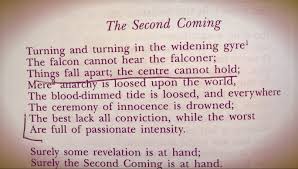
I am not the first person during the past weeks and months to think of the next two lines from Yeats’ “The Second Coming” when considering current events: The best lack all conviction, while the worst / Are full of passionate intensity. From departmental drama to presidential politics to immigration crises to the war on terrorism, these lines capture the essence of the world we live in. During this holiday season, the closing lines of Yeats’ masterpiece are especially haunting: And what rough beast, its hour come round at last / Slouches toward Bethlehem to be born? What is this world that we have created? And what hope is there, as we move to yet another year, to stem the blood-dimmed tide and begin to do something different?
With a few notable exceptions, the public sphere these days is crammed to overflowing with people who embody Yeats’ observation. Those who have boundless passion and energy, grabbing all the headlines and air space regularly display the worst aspects of what humans can be—intolerant, judgmental, pompous, self-centered, ambitious for all the wrong reasons—while evidence of what is best about us seldom rises to our attention.  I read in Rebecca Mead’s My Life in Middlemarch the other day a line from a George Eliot essay that could have been written yesterday about many of our public figures. In a withering critique of Dr. John Cumming, a well-known nineteenth-century Scottish Evangelical preacher, Eliot comments on his ability “to reconcile small ability with great ambition, superficial knowledge with the prestige of erudition, a middling morality with a high reputation for sanctity.” Our current political landscape is populated with such people; as Eliot writes elsewhere, “one’s ambition is always in the inverse proportion of one’s knowledge.” And this is not forced on us—if pollsters are correct, this is precisely the sort of person that many of us are attracted to.
The obvious solution for this would be to find a way to spark the conviction of the “best” so that better people will seek the highest offices in the land. This is a problem that has challenged philosophers and others since Plato’s Republic—how is one to ensure that the best people are in charge of things (Plato essentially said they should be forced to do so)? My own thinking is that the “best” do not necessarily lack conviction as Yeats suggests; instead, the “best” are those whose conviction leads them to live the sort of life described by 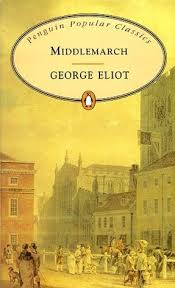 George Eliot beautifully in the final sentence of Middlemarch:
The growing good of the world is partly dependent on unhistoric acts; and that things are not so ill with you and me as they might have been, is half owing to the number who lived faithfully a hidden life, and rest in unvisited tombs.
Goodness does not enter the world on grand stages with fanfare and media coverage. Rather, the best people are those who live lives of excellence and virtue with conviction, seeking no reward or notoriety. How is such conviction cultivated?
Many argue that religious faith is the most likely, perhaps the only, source of moral excellence and conviction. There is strong evidence linking faith and moral excellence, but we are all aware of just how much damage and violence is done in the name of religious purity and conviction in our nation and world. In his recent book 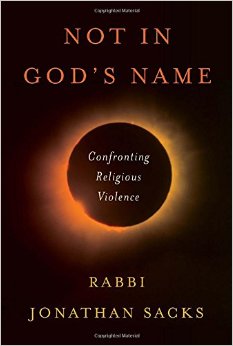 Not in God’s Name, Jonathan Sacks, until recently the Chief Rabbi of the United Kingdom, reflects on the connection between faith and moral conviction:
Abraham himself sought to be a blessing to others regardless of their faith. That idea, ignored for many of the intervening centuries, remains the simplest definition of Abrahamic faith. It is not our task to conquer or convert the world or enforce uniformity of belief. It is our task to be a blessing to the world. The use of religion for political ends is not righteousness but idolatry . . . To invoke God to justify violence against the innocent is not an act of sanctity but of sacrilege.
It is perhaps time for persons of all faiths to seek common sources of moral conviction, shared simply by being human.
George Eliot consciously intended her novels to be an inspiration for human excellence, but she spent most of her adult life as an agnostic, having left the Anglicanism of her youth behind in her early twenties. She found the wellspring of moral excellence and conviction in obvious, but often overlooked places—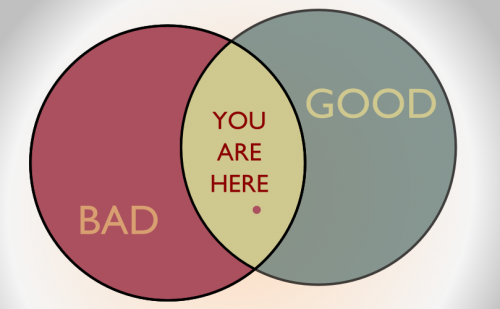 our shared humanity and our capacity to empathize with others. Her answer to the perennial question “Why be moral?” is as direct as it is simple:
I am just and honest, not because I expect to live in another world, but because, having felt the pain of injustice and dishonesty towards myself, I have a fellow-feeling with other people, who would suffer the same pain if I were unjust or dishonest towards them. It is a pang to me to witness the suffering of fellow-beings, and I feel their suffering the more acutely because they are mortal—because their lives are so short, I would have them, if possible, filled with happiness and not misery.
This is not a call to debate, legislation, philosophical hair-splitting, or theological distinctions. It is a simple call to action. As the prophet Micah wrote so many centuries ago, “do justice, love mercy, walk humbly.” These are action verbs. We are called to do more than talk.
In keeping with Rabbi Sacks’ call, my New Year’s resolution is to find new ways to be a blessing in the part of the world that is in front of me on a daily basis. Perhaps if enough of us shared that resolution, our collective conviction might introduce some positive change into a world that badly needs it. It’s worth a try.
Previous Post

December 29, 2015
One Thing
Next Post
January 2, 2016 Goliath was a Wimp: Random Observations for the New Year
Browse Our Archives
Select a Category abortion Advent AI Angels Artificial intelligence atheism attention baptism Baptists beauty belief Benedictines Bible bicycling Big Bird books Bovina Camaldoli hermitage Canada Catholicism cats certainty change Christianity Christmas Collegeville Covid-19 creativity Development of Western Civilization dogs doubt Easter Enneagram Epiphany Episcopal ethics Eucharist evil extroverts Facebook faith family fear flowers forgiveness freedom friends God goodness grace happiness heaven hell history Holy Spirit Holy Week hope human nature humility humor idolatry incarnation introverts irreverence Islam Jeanne Jesus Joe Biden joy Judaism justice Kamala Harris knowledge Lent listen literature liturgy love Marsue Memorial Day miracles movies music mystery mythology NPR Old Testament optimism paradox peace Penguins philosophy piano podcast politics power prayer Protestantism Providence College Religion Rhode Island sabbatical sacrament science seeing silence Simone Weil Socrates soul sports St. John's College stories suffering tattoo teaching technology television theology thinking time tolerance transcendence travel trees trust truth Uncategorized Vermont wisdom wonder writing
Select a Month May 2026 April 2026 March 2026 February 2026 January 2026 December 2025 November 2025 October 2025 September 2025 August 2025 July 2025 June 2025 May 2025 April 2025 March 2025 February 2025 January 2025 December 2024 November 2024 October 2024 September 2024 August 2024 July 2024 June 2024 May 2024 April 2024 March 2024 February 2024 January 2024 December 2023 November 2023 October 2023 September 2023 August 2023 July 2023 June 2023 May 2023 April 2023 March 2023 February 2023 January 2023 December 2022 November 2022 October 2022 September 2022 August 2022 July 2022 June 2022 May 2022 April 2022 March 2022 February 2022 January 2022 December 2021 November 2021 October 2021 September 2021 August 2021 July 2021 June 2021 May 2021 April 2021 March 2021 February 2021 January 2021 December 2020 November 2020 October 2020 September 2020 August 2020 July 2020 June 2020 May 2020 April 2020 March 2020 February 2020 January 2020 December 2019 November 2019 October 2019 September 2019 August 2019 July 2019 June 2019 May 2019 April 2019 March 2019 February 2019 January 2019 December 2018 November 2018 October 2018 September 2018 August 2018 July 2018 June 2018 May 2018 April 2018 March 2018 February 2018 January 2018 December 2017 November 2017 October 2017 September 2017 August 2017 July 2017 June 2017 May 2017 April 2017 March 2017 February 2017 January 2017 December 2016 November 2016 October 2016 September 2016 August 2016 July 2016 June 2016 May 2016 April 2016 March 2016 February 2016 January 2016 December 2015 November 2015 October 2015 September 2015 August 2015 July 2015 June 2015 May 2015 April 2015 March 2015 February 2015 January 2015 December 2014 November 2014 October 2014 September 2014 August 2014 July 2014 June 2014 May 2014 April 2014 March 2014 February 2014 January 2014 December 2013 November 2013 October 2013 September 2013 August 2013 July 2013 June 2013 May 2013 April 2013 March 2013 February 2013 January 2013 December 2012 November 2012 October 2012 September 2012
Follow Us!
TAKE THE
Religious Wisdom Quiz
Who was the first king of the northern kingdom of Israel?
Select your answer to see how you score.
Ahab Rehoboam Jeroboam Omri
Books by This Author Books by Vance G. Morgan
Related posts from Freelance Christianity

The Lonely Pawn: On Faith, Doubt, and Meaning


AI and Love: When a Chatbot Becomes a...

TRENDING AT PATHEOS Progressive Christian

What Being a Modern-Day Apostle Means to Me
In my last column, I discussed the ins and outs of modern-day...

Did Ancient China Once Worship the God of...
Across human history, a common thread weaves through the origins of the...

Love Your Neighbor – Including Earth-Kin: Lev. 19,...
God’s command to love your neighbor means acting in an ethical and...

Lead a Church Study of “Jesus and Lao...
Guest writer Jack Thomas (The Irreverent Reverend) reflects on leading his church...

Pastoral Wisdom for Responding to Sermon Pushback
Getting sermon pushback on your social justice sermon? Learn practical, Proverbs-based strategies...

Principles for Understanding the Apostolic Ministry Today
Whenever people discover that my formal ministry title is "apostle," as in...
view all Progressive Christian blogs
Ad-Free & Subscriber Log-In Subscription Support
- About Us
- 2026 Calendar
- Videos
- Podcasts
- Library of World Religions
- Faith In Media Tracker
- Advertise With Us
- Write for Us
- Privacy Policy
- Terms of Service
- Do Not Sell My Data
- Contact Us
- Radiant Digital
- Manage Newsletter Subscriptions
- Unsubscribe From Notifications
- Sitemap
Copyright 2008-2026, Patheos. All rights reserved.
Subscription Support Ad-Free & Subscriber Log-In
Follow Patheos