
BuddhistCatholicContemplativeEvangelicalGeneral ChristianHinduJewishLatter-day SaintMuslimNew VisionsProgressive Christian
Beliefs
- Buddhist
- Catholic
- Contemplative
- Evangelical
- General Christian
- Hindu
- Jewish
- Latter-day Saint
- More Voices
- Muslim
- New Visions
- Pagan
- Progressive Christian
Topics
- Religion News
- Food and Religion
- Sports and Religion
- Religious Art
- Religious Music and Entertainment
- Religious Events
- History and Religion
- Style and Religion
- Politics and Religion
- Women in Religion
- Recreation Outdoors and Religion
- Business Finance and Religion
- Careers Workplace and Religion
- Education and Religion
- Family Parenting and Religion
- Health Fitness and Religion
- Home and Religion
- Relationships and Religion
- Technology and Religion
- Travel and Religion
Columnists
- Buddhist Columnists
- Business Finance and Religion Columnists
- Careers Workplace and Religion Columnists
- Catholic Columnists
- Contemplative Columnists
- Education and Religion Columnists
- Evangelists Columnists
- Family Parenting and Religion Columnists
- General Christian Columnists
- Health Fitness and Religion Columnists
- Hindu Columnists
- History and Religion Columnists
- Home and Religion Columnists
- Jewish Columnists
- More Voices Columnists
- Latter Day Columnists
- Muslim Columnists
- New Visions Columnists
- Nonreligious Columnists
- Pagan Columnists
- Politics and Religion Columnists
- Progressive Columnists
- Recreation Outdoors and Religion Columnists
- Relationships and Religion Columnists
- Religion News Columnists
- Religious Art Columnists
- Religious Events Columnists
- Religious Music and Entertainment Columnists
- Sports and Religion Columnists
- Style and Religion Columnists
- Technology and Religion Columnists
- Travel and Religion Columnists
- Women in Religion Columnists
Resource Library
- 2026 Calendar
- Library of World Religions
- The 100 Most Holy Places on Earth
- Patheos Answers
- Podcasts
- Videos
- Faith Leaders Database
- Anglican Episcopalian
- Bahai
- Baptist
- Buddhism
- Christianity
- Confucianism
- Eastern Orthodoxy
- Hinduism
- Holiness and Pentecostal
- ISKCON
- Islam
- Judaism
- Lutheran
- Methodist
- The Church of Jesus Christ of Latter-day Saints
- New Age
- Paganism
- Presbytarian and Reformed
- Protestantism
- Religion Behind the Scenes
- Roman Catholic
- Scientology
- Shia Islam
- Sikhism
- Sufism
- Sunni Islam
- Taoism
- Zen
- See all religions
Research Tools
 Ad-Free & Subscriber Log-In Subscription Support
Ad-Free & Subscriber Log-In Subscription Support
Follow Patheos 

- Trending:
- Forgiveness
- |
- Marriage
- |
- Consciousness
- |
- Death Penalty
- |
- Election
- |
- Halloween

- Home
- Progressive Christian
- Why the Liberal Arts Matter
Why the Liberal Arts Matter
Last updated on: November 7, 2021 at 1:40 pm by Vance Morgan
Why the Liberal Arts Matter 2021-11-07T13:40:21-04:00 Vance Morgan
Patheos Explore the world's faith through different perspectives on religion and spirituality! Patheos has the views of the prevalent religions and spiritualities of the world.
Two-time Pulitzer Prize winning historian David McCullough was the speaker at Providence College’s Commencement exercises last Sunday. His presence reminded me of when I met McCullough (I tried not to be too much of a groupie) four and a half years ago.
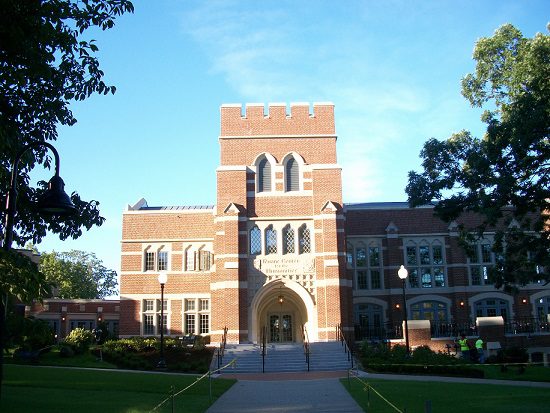
In October 2013, McCullough was the invited keynote speaker at the dedication of our beautiful new Ruane Center for the Humanities; in an education world in which institutions of higher education are marginalizing, downsizing, and even occasionally eliminating the humanities from their curricula, Providence College doubled down on what we do best–the liberal arts–and spent millions of dollars to prove its dedication to its mission. Here’s an excerpt from McCullough’s remarks:
I feel to the depths of my being that this emblematic new building is not only a step in the right direction for Providence College, but for our country. We need to be reminded about who we are and how we got to be here.”
As the director at the time of the large, interdisciplinary program required of all Providence College students whose classes all take place in the new building, I was asked, as part of a series of speakers including McCullough, to bring greetings to the several hundred people gathered from the faculty. It gave me the opportunity to consider the value of a liberal education. Here’s what I said.
My father, an itinerant Baptist minister, once told me about a plaque on the preacher’s side of the pulpit in one of the many churches in which he sermonized during my growing-up years. The pulpit plaque challenged the person giving the sermon directly by asking “What are you trying to do to these people?” As director of the Development of Western Civilization [DWC] program that has just finished its first month in this glorious new building that we are dedicating today, I frequently ask myself this question and bring it regularly to the DWC faculty. 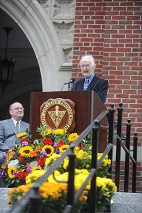 “What are we trying to do to these people, these students who have chosen, along with their families, to make a Providence College liberal arts education a central part of their plans for a flourishing future?”
Just as I usually start DWC faculty meetings with “Here’s what we are not talking about today,” a good answer to “What are we trying to do to these people” might begin with understanding what we are not doing as well. In DWC, for instance, we are not conducting a four-semester long museum tour, spending last week in the Homer wing, this week in the Herodotus wing, and next week in the Sophocles section, bemused by how quaint and how different things were back then.
As I often tell my students, if we can’t find something directly relevant to us in what we read and discuss, something of importance to twenty-first century people, we’re wasting our time. So how do we make the connection between the past and the present in such a way as to shape a better future? Brief passages from two different authors, a Lutheran pastor and an Anglican bishop, have recently helped me frame this question anew.
Nadia Bolz-Weber writes that **You have to be deeply rooted in tradition in order to innovate with integrity.**A liberally educated person knows where she comes from. Athena may have sprung fully formed from Zeus’s head, but a liberally educated person is shaped, molded, and formed by continual and intelligent immersion in the greatest works and ideas of the past. A liberal education is not a museum tour. It is a deliberate and extended engagement with where we come from; such an engagement forms the foundation a well-lived and creatively expressed life.
Rowan Williams writes that To read means to reread. If we are to gain any meaning out of the past, we must energize it in terms of the present. Contrary to a favorite phrase among Rhode Islanders, liberally educated persons are never “all set.” The ultimate purpose of a liberal education is to establish the tools and habits of lifetime learning, tools and habits that will help shine a new light on everything, even things you thought you already knew.
The past, whether my past or a text from several thousand years ago, becomes new each time it is considered, shining a new light on possible futures. Two weeks ago in a seminar on the Odyssey, I understood a text that I thought I knew thoroughly in a brand new way as a student compared the challenges faced by Odysseus and Penelope once he makes it back to Ithaca with similar challenges faced by veterans returning from Iraq and Afghanistan and their families.
This beautiful new building has been in full pedagogical operation for a month, and the early returns are wonderfully positive. Students and faculty walk the halls with smiles on their faces. There are students already studying and conversing in the Great Room when I arrive at 7:30 every morning. Several colleagues have reported that they are having the best seminars of their lives.
The faculty has not become smarter, the students aren’t necessarily better, but we are teaching and learning in a building whose beauty and elegance matches the beauty and elegance of what takes place inside on a daily basis—preparation for a life of learning and excellence. Since the DWC offices were moved into the Ruane Center two months ago, I frequently find myself wandering the halls alternating between smiling and pinching myself to make sure that this is truly our building.
To take the Apostle Paul out of context, “old things are passed away; behold, all things are become new.” On behalf of the Providence College faculty, I have two words to say to all of those on the stage and all those out there who contributed to making this dream a reality: THANK YOU.
Development of Western Civilization
Development of Western Civilization
Previous Post
May 20, 2018
Pentecost and Graduation Day
Next Post
May 24, 2018 Ruining the Christian Brand
Browse Our Archives
Select a Category abortion Advent AI Angels Artificial intelligence atheism attention baptism Baptists beauty belief Benedictines Bible bicycling Big Bird books Bovina Camaldoli hermitage Canada Catholicism cats certainty change Christianity Christmas Collegeville Covid-19 creativity Development of Western Civilization dogs doubt Easter Enneagram Epiphany Episcopal ethics Eucharist evil extroverts Facebook faith family fear flowers forgiveness freedom friends God goodness grace happiness heaven hell history Holy Spirit Holy Week hope human nature humility humor idolatry incarnation introverts irreverence Islam Jeanne Jesus Joe Biden joy Judaism justice Kamala Harris knowledge Lent listen literature liturgy love Marsue Memorial Day miracles movies music mystery mythology NPR Old Testament optimism paradox peace Penguins philosophy piano podcast politics power prayer Protestantism Providence College Religion Rhode Island sabbatical sacrament science seeing silence Simone Weil Socrates soul sports St. John's College stories suffering tattoo teaching technology television theology thinking time tolerance transcendence travel trees trust truth Uncategorized Vermont wisdom wonder writing
Select a Month May 2026 April 2026 March 2026 February 2026 January 2026 December 2025 November 2025 October 2025 September 2025 August 2025 July 2025 June 2025 May 2025 April 2025 March 2025 February 2025 January 2025 December 2024 November 2024 October 2024 September 2024 August 2024 July 2024 June 2024 May 2024 April 2024 March 2024 February 2024 January 2024 December 2023 November 2023 October 2023 September 2023 August 2023 July 2023 June 2023 May 2023 April 2023 March 2023 February 2023 January 2023 December 2022 November 2022 October 2022 September 2022 August 2022 July 2022 June 2022 May 2022 April 2022 March 2022 February 2022 January 2022 December 2021 November 2021 October 2021 September 2021 August 2021 July 2021 June 2021 May 2021 April 2021 March 2021 February 2021 January 2021 December 2020 November 2020 October 2020 September 2020 August 2020 July 2020 June 2020 May 2020 April 2020 March 2020 February 2020 January 2020 December 2019 November 2019 October 2019 September 2019 August 2019 July 2019 June 2019 May 2019 April 2019 March 2019 February 2019 January 2019 December 2018 November 2018 October 2018 September 2018 August 2018 July 2018 June 2018 May 2018 April 2018 March 2018 February 2018 January 2018 December 2017 November 2017 October 2017 September 2017 August 2017 July 2017 June 2017 May 2017 April 2017 March 2017 February 2017 January 2017 December 2016 November 2016 October 2016 September 2016 August 2016 July 2016 June 2016 May 2016 April 2016 March 2016 February 2016 January 2016 December 2015 November 2015 October 2015 September 2015 August 2015 July 2015 June 2015 May 2015 April 2015 March 2015 February 2015 January 2015 December 2014 November 2014 October 2014 September 2014 August 2014 July 2014 June 2014 May 2014 April 2014 March 2014 February 2014 January 2014 December 2013 November 2013 October 2013 September 2013 August 2013 July 2013 June 2013 May 2013 April 2013 March 2013 February 2013 January 2013 December 2012 November 2012 October 2012 September 2012
Follow Us!
TAKE THE
Religious Wisdom Quiz
Who was visited by an angel to announce his wife would have John the Baptist?
Select your answer to see how you score.
Simon Caiaphas Zechariah Joseph
Books by This Author Books by Vance G. Morgan
Related posts from Freelance Christianity

The Lonely Pawn: On Faith, Doubt, and Meaning


AI and Love: When a Chatbot Becomes a...

TRENDING AT PATHEOS Progressive Christian

What Being a Modern-Day Apostle Means to Me
In my last column, I discussed the ins and outs of modern-day...

Did Ancient China Once Worship the God of...
Across human history, a common thread weaves through the origins of the...

Love Your Neighbor – Including Earth-Kin: Lev. 19,...
God’s command to love your neighbor means acting in an ethical and...

Lead a Church Study of “Jesus and Lao...
Guest writer Jack Thomas (The Irreverent Reverend) reflects on leading his church...

Pastoral Wisdom for Responding to Sermon Pushback
Getting sermon pushback on your social justice sermon? Learn practical, Proverbs-based strategies...

Principles for Understanding the Apostolic Ministry Today
Whenever people discover that my formal ministry title is "apostle," as in...
view all Progressive Christian blogs
Ad-Free & Subscriber Log-In Subscription Support
- About Us
- 2026 Calendar
- Videos
- Podcasts
- Library of World Religions
- Faith In Media Tracker
- Advertise With Us
- Write for Us
- Privacy Policy
- Terms of Service
- Do Not Sell My Data
- Contact Us
- Radiant Digital
- Manage Newsletter Subscriptions
- Unsubscribe From Notifications
- Sitemap
Copyright 2008-2026, Patheos. All rights reserved.
Subscription Support Ad-Free & Subscriber Log-In
Follow Patheos