
BuddhistCatholicContemplativeEvangelicalGeneral ChristianHinduJewishLatter-day SaintMuslimNew VisionsProgressive Christian
Beliefs
- Buddhist
- Catholic
- Contemplative
- Evangelical
- General Christian
- Hindu
- Jewish
- Latter-day Saint
- More Voices
- Muslim
- New Visions
- Pagan
- Progressive Christian
Topics
- Religion News
- Food and Religion
- Sports and Religion
- Religious Art
- Religious Music and Entertainment
- Religious Events
- History and Religion
- Style and Religion
- Politics and Religion
- Women in Religion
- Recreation Outdoors and Religion
- Business Finance and Religion
- Careers Workplace and Religion
- Education and Religion
- Family Parenting and Religion
- Health Fitness and Religion
- Home and Religion
- Relationships and Religion
- Technology and Religion
- Travel and Religion
Columnists
- Buddhist Columnists
- Business Finance and Religion Columnists
- Careers Workplace and Religion Columnists
- Catholic Columnists
- Contemplative Columnists
- Education and Religion Columnists
- Evangelists Columnists
- Family Parenting and Religion Columnists
- General Christian Columnists
- Health Fitness and Religion Columnists
- Hindu Columnists
- History and Religion Columnists
- Home and Religion Columnists
- Jewish Columnists
- More Voices Columnists
- Latter Day Columnists
- Muslim Columnists
- New Visions Columnists
- Nonreligious Columnists
- Pagan Columnists
- Politics and Religion Columnists
- Progressive Columnists
- Recreation Outdoors and Religion Columnists
- Relationships and Religion Columnists
- Religion News Columnists
- Religious Art Columnists
- Religious Events Columnists
- Religious Music and Entertainment Columnists
- Sports and Religion Columnists
- Style and Religion Columnists
- Technology and Religion Columnists
- Travel and Religion Columnists
- Women in Religion Columnists
Resource Library
- 2026 Calendar
- Library of World Religions
- The 100 Most Holy Places on Earth
- Patheos Answers
- Podcasts
- Videos
- Faith Leaders Database
- Anglican Episcopalian
- Bahai
- Baptist
- Buddhism
- Christianity
- Confucianism
- Eastern Orthodoxy
- Hinduism
- Holiness and Pentecostal
- ISKCON
- Islam
- Judaism
- Lutheran
- Methodist
- The Church of Jesus Christ of Latter-day Saints
- New Age
- Paganism
- Presbytarian and Reformed
- Protestantism
- Religion Behind the Scenes
- Roman Catholic
- Scientology
- Shia Islam
- Sikhism
- Sufism
- Sunni Islam
- Taoism
- Zen
- See all religions
Research Tools
 Ad-Free & Subscriber Log-In Subscription Support
Ad-Free & Subscriber Log-In Subscription Support
Follow Patheos 

- Trending:
- Forgiveness
- |
- Marriage
- |
- Consciousness
- |
- Death Penalty
- |
- Election
- |
- Halloween

-
More
- Home
- Progressive Christian
- Coming Out Catholic
Coming Out Catholic
Last updated on: October 11, 2016 at 11:59 am by Susan Cottrell
Coming Out Catholic 2016-10-11T11:59:01-05:00 Susan Cottrell
Patheos Explore the world's faith through different perspectives on religion and spirituality! Patheos has the views of the prevalent religions and spiritualities of the world.
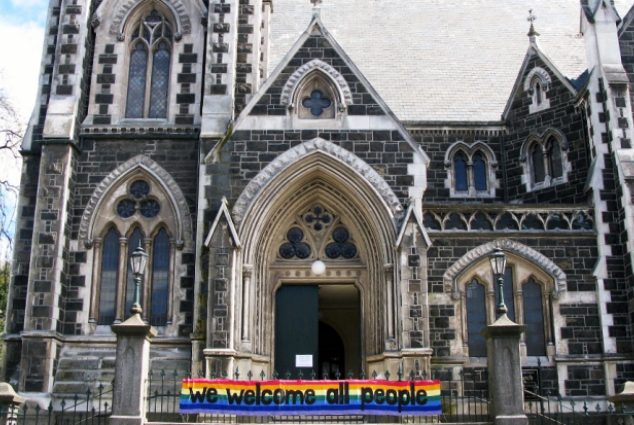
“I have no problem telling people I’m gay. But it can sometimes be weird telling people I’m a Catholic.”
Jeffrey Essmann is a friend and follower of FreedHearts. He is a writer whose work has appeared in the New York Times, the Washington Post, and numerous magazines and literary journals. He is a gay Catholic and I am thrilled to share his story and unique perspective with you today.
Enjoy…
It’s said that coming out is a lifelong process. There are its initial, more dramatic phases, usually connected with firsts (though not necessarily in this order): when you first realize what your sexual feelings are, the first time you tell someone you’re gay, the first time you fall in love. The drama of each is essentially the same. It’s the existential drama of asserting yourself in the world, in your own life, and of saying, “This is who I am.”
It can be an exhilarating moment; it can be a terrifying one. Most often, it’s both at the same time. Exhilarating, because it’s an assertion of personal and public honesty, of growth, but also—and more important—because it’s a movement out of secrecy into mystery. Martin Buber says that anyone who moves forward in truth moves forward into God, into purity of spirit, and into the mystery of life itself.
But the coming out here is of another species entirely. This is something deeper than your earlier comings out—drama has been replaced by resonance. Now it’s not so much about telling yourself you’re gay as it is about asking yourself what exactly that means to you; about looking realistically at the world and deciding what are the battles you’re willing to fight with it and what are the battles you’re willing to fight with yourself; about getting past the rhetoric and easy polarities, admitting that both sides may be right and both sides may be wrong, and, while a given solution may seem simple, there’s no evidence at all that life has ever moved toward simplicity.
The coming out in this case was about who I am spiritually. I have no problem telling people I’m gay. But it can sometimes be weird telling people I’m a Catholic. Pope Francis’ “Who am I to judge?” remarks, though taken entirely out of context and wildly misinterpreted, have nonetheless reflected a welcome shift in tone. But the shift is not widespread. A recent Pew Research Center survey of LGBT Americans found that 48 percent of the respondents—more than twice the national average—consider themselves atheist/agnostic or simply have no religious affiliation. Of the 51 percent who do have a religious affiliation, 26 percent are Catholics, and two thirds of that 26 percent consider their own church to be unfriendly toward them. When respondents were asked to list the religions they considered most unfriendly, 8 in 10 put the Catholic Church on the list, along with the Mormon Church and Islam.
These are heartbreaking figures, all the more so because the unfriendliness being referred to isn’t simply a matter of a crusty pastor here and there. It is, in part, doctrinal. During my own years away from the church, a period I now see honestly as spiritual laziness, the angry part of it was about not wanting to be part of an organization that considered my sexual inclination to be, per the catechism, “intrinsically disordered.”
But now I’m one of the 26 percent, and the irony here is that it was a former boyfriend, a convert to Catholicism, who got me back into the church. I remember him telling me about his conversion experience, and I had never heard anyone, certainly not a gay man, talk so happily, so assuredly, so emphatically about his faith. Being in a relationship with him was an important layer of coming out for me, but it’s the moment of spiritual honesty that resonates with me still. I’m a Catholic. I’m a gay Catholic. And it grieves me to think that two thirds of my brothers and sisters don’t feel welcome in their own church. No one should feel unwelcome in a church — and certainly not in the church.
It particularly grieves me because I know it doesn’t have to be like that. At all. I’m a member of a parish in New York that’s so welcoming as to be nearly a parody of inclusion. We have all races, ages, abilities, styles, and sensibilities, from some of the older Irish crowd who go way back to the neo-punk guy who’s fairly regular at the 9 o’clock Mass. It’s a parish where the liturgies actually feel alive, where people clearly enjoy praying with one another; a parish with prayer groups, social justice groups, a shelter, a soup kitchen. A place where you can feel the goodness going on around you and you want to get involved. (I’m a lector, a eucharistic minister, and the catechist for the third-graders.) And it’s wonderful to be part of a parish community, a faith community that does exactly what it’s supposed to: Every week it convinces me that Christianity might work after all.
Gay people expend a lot of energy looking for acceptance and tolerance. It’s pretty much a part of our DNA. But genuine welcome goes far beyond acceptance and tolerance. Welcome is a joyous absurdity of openness and love, of oneness, and what I love most about my parish is that I’m not a gay Catholic there. I’m just a Catholic. There’s nothing special about me. On the contrary, I am appreciated but otherwise wonderfully taken for granted. It’s a genuine welcome that doesn’t just welcome you to church; it welcomes you to the baptism that made you church in the first place.
As Catholics we’ve heard a million times that everyone is welcome at the table, so much so that it’s nearly a spiritual cliché. But once you actually experience that welcome on a real level, when the invitation goes beyond Christian nicety or tolerance and pulls you into the living spirit of the faith community, into transcendence, you remember that God doesn’t accept us, doesn’t tolerate us. God loves us.
And when I remember that, I remember why I’m in the church, why I’m one of the 26 percent. I’m not in the church for the catechism, I’m in it for the creed. I’m in it for the light and beauty I experience at the heart of Catholicism, far from any politics—far, even, from a good deal of theology. I’m in it for the spirit of the Eucharist, of scripture, and most of all for the spirit of the people I worship with every Sunday. A couple weeks ago I was sitting next to one of the older members of the parish and was in tears at the simplicity, intent, and quiet joy with which he sang the psalm response. No catechism can touch that. And it’s this experience of the church on the local level—which I think is the important one—that gives me hope for the church at large.
I’m a sinner just like everyone else at my parish, but my sin isn’t my homosexuality. The sinfulness of my being gay is that it tempted me, allowed me—encouraged me, really—to think that I was somehow set off from the rest of society, that I wasn’t really part of the world. The sin of my homosexuality is that it led me to believe lies—deadly, soul-killing lies—a sin for which I am indeed heartily sorry. But by the grace of God I’ve forgiven the people who told me those lies, and I’ve forgiven myself for believing them. And by the grace of the people I pray with every week, by the love they give me and the love I return, I move forward with them into the truth: I am part of society. I am part of nature. And I am very happily part of the church.
Jeffrey Essmann is a writer whose work has appeared in the New York Times, the Washington Post, and numerous magazines and literary journals.
This article appeared in the July 2014 issue of U.S. Catholic (Vol. 79, No. 7, pages 35-36). Image: Flickr photo cc by Moira Clunie
You can see the original article at: http://www.uscatholic.org/articles/201407/coming-out-catholic-29133
Previous Post

September 3, 2014
Our One Wild and Precious Life
Next Post

September 5, 2014 Dear Susan: Did I Cause My Son To Be Gay?
Browse Our Archives
Select a Category Church & Religion Dear Susan Family Support Gay Weddings & Marriage GCN Conference Jesus Blog LGBTQ Support Parenting Personal Stories Suicide The Real Jesus Theology Transgender Uncategorized X Archived Posts
Select a Month August 2026 July 2026 June 2026 May 2026 February 2026 January 2026 December 2025 November 2025 October 2025 September 2025 August 2025 July 2025 May 2025 April 2025 March 2025 January 2025 November 2024 October 2024 September 2024 August 2024 July 2024 June 2024 May 2024 April 2024 March 2024 February 2024 January 2024 November 2023 October 2023 September 2023 August 2023 July 2023 June 2023 May 2023 April 2023 March 2023 June 2022 December 2021 May 2021 February 2021 November 2020 August 2020 July 2020 June 2020 May 2020 December 2019 November 2019 October 2019 May 2019 March 2019 January 2019 November 2018 March 2018 January 2018 October 2017 September 2017 August 2017 July 2017 June 2017 May 2017 April 2017 March 2017 February 2017 January 2017 December 2016 November 2016 October 2016 September 2016 August 2016 July 2016 June 2016 May 2016 April 2016 March 2016 February 2016 January 2016 December 2015 November 2015 October 2015 September 2015 August 2015 July 2015 June 2015 May 2015 April 2015 March 2015 February 2015 January 2015 December 2014 November 2014 October 2014 September 2014 August 2014 July 2014 June 2014 May 2014 April 2014 March 2014 February 2014 January 2014 December 2013 November 2013 October 2013 September 2013 August 2013 July 2013 June 2013 May 2013 April 2013 March 2013 February 2013 January 2013 December 2012 November 2012 October 2012 September 2012 August 2012 July 2012 June 2012 May 2012 April 2012 March 2012 February 2012 January 2012
Follow Us!
TAKE THE
Religious Wisdom Quiz
True or False: Timothy was instructed to avoid godless chatter and opposing ideas of what is falsely called knowledge.
Select your answer to see how you score.
FALSE TRUE
Support this
Column


Related posts from FreedHearts

We’re Straight & Queer. Why It Matters.
Queer. Why It Matters Now More Than Ever.
The Lie Religion Told You About God —...

We Are Not the Resistance — We Are...
TRENDING AT PATHEOS Progressive Christian

The First Eucharistic Controversy: Christ’s Real Presence
For Catholics, the Eucharist is the source and summit of the Christian...

How to Make a Decision When You Can't...
Main point: It’s much more valuable to stay close to God so...

Archdiocese Hosts Military Marriage Retreat in Germany
RASTATT, Germany — The transient military lifestyle, with its frequent deployments and...

Nearly every morning, I make the drive to Detroit with my high-school-age...

The Real AI Story Is Adoption Without Trust
Artificial intelligence has crossed a political threshold. It is no longer a...

A new article, written by Jeff Lindsay and Gale L. Pooley,...
view all Progressive Christian blogs
Ad-Free & Subscriber Log-In Subscription Support
- About Us
- 2026 Calendar
- Videos
- Podcasts
- Library of World Religions
- Faith In Media Tracker
- Advertise With Us
- Write for Us
- Privacy Policy
- Terms of Service
- Do Not Sell My Data
- Contact Us
- Radiant Digital
- Manage Newsletter Subscriptions
- Unsubscribe From Notifications
- Sitemap
Copyright 2008-2026, Patheos. All rights reserved.
Subscription Support Ad-Free & Subscriber Log-In
Follow Patheos