
BuddhistCatholicContemplativeEvangelicalGeneral ChristianHinduJewishLatter-day SaintMuslimNew VisionsProgressive Christian
Beliefs
- Buddhist
- Catholic
- Contemplative
- Evangelical
- General Christian
- Hindu
- Jewish
- Latter-day Saint
- More Voices
- Muslim
- New Visions
- Pagan
- Progressive Christian
Topics
- Religion News
- Food and Religion
- Sports and Religion
- Religious Art
- Religious Music and Entertainment
- Religious Events
- History and Religion
- Style and Religion
- Politics and Religion
- Women in Religion
- Recreation Outdoors and Religion
- Business Finance and Religion
- Careers Workplace and Religion
- Education and Religion
- Family Parenting and Religion
- Health Fitness and Religion
- Home and Religion
- Relationships and Religion
- Technology and Religion
- Travel and Religion
Columnists
- Buddhist Columnists
- Business Finance and Religion Columnists
- Careers Workplace and Religion Columnists
- Catholic Columnists
- Contemplative Columnists
- Education and Religion Columnists
- Evangelists Columnists
- Family Parenting and Religion Columnists
- General Christian Columnists
- Health Fitness and Religion Columnists
- Hindu Columnists
- History and Religion Columnists
- Home and Religion Columnists
- Jewish Columnists
- More Voices Columnists
- Latter Day Columnists
- Muslim Columnists
- New Visions Columnists
- Nonreligious Columnists
- Pagan Columnists
- Politics and Religion Columnists
- Progressive Columnists
- Recreation Outdoors and Religion Columnists
- Relationships and Religion Columnists
- Religion News Columnists
- Religious Art Columnists
- Religious Events Columnists
- Religious Music and Entertainment Columnists
- Sports and Religion Columnists
- Style and Religion Columnists
- Technology and Religion Columnists
- Travel and Religion Columnists
- Women in Religion Columnists
Resource Library
- 2026 Calendar
- Library of World Religions
- The 100 Most Holy Places on Earth
- Patheos Answers
- Podcasts
- Videos
- Faith Leaders Database
- Anglican Episcopalian
- Bahai
- Baptist
- Buddhism
- Christianity
- Confucianism
- Eastern Orthodoxy
- Hinduism
- Holiness and Pentecostal
- ISKCON
- Islam
- Judaism
- Lutheran
- Methodist
- The Church of Jesus Christ of Latter-day Saints
- New Age
- Paganism
- Presbytarian and Reformed
- Protestantism
- Religion Behind the Scenes
- Roman Catholic
- Scientology
- Shia Islam
- Sikhism
- Sufism
- Sunni Islam
- Taoism
- Zen
- See all religions
Research Tools
 Ad-Free & Subscriber Log-In Subscription Support
Ad-Free & Subscriber Log-In Subscription Support
Follow Patheos 

- Trending:
- Forgiveness
- |
- Marriage
- |
- Consciousness
- |
- Death Penalty
- |
- Election
- |
- Halloween

- Home
- Evangelical
- WISDOM: CAPTURING THE POWER OF OUR WORDS
WISDOM: CAPTURING THE POWER OF OUR WORDS
Last updated on: August 15, 2022 at 5:47 am by Frank Viola
WISDOM: CAPTURING THE POWER OF OUR WORDS 2022-08-15T05:47:00-04:00 Frank Viola
Patheos Explore the world's faith through different perspectives on religion and spirituality! Patheos has the views of the prevalent religions and spiritualities of the world.
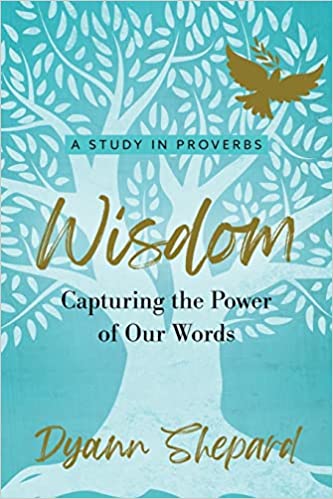
Dyann Shepard has released a new book.
It’s called Wisdom: Capturing the Power of Our Words.
I connected with Dyann at SCRIBE, my training for authors, which is now completely online.
Recently, I caught up with Dyann to discuss her new book.
Enjoy!
This is a study about the relationship of growing in God’s wisdom to the power of our words. How did you find the lives of the women who first went through the study were benefited?
We actually began the study because we, and especially myself, were noticing our verbal boundaries were beginning to weaken as we aged. We knew Proverbs and the book of James had a lot to say about our words.
When we started making lists of the verses relating to the tongue we were shocked at the number and we saw the relationship between pursuing wisdom and taming our tongues.
We began to understand that as we pursue God’s wisdom the fruit of this pursuit is compassion, kindness, listening ears, wise council, intimacy with God, peace, just to name a few.
These attributes are essentials in using our words to foster healing, blessing, and to lift others up rather than tear them down.
We became very aware of our responses versus just reacting to what others thought or said. As we actively and intentionally grew in the wisdom of God, our patterns of conversations changed. Our relationships improved. We listened, truly listened more.
It has been 10 years since we first studied Proverbs and we have gone back to the lessons learned over and over.
You illustrate lessons on communicating with wisdom with a personal story of having to learn this lesson yourself. Can you tell us about that?
Yes, my husband and I attended a meeting on the issue of oil shale fracking. The speaker spoke for about an hour reading in a monotone voice verbatim from her notes. When people began to ask questions she seemed dismissive and I thought rude and defensive. I became very angry.
As the evening went on, I became angrier and angrier to point I didn’t hear her any more. My anger took over. I raised my hand and then publicly admonished her for her rudeness by requesting that she give the audience the same respect we had given her. Even telling you this, I continue to be embarrassed by my behavior.
My husband was shocked.
The room was silent. The minute the words left my mouth I thought “What just happened? Why did I say that?” Now, I was the rude one, not the speaker. The irony is I have always been known for my cool head and calm spirit but not that night. As the weeks went on, I was more and more ashamed and embarrassed.
Through many discussions with the women of my Bible study and prayer, the Lord revealed to me that my reaction had nothing to do with the speaker and everything to do with unresolved hurt from my past. I had buried the pain for so long, I didn’t know how hard my heart had become.
You say your own heart was “fracked” by the Holy Spirit after this incident. What do you mean?
The meeting was addressing oil shale fracking which is the process of tremendous pressure and hot water being shot deep into the ground to extract oil from hard oil rocks known as oil shale. On a personal level it took the deep, humiliating, hot pressure of the Holy Spirit to break up the hardness in my heart thereby freeing the Lord to work in me and through me in ways I never imagined.
My soul was free to experience God in a new fresh way.
How do situations of hurt and shame from our past result in unwise words being spoken?
Unresolved hurt and shame become the murky filter we see life through. We don’t see clearly. We can’t see clearly. Because of this we hear with faulty ears and react with a faulty understanding resulting in unwise words that often hurt and harm others. We don’t give others the benefit of the doubt.
Why do you think wisdom is referred to as the “tree of life?”
Because Jesus is ultimately our tree of life and He is the embodiment of wisdom. Proverbs 3:18-19 says “She (wisdom) is a tree of life to those who embrace her, and those who lay hold of her are blessed. “The Lord founded the earth by wisdom and established the heavens by understanding.”
Jesus is our tree of life, and where was He when the world was created? With God because He is God. “In the beginning, was the Word, and the Word was with God, and the Word was God. He was in the beginning with God. All things came into being through Him, and apart from Him nothing came into being that has come into being” (John 1:1-3).
What are some things we can do when we are tempted to speak in anger or haste?
Take a deliberate pause. Put some space between your mind and your mouth. Proverbs 10:19 says “When there are many words, wrongdoing is unavoidable, But one who restrains his lips is wise.”
I share in the study a time when anger overtook me and I hurt someone badly. If I had put some space between my mind and my mouth, taken a deep breath, thought about the consequences of my words, I would have avoided hurting this person.
Developing the habit of meditating on Proverbs will make all the difference. As people go through the study, the are encouraged to meditate, pray and ask the Lord to reveal to them specific areas where they need acknowledge and yield to what the Lord reveals to them. In fact each session begins with a least one verse, a prayer and the acronym PRAY.
P—Prepare by praying for a receptive heart.
R—Read and reflect on the passage.
A—Acknowledge how it applies to your life.
Y—Yield by saying, “Yes, Lord.”
Acknowledging is not enough. We need to yield and give up control.
You center this study in the book of Proverbs. What is the main lesson you have found it has to teach us?
When we seek the wisdom of God, our speech and conversations will change. We will grow in the desire to bless, heal and uplift with our words. God has given us the privilege of speaking the truth in love.
Is Wisdom: Capturing the Power of Our Words suitable for personal study, or is it designed for a group?
It is suitable for either personal or group study. However, I believe the deepest work will be done in a group where the participants can share their stories without shame, grow from them and embraced the joy of God’s healing together. Iron sharpens iron. When one life is lifted up in Christ we are all lifted up.
You shared a story about how your words hurt someone badly. Did you ever see or speak to the person you hurt again?
Yes, one of the important lessons was it is never too late to ask for forgiveness. A major part of my story is how we met again, what transpired and the forgiveness received.
Additionally, I was able to forgive and have compassion for the person who hurt me. The process of receiving and giving forgiveness is shared throughout the eight sessions. God was unfolding new revelations to me even as I wrote. The process was a gift to me and I hope will be a gift to the participants.
What surprised you the most as you studied Proverbs?
The number of verses in Proverbs that relate tour words and the direct correlation of growing in wisdom and taming our tongues. Proverbs 6:16-19 says there are 7 things the Lord HATES.
Five out of seven have to do with communication, verbal and non-verbal. This shocked me and forced me to take my words much more seriously.
Previous Post

August 14, 2022
Silence, Civility, and Sanity
Next Post
August 16, 2022 A Week in the Life of Rome
Browse Our Archives
Select a Category Uncategorized
Select a Month October 2026 September 2026 August 2026 July 2026 June 2026 May 2026 April 2026 March 2026 February 2026 January 2026 December 2025 November 2025 October 2025 September 2025 August 2025 July 2025 June 2025 May 2025 April 2025 March 2025 February 2025 January 2025 December 2024 November 2024 October 2024 September 2024 August 2024 July 2024 June 2024 May 2024 April 2024 March 2024 February 2024 January 2024 December 2023 November 2023 October 2023 September 2023 August 2023 July 2023 June 2023 May 2023 April 2023 March 2023 February 2023 January 2023 December 2022 November 2022 October 2022 September 2022 August 2022 July 2022 June 2022 May 2022 April 2022 March 2022 February 2022 January 2022 December 2021 November 2021 October 2021 September 2021 August 2021 July 2021 June 2021 May 2021 April 2021 March 2021 February 2021 January 2021 December 2020 November 2020 October 2020 September 2020 August 2020 July 2020 June 2020 May 2020 April 2020 March 2020 February 2020 January 2020 December 2019 November 2019 October 2019 September 2019 August 2019 July 2019 June 2019 May 2019 April 2019 March 2019 February 2019 January 2019 December 2018 November 2018 October 2018 September 2018 August 2018 July 2018 June 2018 May 2018 April 2018 March 2018 February 2018 January 2018 December 2017 November 2017 October 2017 September 2017 August 2017 July 2017 June 2017 May 2017 April 2017 March 2017 February 2017 January 2017 December 2016 November 2016 October 2016 September 2016 August 2016 July 2016 June 2016 May 2016 April 2016 March 2016 February 2016 January 2016 December 2015 November 2015 October 2015 September 2015 August 2015 July 2015 June 2015 May 2015 April 2015 March 2015 February 2015 January 2015 December 2014 November 2014 October 2014 September 2014 August 2014 July 2014 June 2014 May 2014 April 2014 March 2014 February 2014 January 2014 December 2013 November 2013 October 2013 September 2013 August 2013 July 2013 June 2013 May 2013 April 2013 March 2013 February 2013 January 2013 December 2012 November 2012 October 2012
TAKE THE
Religious Wisdom Quiz
What is the lesson in the Parable of the Lost Coin?
Select your answer to see how you score.
Keep your house clean God values each lost person Money is a blessing Riches must be counted
Related posts from The Deeper Journey

Emotion in Early Christianity by Andrew Crislip

Letters on Living the Faith by C.S. Lewis


TRENDING AT PATHEOS Evangelical
Emotion in Early Christianity by Andrew Crislip
Andrew Crislip’s Emotion in Early Christianity examines an often overlooked dimension of...

16 Spiritual Touchstones for a More Grounded Life
After decades of spiritual study, here are 16 principles I try...

Catholic Evangelization: Sharing Your Faith Every Day
Welcome back to the Graceful Awakening mini-series called, “From Faith to Mission.” ...

The Pillar of the Boatmen: the Ancient Monument...
The Pillar of the Boatmen is a Romano-Gaulish sculpture that dates from...

In one sense walking into Westminster Abbey is like walking down the...

'Super Scam Me' Exposes AI Jon Bon Jovi...
Leslie Pickett believed she was in a relationship with Jon Bon Jovi....
view all Evangelical blogs
Ad-Free & Subscriber Log-In Subscription Support
- About Us
- 2026 Calendar
- Videos
- Podcasts
- Library of World Religions
- Faith In Media Tracker
- Advertise With Us
- Write for Us
- Privacy Policy
- Terms of Service
- Do Not Sell My Data
- Contact Us
- Radiant Digital
- Manage Newsletter Subscriptions
- Unsubscribe From Notifications
- Sitemap
Copyright 2008-2026, Patheos. All rights reserved.
Subscription Support Ad-Free & Subscriber Log-In
Follow Patheos