
BuddhistCatholicContemplativeEvangelicalGeneral ChristianHinduJewishLatter-day SaintMuslimNew VisionsProgressive Christian
Beliefs
- Buddhist
- Catholic
- Contemplative
- Evangelical
- General Christian
- Hindu
- Jewish
- Latter-day Saint
- More Voices
- Muslim
- New Visions
- Pagan
- Progressive Christian
Topics
- Religion News
- Food and Religion
- Sports and Religion
- Religious Art
- Religious Music and Entertainment
- Religious Events
- History and Religion
- Style and Religion
- Politics and Religion
- Women in Religion
- Recreation Outdoors and Religion
- Business Finance and Religion
- Careers Workplace and Religion
- Education and Religion
- Family Parenting and Religion
- Health Fitness and Religion
- Home and Religion
- Relationships and Religion
- Technology and Religion
- Travel and Religion
Columnists
- Buddhist Columnists
- Business Finance and Religion Columnists
- Careers Workplace and Religion Columnists
- Catholic Columnists
- Contemplative Columnists
- Education and Religion Columnists
- Evangelists Columnists
- Family Parenting and Religion Columnists
- General Christian Columnists
- Health Fitness and Religion Columnists
- Hindu Columnists
- History and Religion Columnists
- Home and Religion Columnists
- Jewish Columnists
- More Voices Columnists
- Latter Day Columnists
- Muslim Columnists
- New Visions Columnists
- Nonreligious Columnists
- Pagan Columnists
- Politics and Religion Columnists
- Progressive Columnists
- Recreation Outdoors and Religion Columnists
- Relationships and Religion Columnists
- Religion News Columnists
- Religious Art Columnists
- Religious Events Columnists
- Religious Music and Entertainment Columnists
- Sports and Religion Columnists
- Style and Religion Columnists
- Technology and Religion Columnists
- Travel and Religion Columnists
- Women in Religion Columnists
Resource Library
- 2026 Calendar
- Library of World Religions
- The 100 Most Holy Places on Earth
- Patheos Answers
- Podcasts
- Videos
- Faith Leaders Database
- Anglican Episcopalian
- Bahai
- Baptist
- Buddhism
- Christianity
- Confucianism
- Eastern Orthodoxy
- Hinduism
- Holiness and Pentecostal
- ISKCON
- Islam
- Judaism
- Lutheran
- Methodist
- The Church of Jesus Christ of Latter-day Saints
- New Age
- Paganism
- Presbytarian and Reformed
- Protestantism
- Religion Behind the Scenes
- Roman Catholic
- Scientology
- Shia Islam
- Sikhism
- Sufism
- Sunni Islam
- Taoism
- Zen
- See all religions
Research Tools
 Ad-Free & Subscriber Log-In Subscription Support
Ad-Free & Subscriber Log-In Subscription Support
Follow Patheos 

- Trending:
- Forgiveness
- |
- Marriage
- |
- Consciousness
- |
- Death Penalty
- |
- Election
- |
- Halloween

- Home
- Evangelical
- That I May Dwell Among Them
That I May Dwell Among Them
Last updated on: January 8, 2024 at 12:57 pm by Frank Viola
That I May Dwell Among Them 2024-01-08T12:57:01-04:00 Frank Viola
Patheos Explore the world's faith through different perspectives on religion and spirituality! Patheos has the views of the prevalent religions and spiritualities of the world.
That I May Dwell among Them: Incarnation and Atonement in the Tabernacle Narrative is a new book by Gary Anderson.
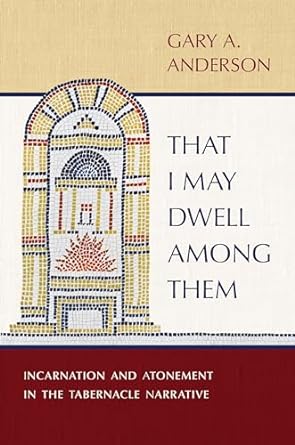
I was interested in this book because the tabernacle and temple are two key pieces of the Eternal Purpose that I’ve spoken and written about often.
Anderson’s book is scholarly, and it’s one of the works I’m citing in my revised and expanded version of The Untold Story of the New Testament Church, which is forthcoming.
Well written, here’s a description from the publisher:
What does Israel’s tabernacle mean for Christians today?
The Tabernacle Narrative comprises passages in Exodus and Leviticus that detail the construction, furnishing, and liturgical use of the tabernacle. Given its genre and style, the narrative is often passed over by those reading Scripture for theological insight.
But what can these complex passages reveal about Christ? Gary Anderson shows how these passages shed light on incarnation and atonement both in ancient Israel’s theology and in Christian theology. Anderson explains how the chronology of the narrative reflects sacred time, how the Israelites saw divine features in the physical aspects of the tabernacle, and how Isaac’s sacrifice foreshadowed the sacrificial rite revealed to Moses at Mt. Sinai.
Ultimately, Anderson shows how the Old Testament can deepen our understanding of the gospel. For Athanasius and many church fathers, God’s “indwelling” in the tabernacle offers a unique witness to the nature of incarnation, supplementing the story told in the gospels.
Likewise, careful analysis of the purpose of sacrifice at the tabernacle clarifies the purpose of Christ’s passion. Far from connoting penal substitution, sacrifice in the Old Testament demonstrates self-emptying as an antidote to sin. Theologians, pastors, and serious readers of the Bible will appreciate how Anderson’s canonical and literary analysis of the Tabernacle Narrative illuminates Christian theology.
Excerpt from Chapter 1: The Place of the Tabernacle Narrative in the Christian Bible
Why study the Tabernacle Narrative? Next to the genealogies, it is regarded by most readers as the most tedious portion of the entire Bible. Yet embedded within this story are two supremely important theological ideas—God’s decision to dwell among the people Israel and be served by them at his altar.
Both of these ideas are central to Israelite religion, but they also inform the core doctrines of the early church. In fact, one of the surprising features of my own research has been how productive these chapters were in shaping how Christians have thought about the incarnation and the atonement.
Perhaps the best evidence for the influence of the Tabernacle Narrative on the idea of the incarnation is found in the Prologue to John’s Gospel: “And the Word became flesh and lived among us, and we have seen his glory, the glory as of a father’s only son, full of grace and truth” (1:14). The expression “to live among us” comes from the Greek verb skēnoō, which literally means “to pitch a tent.” As Raymond Brown, author of perhaps the most important modern commentary on the Gospel of John, observes:
The theme of “tenting” is found in Exod 25:8–9 where Israel is told to make a tent (the Tabernacle—skēnē) so that God can dwell among His people; the Tabernacle became the site of God’s localized presence on earth. . . . When the Prologue proclaims that the Word made his dwelling among men, we are being told that the flesh of Jesus Christ is the new localization of God’s presence on earth, and that Jesus is the replacement of the ancient Tabernacle.
But it is not just the act of indwelling that links the prologue to the Tabernacle Narrative. The Gospel adds that its purpose is to make the glory of God visible (“the Word became flesh . . . and we have seen his glory”). This notion of visibility is derived from the appearance (or “theophany”) of the God of Israel at the close of Exodus when the construction of the tabernacle was finished.
Then the cloud covered the tent of meeting, and the glory of the Lord filled the tabernacle. Moses was not able to enter the tent of meeting because the cloud settled upon it, and the glory of the Lord filled the tabernacle. (Exod. 40:34–35)
The importance of the glory becoming visible is emphasized at several other key moments in the history of Israel. The dedication of the temple by King Solomon is accompanied by a visible display of divine glory (1 Kings 8:10–11). And just prior to the Babylonian invasion of Jerusalem and destruction of the temple, that same glory exits the city (Ezek. 11:23).
Afterward, when Ezekiel sees the vision of a new Jerusalem, the account of its construction concludes with the glory of God entering the complex and filling the temple (44:4). “Thus, it is quite appropriate,” Brown concludes, “that, after the description of how the Word set up a Tabernacle among men in the flesh of Jesus, the Prologue should mention that his glory became visible.”
Previous Post
January 6, 2024
New Testament Theology
Next Post
February 7, 2024 What Is a Gospel?
Recent Comments
"I get, the more I see that every attempt to debunk it leaves the Shroud ..."
Interview with Leonard Sweet – More ..."
"You're referring to the way things happen in the Industrial Religious Complex. I'm speaking about ..."
"Another insight is that young people want to start their own ministry and are not ..."
"You’re challenging the usual narratives and pointing us toward deeper, more nuanced perspectives. This is ..."
The Origins of Human Government and ..."
Browse Our Archives
Select a Category Uncategorized
Select a Month October 2026 September 2026 August 2026 July 2026 June 2026 May 2026 April 2026 March 2026 February 2026 January 2026 December 2025 November 2025 October 2025 September 2025 August 2025 July 2025 June 2025 May 2025 April 2025 March 2025 February 2025 January 2025 December 2024 November 2024 October 2024 September 2024 August 2024 July 2024 June 2024 May 2024 April 2024 March 2024 February 2024 January 2024 December 2023 November 2023 October 2023 September 2023 August 2023 July 2023 June 2023 May 2023 April 2023 March 2023 February 2023 January 2023 December 2022 November 2022 October 2022 September 2022 August 2022 July 2022 June 2022 May 2022 April 2022 March 2022 February 2022 January 2022 December 2021 November 2021 October 2021 September 2021 August 2021 July 2021 June 2021 May 2021 April 2021 March 2021 February 2021 January 2021 December 2020 November 2020 October 2020 September 2020 August 2020 July 2020 June 2020 May 2020 April 2020 March 2020 February 2020 January 2020 December 2019 November 2019 October 2019 September 2019 August 2019 July 2019 June 2019 May 2019 April 2019 March 2019 February 2019 January 2019 December 2018 November 2018 October 2018 September 2018 August 2018 July 2018 June 2018 May 2018 April 2018 March 2018 February 2018 January 2018 December 2017 November 2017 October 2017 September 2017 August 2017 July 2017 June 2017 May 2017 April 2017 March 2017 February 2017 January 2017 December 2016 November 2016 October 2016 September 2016 August 2016 July 2016 June 2016 May 2016 April 2016 March 2016 February 2016 January 2016 December 2015 November 2015 October 2015 September 2015 August 2015 July 2015 June 2015 May 2015 April 2015 March 2015 February 2015 January 2015 December 2014 November 2014 October 2014 September 2014 August 2014 July 2014 June 2014 May 2014 April 2014 March 2014 February 2014 January 2014 December 2013 November 2013 October 2013 September 2013 August 2013 July 2013 June 2013 May 2013 April 2013 March 2013 February 2013 January 2013 December 2012 November 2012 October 2012
TAKE THE
Religious Wisdom Quiz
According to Jesus, who will inherit the earth?
Select your answer to see how you score.
The meek The wise The rich The strong
Related posts from The Deeper Journey



What Was Jesus’ Central Message?

Can Genuine Christians Learn From the Pagans?
TRENDING AT PATHEOS Evangelical

When Halloween Unmasks Married Hearts
Written by Dr. David K. Ewen from Eternal Truth Bible College Behind...

Aristotle. He’s been called the father of logic, the father of the...

Methodist Central Hall and Westminster Abbey
Situated on the same square is Methodist Central Hall and Westminster Abbey. ...

57th Dove Awards Honor Dolly Parton, Crown New...
On gospel music’s biggest night, the 57th annual GMA Dove Awards honored...

The First Eucharistic Controversy: Christ’s Real Presence
For Catholics, the Eucharist is the source and summit of the Christian...

What a Stop Sign Can Teach Us About...
How to Make a Decision When You Can't Hear God Main point:...
view all Evangelical blogs
What Are Your Thoughts?leave a comment
Ad-Free & Subscriber Log-In Subscription Support
- About Us
- 2026 Calendar
- Videos
- Podcasts
- Library of World Religions
- Faith In Media Tracker
- Advertise With Us
- Write for Us
- Privacy Policy
- Terms of Service
- Do Not Sell My Data
- Contact Us
- Radiant Digital
- Manage Newsletter Subscriptions
- Unsubscribe From Notifications
- Sitemap
Copyright 2008-2026, Patheos. All rights reserved.
Subscription Support Ad-Free & Subscriber Log-In
Follow Patheos