
BuddhistCatholicContemplativeEvangelicalGeneral ChristianHinduJewishLatter-day SaintMuslimNew VisionsProgressive Christian
Beliefs
- Buddhist
- Catholic
- Contemplative
- Evangelical
- General Christian
- Hindu
- Jewish
- Latter-day Saint
- More Voices
- Muslim
- New Visions
- Pagan
- Progressive Christian
Topics
- Religion News
- Food and Religion
- Sports and Religion
- Religious Art
- Religious Music and Entertainment
- Religious Events
- History and Religion
- Style and Religion
- Politics and Religion
- Women in Religion
- Recreation Outdoors and Religion
- Business Finance and Religion
- Careers Workplace and Religion
- Education and Religion
- Family Parenting and Religion
- Health Fitness and Religion
- Home and Religion
- Relationships and Religion
- Technology and Religion
- Travel and Religion
Columnists
- Buddhist Columnists
- Business Finance and Religion Columnists
- Careers Workplace and Religion Columnists
- Catholic Columnists
- Contemplative Columnists
- Education and Religion Columnists
- Evangelists Columnists
- Family Parenting and Religion Columnists
- General Christian Columnists
- Health Fitness and Religion Columnists
- Hindu Columnists
- History and Religion Columnists
- Home and Religion Columnists
- Jewish Columnists
- More Voices Columnists
- Latter Day Columnists
- Muslim Columnists
- New Visions Columnists
- Nonreligious Columnists
- Pagan Columnists
- Politics and Religion Columnists
- Progressive Columnists
- Recreation Outdoors and Religion Columnists
- Relationships and Religion Columnists
- Religion News Columnists
- Religious Art Columnists
- Religious Events Columnists
- Religious Music and Entertainment Columnists
- Sports and Religion Columnists
- Style and Religion Columnists
- Technology and Religion Columnists
- Travel and Religion Columnists
- Women in Religion Columnists
Resource Library
- 2026 Calendar
- Library of World Religions
- The 100 Most Holy Places on Earth
- Patheos Answers
- Podcasts
- Videos
- Faith Leaders Database
- Anglican Episcopalian
- Bahai
- Baptist
- Buddhism
- Christianity
- Confucianism
- Eastern Orthodoxy
- Hinduism
- Holiness and Pentecostal
- ISKCON
- Islam
- Judaism
- Lutheran
- Methodist
- The Church of Jesus Christ of Latter-day Saints
- New Age
- Paganism
- Presbytarian and Reformed
- Protestantism
- Religion Behind the Scenes
- Roman Catholic
- Scientology
- Shia Islam
- Sikhism
- Sufism
- Sunni Islam
- Taoism
- Zen
- See all religions
Research Tools
 Ad-Free & Subscriber Log-In Subscription Support
Ad-Free & Subscriber Log-In Subscription Support
Follow Patheos 

- Trending:
- Forgiveness
- |
- Marriage
- |
- Consciousness
- |
- Death Penalty
- |
- Election
- |
- Halloween

- Home
- Evangelical
- Starting Missional Churches
Starting Missional Churches
Last updated on: May 23, 2018 at 1:27 pm by Frank Viola
Starting Missional Churches 2018-05-23T13:27:50-04:00 Frank Viola
Patheos Explore the world's faith through different perspectives on religion and spirituality! Patheos has the views of the prevalent religions and spiritualities of the world.
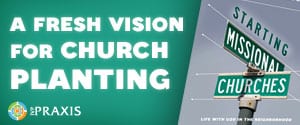
InterVarsity Press has just released a new book called Starting Missional Churches: Life with God in the Neighborhood written by Mark Lau Branson and Nicholas Warnes.
I caught up with the authors to interview them on their new book.
Enjoy!
Instead of asking, “what is your book about,” I’m going to ask the question that’s behind that question. And that unspoken question is, “how are readers going to benefit from reading your book?”
Nick Warnes: Good question. The benefit of readers is two-fold. First, readers will encounter a fresh theological framework for how new churches are started. We contrast the pre-conceived notions of how new churches begin with four new priorities.
We want to encourage everyday people in everyday churches to become engaged in the local neighborhoods and to develop contextual imaginations. Link these new priorities with seven practical, on the ground narratives of people doing this work across America, and readers will experience the four new priorities in action.
To add to this, we are finding that many existing churches, along with new churches, are finding encouragement and very practical stories in our book. This came as a bit of a surprise to us, but we are enjoying the activity! The book is meant to be accessible and we hope that it will inspire planters and churches to become aware of how God is already ahead of them in their own contexts so they can be witnesses of Emmanuel in their communities.
Just like “organic church,” the term “missional church” has become a clay word in our time. It’s been defined so many different ways by so many different people that the word itself is practically meaningless. Unless one specifically defines it. So how do you define a “missional church” in your book?
Mark Lau Branson: I agree with your premise – the word “missional” has come to mean everything from satellite campuses to better outreach programs to restocked food pantries. We emphasize two elements, and they have theological roots.
First, God is the initiator, so the Holy Spirit is already at work in and around our neighbors. That means that we, as leadership teams and as churches, need to begin by becoming aware so we might discern and participate in God’s activities.
Second, our neighbors are subjects (not objects) so we don’t just deliver goods and services and truth to them. Rather we listen and participate and become neighbors – which opens relational spaces for collaborative activities and conversations in regard to all aspects of life, including the welfare of the neighborhood and our own lives as physical, relational, spiritual, thinking, acting people. God is an engaged, missional God, so we join in.
Please give a few examples of a “missional churches” that you feel are impressive. And tell us why they are impressive.
Nick: Well, we don’t want to give too much away! At the center of our book are seven examples of “missional churches” that are indeed impressive. As we began we invited dozens of churches to share their stories. Fifteen agreed to participate.
We slowly worked through these different narratives and chose the seven that fit within the practices of a missional church and offered significant diversity regarding geography, denominations, and ethnicity.
We admired these churches as they were regularly discerning the initiatives of the Spirit of God with one another in their particular cities and neighborhoods. They were making courageous decisions and those decisions were leading communities, both people inside and out side of the church, into mutual transformation. The best part is that all of the churches that we chose are still doing this work today! They continue to not only thrive, but also multiply.
How is your book different from the plethora of other books on “missional church” on the market today?
Mark: Many such books have confidence in the habits of modernity – assured strategies, predictable programs, and specialized experts. They miss the profound theological reminders in Lesslie Newbigin’s work – that God works in specific and concrete ways in each cultural context and in each person.
When we simply import marketing plans and prescribed worship or social plans, we are not attending to God’s initiatives. Instead, if a church learned (through scripture, prayer, and life among neighbors) then each and every church person becomes a key participant in becoming aware, in imagining possible engagements, and in experimenting toward gospel life.
Readers will see that we are very appreciative of many other authors; our book benefits from the thoughtful and engaging work of others. Because of what we have learned in our own networks, we knew that our book needed to engage real on-the-ground stories, and we needed to provide articulate and relevant reflections from the perspectives of theology, leadership theory, and cultural studies.
So by featuring diverse new churches – from various locations, denominations, and ethnicities – and adding relevant frameworks and commentary, we believe we have provided an accessible and insightful book.
Give us two or three insights from the book that would be helpful to all Christians, not just people who are into “missional church.”
Nick: As Mark and I have been sharing this book and its contents with people across the country, we are finding the content of the book fits well into the lives of Christians. For instance, Mark’s work that he did on prioritizing our neighbors not as objects, but as mutual subjects of God’s affection has shifted the way that people view their neighbors. Mark really hit on the church’s common objectification of the people that surround us, and inspired a different way forward that is prophetically connecting with readers.
Another aspect of the book that would be helpful to all Christians is the expansion of the imagination that occurs when we are confronted with practical examples of people that are creating with one another. As we hear more and more stories of new churches, Mark and I continue to fall deep into the wonder and power of a community of people discerning God’s initiatives, innovating with God in those initiatives, and enjoying the fruit of the shared effort with God.
Stories of already existing churches and institutions can be motivating, but there is something distinctive about the faith of people who plant churches that we find exceptionally inspiring. We hope that others experience the same thing as they encounter the seven churches in our book.
Have you gotten any push-back on the book? If so, explain and respond.
Nick: The book has just been released, so there hasn’t yet been push back. We were fortunate to receive many comments from readers who were given the book prior to release. Thus far, all of their reviews, from professors and practitioners, have been positive.
We anticipate reciprocal formation with people who would like to enter into thoughtful dialogue with us. We are still learning about life at the intersection of church planting and missional church and look forward to continuing in the process with others.
When a reader finishes your book, what will they “take away” from it?
Mark: They will have genuine hope – that God is ahead of us in our own neighborhoods and communities and that God wants to shape and empower us to participate. We are continually encouraged by the stories we hear, the collaborative and innovative activities, and the frequent boundary-crossing (generationally, ethnically, economically) all across the country.
We believe readers will gain some insightful frameworks that will allow them to see more clearly and to understand what they are experiencing. And we are convinced that these stories and reflections will provide encouragement for numerous leadership teams who want to plant churches or participate in the missional transformation of an existing church.
—
Mark Lau Branson, Homer Goddard Professor of Ministry at Fuller Theological Seminary, and coauthor of Churches, Cultures and Leadership: A Practical Theology of Congregations and Ethnicities (IVP Academic, 2011).
Nicholas Warnes, organizing pastor of Northland Village Church in Los Angeles, coach and church planting assessor for the Presbyterian Church (USA), and a teacher and advisor for the Fuller Theological Seminary Church Planting Certificate.
Order Starting Missional Churches: Life with God in the Neighborhood on discount.
Previous Post

August 18, 2014
What Christian Leaders Can Learn from the Music World of the 1960s
Next Post
August 21, 2014 Post Expired
Browse Our Archives
Select a Category Uncategorized
Select a Month October 2026 September 2026 August 2026 July 2026 June 2026 May 2026 April 2026 March 2026 February 2026 January 2026 December 2025 November 2025 October 2025 September 2025 August 2025 July 2025 June 2025 May 2025 April 2025 March 2025 February 2025 January 2025 December 2024 November 2024 October 2024 September 2024 August 2024 July 2024 June 2024 May 2024 April 2024 March 2024 February 2024 January 2024 December 2023 November 2023 October 2023 September 2023 August 2023 July 2023 June 2023 May 2023 April 2023 March 2023 February 2023 January 2023 December 2022 November 2022 October 2022 September 2022 August 2022 July 2022 June 2022 May 2022 April 2022 March 2022 February 2022 January 2022 December 2021 November 2021 October 2021 September 2021 August 2021 July 2021 June 2021 May 2021 April 2021 March 2021 February 2021 January 2021 December 2020 November 2020 October 2020 September 2020 August 2020 July 2020 June 2020 May 2020 April 2020 March 2020 February 2020 January 2020 December 2019 November 2019 October 2019 September 2019 August 2019 July 2019 June 2019 May 2019 April 2019 March 2019 February 2019 January 2019 December 2018 November 2018 October 2018 September 2018 August 2018 July 2018 June 2018 May 2018 April 2018 March 2018 February 2018 January 2018 December 2017 November 2017 October 2017 September 2017 August 2017 July 2017 June 2017 May 2017 April 2017 March 2017 February 2017 January 2017 December 2016 November 2016 October 2016 September 2016 August 2016 July 2016 June 2016 May 2016 April 2016 March 2016 February 2016 January 2016 December 2015 November 2015 October 2015 September 2015 August 2015 July 2015 June 2015 May 2015 April 2015 March 2015 February 2015 January 2015 December 2014 November 2014 October 2014 September 2014 August 2014 July 2014 June 2014 May 2014 April 2014 March 2014 February 2014 January 2014 December 2013 November 2013 October 2013 September 2013 August 2013 July 2013 June 2013 May 2013 April 2013 March 2013 February 2013 January 2013 December 2012 November 2012 October 2012
TAKE THE
Religious Wisdom Quiz
Who said, "Repent, for the kingdom of heaven is at hand"?
Select your answer to see how you score.
Isaiah John the Baptist Jesus Peter
Related posts from The Deeper Journey

Letters on Living the Faith by C.S. Lewis



What Was Jesus’ Central Message?
TRENDING AT PATHEOS Evangelical

The Pillar of the Boatmen: the Ancient Monument...
The Pillar of the Boatmen is a Romano-Gaulish sculpture that dates from...

In one sense walking into Westminster Abbey is like walking down the...

'Super Scam Me' Exposes AI Jon Bon Jovi...
Leslie Pickett believed she was in a relationship with Jon Bon Jovi....

The Brazilian Remake of Kendricks' 'Flywheel' Opens in...
“Flywheel,” the story that launched the Kendrick Brothers’ filmmaking career is getting...

The Dangers of Gradual Accommodation (Winking at Sin)
Recently, the “law of gradualness” resurfaced during the opening of a weeklong,...

The Iron Gates and the Lion of the...
Yesterday, I didn't finish my report about, well, yesterday. So I'll...
view all Evangelical blogs
Ad-Free & Subscriber Log-In Subscription Support
- About Us
- 2026 Calendar
- Videos
- Podcasts
- Library of World Religions
- Faith In Media Tracker
- Advertise With Us
- Write for Us
- Privacy Policy
- Terms of Service
- Do Not Sell My Data
- Contact Us
- Radiant Digital
- Manage Newsletter Subscriptions
- Unsubscribe From Notifications
- Sitemap
Copyright 2008-2026, Patheos. All rights reserved.
Subscription Support Ad-Free & Subscriber Log-In
Follow Patheos