
BuddhistCatholicContemplativeEvangelicalGeneral ChristianHinduJewishLatter-day SaintMuslimNew VisionsProgressive Christian
Beliefs
- Buddhist
- Catholic
- Contemplative
- Evangelical
- General Christian
- Hindu
- Jewish
- Latter-day Saint
- More Voices
- Muslim
- New Visions
- Pagan
- Progressive Christian
Topics
- Religion News
- Food and Religion
- Sports and Religion
- Religious Art
- Religious Music and Entertainment
- Religious Events
- History and Religion
- Style and Religion
- Politics and Religion
- Women in Religion
- Recreation Outdoors and Religion
- Business Finance and Religion
- Careers Workplace and Religion
- Education and Religion
- Family Parenting and Religion
- Health Fitness and Religion
- Home and Religion
- Relationships and Religion
- Technology and Religion
- Travel and Religion
Columnists
- Buddhist Columnists
- Business Finance and Religion Columnists
- Careers Workplace and Religion Columnists
- Catholic Columnists
- Contemplative Columnists
- Education and Religion Columnists
- Evangelists Columnists
- Family Parenting and Religion Columnists
- General Christian Columnists
- Health Fitness and Religion Columnists
- Hindu Columnists
- History and Religion Columnists
- Home and Religion Columnists
- Jewish Columnists
- More Voices Columnists
- Latter Day Columnists
- Muslim Columnists
- New Visions Columnists
- Nonreligious Columnists
- Pagan Columnists
- Politics and Religion Columnists
- Progressive Columnists
- Recreation Outdoors and Religion Columnists
- Relationships and Religion Columnists
- Religion News Columnists
- Religious Art Columnists
- Religious Events Columnists
- Religious Music and Entertainment Columnists
- Sports and Religion Columnists
- Style and Religion Columnists
- Technology and Religion Columnists
- Travel and Religion Columnists
- Women in Religion Columnists
Resource Library
- 2026 Calendar
- Library of World Religions
- The 100 Most Holy Places on Earth
- Patheos Answers
- Podcasts
- Videos
- Faith Leaders Database
- Anglican Episcopalian
- Bahai
- Baptist
- Buddhism
- Christianity
- Confucianism
- Eastern Orthodoxy
- Hinduism
- Holiness and Pentecostal
- ISKCON
- Islam
- Judaism
- Lutheran
- Methodist
- The Church of Jesus Christ of Latter-day Saints
- New Age
- Paganism
- Presbytarian and Reformed
- Protestantism
- Religion Behind the Scenes
- Roman Catholic
- Scientology
- Shia Islam
- Sikhism
- Sufism
- Sunni Islam
- Taoism
- Zen
- See all religions
Research Tools
 Ad-Free & Subscriber Log-In Subscription Support
Ad-Free & Subscriber Log-In Subscription Support
Follow Patheos 

- Trending:
- Forgiveness
- |
- Marriage
- |
- Consciousness
- |
- Death Penalty
- |
- Election
- |
- Halloween

- Home
- Evangelical
- The Pharisees
The Pharisees
Last updated on: March 12, 2022 at 2:09 pm by Frank Viola
The Pharisees 2022-03-12T14:09:02-04:00 Frank Viola
Patheos Explore the world's faith through different perspectives on religion and spirituality! Patheos has the views of the prevalent religions and spiritualities of the world.
The Pharisees is a new 500-page book edited by Joseph Sievers and Amy-Jill Levine.
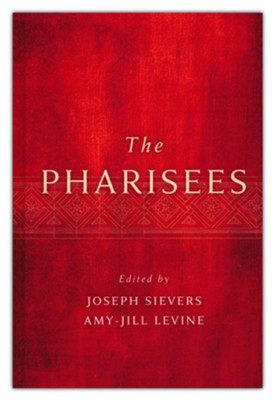
Note that scholars disagree regarding the specific relationship that the Pharisees had with Jesus in the New Testament as well as their overall disposition. This book favors certain perspectives. And it does a great job in that endeavor.
I caught up with the editors to ask them some questions about their robust new volume.
Enjoy!
What provoked you to write this book and how does it differ from the other books in print on Pharisees?
The book is an edited collection with contributions from an international gathering of both Jewish and Christian scholars who work in New Testament Studies, the Dead Sea Scrolls, Josephus the Jewish historian, rabbinic Judaism, medieval and modern Jewish and Christian thought, history, and art, contemporary films and textbooks, preaching, and theology.
The idea for the conference grew out of the realization that serious interdisciplinary work concerning the Pharisees was needed. It had to include Jewish and Christian representatives of all these disciplines. Only in this way we could confront and try to effectively rectify prejudices and stereotypes.
What was it specifically about the Pharisees that caused Jesus to have so much trouble with them?
Jesus, the Pharisees, and various other individuals and groups had different ways of understanding the Torah (we might compare various Christian groups today who have different ways of understanding what Paul teaches about women or slaves, or different ways of understanding what the Gospels suggest concerning relationships with outsiders).
Jesus and the Pharisees share much in common: they are among the people rather than out in the desert, they are both known for their piety and simplicity, they both have the attention of the crowds. The closer people are, the more difficult the process of self-definition.
Many scholars believe that the book of Acts is a work of historiography. What does that mean exactly?
The evangelist we call “Luke,” who wrote both the Gospel and Acts of the Apostles, wrote history the way other historians of the time wrote history: they were less interested in recording facts than in promoting a certain way of life and a certain set of values for their readers.
Luke freely edited his sources (including among others the Gospel of Mark), crafted speeches that he found appropriate for specific occasions, and corrected what he found to be certain misperceptions that other followers of Jesus held. That is why he tells us, in the Prologue to the Gospel, that while others have attempted to tell the story of Jesus, he is going to present what he considers the correct version.
Where did the Pharisees come from? What is their origin as a party?
We do not know. Josephus first mentions them following the Maccabean revolt about 150 BCE. They are a lay group rather than part of the priesthood, they appear to have started as a political party involved with local politics while Judea was ruled by fellow Jews, but after Rome gained control in 63 BCE and subsequently established client rulers in Galilee and, in 6 CE, a Roman governor in Judea, they appear less interested in politics and more interested in promoting piety among the people.
What were the main differences between the Pharisees and the Sadducees?
- Pharisees believed in a combination of fate and free will; Sadducees believed only in free will.
- Pharisees believed in resurrection of the dead; Sadducees did not (or, at least they did not believe one could locate the teaching of resurrection of the dead in Torah)
- Pharisees had the “tradition of the elders” through which they understood how to interpret Torah; Sadducees did not, or followed different traditions.
- Pharisees are in both Judea and Galilee and are popular among the masses; Sadducees tend to be based in Jerusalem and, according to Josephus, lacked popular support.
- Pharisees were interested in extending priestly sanctity found in the Temple to all Jews; Sadducees were more interested in retaining priestly privilege and responsibility.
Who was wealthier in Jesus’ day and who owned more land?
The high priesthood based in Jerusalem had land holdings. However, the “elites” or the “rich” are primarily the “sinners and tax collectors” with whom Jesus affiliates. This affiliation is one of the reasons the Pharisees question his table companionship.
The issue is not dietary regulations. The issue is Jesus’s associating with the ancient equivalents of drug dealers, loan sharks, and contract killers.
Which party was more popular with the Jewish people?
Josephus, the first-century Jewish historian, complains that the people follow the teachings of the Pharisees; he, a priest, thinks they should be listening to the priests instead.
What was the synagogue ruler called?
The Greek is archisynagogos which is literally, “The head” or “the first” of the synagogue. The position was probably like that of a patron. We also have inscriptions that use the feminine form of the term, which means that women also held this position.
What was a “rabbi” in the first century exactly (before A.D. 70)?
At the time of Jesus, “rabbi” is simply a polite title with the connotation of “teacher.” Anyone could be a rabbi, since the position is voluntary. Not everyone could be a priest, since priesthood is inherited (on the paternal line). “Rabbi” is, at the time of Jesus, a title of respect, with the connotation of “teacher.”
Could any visitor speak in a synagogue?
Synagogues are public spaces where anyone could speak. Gentiles attended synagogues and some even built synagogues and served as patrons of synagogues (see Luke 7.1-10). We see in Luke 13.13 a woman speaking in a synagogue.
If someone reads your book to the end, what are the big takeaways you want them to have from reading? What would you like them to understand and remember, exactly?
As Pope Francis states in the final section of the book, it would be helpful for Christians to stop using the Pharisees as negative foils and to see how close Jesus and the Pharisees were on the basics, such as love of G-d (Deuteronomy 6) and love of neighbor (Leviticus 19).
They may come to see Paul not as rejecting his Pharisaic training but as, in his view, becoming a better Pharisee following his Damascus Road experience.
We can better appreciate the Pharisees Nicodemus in the Gospel of John and Gamaliel in the book of Acts. In locating the Pharisees in history, including their connection to rabbinic Judaism, we can have greater respect for how they interpreted scripture in a way that welcomed everyone, showed people various ways of sanctifying daily life, provided guidance on how to resist assimilation into the broader Roman Empire, and modeled debate over how best to live according to divine will.
By recognizing how they have maligned the Pharisees over the past 2,000 years, Christians can correct past misinterpretations and use this new and compelling study to stop bearing false witness against Jews past and present. By seeing how Pharisees are portrayed in the ancient sources, Jews can get a better sense of their own history and be in a better position to respond to Christian misunderstandings.
Thank you!
Previous Post

February 16, 2022
Of Widows and Meals
Next Post
March 16, 2022 When the Church Was a Family: Recapturing Jesus' Vision
Browse Our Archives
Select a Category Uncategorized
Select a Month October 2026 September 2026 August 2026 July 2026 June 2026 May 2026 April 2026 March 2026 February 2026 January 2026 December 2025 November 2025 October 2025 September 2025 August 2025 July 2025 June 2025 May 2025 April 2025 March 2025 February 2025 January 2025 December 2024 November 2024 October 2024 September 2024 August 2024 July 2024 June 2024 May 2024 April 2024 March 2024 February 2024 January 2024 December 2023 November 2023 October 2023 September 2023 August 2023 July 2023 June 2023 May 2023 April 2023 March 2023 February 2023 January 2023 December 2022 November 2022 October 2022 September 2022 August 2022 July 2022 June 2022 May 2022 April 2022 March 2022 February 2022 January 2022 December 2021 November 2021 October 2021 September 2021 August 2021 July 2021 June 2021 May 2021 April 2021 March 2021 February 2021 January 2021 December 2020 November 2020 October 2020 September 2020 August 2020 July 2020 June 2020 May 2020 April 2020 March 2020 February 2020 January 2020 December 2019 November 2019 October 2019 September 2019 August 2019 July 2019 June 2019 May 2019 April 2019 March 2019 February 2019 January 2019 December 2018 November 2018 October 2018 September 2018 August 2018 July 2018 June 2018 May 2018 April 2018 March 2018 February 2018 January 2018 December 2017 November 2017 October 2017 September 2017 August 2017 July 2017 June 2017 May 2017 April 2017 March 2017 February 2017 January 2017 December 2016 November 2016 October 2016 September 2016 August 2016 July 2016 June 2016 May 2016 April 2016 March 2016 February 2016 January 2016 December 2015 November 2015 October 2015 September 2015 August 2015 July 2015 June 2015 May 2015 April 2015 March 2015 February 2015 January 2015 December 2014 November 2014 October 2014 September 2014 August 2014 July 2014 June 2014 May 2014 April 2014 March 2014 February 2014 January 2014 December 2013 November 2013 October 2013 September 2013 August 2013 July 2013 June 2013 May 2013 April 2013 March 2013 February 2013 January 2013 December 2012 November 2012 October 2012
TAKE THE
Religious Wisdom Quiz
Who cried out, "My God, my God, why have you forsaken me?" while dying?
Select your answer to see how you score.
Paul David Jesus Stephen
Related posts from The Deeper Journey

Letters on Living the Faith by C.S. Lewis



What Was Jesus’ Central Message?
TRENDING AT PATHEOS Evangelical

In one sense walking into Westminster Abbey is like walking down the...

'Super Scam Me' Exposes AI Jon Bon Jovi...
Leslie Pickett believed she was in a relationship with Jon Bon Jovi....

The Brazilian Remake of Kendricks' 'Flywheel' Opens in...
“Flywheel,” the story that launched the Kendrick Brothers’ filmmaking career is getting...

The Dangers of Gradual Accommodation (Winking at Sin)
Recently, the “law of gradualness” resurfaced during the opening of a weeklong,...

The Iron Gates and the Lion of the...
Yesterday, I didn't finish my report about, well, yesterday. So I'll...

The Image: On the Horror of Capitalism and...
The Image Then went the Pharisees, and took counsel how they might...
view all Evangelical blogs
Ad-Free & Subscriber Log-In Subscription Support
- About Us
- 2026 Calendar
- Videos
- Podcasts
- Library of World Religions
- Faith In Media Tracker
- Advertise With Us
- Write for Us
- Privacy Policy
- Terms of Service
- Do Not Sell My Data
- Contact Us
- Radiant Digital
- Manage Newsletter Subscriptions
- Unsubscribe From Notifications
- Sitemap
Copyright 2008-2026, Patheos. All rights reserved.
Subscription Support Ad-Free & Subscriber Log-In
Follow Patheos