
BuddhistCatholicContemplativeEvangelicalGeneral ChristianHinduJewishLatter-day SaintMuslimNew VisionsProgressive Christian
Beliefs
- Buddhist
- Catholic
- Contemplative
- Evangelical
- General Christian
- Hindu
- Jewish
- Latter-day Saint
- More Voices
- Muslim
- New Visions
- Pagan
- Progressive Christian
Topics
- Religion News
- Food and Religion
- Sports and Religion
- Religious Art
- Religious Music and Entertainment
- Religious Events
- History and Religion
- Style and Religion
- Politics and Religion
- Women in Religion
- Recreation Outdoors and Religion
- Business Finance and Religion
- Careers Workplace and Religion
- Education and Religion
- Family Parenting and Religion
- Health Fitness and Religion
- Home and Religion
- Relationships and Religion
- Technology and Religion
- Travel and Religion
Columnists
- Buddhist Columnists
- Business Finance and Religion Columnists
- Careers Workplace and Religion Columnists
- Catholic Columnists
- Contemplative Columnists
- Education and Religion Columnists
- Evangelists Columnists
- Family Parenting and Religion Columnists
- General Christian Columnists
- Health Fitness and Religion Columnists
- Hindu Columnists
- History and Religion Columnists
- Home and Religion Columnists
- Jewish Columnists
- More Voices Columnists
- Latter Day Columnists
- Muslim Columnists
- New Visions Columnists
- Nonreligious Columnists
- Pagan Columnists
- Politics and Religion Columnists
- Progressive Columnists
- Recreation Outdoors and Religion Columnists
- Relationships and Religion Columnists
- Religion News Columnists
- Religious Art Columnists
- Religious Events Columnists
- Religious Music and Entertainment Columnists
- Sports and Religion Columnists
- Style and Religion Columnists
- Technology and Religion Columnists
- Travel and Religion Columnists
- Women in Religion Columnists
Resource Library
- 2026 Calendar
- Library of World Religions
- The 100 Most Holy Places on Earth
- Patheos Answers
- Podcasts
- Videos
- Faith Leaders Database
- Anglican Episcopalian
- Bahai
- Baptist
- Buddhism
- Christianity
- Confucianism
- Eastern Orthodoxy
- Hinduism
- Holiness and Pentecostal
- ISKCON
- Islam
- Judaism
- Lutheran
- Methodist
- The Church of Jesus Christ of Latter-day Saints
- New Age
- Paganism
- Presbytarian and Reformed
- Protestantism
- Religion Behind the Scenes
- Roman Catholic
- Scientology
- Shia Islam
- Sikhism
- Sufism
- Sunni Islam
- Taoism
- Zen
- See all religions
Research Tools
 Ad-Free & Subscriber Log-In Subscription Support
Ad-Free & Subscriber Log-In Subscription Support
Follow Patheos 

- Trending:
- Forgiveness
- |
- Marriage
- |
- Consciousness
- |
- Death Penalty
- |
- Election
- |
- Halloween

- Home
- Evangelical
- An Interview About Jesus for Your Skeptical Friends
An Interview About Jesus for Your Skeptical Friends
Last updated on: September 14, 2024 at 5:47 pm by Frank Viola
An Interview About Jesus for Your Skeptical Friends 2024-09-14T17:47:25-04:00 Frank Viola
Patheos Explore the world's faith through different perspectives on religion and spirituality! Patheos has the views of the prevalent religions and spiritualities of the world.
Jesus, Contradicted: Why the Gospels Tell the Same Story Differently is a new book by Michael Licona. Licona (PhD, University of Pretoria) is Professor of New Testament Studies at Houston Christian University. He is the author of numerous books, including the critically acclaimed The Resurrection of Jesus: A New Historiographical Approach.
I thought the book was remarkable. Therefore, I sought to catch up with Michael to ask him salient questions about the book and his ministry defending the historical reality of the resurrection of Jesus.
Enjoy!
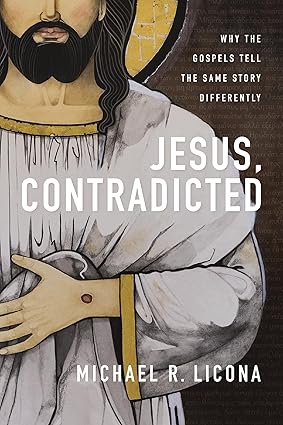
There have been a plethora of books written on Jesus and the Gospels. In that light, what provoked you to write Jesus, Contradicted?
Many skeptics often appeal to contradictions in the Gospels as a reason for having little or no confidence in them. Observing differences in how the Gospels report the same event troubled me in the past. But once I investigated the evidence for the resurrection of Jesus in depth and understood how strong the evidence actually is, the differences in the Gospels ceased troubling me. For if Jesus rose, it’s game – set – match.
Christianity is true . . . PERIOD! Notwithstanding, Gospel differences remain troubling to many Christians. So, I engaged in eight years of focused research on the matter and published an academic monograph with my results. Although many found that book helpful, many others found it too academic and had additional questions the book did not address. So, I spent another three years or so writing this new book that’s geared toward the serious Christian who is willing to ask the difficult questions and who demands authentic answers.
Most readers want to know the answer to this question when they consider buying the book – what’s in it for me? Why do I want to spend the money and time on buying your book? What am I going to get out of it? Please answer this question.
I wrote this book for the inquiring Christian who is looking for authentic answers to some difficult questions pertaining to the Gospels. There are 3 key rewards they will gain from reading this book: 1. They will obtain a fresh confidence in the reliability of the Gospels; 2. They will discover new insights in Scripture, both theological and historical; and 3. They will develop a refined view of the nature of Scripture.
Share 3 “aha” moments that struck you the most when you were doing research for your book.
1) There are a few surviving works from antiquity that describe the techniques of writing in that era. Some of those techniques are similar to what we use today. But some are different. One ancient writer named Theon said that some of these techniques are used in every form of writing. Reading the Gospels with these literary conventions in mind assists us in understanding them better. In fact, the vast majority of differences are easily understood when we view the Gospels through the lens of ancient biographical writing. So, we should not be surprised if we observe the authors of the Gospels writing in this manner. In fact, we should be surprised if we did not.
2) The greatest biographer in antiquity was Plutarch. His most quoted text is found in chapter one of his Life of Alexander. There he tells his readers that the primary objective of biographies in that era was to illuminate the character of the main person featured. This was to be accomplished through telling of certain words and deeds that illuminate the kind of person they were. Keep this in mind when we come to the Gospels, which are ancient biographies of Jesus. In the book, I describe in detail how at least half of the chapters in our earliest Gospel, Mark, contain sayings and deeds of Jesus that illuminate his character. He does things that God does and claims to have authority belonging exclusively to God. By selecting to include certain things Jesus had said and done, Mark is telling us in his biography of Jesus that Jesus is God’s uniquely divine Son.
3) One common objection we hear from skeptics is that none of the traditional authors attributed of the Gospels are correct. In particular, Matthew was a tax collector, which did not require a great degree of literacy and John was a fisherman. Therefore, neither of these men would be expected to possess the degree of literacy required to write the Gospels named after them. Moreover, the titles “The Gospel according to Matthew,” etc., are not present in the earliest manuscripts. What I discovered absolutely negates both objections. For one, of the nearly 100 biographies composed on anyone during that period that have survived, with only one exception, none contain the author’s name in the title or preface! Yet, historians who study antiquity don’t despair over the matter of their authorship, since there is external evidence for it. Although the external evidence supporting the traditional authorship of all four canonical Gospels is not unimpeachable by any means, there is actually better evidence for their traditional authorship than we have for the authorship of much ancient literature, including Plutarch’s Lives, which no classicist disputes.
Moreover, while it’s true that Matthew and especially John may not have possessed a degree of literacy necessary to compose the Gospels named after them, that’s actually not a problem. Cicero was one of the most highly educated Romans and we know the apostle Paul was likewise highly educated. Both Cicero and Paul made robust and sustained use of a secretary to assist them in writing. Cicero had Tiro and Paul names his secretary who helped him write his letter to the church in Rome: Tertius (Rom. 16:22). Because the literary quality of Romans is far superior to what we find in Paul’s other letters, we can be confident that Tertius’ role in the composition of that letter exceeded that of merely writing what Paul dictated to him. Now if Cicero and Paul used secretaries to assist them in writing their literature, wouldn’t we expect the authors of the Gospels, especially Matthew and John, to do likewise? Matthew and John would not have had to be literate. All that was necessary is that their secretaries were and that they were aware of the literary conventions in play when they wrote.
Please answer the question in simple form: Why do the Gospels tell the same story so differently?
The Gospel authors employed various techniques of paraphrasing that were prescribed in the compositional textbooks written by Theon and others. They also employed a variety of other compositional devices that altered some details, many of which we still use even today. For example, Matthew and Mark mention one angel at the tomb while Luke and John mention two. The former are likely focusing their attention on the angel making the announcement that Jesus had risen from the dead. This technique is called literary spotlighting and is extremely common in ancient historical literature.
For those who don’t read too many books, give us a two or three paragraph summaries of the key points you make in the book.
The Gospels are ancient biographies and should be read through the lens of that genre. Seeking to provide better answers to the problem of Gospel differences than have been previously offered, I show that the genre of ancient biography allowed biographers flexibility in how they reported details. I introduce readers to two authors from antiquity, Theon and Plutarch. The former articulates specific exercises intended to train students how to write well. The latter employs numerous literary techniques when reporting the same story in two or more of his ancient biographies, since his main characters often participated in the same events. This provides historians with the wonderful opportunity to compare how the same author, using the same sources, reports the same events. Differences occur.
It is of great interest then that many of the same techniques taught by Theon and employed by Plutarch appear to have been known by the authors of the Gospels or their secretaries and can account for most of the differences that exist between them. In this book, I explore numerous examples of compositional devices employed in Plutarch’s Lives and examine instances in the Gospels where their authors appear to be using similar techniques. This assists readers in understanding why the Gospels report many events differently.
Some conservative readers will be uncomfortable when observing some of the liberties taken by the editorial hands of the authors of the Gospels. Therefore, I address the thorny questions of whether such editorial moves are compatible with the doctrines of the divine inspiration and the inerrancy of Scripture. I guide readers in taking an in-depth look at these two doctrines and help them to emerge with a fine-tuned grasp of the nature of Scripture.
One of the things that I found curious when I was a young believer is the fact that the four Gospel writers tell the story of the resurrection of Jesus very differently. In fact, on the surface, they appear to contradict each other. One would think that of all things that the Gospels report, they’d all be consistent with the resurrection. What do you say to this observation? What is your explanation for it?
You’re correct. There are many differences between the resurrection narratives. Almost all of them can be easily accounted for when read in view of the compositional devices we examine throughout the book. However, there are two that leave me scratching my head. One of these concerns where Jesus first met Mary Magdalene on Easter morning. John tells us it was at the empty tomb whereas Matthew says it was when Jesus stops her and another Mary who have already left the tomb and are on their way to tell the group of male disciples that he has risen and will meet them in Galilee.
A few scholars have posited ways of reconciling the details. But I find them to be speculation squared rather than solutions that have a reasonable chance of reflecting what had actually happened. In such instances, I prefer to allow the matter to remain open. And even if one were to think we have an error here, it’s not at all a substantive one. It doesn’t call into question the resurrection of Jesus or an appearance of Jesus to Mary. Finally, I’ll simply note that differences are not at all unique to the Gospels but appear in abundance in the Greek, Roman, and Jewish literature. For example, descriptions of Caesar’s assassination on the Ides of March, 44 BC are reported by Appian, Cicero, Dio, Livy, Nicholaus, Plutarch (3 times in Plutarch’s Lives), Suetonius, and Vellius. Despite the abundance of discrepancies in details provided in these accounts, no one questions whether Caesar was assassinated. Nor do they question most of what the accounts report.
Based on the feedback so far, what are readers saying about the book?
Initial endorsements of the book from prominent scholars have been very encouraging. The book has not even been out for four months. So, reviews in professional literature are forthcoming. The only one of which I’m aware is by my friend Craig Blomberg who is a prominent New Testament scholar. He published a review of the book in the Denver Journal this past July. Craig is largely supportive of my approach, though not entirely so. At this moment, there are already 44 reviews of the book on Amazon where it has a rating of 4.6 of 5 stars. At the end of the book, I invite readers to email me and let me know if they found the book helpful. Many have done so and have said the book was a stimulating yet easy read that either strengthened or restored their confidence in the reliability of the Gospels while clearing up some questions they have had. I’ve been very encouraged by the response thus far.
We live in a time when we have many notable people who appear open-minded, curious, and even “seeking.” Joe Rogan, the world’s most popular podcaster, comes to mind. However, Rogan represents millions of intelligent people who haven’t been persuaded that Jesus is alive and He is this world’s true Lord. Nor that the Gospels are reliable.
If you were talking to Joe, what would you say to him in an effort to persuade him to question his assumptions and recognize that the evidence for trusting in Jesus – and the testimony of the Gospels — is overwhelming?
If I were to have a conversation with Joe, I would focus on a historical case for the resurrection of Jesus. If Jesus rose, it’s almost certain that Christianity is true. If Joe came to think Jesus probably rose, I would then transition to providing reasons to regard the Gospels as reliable sources about Jesus. Those interested may learn these reasons in my lecture on the topic here.
What else would you like readers to know about your book?
As I stated at the beginning, the intended reader of this book is the serious but curious Christian. This reader has questions about why the Gospels often seem to disagree on details in the stories they recall. They are asking what it means to say the Bible is divinely inspired when human elements are clearly present in the texts. They want real answers that are supported by plausible supporting data instead of appeals to strained harmonizing efforts and the encouragement to “Just have faith.” Those for whom I wrote this book will find it quite refreshing. I have taught this stuff all over the world and to my students at Houston Christian University. Several students have said that once they saw what’s actually going on in the Gospels that resulted in the different ways they report the same events, they can’t unsee it and that it’s like reading the Gospels for the first time . . . again!
Previous Post

September 8, 2024
God's Heartbeat & Why I Don't Advocate House Church
Next Post

September 15, 2024 Traumergy, An Interview With Author Patrick Carberry
Recent Comments
"I get, the more I see that every attempt to debunk it leaves the Shroud ..."
Interview with Leonard Sweet – More ..."
"You're referring to the way things happen in the Industrial Religious Complex. I'm speaking about ..."
"Another insight is that young people want to start their own ministry and are not ..."
"You’re challenging the usual narratives and pointing us toward deeper, more nuanced perspectives. This is ..."
The Origins of Human Government and ..."
Browse Our Archives
Select a Category Uncategorized
Select a Month October 2026 September 2026 August 2026 July 2026 June 2026 May 2026 April 2026 March 2026 February 2026 January 2026 December 2025 November 2025 October 2025 September 2025 August 2025 July 2025 June 2025 May 2025 April 2025 March 2025 February 2025 January 2025 December 2024 November 2024 October 2024 September 2024 August 2024 July 2024 June 2024 May 2024 April 2024 March 2024 February 2024 January 2024 December 2023 November 2023 October 2023 September 2023 August 2023 July 2023 June 2023 May 2023 April 2023 March 2023 February 2023 January 2023 December 2022 November 2022 October 2022 September 2022 August 2022 July 2022 June 2022 May 2022 April 2022 March 2022 February 2022 January 2022 December 2021 November 2021 October 2021 September 2021 August 2021 July 2021 June 2021 May 2021 April 2021 March 2021 February 2021 January 2021 December 2020 November 2020 October 2020 September 2020 August 2020 July 2020 June 2020 May 2020 April 2020 March 2020 February 2020 January 2020 December 2019 November 2019 October 2019 September 2019 August 2019 July 2019 June 2019 May 2019 April 2019 March 2019 February 2019 January 2019 December 2018 November 2018 October 2018 September 2018 August 2018 July 2018 June 2018 May 2018 April 2018 March 2018 February 2018 January 2018 December 2017 November 2017 October 2017 September 2017 August 2017 July 2017 June 2017 May 2017 April 2017 March 2017 February 2017 January 2017 December 2016 November 2016 October 2016 September 2016 August 2016 July 2016 June 2016 May 2016 April 2016 March 2016 February 2016 January 2016 December 2015 November 2015 October 2015 September 2015 August 2015 July 2015 June 2015 May 2015 April 2015 March 2015 February 2015 January 2015 December 2014 November 2014 October 2014 September 2014 August 2014 July 2014 June 2014 May 2014 April 2014 March 2014 February 2014 January 2014 December 2013 November 2013 October 2013 September 2013 August 2013 July 2013 June 2013 May 2013 April 2013 March 2013 February 2013 January 2013 December 2012 November 2012 October 2012
TAKE THE
Religious Wisdom Quiz
Who conquered Jerusalem and made it his capital?
Select your answer to see how you score.
Solomon David Saul Hezekiah
Related posts from The Deeper Journey

Letters on Living the Faith by C.S. Lewis



What Was Jesus’ Central Message?
TRENDING AT PATHEOS Evangelical

Letters on Living the Faith by C.S. Lewis
Most of us met C.S. Lewis as a public intellectual. Mere Christianity....

When Halloween Unmasks Married Hearts
Written by Dr. David K. Ewen from Eternal Truth Bible College Behind...

Aristotle. He’s been called the father of logic, the father of the...

Methodist Central Hall and Westminster Abbey
Situated on the same square is Methodist Central Hall and Westminster Abbey. ...

57th Dove Awards Honor Dolly Parton, Crown New...
On gospel music’s biggest night, the 57th annual GMA Dove Awards honored...

The First Eucharistic Controversy: Christ’s Real Presence
For Catholics, the Eucharist is the source and summit of the Christian...
view all Evangelical blogs
What Are Your Thoughts?leave a comment
Ad-Free & Subscriber Log-In Subscription Support
- About Us
- 2026 Calendar
- Videos
- Podcasts
- Library of World Religions
- Faith In Media Tracker
- Advertise With Us
- Write for Us
- Privacy Policy
- Terms of Service
- Do Not Sell My Data
- Contact Us
- Radiant Digital
- Manage Newsletter Subscriptions
- Unsubscribe From Notifications
- Sitemap
Copyright 2008-2026, Patheos. All rights reserved.
Subscription Support Ad-Free & Subscriber Log-In
Follow Patheos